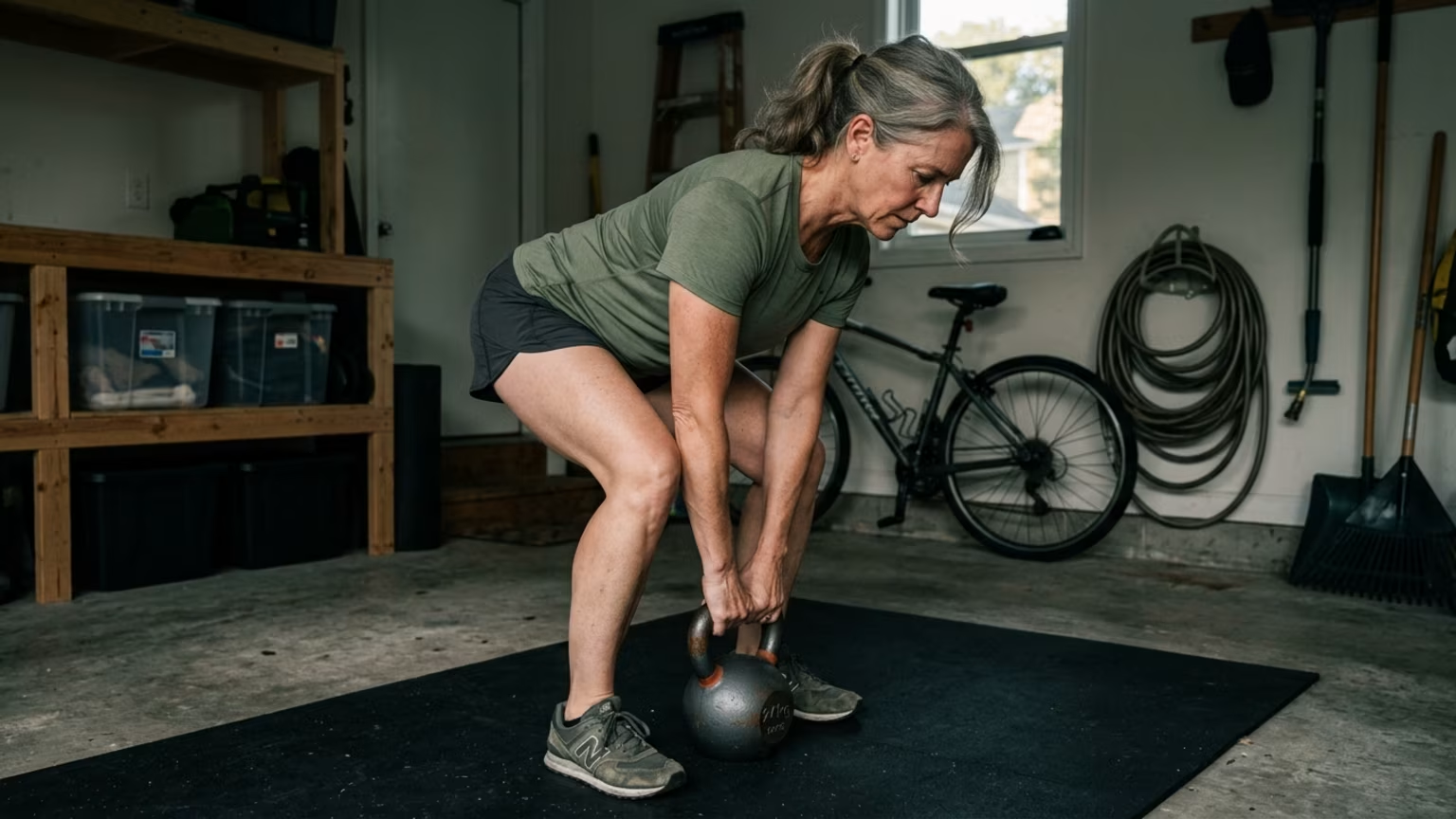

Updated 2026 ACSM guidance emphasizes power training for older adults. Read why adding intentional speed to workouts helps veterans maintain physical capability.





On September 27, 2026, Men's Journal reported on updated resistance training guidance from the American College of Sports Medicine. The American College of Sports Medicine, or ACSM, released this update as its first major revision on resistance training since 2009. The new guidance represents a massive synthesis of recent physical performance data.
The organization drew its conclusions from 137 systematic reviews. These reviews represent more than 30,000 total participants across various fitness levels and age groups. A central focus of this new reporting is the explicit separation of strength and power. The ACSM now highlights power as a distinct fitness quality rather than just another word for strength.
For military veterans focused on staying capable in later life, this separation between physical qualities matters deeply. Traditional military physical training often focuses on moving heavy loads, enduring long distances, or passing periodic fitness tests. Once active service ends, veterans naturally seek out new frameworks to maintain their capability.
Strength is the ability to produce force, but power requires adding speed to that force. Everyday activities rely heavily on this fast force production. Tasks like standing up, climbing a flight of stairs, or catching yourself during a loss of balance require power.
Strength allows you to stand up from a chair, but power allows you to stand up quickly. Strength helps you climb a flight of stairs, while power gives you the physical capacity to catch yourself if you stumble on the top step. Responding to a loss of balance requires producing force in a fraction of a second. When veterans lose this rapid reaction capability, they often experience a decline in overall independence. Many traditional gym machines do not train this necessary speed component.
This update serves as a reminder that physical maintenance is not a static process. A routine that worked perfectly during active duty might not address the shifting demands of civilian life. As bodies age, the nervous system requires different stimulus to maintain coordination and fast twitch muscle function. Adjusting your workouts to include power is a practical step toward lifelong readiness.
We understand how these physical shifts can catch you off guard. I remember waking up after a poor night of sleep and realizing that my training recovery was taking much longer than it used to. I realized that readiness is more than just pushing through the fatigue. It requires a dedicated approach to managing sleep and stress, which completely shifted how I view long term capability.
Addressing power output is another necessary shift in how we approach our health over time. If your routine only includes slow grinding movements, your body may struggle with fast and unpredictable physical demands. Recognizing power as a distinct target helps veterans build a more complete routine. Veterans looking for a sustainable approach to physical fitness should consider how speed factors into their workouts.
The updated guidelines rely on a massive amount of verified data. The ACSM synthesized 137 systematic reviews to build this framework. These reviews represent over 30,000 total participants across a wide variety of fitness levels. This scale of evidence indicates that power training has broad applications.
A 2026 systematic review and meta analysis summarized in the report provides a clear picture of these benefits for aging populations. This specific review looked at 16 distinct studies and included 801 adults aged 60 and older. The findings confirmed that resistance training improved muscle mass, general strength, and functional performance across the board. Lifting weights with maximal intended velocity produced the strongest functional performance outcomes among the different approaches compared.
Another 12-week trial detailed in the report examined how speed impacts smaller muscle groups and daily coordination. Researchers compared traditional speed bodyweight exercises against explosive bodyweight exercises. At the end of the 12 weeks, the explosive training group showed a significantly greater improvement. This improvement was measured in the early rate of force development in toe grip.
Toe grip might seem like a minor detail, but it plays a large role in foot stability and balance. The researchers concluded that explosive bodyweight training may help prepare older adults for quick movements in their daily routines. This data suggests that deliberate speed can be applied to very simple movements.
The evidence also extends to common home-based exercise routines. A 2024 study looked specifically at men aged 65 to 88. These men participated in eight weeks of home-based knee extensions and sit-to-stand movements. The men assigned to the fast-training group increased their peak power by 24 percent.
These outcomes indicate that intentional speed can create measurable physical improvements without requiring complex gym equipment. Doing a sit-to-stand movement with explosive intent trains the exact muscles needed to get out of a chair quickly. However, these outcomes reflect specific study conditions and are not a guaranteed result for every individual. Veterans reading this information should view the 24 percent increase as a verified study result rather than a personal promise.
This new information shifts the standard guidance for how to program a resistance workout. The general prescription for power training involves using a moderate load instead of a maximal load. The report defines this moderate load as roughly 30 to 70 percent of a one-repetition maximum. The key alteration is that the lifting phase is performed as quickly as possible.
The ACSM guidance instructs participants to move the weight quickly and finish the exercise explosively. This protocol emphasizes the intent to move fast rather than the amount of weight on the bar. Moving a lighter weight fast trains the nervous system to recruit muscle fibers instantly.
For older adults, the practical application of this guidance requires scaling the movements carefully. The ACSM recommends starting with lighter dumbbell or kettlebell exercises to ensure safety and control. The recommended volume for this demographic is relatively low to prevent excess fatigue. The protocol suggests one to six repetitions per set.
Workouts should contain two to six sets and happen one to three times weekly. These parameters must be scaled to match the individual's physical ability and past training experience. Older adults should not view these ranges as a mandatory prescription for everyone.
Scaling these exercises correctly is just as important as the speed itself. Using too much weight can force the body to slow down, defeating the purpose of the movement. Older adults should focus entirely on the velocity of the lifting phase while maintaining strict control. The eccentric portion, or the lowering of the weight, should still be done safely and deliberately.
Veterans looking for safe workout progression models should view this as an adaptable framework. Fast lifting is an addition to a comprehensive health strategy, not a replacement for traditional strength training. The report uses simple movements like sit-to-stands to demonstrate explosive intent. You do not need to perform complex lifts to benefit from power training.
Incorporating deliberate speed into lighter exercises offers a practical way to train for the demands of aging. You can simply apply this new speed intent to the basic exercises you already know.
As fitness research increasingly distinguishes between strength and power, general health protocols will continue to evolve. The current ACSM guidance provides a solid foundation based on general populations of older adults. However, it does not specifically address the unique physical histories of former military personnel. Will future clinical studies develop specialized power training protocols for veterans managing service-related injuries and mobility limitations?
Follow BattleVet for practical guidance on military and veteran health, strength, recovery, testosterone, sleep and healthy aging. Stay connected for new articles, research backed insights and clear information to help you stay capable for the years ahead.



A San Diego report examined VA mental health wait times and emergency care access. Learn how veterans can navigate scheduled appointments and crisis pathways.

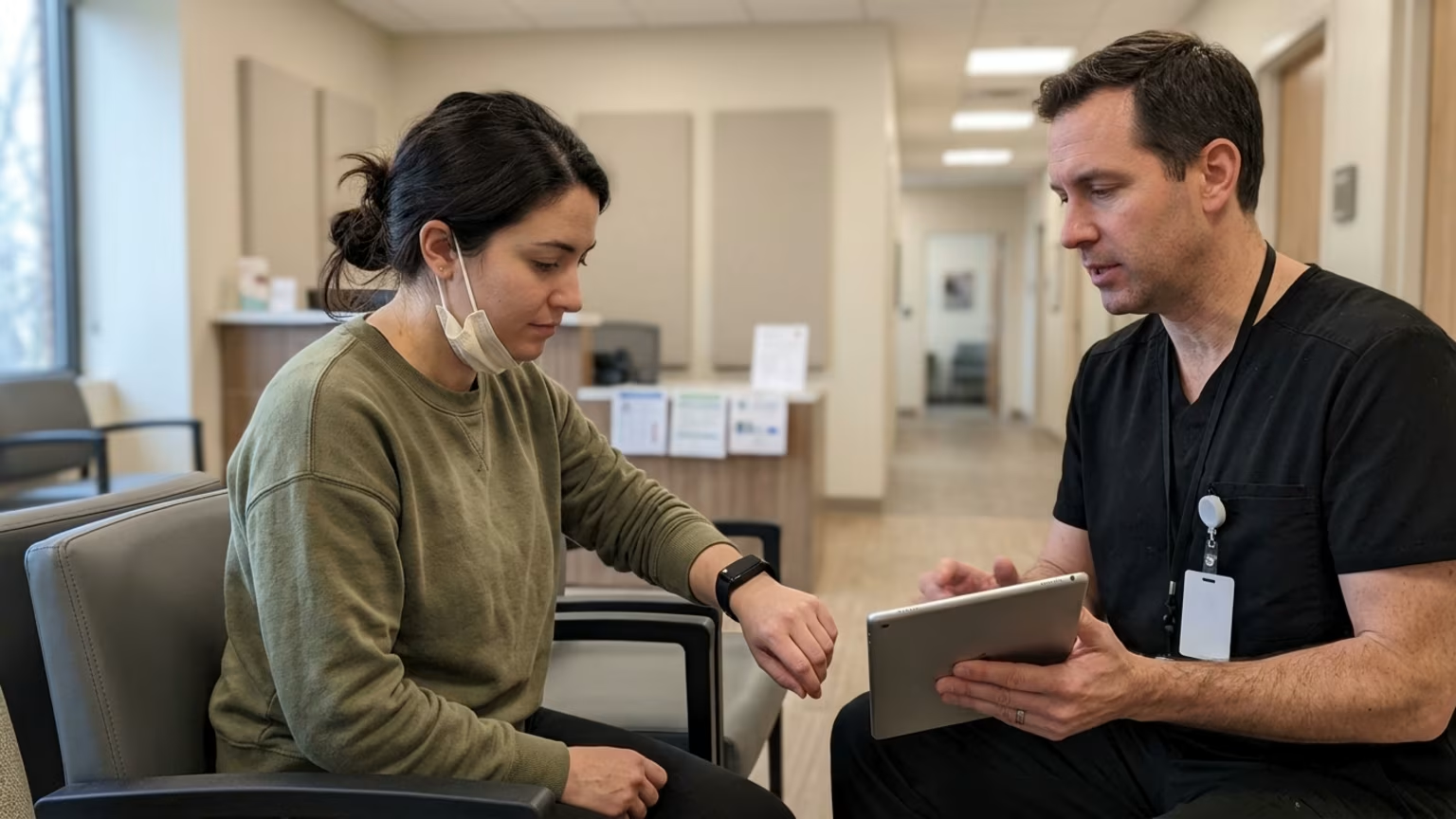
Reviewing the September 2026 missile strike in the Strait of Hormuz, and why returning to duty requires ongoing monitoring for traumatic brain injuries.
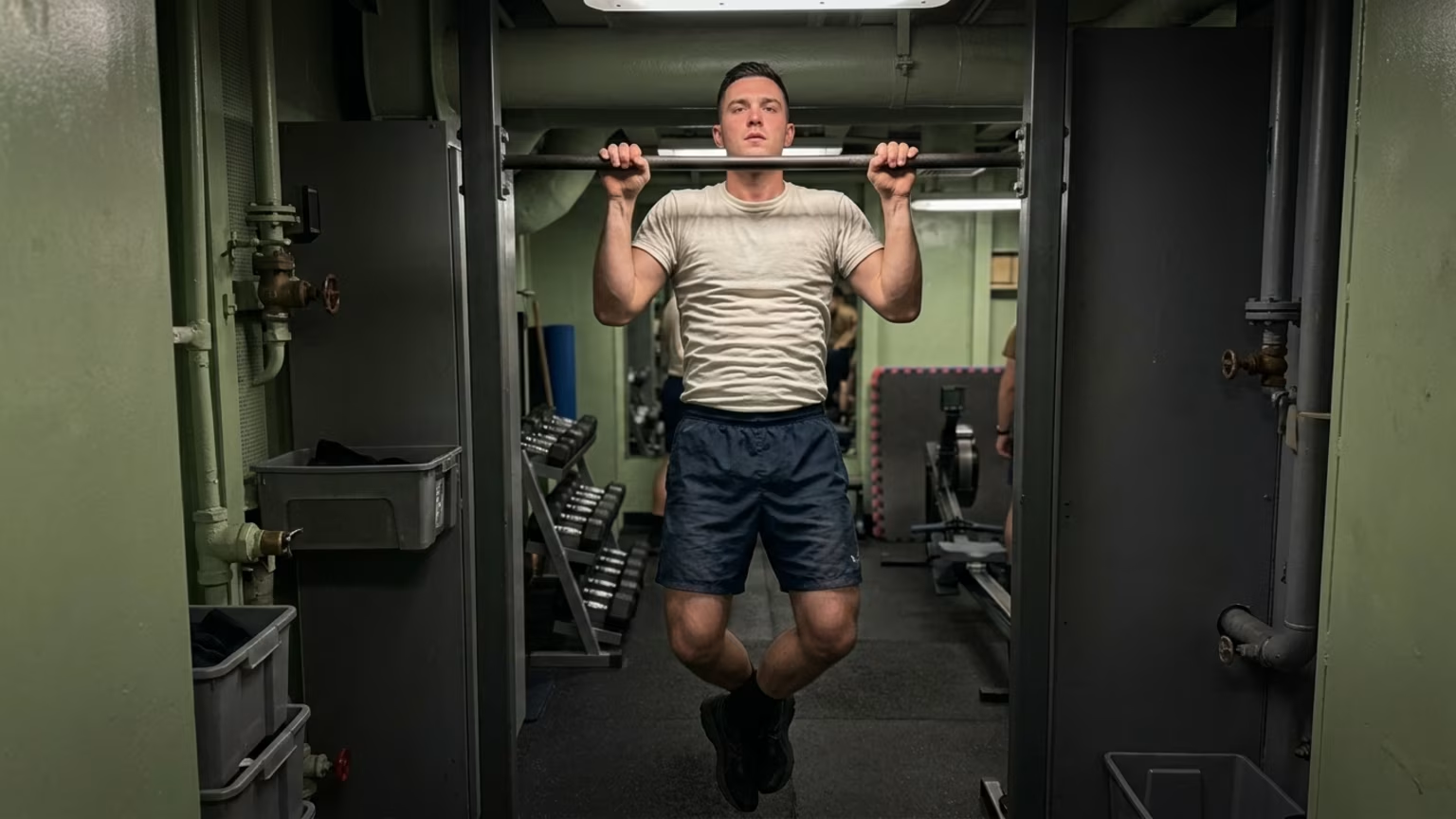
Recent reports highlight how sailors maintain strength and cardiovascular training during submarine deployments using limited space and minimal equipment.
Build better habits around strength, recovery, sleep, hormones and healthy aging with practical guidance for active military personnel and veterans.
Explore BattleVet