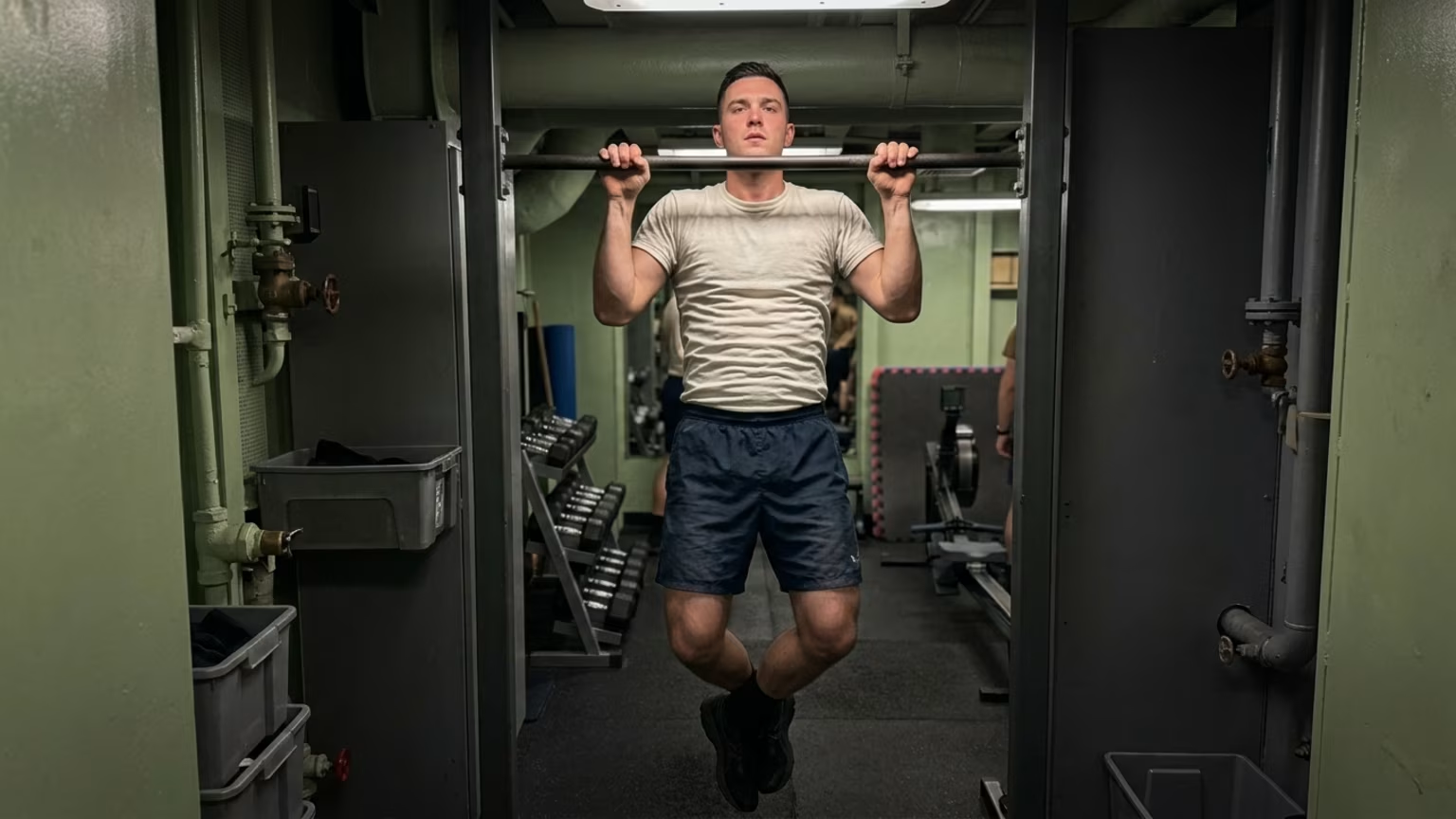

Recent reports highlight how sailors maintain strength and cardiovascular training during submarine deployments using limited space and minimal equipment.





On September 27, 2026, Military.com published an update on how sailors adapt their physical training during long submarine deployments. The report examines how personnel maintain strength and cardiovascular conditioning when running space is unavailable and equipment is limited. Central to this update is the Navy Operational Fitness and Fueling System, which is designed specifically for small spaces and minimal equipment. The article highlights that equipment availability varies heavily depending on the specific boat.
During a visit to the ballistic missile submarine USS Rhode Island, reporters noted that various exercise machines were distributed wherever space permitted. Sailors had access to treadmills, ellipticals, stationary bikes, and free weights. However, Military.com explicitly warns that this setup does not represent every submarine in the fleet. Some boats may have very little access to machines, forcing sailors to find alternative ways to exercise.
This update is highly relevant for active personnel and veterans who must adapt their fitness routines to strict environmental constraints. Submarine duty represents an extreme operational environment where space is severely restricted. Floor space is often required for non-fitness purposes, limiting where personnel can actually move. These physical limitations force sailors to prioritize basic conditioning over ideal training setups.
Maintaining readiness under these conditions requires managing numerous competing demands. The mission and schedule dictate exactly when and where exercise happens. The Military.com report notes that training must be adapted around watches, routine drills, scheduled meals, and sleep. Personnel must be flexible, completing their conditioning work whenever their duty schedule allows.
In our experience, adapting to these limitations requires a massive shift in how you view physical readiness. I remember waking up after a poor night of sleep and realizing that my training recovery was taking much longer than it used to. I realized that readiness is more than just pushing through the fatigue. It requires a dedicated approach to sleep and hormonal health, which completely shifted how I view long term capability.
During a deployment, this principle of balancing stress and recovery becomes even more critical. A sailor operating on fragmented sleep is already carrying a heavy physiological load. Adding a highly demanding workout without adequate recovery can actually decrease overall operational readiness. Prioritizing proper recovery and sleep alongside these workouts is essential for managing central nervous system fatigue.
The operational tempo on a submarine adds another layer of difficulty to physical conditioning. Watches run on a strict rotation, meaning a sailor's available free time constantly shifts. Routine drills can interrupt planned rest periods, further complicating any structured fitness regimen. These unpredictable interruptions mean that adaptability is the most critical component of any underway fitness plan.
The Navy Operational Fitness and Fueling System provides strength and endurance plans adapted to equipment found aboard submarines. According to the Military.com report, Human Performance Resources by CHAMP recommends bodyweight circuits as a cardiovascular option. This guidance is crucial when space for running is completely unavailable. Circuits require very little floor space, which is often needed for other operational purposes.
Military.com gives squats, lunges, push-ups, and planks as examples of movements for these circuits. Sailors can string these basic exercises together to maintain cardiovascular health without relying on machines. This approach ensures that personnel can still train even if the boat's equipment is occupied or absent. These movements target major muscle groups while keeping the heart rate elevated.
Squats and lunges preserve lower body function, which is often compromised by long periods of sitting or standing in tight spaces. Push-ups and planks engage the core and upper body, supporting posture and baseline strength. Executing these movements in a circuit keeps the heart rate elevated, providing a solid cardiovascular stimulus. This functional approach prevents the physical degradation that often accompanies prolonged inactivity in confined quarters.
The physical layout of a submarine requires fitness equipment to be distributed wherever space permits. Unlike a traditional military base, there is rarely a dedicated, single room facility for physical training. An elliptical machine might be wedged into a narrow passageway, while a set of free weights sits in a completely different sector. This decentralized setup forces sailors to be opportunistic with their exercise routines.
The Navy Operational Fitness and Fueling System represents a structured attempt to solve this minimal equipment problem. It provides a clear framework for service members who cannot access traditional base gyms. The system emphasizes functional movements that translate directly to the physical demands of active duty. By focusing on these practical movement patterns, personnel can maintain their operational readiness without complex machinery.
The equipment found aboard the USS Rhode Island provides a glimpse into what is possible when space allows. According to the September 2026 report, items like ellipticals and bikes can be distributed throughout the boat. However, treating this specific setup as a standardized fleet wide inventory is a mistake. Service members must prepare for the reality that their next assignment may offer far fewer resources.
This variability means that rigid, equipment dependent training programs will inevitably fail during some deployments. A sailor might transition from a boat with a stationary bike to one where only a small patch of deck is available. Understanding how to scale a workout down to its bare essentials is a mandatory skill. It ensures that physical conditioning does not decline simply because a specific machine is missing.
A critical distinction in the recent report is the difference between maintaining current conditioning and pursuing substantial strength gains. Military.com reports that bodyweight and light equipment can effectively support physical training at sea. However, heavier resistance is generally needed ashore for substantial strength gains. Sailors must adjust their expectations, focusing on baseline maintenance rather than maximum muscle growth during a patrol.
Attempting a high volume resistance program without adequate weight can lead to frustration and stalled progress. Instead, prioritizing joint mobility and basic endurance prepares the body for a return to heavy lifting later. This strategy aligns with sensible training and performance principles for any restrictive environment. The specific bodyweight movements recommended by Human Performance Resources are highly effective for maintaining this necessary baseline mobility.
Nutrition presents another significant variable during extended subsurface operations. The Military.com article notes that fresh fruits and vegetables become scarce as a deployment progresses. Sailors must rely heavily on the available food, which may contribute to weight gain if portions are unchecked. While the report offers no quantitative nutrition data, it highlights portion control as a vital consideration.
Without access to a full galley of fresh produce, maintaining body composition requires deliberate dietary choices. Personnel must adjust their caloric intake to match their reduced daily energy expenditure in a confined space. Managing these nutritional limits is essential for long term Military health. It prevents unwanted weight gain that could compromise physical readiness upon returning to port.
When a deployment finally ends, personnel face the challenge of transitioning back to a traditional training environment. Because they have focused on maintenance, they can safely reintroduce heavy resistance training ashore. Attempting to immediately return to previous maximum lifts can result in severe injury. Instead, a gradual reintegration utilizing a proper veteran lifestyle and healthcare approach ensures long term success.
The transition back to shore duty requires patience and a strategic approach to physical recovery. After months of relying on light equipment and bodyweight circuits, the central nervous system must readapt to heavy loads. Service members should avoid the temptation to immediately test their one repetition maximums upon returning to port. A phased approach to building strength back up is the safest way to avoid connective tissue injuries.
As the military continues to evaluate its operational fitness protocols for confined environments, new questions emerge. Will future data collection efforts provide a clearer picture of how these restricted deployments impact physical capability? How will the Navy further adapt its framework to ensure that all personnel maintain optimal conditioning regardless of their specific boat assignment?
Follow BattleVet for practical guidance on military and veteran health, strength, recovery, testosterone, sleep and healthy aging. Stay connected for new articles, research backed insights and clear information to help you stay capable for the years ahead.


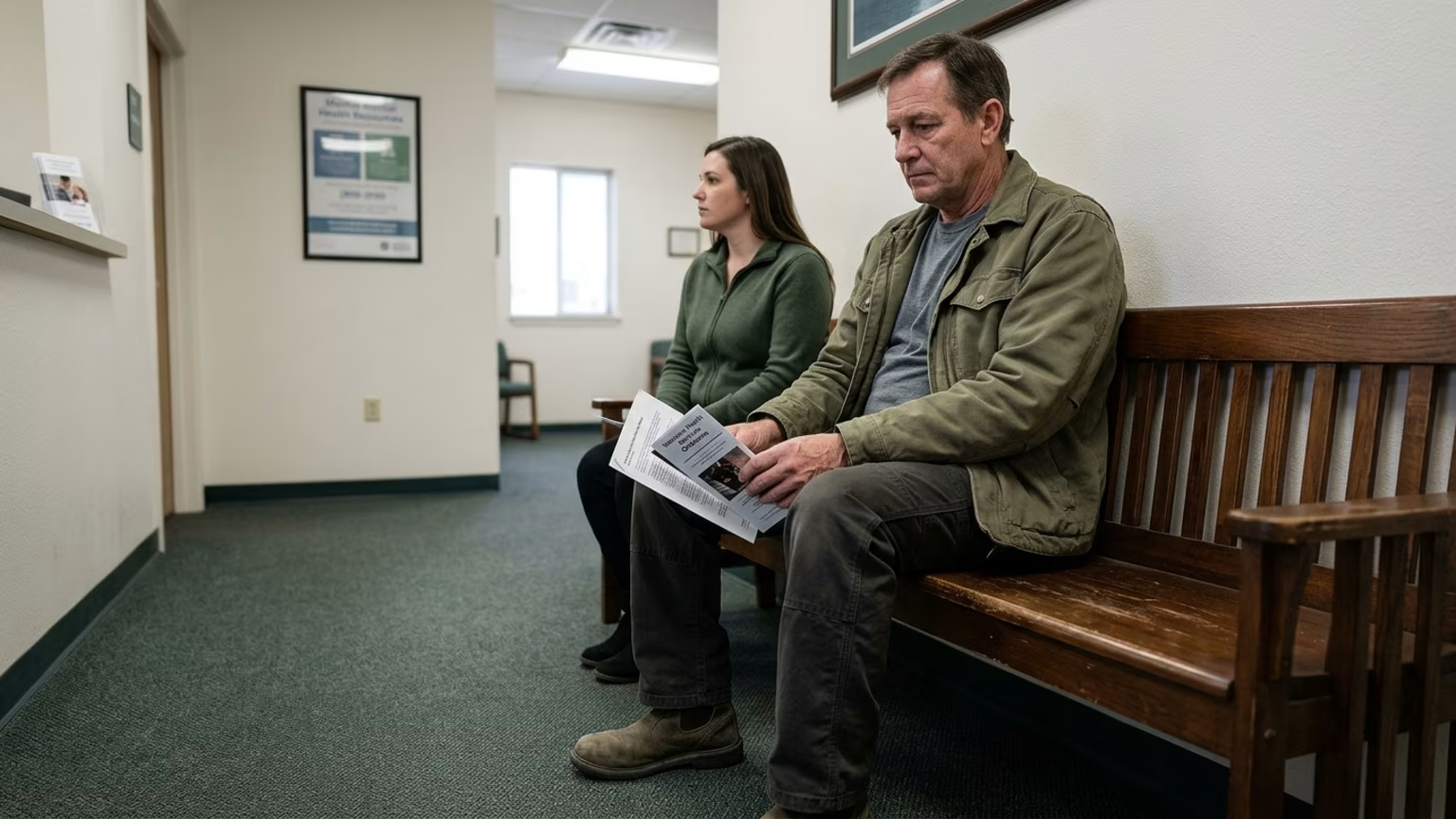
Oklahoma lawmakers recently reviewed access barriers and average mental health appointment waits for veterans. Learn how these factors impact health decisions.


NYU Langone Health details an integrated preventive care model for veterans, connecting primary care, nutrition, and mental health support during transition.

A 2026 study found highly resilient WTC responders show stronger reward-circuit brain activity. Learn how positive anticipation impacts long-term trauma recovery.
Build better habits around strength, recovery, sleep, hormones and healthy aging with practical guidance for active military personnel and veterans.
Explore BattleVet