

A San Diego report examined VA mental health wait times and emergency care access. Learn how veterans can navigate scheduled appointments and crisis pathways.





If you or a veteran you know is in immediate crisis, help is available right now. Call 911 for immediate danger. You can also call 988 and press 1 for the Veterans Crisis Line, or text 838255. You do not need to be enrolled in VA health care to use the crisis line.
On September 16, a retired Navy bomb-disposal expert and two of his family members were found dead in their San Diego home. The San Diego Union-Tribune reported that the deceased included his wife and their 13-year-old daughter. Police investigated the tragedy as a suspected murder-suicide.
Following the deaths, relatives told the newspaper that the wife had driven her husband to a VA facility for emergency mental-health treatment that same day. The relatives stated that the facility turned them away. VA spokesperson Quinn Slaven disputed the family's account. Slaven stated that the agency could not discuss the specific case due to privacy concerns but emphasized that VA facilities offer same-day emergency mental-health care to veterans who need it.
This tragic report brings attention to the critical difference between scheduled mental health care and emergency crisis services. For active personnel and veterans, understanding exactly how to access different levels of care is a necessary part of maintaining health and capability. A reported wait time for a routine appointment does not mean that emergency services are unavailable. Veterans and their families need clear information about their options when immediate support is required.
We know from our own team's experience that true physical and mental readiness requires a structured approach to longevity. I remember waking up after a poor night of sleep and realizing that my training recovery was taking much longer than it used to. I realized that physical readiness requires a dedicated approach to sleep and hormonal health. That same principle applies directly to mental resilience.
Relying solely on grit to manage stress is not a sustainable strategy for active personnel or veterans. Engaging with healthcare systems before symptoms become severe is a necessary part of a comprehensive health plan. Veterans who proactively schedule check-ins can build a strong relationship with a provider. This approach eliminates the stress of navigating a complex system for the first time during a difficult moment.
Many veterans hesitate to schedule medical appointments until a minor issue becomes a major operational roadblock. This approach often leads to frustration when non-urgent care queues are long. Scheduling early allows individuals to bypass the stress of sudden wait times for routine check-ups. Building these steady habits creates a strong foundation for both physical and mental performance.
Proper planning is an essential aspect of responsible veteran life management. Active personnel are trained to maintain their gear long before a deployment begins. That identical mindset must apply to personal health and medical scheduling after leaving the service. Veterans who establish a relationship with a provider early face fewer administrative hurdles later.
A routine appointment delay should never discourage a veteran from seeking help entirely. The system distinguishes between routine care and emergency interventions for a very specific reason. Understanding this distinction empowers former service members to take charge of their own health outcomes. Our team knows that physical conditioning and mental clarity are two sides of the same coin.
The San Diego report highlighted significant differences in wait times based on a patient's status and their specific location. According to VA data cited by the Union-Tribune, established patients seeking individual mental-health care in San Diego County faced reported waits of 9 to 18 days. New patients faced a much wider range of potential delays. These new patients experienced reported waits spanning 25 to 76 days.
Wait times for established patients varied notably across local facilities in the region. These local wait times included 9 days in Kearny Mesa and Oceanside. Patients waited 10 days at the Rio center in Mission Valley and the Escondido clinic. The data showed waits of 12 days at the La Jolla VA medical center and 18 days in Chula Vista.
The article also cited a Vet Voice Foundation study that examined broader wait time trends across two specific three-month periods. The study reported that individual mental-health treatment waits rose from 27 days in the period of August to November 2025 to 27.4 days in the period ending February 20, 2026. The same foundation study found that group-therapy waits increased from 17.2 to 29 days during that identical timeframe. Furthermore, Vet Voice reported that 90 percent of the 21 centers it tracked acknowledged severe physician shortages.
The VA strongly challenged the Vet Voice study and described the research as flawed and biased. The agency argued that the research used incomplete data, focused on a small share of specialty services, and treated clinics of different sizes equally. VA spokesperson Quinn Slaven provided alternative national figures for new patient wait times to present a different perspective. Slaven reported average waits for new patients of 20 days in fiscal 2023, 19 days in fiscal 2024, and nearly 16 days under the second Trump administration.
Slaven also noted that the VA completed a record 15.5 million mental-health appointments in the last fiscal year. These conflicting viewpoints reflect ongoing debates about staffing and systemic capacity within veteran healthcare facilities. While independent researchers point to localized shortages, the VA maintains that patient services remain robust. Clear communication about these realities helps veterans set accurate expectations for their care timelines.
Navigating veteran lifestyle and healthcare requires knowing exactly where to turn during a sudden crisis. The VA's Oklahoma City guidance explicitly directs people facing an emergency to call 911, go to the nearest emergency department, or go directly to a VA medical center. Using a civilian emergency department is a completely valid choice when immediate physical safety is the priority. A veteran does not need to be actively enrolled in VA health care to receive immediate assistance through the Veterans Crisis Line.
Official VA crisis guidance instructs veterans to call 988 and press 1, text 838255, or use the online chat feature. These emergency resources operate continuously and remain completely separate from the scheduling systems used for routine clinical care. Knowing these distinct pathways can prevent confusion when time is critical. Veterans must recognize that long wait times for routine appointments do not apply to urgent crisis care.
In addition to professional emergency services, implementing practical safety measures at home is a recommended and highly effective step. This process includes safely storing medications and securing firearms in the home. Means-restriction steps should always be arranged collaboratively with a trusted family member, friend, or professional clinician. Taking these concrete actions during routine periods can help ensure a much safer environment if a sudden challenge arises.
Former VA San Diego Healthcare System director Jeff Gering noted that mental-health symptoms can vary substantially and unpredictably. This unpredictable variability can make it difficult for friends and family to recognize when immediate intervention is required. Having established safety plans and clear communication channels reduces the burden on loved ones during a crisis. Preparation is a core component of overall military health management.
Veterans can also access non-VA community support options for their ongoing recovery care. The Union-Tribune reported on the Headstrong Project, which provides outpatient trauma care for veterans and transitioning service members. The news article reported that the organization does not provide emergency care. Its chief clinical officer stated that the average time from phone intake to a first appointment was 12 days.
These community organizations offer valuable supplemental services for veterans seeking steady, non-urgent treatment routines. Local peer networks offer another layer of engagement for those transitioning out of active service. Tom Moore, a combat veteran and local American Legion leader, noted that some veterans feel more comfortable opening up to peers rather than clinical staff. He described the Legion's Be the One program as an initiative to recognize when someone may be in trouble and connect them with safety and support.
Navy veteran and San Diego Veterans Coalition volunteer Ron Stark emphasized that veterans often need targeted help navigating civilian life and finding appropriate services. He stressed that while robust support is absolutely available, veterans may need encouragement to actively engage with it. Community resources serve as an important bridge between individual isolation and structured clinical care. Building these connections early can significantly improve long-term well-being and health outcomes.
As healthcare systems continue to evolve, the distinction between routine appointment scheduling and immediate emergency access will remain a critical focus for military communities. With ongoing debates about clinical staffing levels, facility capacity, and the necessary role of community organizations, how will the VA and external support networks adapt to ensure every veteran receives timely care without unnecessary administrative delays?
Follow BattleVet for practical guidance on military and veteran health, strength, recovery, testosterone, sleep and healthy aging. Stay connected for new articles, research backed insights and clear information to help you stay capable for the years ahead.


Reviewing the September 2026 missile strike in the Strait of Hormuz, and why returning to duty requires ongoing monitoring for traumatic brain injuries.

Recent reports highlight how sailors maintain strength and cardiovascular training during submarine deployments using limited space and minimal equipment.
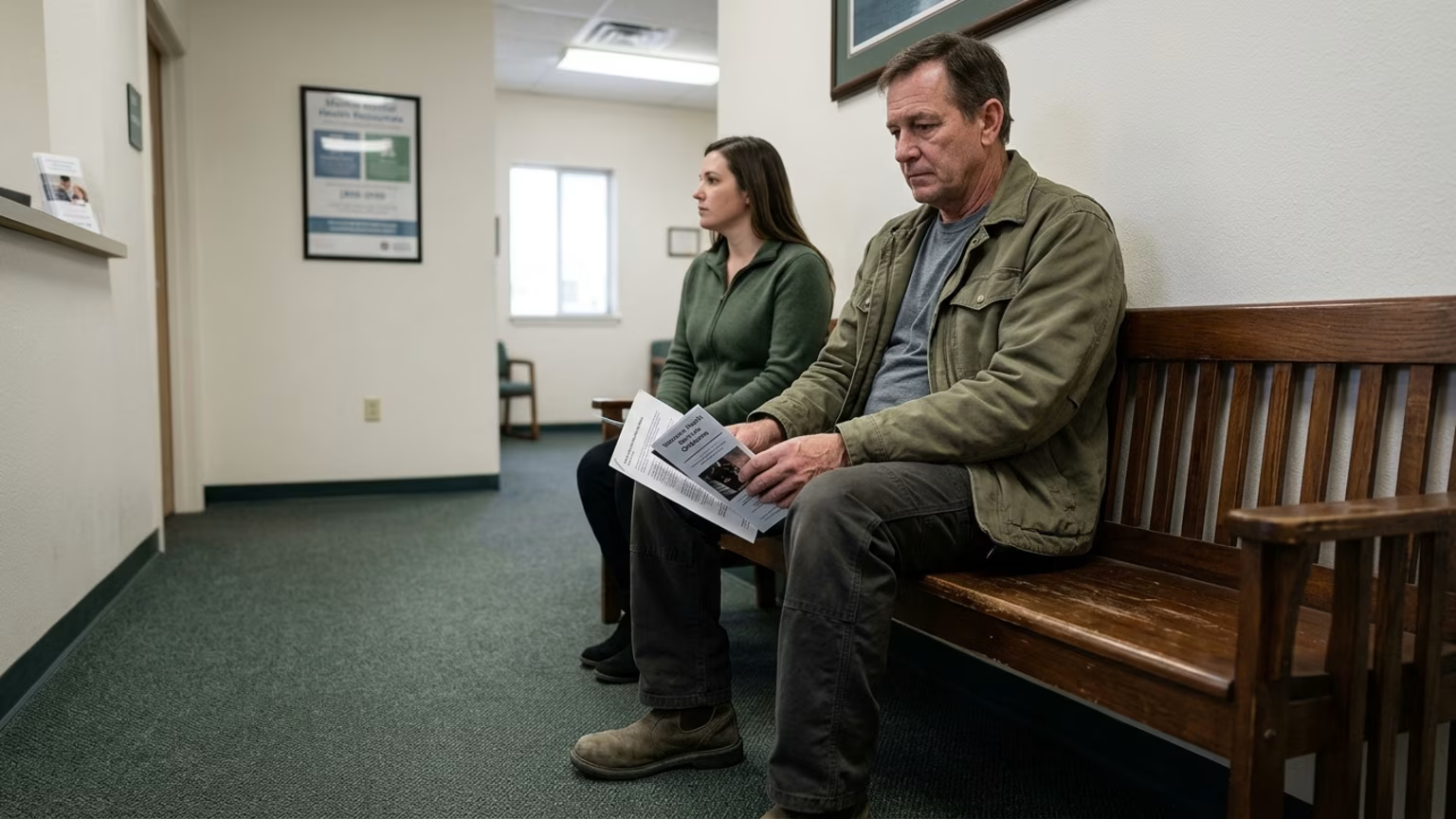
Oklahoma lawmakers recently reviewed access barriers and average mental health appointment waits for veterans. Learn how these factors impact health decisions.
Build better habits around strength, recovery, sleep, hormones and healthy aging with practical guidance for active military personnel and veterans.
Explore BattleVet