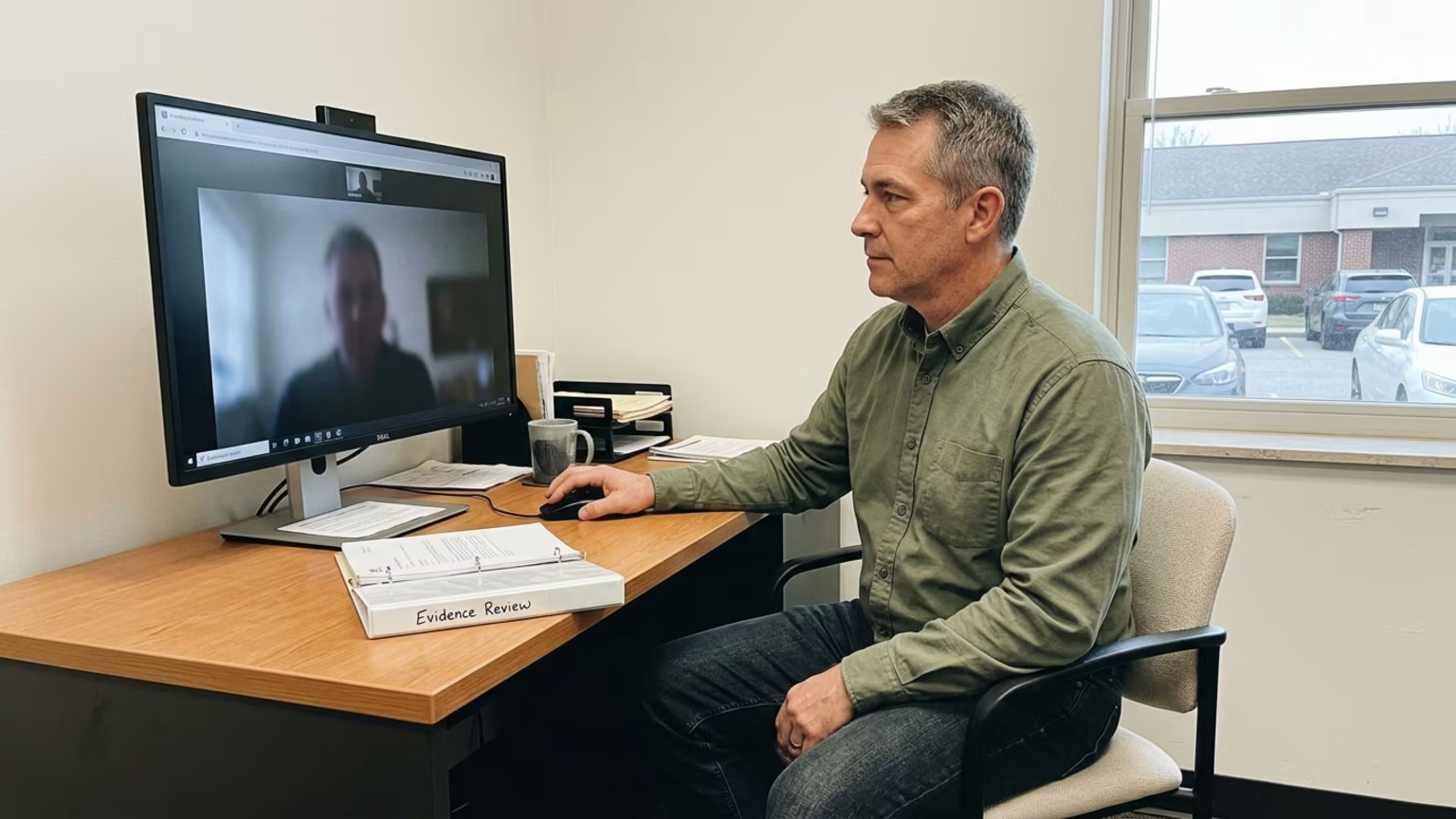

A September 2026 clinical digest reviews the association between substance use and suicidality among women veterans, alongside new data on telehealth outcomes.





If you or someone you know is in immediate danger, please call 911. For urgent crisis support at any time, veterans and concerned individuals can call 988 and press 1. You can also text 838255 or use the online Veterans Crisis Line chat. Enrollment in Veterans Affairs health care is not required to access these services.
In September 2026, the American Psychiatric Nurses Association released a clinical digest highlighting two significant veteran health findings. The digest reviewed an analysis linking substance use with suicidality among women veterans. It also summarized a large comparative study that examined video, telephone, and in person mental health care. These findings offer specific insights into how healthcare providers assess risk and deliver treatment to former service members.
These clinical updates provide practical context for active personnel and veterans who want to make informed health decisions. Historically, medical systems have sometimes treated mental health distress and substance habits as entirely separate issues. The new association between substance use and mental health risks highlights the need for comprehensive medical evaluations. Clinicians are encouraged to ask directly and nonjudgmentally about alcohol and medication use when assessing patients.
This direct assessment is especially important when a veteran presents with depression, trauma symptoms, or a recent personal crisis. This integrated approach ensures that doctors understand the complete operational reality of a patient's daily life. It shifts the focus from managing isolated symptoms to supporting the whole individual. Open communication builds trust and allows medical professionals to offer more accurate guidance.
Recognizing the full picture of physical and mental health is essential for maintaining long term capability. I remember waking up after a poor night of sleep and realizing that my training recovery was taking much longer than it used to. I realized that readiness is more than just pushing through the fatigue. It requires honest assessments of our daily habits and coping mechanisms, which completely shifted how I view long term capability.
Our team knows that identifying underlying stressors early prevents larger health complications down the road. This comprehensive perspective provides clarity for veterans seeking consistent military health guidance. The additional findings on telehealth show how different appointment formats affect access to this necessary care. Providing multiple avenues for treatment ensures that veterans can connect with providers without unnecessary friction.
The American Psychiatric Nurses Association summary included an analysis of data collected through the National Survey on Drug Use and Health. This specific review focused on survey responses gathered between 2015 and 2019. The analysis found that women veterans had higher odds of suicidality than their civilian peers. The organization reported that substance use may predict suicidality in this specific population.
Because this conclusion stems from an association found in survey data, it does not prove that substance use directly causes suicidal behavior. The data simply indicates that substance use acts as a potential risk marker that warrants careful attention during medical visits. It does not establish a universal screening threshold or a predictive test for all patients. Instead, it supports asking clear questions to identify those who might need additional support.
This finding aligns with a separate 2026 analysis of National Survey on Drug Use and Health data spanning a longer period. That separate research evaluated survey data from 2014 through 2023. The study reviewed records from 544,488 adults in the United States, a group that included 19,047 people with prior military service. Researchers found that alcohol and opioid combined use was associated with suicidal behaviors.
Among adults with prior military service, the adjusted association for this specific concurrent use was an odds ratio of 1.99. The findings carried a 95 percent confidence interval of 1.36 to 2.92. This reinforces the value of asking patients about combinations of substances rather than checking a single category. Understanding combined use patterns helps clinicians provide more effective and dignified medical care.
The digest also reviewed a retrospective comparative effectiveness analysis regarding telehealth access. This evaluation utilized Veterans Affairs administrative data from July 2021 through October 2022. The final research cohort included 813,699 veterans who had completed at least three outpatient mental health appointments. Researchers grouped patients according to the specific modality used for more than half of their outpatient visits.
The group consisted of 42.2 percent predominantly video users, 37.5 percent predominantly in person users, and 20.3 percent predominantly telephone users. Researchers found that appointment completion rates were notably higher among video users. Exactly 71.1 percent of scheduled appointments were completed by the video group. This compares with 68.0 percent for in person care and 68.4 percent for telephone care.
After making statistical adjustments, appointment completion was 4.1 percentage points higher with video than with telephone care. It was also 3.6 percentage points higher than with in person care. These differences show that video options can effectively reduce missed appointments for established patients.
Over one year of follow up, unadjusted mental health hospitalization rates varied distinctly by modality. The rates were 0.9 percent among predominantly video users, 2.1 percent among predominantly in person users, and 1.6 percent among telephone users. Researchers attempted to account for baseline differences between these groups. They adjusted the data for demographic characteristics, socioeconomic status, rurality, and broadband access.
They also adjusted for psychiatric and medical comorbidities, prior health care use, and facility characteristics. After these thorough adjustments, video care was associated with a 0.5 percentage point lower expected probability of mental health hospitalization than both telephone and in person care. Video appointments were also associated with fewer mental health emergency department visits over the study period. The adjusted average treatment effect was negative 0.006 compared with telephone care.
It was negative 0.005 compared with in person care. The adjusted association with suicidal behaviors was a much smaller reduction. The effect was negative 0.003 for video compared with telephone care, and negative 0.001 compared with in person care. These small but measurable outcome advantages demonstrate the potential value of video modalities in routine veteran lifestyle and healthcare management.
These recent clinical findings reinforce the importance of combined assessments during routine medical appointments. Patients should answer substance use questions honestly when discussing their physical or mental health with a physician. Alcohol, prescription medications, opioids, stimulants, and cannabis are all clinically relevant when a provider evaluates overall well being. Open communication about these substances helps doctors form an accurate picture of a veteran's immediate needs.
A useful medical appointment should evaluate multiple overlapping factors simultaneously. Clinicians should evaluate suicidal thoughts, substance habits, and depression alongside sleep quality and physical pain. Evaluating these elements together prevents doctors from focusing too narrowly on a single symptom. It allows medical teams to address immediate safety concerns while building a sustainable recovery plan.
When managing health risks, securing the home environment is a practical step that supports overall safety. Proper storage of firearms and secure organization of prescription medications are critical components of a comprehensive care strategy. These protective measures are most effective when arranged collaboratively with a trusted family member, close friend, or clinical provider. Taking proactive steps to secure medications and firearms reduces immediate risks during periods of acute stress.
The new research also supports treating video care as a valuable access option rather than a universal promise. Video appointments can remove significant logistical barriers. They are worth discussing when distance, mobility issues, caregiving responsibilities, or strict work schedules make physical visits difficult. In the large retrospective study, video care was associated with higher appointment completion rates and modestly better measured outcomes.
However, the observational nature of the research means that patient differences may explain part of the observed advantage. Veterans who selected video care tended to be healthier and better resourced overall. They generally had fewer unrelated medical or surgical hospitalizations. Statistical adjustments cannot completely eliminate these residual differences between the groups.
The study excluded patients who did not have a dominant care modality, those with too few visits, and individuals missing essential data covariates. This means the findings apply most directly to veterans who already have established outpatient mental health care routines. Because the data came specifically from the Veterans Affairs system, the conclusions also have limited generalizability beyond the veteran population. A completed video appointment does not automatically guarantee immediate symptom improvement or long term recovery.
Patients should always choose the appointment modality that best supports their safety, privacy, and clinical requirements. Physical in person visits may be strictly preferable when someone lacks reliable technology or cannot speak privately at home. They are also necessary when a patient requires a clinical examination, intensive intervention, or a higher level of supervision. Telephone care remains a highly important alternative for individuals who lack reliable broadband access or compatible smart devices.
Understanding these available options helps veterans integrate their medical support into a broader approach to managing sleep and stress resilience. Providing multiple care pathways ensures that patients receive the right support at the right time. It respects the diverse operational realities of life after military service.
As healthcare systems continue to adapt to new evidence, the integration of thorough substance assessments and flexible telehealth options will likely evolve. Will future medical research identify specific video care protocols that work best for distinct veteran subgroups, or will blended models of in person and remote care become the new standard for military health?
Follow BattleVet for practical guidance on military and veteran health, strength, recovery, testosterone, sleep and healthy aging. Stay connected for new articles, research backed insights and clear information to help you stay capable for the years ahead.


More than 100 women veterans advocated for expanded VA mammography access and midlife health support at the 2026 Women Warriors Summit in Washington, D.C.


New male contraception research highlights how hormonal treatments suppress sperm production, providing key context for veterans managing testosterone therapy.
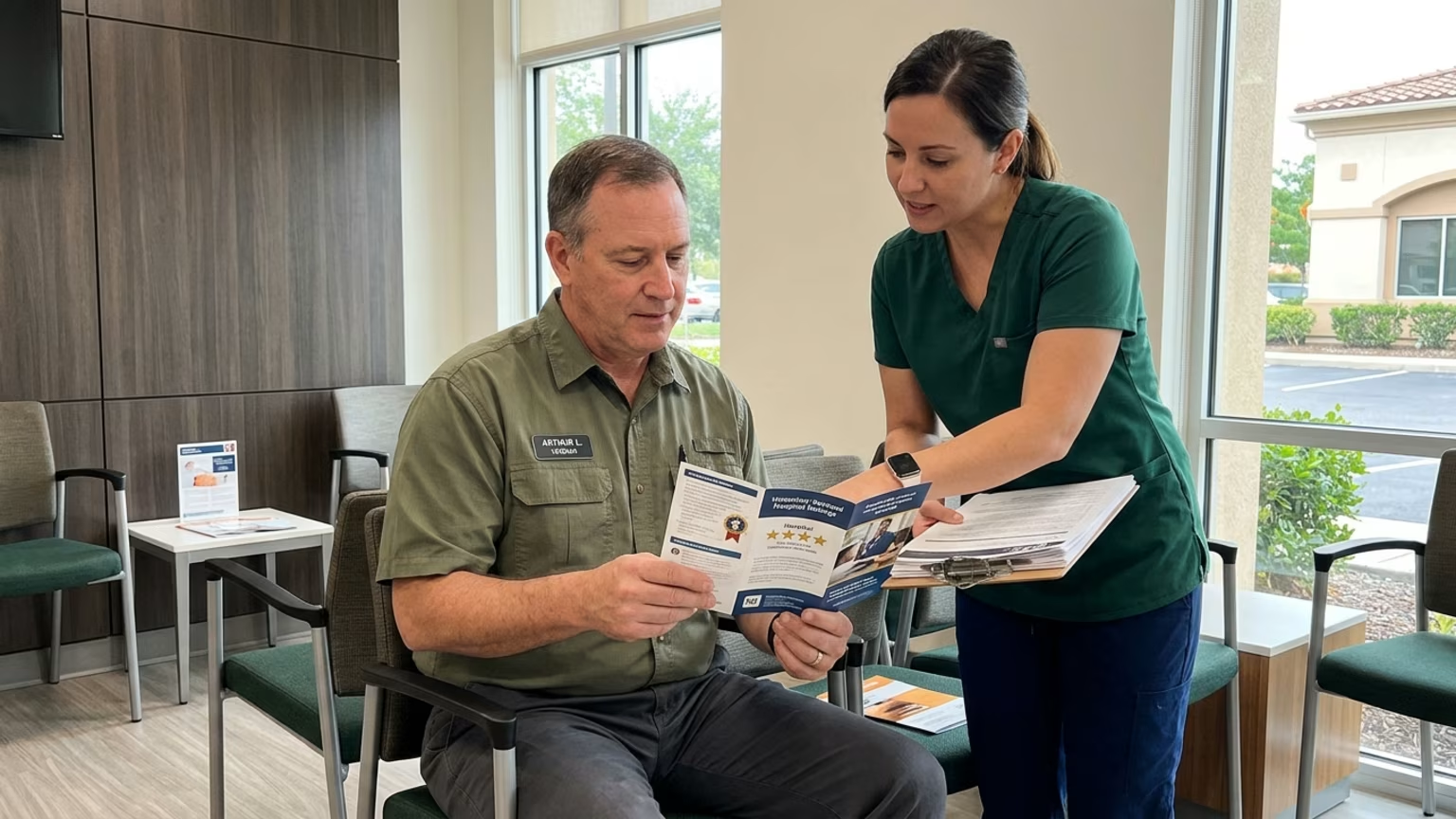
A new CMS report reveals 78 percent of VA hospitals earned four or five stars in overall quality. Learn what these ratings mean for your healthcare choices.
Build better habits around strength, recovery, sleep, hormones and healthy aging with practical guidance for active military personnel and veterans.
Explore BattleVet