

More than 100 women veterans advocated for expanded VA mammography access and midlife health support at the 2026 Women Warriors Summit in Washington, D.C.





If you are in immediate danger, call 911. If you need immediate support, dial 988 and press 1 for the Veterans Crisis Line, or text 838255.
Between September 21 and 24 of 2026, more than 100 women veterans traveled to Washington for the Wounded Warrior Project’s 2026 Women Warriors Summit. The attendees met with more than 120 congressional offices to present proposed legislation affecting women veterans. According to the Wounded Warrior Project, the principal legislative priorities were the VOICE for Women Veterans Act, the Mammography Access for Veterans Act, and provisions of the Take Care of America’s Veterans Act. These measures seek to address health care gaps for veterans across the country.
The proposed Mammography Access for Veterans Act would expand and strengthen mammography services throughout the Department of Veterans Affairs. Summit participants also advocated for the VOICE for Women Veterans Act. This act would strengthen research and data collection on women veterans with the stated goal of improving health outcomes. Additionally, Wounded Warrior Project representatives said the Take Care of America’s Veterans Act provisions would address support for military sexual trauma survivors. These provisions also focus on veteran mothers and women experiencing midlife health challenges.
The Department of Veterans Affairs describes women veterans as the fastest-growing veteran population in the United States. As this population grows, healthcare systems must adapt to provide specialized preventive care and menopause-related health services. Treating veterans as a single uniform population often misses the specific physical transitions women face after service. Understanding these distinctions is critical for maintaining long-term health and capability.
I remember waking up after a poor night of sleep and realizing that my training recovery was taking much longer than it used to. I realized that readiness is more than just pushing through the fatigue. It requires a dedicated approach to sleep and hormonal health, which completely shifted how I view long term capability. Midlife health challenges require targeted care, and current healthcare frameworks must evolve to support those needs. You can learn more about these transitions in our military health articles.
The 2026 summit highlights a broader shift toward women-veteran-specific policy advocacy. Wounded Warrior Project Chief Program Officer Jen Silva stated that women veterans’ service-based perspectives should remain central to policies affecting them. Silva noted the summit was intended to build participants' advocacy skills and momentum for work within their own communities. Advocacy helps clarify where current VA health systems might need stronger infrastructure.
For service members transitioning out of the military, this focus on tailored care emphasizes the importance of early preparation. Transitioning personnel should identify their VA women’s health point of contact early in the process. Confirming enrollment and primary care access can help maintain continuity for preventive screenings and referrals. Maintaining accurate medical records is an essential part of navigating veteran lifestyle and healthcare.
The Wounded Warrior Project launched its Women Warriors Initiative in 2020 to better understand the evolving needs of women veterans. The organization reported that summit participation had doubled since 2023. Attendees at the 2026 event represented 48 states and every branch of the U.S. military. Wounded Warrior Project Warrior Advocate Leader Ashley Trevino noted the event provided an opportunity to share personal experiences with lawmakers.
Trevino characterized this type of advocacy as a practical way to give back to the veteran community. The summit included comprehensive advocacy and leadership training for the attendees. Participants received policy education and preparation for continued community action after the event concluded. Beyond the summit attendance figures, external research outlines the specific challenges driving this policy push.
A VA research abstract states that more than one in three women veterans experience intimate-partner violence. This statistic emphasizes the distinct need for trauma-informed support. Military sexual trauma, intimate-partner violence, post-traumatic stress, reproductive health, and breast-cancer screening are related areas of women’s health. However, these distinct issues are not interchangeable and require specific care models.
Some facility-level data suggests progress in specific preventive screening areas. VA facility performance pages indicate that breast cancer screening is rated better than community comparison data at several locations. These locations include the Raymond G. Murphy VA Medical Center and the C.W. Bill Young VA Medical Center. However, these facility-level ratings do not guarantee uniform national access or eliminate all local scheduling barriers.
The proposed legislation clarifies steps women veterans can take regarding their current health decisions. Veterans should clearly distinguish between an advocacy proposal and an available national benefit. The Mammography Access for Veterans Act represents a priority presented to lawmakers rather than a confirmed nationwide change in services. Women seeking preventive care should proactively ask their VA primary care team what breast cancer screening schedule is appropriate for them.
Practical mammography access often depends on referral processes, facility availability, and community care coordination. Patients should ask how to arrange follow-up care if imaging identifies a concern. The VA continues to conduct breast cancer awareness events and women-veteran outreach activities. This includes multiple October 2026 events organized by the Orlando VA Healthcare System. For those balancing healthcare with family responsibilities, the VA has been expanding women-veteran outreach through local healthcare events and specialized programming.
A September 2026 VA article described weekly virtual talking circles designed specifically around the experiences of women veterans. These virtual formats are explicitly designed to reduce participation barriers. Virtual options can eliminate travel requirements and the need to arrange child care around an appointment. The VA also provides dedicated support for military sexual trauma survivors within its women-veteran programming.
Veterans who have experienced military sexual trauma can ask their care teams about MST-sensitive mental health care. These resources often include telehealth options and peer support groups designed around survivors' experiences. Veterans who want to influence future policy can look to the summit model as a practical framework. Staying informed about preventive care and healthy aging and longevity remains vital for long-term capability.
As advocacy efforts for women veterans gain visibility, the focus shifts to how healthcare systems will implement structural changes. Will future legislative actions secure the necessary funding and national mandates to ensure uniform mammography access and specialized midlife health support for all women veterans?
Follow BattleVet for practical guidance on military and veteran health, strength, recovery, testosterone, sleep and healthy aging. Stay connected for new articles, research backed insights and clear information to help you stay capable for the years ahead.


New male contraception research highlights how hormonal treatments suppress sperm production, providing key context for veterans managing testosterone therapy.

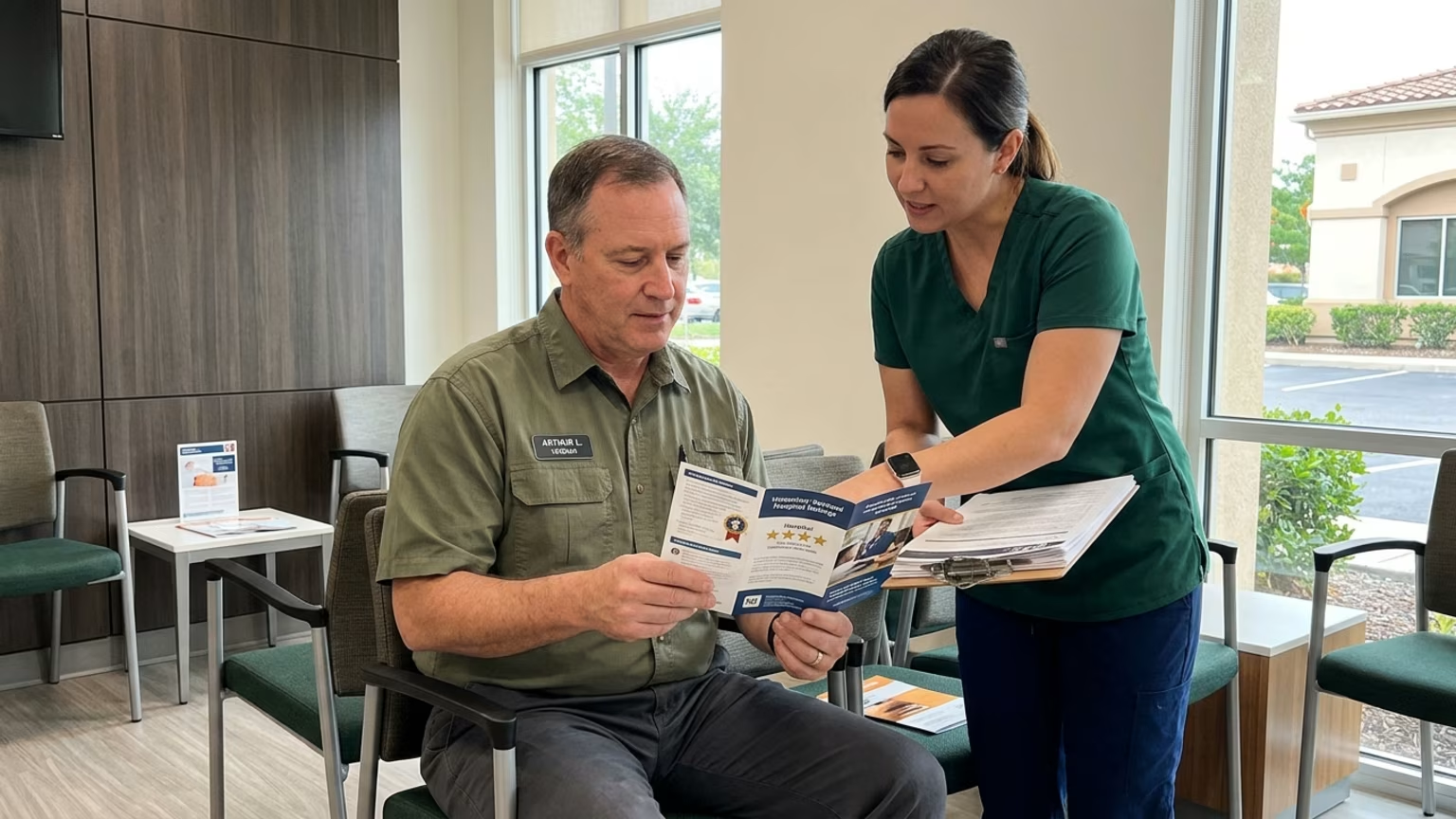
A new CMS report reveals 78 percent of VA hospitals earned four or five stars in overall quality. Learn what these ratings mean for your healthcare choices.
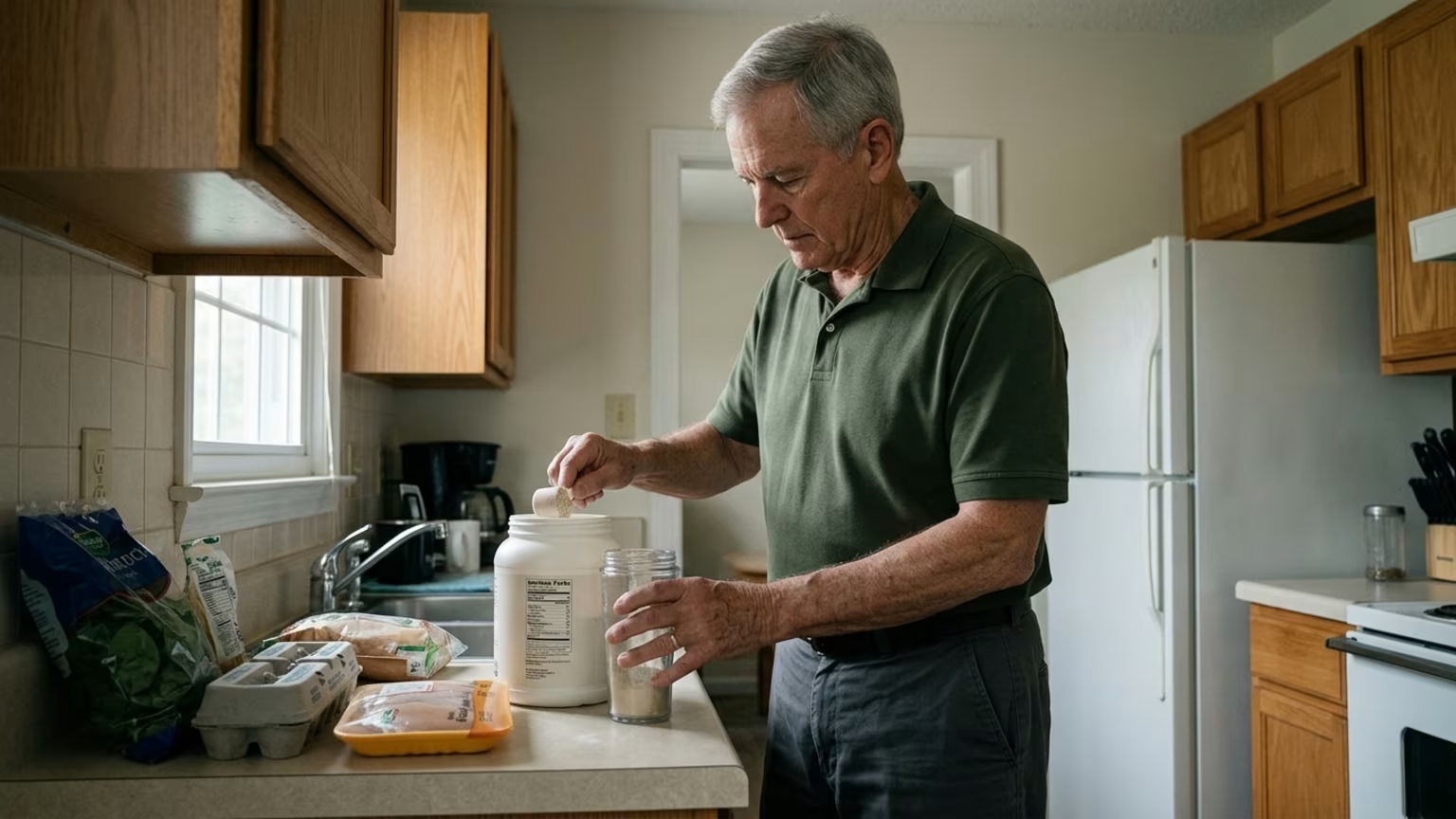
A Durham VA study suggests older veterans with obesity and prediabetes who double their protein intake better preserve physical function during weight loss.
Build better habits around strength, recovery, sleep, hormones and healthy aging with practical guidance for active military personnel and veterans.
Explore BattleVet