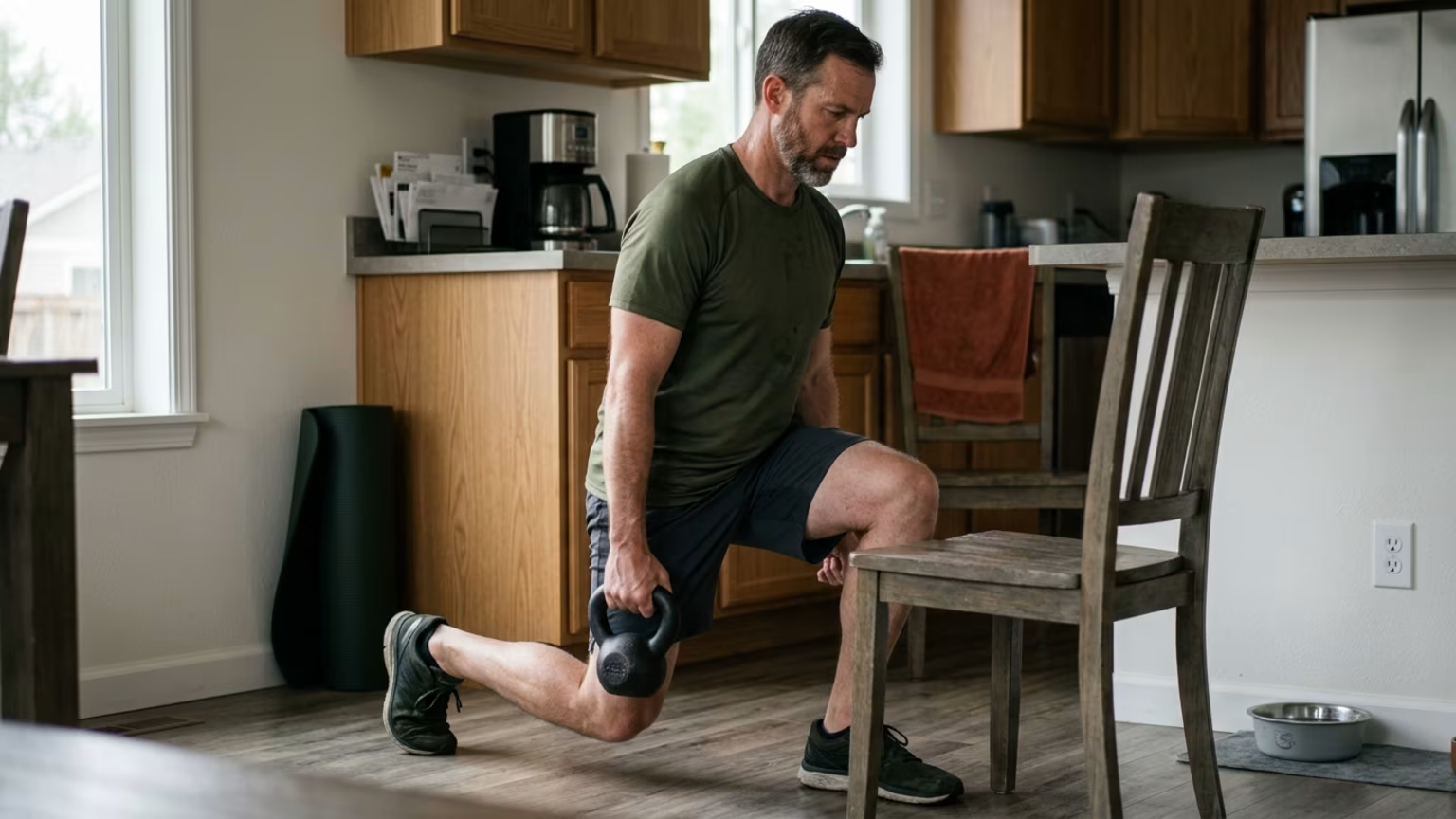

Recent reports highlight a 10-minute daily resistance habit for adults over 40. Learn how brief fitness routines compare to federal strength guidelines.





In early October 2026, Fox News reported on a new practical approach to resistance training. Fitness entrepreneur Carl Daikeler suggested that adults over 40 can maintain muscle and function using brief daily workouts. Daikeler recommended a targeted 10-minute daily resistance routine as an accessible habit. The news report clarified that this specific approach is one person's suggestion rather than a clinical finding.
This 10-minute routine sits alongside federal guidance calling for muscle-strengthening activities at least two days a week. Federal guidelines provide a comprehensive baseline for physical health by requiring regular work for all major muscle groups. The Fox News article noted that this strength work must be accompanied by regular aerobic activity. While brief daily habits build consistency, they do not automatically fulfill all comprehensive exercise requirements.
Finding time for consistent physical activity is a common challenge for active military personnel and veterans. The transition from mandatory physical training to civilian life often disrupts established fitness routines. This disruption makes practical resistance training guidance highly relevant for long-term capability. Maintaining muscle mass directly impacts physical independence and overall quality of life.
The shift from active duty requirements to civilian life requires a fundamental change in fitness philosophy. Service members are accustomed to physical training schedules that demand high volume and intense effort. Replicating that intensity without a unit structure often leads to burnout or joint injury. A brief and manageable resistance habit offers a more sustainable path forward.
This practical approach helps aging adults maintain their capability without overwhelming their daily schedules. Adapting to a civilian lifestyle means finding routines that fit around work and family obligations. Consistency over years is far more beneficial than sporadic months of extreme training. Veterans need strategies that preserve their physical health for the long term.
A September 2026 report from the Military Officers Association of America (MOAA) highlighted the realities of age-related muscle decline. This specific condition is known as sarcopenia. The loss of muscle mass and function can compromise health after military service. Daikeler described muscle as the "coal" of the body, while cardio is what "stokes" it.
Balancing these two physical elements is essential for staying strong. The VA Tennessee Valley Healthcare System emphasizes the importance of finding new ways to stay active. They offer recreation therapy opportunities that are tailored to the physical abilities of veterans. Their clinical approach highlights that physical activity must match individual goals and interests.
A single rigid routine is rarely the right fit for an entire population. Adaptability is crucial for veterans managing past injuries or joint limitations. Establishing a sustainable exercise habit requires practical entry points. Daikeler calls his brief approach a way to establish, build, and maintain muscle over time.
The goal is to support consistency without requiring long gym sessions. However, these brief routines should not be viewed as a complete replacement for a well-rounded fitness program. Veterans must ensure their physical habits align with broader health objectives. Our articles covering healthy aging offer additional context on maintaining overall wellness during these transitions.
The MOAA report outlined specific data on how muscle loss progresses with advancing age. They cited a major study that followed adults for more than a decade. The researchers found sarcopenia in 5 percent of people in their late 60s. That rate climbed significantly to 36 percent by the time participants reached their late 80s.
These exact figures demonstrate a clear physical trajectory if strength is not actively maintained. MOAA also shared results from a specific trial involving older former military men. The study tested the effects of pairing resistance training with targeted protein intake. Participants consumed 1.6 grams of protein per kilogram of body weight during the trial.
The combination of weight lifting and protein resulted in improved body composition and physical performance. The report specifically noted that this approach caused no kidney or liver harm in older adults with healthy kidney function. These verified findings validate the basic mechanics of muscle maintenance for aging populations. Adequate physical stimulus and proper nutrition are necessary to change a person's trajectory.
MOAA suggests a general daily protein range of 1.2 to 1.6 grams per kilogram of body weight for older adults. They recommend spreading this dietary intake across multiple meals to support physical recovery. Proper recovery and sleep strategies are essential for long-term physical resilience. Nutrition and rest determine how well the body adapts to new training habits.
Understanding the limits of these studies is also critical. The numerical sarcopenia estimates represent findings from one long-term study rather than universal rates for every population. Similarly, the safety findings regarding high protein intake carry an important medical qualification. The statement of no liver or kidney harm applies exclusively to older adults with healthy kidney function.
The recent reporting highlights a shift toward more accessible and adaptable training methods. Daikeler's suggested routine rotates muscle groups to avoid doing a full-body workout every single day. He recommends focusing on the chest, then the upper body, and finally the legs and glutes. This targeted rotation provides a low-barrier entry point for adults looking to rebuild a regular training habit.
Implementing a new training habit requires clear expectations about physical progression. The goal of a brief daily session is to stimulate the muscles frequently rather than exhaust them completely. Daikeler's recommendation to rotate muscle groups prevents excessive fatigue and allows for adequate recovery. This measured approach is particularly important for older adults managing joint wear from previous service.
Veterans must evaluate their own baseline fitness before adopting any new daily routine. Someone with extensive lifting experience might use these brief sessions as supplementary maintenance volume. Conversely, a beginner might find a 10-minute session perfectly challenging for their current capability level. The effectiveness of the routine depends entirely on applying appropriate resistance during the exercises.
However, readers must carefully distinguish between this brief daily habit and comprehensive federal guidelines. Federal guidance still prioritizes working all major muscle groups at least twice weekly. These guidelines also stipulate that strength work must be accompanied by regular aerobic exercise. A 10-minute lifting session is a helpful tool, but it does not replace cardiovascular training.
Both forms of physical exertion serve distinct and necessary roles in veteran health. MOAA provides a very straightforward framework for structuring these resistance training sessions. They recommend completing two to three dedicated strength sessions per week. These workouts should cover basic pushing, pulling, squatting, and hinging movement patterns.
The crucial requirement is using enough resistance to make the final repetitions genuinely hard. Effort intensity is the primary driver of physical adaptation and long-term muscle preservation. For veterans who find weight training intimidating, MOAA recommends working with a professional trainer or coach. Professional guidance can serve as a valuable investment in continued health and capability.
This aligns perfectly with the VA Tennessee Valley's focus on tailored recreational therapy for veterans. Veterans with physical limitations should seek individualized adaptations rather than forcing a standardized routine. Relying exclusively on a brief daily rotation might leave gaps in a veteran's overall fitness. While a 10-minute habit is an excellent starting point, comprehensive physical readiness requires more structure.
The VA's emphasis on tailored activity reinforces the need for individual judgment in fitness planning. A veteran with a shoulder injury might need to modify pushing movements to avoid pain. Another individual might need to focus heavily on leg strength to support knee stability. Recognizing these specific needs is vital for building a safe and effective exercise program.
Ultimately, fitness routines must serve the individual rather than forcing the individual to serve the routine. Following general guidelines provides a map, but the veteran must navigate their own terrain. Combining daily physical habits with focused strength sessions creates a robust defense against aging. Building this comprehensive routine requires patience, effort, and a willingness to adapt.
Incorporating the MOAA movement patterns ensures that all major muscle groups receive adequate stimulation. Veterans should aim to build a schedule that balances strength training, cardiovascular work, and proper recovery. Our resources on maintaining fitness and body composition provide additional context for structuring these routines. The key takeaway from this recent reporting is the importance of sustainable action.
Small daily commitments can help veterans overcome the friction of starting a new program. Once that habit is established, the focus can shift toward meeting the full federal guidelines for health. Consistency and effort matter far more than the specific duration of any single workout.
As physical training models move away from rigid gym schedules toward accessible daily habits, how will veteran healthcare systems integrate these adaptable routines into standard recovery programs?
Follow BattleVet for practical guidance on military and veteran health, strength, recovery, testosterone, sleep and healthy aging. Stay connected for new articles, research backed insights and clear information to help you stay capable for the years ahead.


An ABC investigation highlighted concerns over DVA-funded medicinal cannabis and esketamine prescribing for veterans, leading to tightened rules and oversight.


New European Association of Urology guidance outlines targeted early-morning testosterone, glucose, and lipid testing to properly evaluate men with symptoms.

A September 2026 review shows pre-workout caffeine improves endurance but can degrade sleep quality, requiring careful timing for military and veteran health.
Build better habits around strength, recovery, sleep, hormones and healthy aging with practical guidance for active military personnel and veterans.
Explore BattleVet