

A September 2026 review shows pre-workout caffeine improves endurance but can degrade sleep quality, requiring careful timing for military and veteran health.





In September 2026, a comprehensive analysis led by Joanna Grzelczyk of Lodz University of Technology reported findings on how coffee and caffeine impact physical capability. The review examined research published from 2000 through 2026. Researchers focused heavily on exercise performance, fatigue, muscle soreness, and physical recovery. The analysis concluded that pre-exercise caffeine improves endurance and reduces perceived fatigue.
To build this assessment, the researchers drew on human intervention studies indexed in PubMed, Scopus, and the Web of Science. They also evaluated existing systematic reviews and meta-analyses to form a complete picture of how the body responds to these compounds. While the immediate endurance benefits were clear, the review warned that poorly timed caffeine consumption can degrade essential sleep quality.
Active military personnel and veterans often balance demanding physical conditioning with irregular schedules. Caffeine frequently serves as a tool to maintain alertness and push through strenuous training sessions. The Lodz University of Technology review clarifies that caffeine alters perceived exertion rather than eliminating the true physiological workload. It blocks adenosine receptors involved in drowsiness, which makes high-intensity effort feel less difficult.
This mechanism is an important consideration for long-term physical capability. A service member might feel energetic enough to complete a rigorous workout. Yet, they are still accumulating heat strain, musculoskeletal stress, and systemic fatigue. Using a stimulant to mask exhaustion can lead to overtraining if restorative practices are neglected.
Military physical readiness relies on consistent recovery to repair tissues and adapt to physical stress. Sleep is the most critical component of this ongoing recovery cycle. The review cautioned that consuming caffeine before late-evening exercise may reduce sleep quality. This disruption can potentially impair overnight recovery and decrease next-day exercise capacity.
Army performance guidance specifically treats sleep as a fundamental readiness issue rather than an optional wellness concern. Modern integrated warfighter programs recognize that physical performance and restorative sleep are deeply interconnected. Evaluating how pre-exercise supplements interact with nighttime rest helps veterans make safer health decisions. Integrating these findings supports a more sustainable approach to military health.
According to the Seoul Economic Daily report on the review, relatively consistent performance benefits were observed at specific dosage ranges. The data indicated that doses of 3 to 6 milligrams per kilogram of body weight generally produced positive endurance results. For a typical 70-kilogram adult, this measurement equals approximately 210 to 420 milligrams of caffeine.
In the reviewed studies, participants commonly consumed their designated dose about 60 minutes before exercising. However, the review noted that caffeine absorption and onset vary according to the beverage form and the individual. This variance means that a dose providing immediate benefits for one person might take longer to activate for another.
The direct pre-exercise performance enhancement was primarily attributed to the isolated caffeine. While the review also discussed non-caffeine coffee compounds, their immediate impact on physical output was less definitive. Compounds like chlorogenic acid and trigonelline were noted as possible contributors to longer-term metabolic effects.
Specifically, these non-caffeine elements may play a role in managing oxidative stress, metabolism, and inflammation. However, the researchers emphasized that the immediate reduction in fatigue is driven by caffeine itself. Service members seeking a direct pre-workout advantage are relying entirely on the caffeine content rather than the broader profile of a coffee bean.
The review found mixed results regarding maximal strength, agility, and power. Because the evidence is inconsistent in these areas, the findings do not prove that coffee improves every type of military physical task. Personnel focusing heavily on explosive strength or agility drills may not experience the same reliable benefits as those conducting long-distance endurance training.
The researchers also examined post-exercise recovery data. Some reviewed studies suggested that taking coffee or caffeine alongside carbohydrates may support muscle-glycogen resynthesis when compared to consuming carbohydrates alone. This finding presents a potential nutritional strategy for demanding operational environments.
Additionally, the analysis raised the possibility that caffeine might help reduce post-exercise muscle soreness. The report did not provide a quantitative estimate, a definitive dose, or a specific timing protocol for this soreness reduction. Because the evidence remains tentative, it should not be presented as a guaranteed method for preventing muscle damage.
Because sleep is the principal trade-off, careful timing is essential for maintaining physical readiness. Army performance guidance recommends taking all available sleep opportunities and keeping sleep and wake timing steady. Consistent sleep schedules allow the body to recover efficiently from the physical stress of daily conditioning.
If nighttime rest is compromised by late training schedules or shift work, the guidance suggests using short strategic naps as a valuable recovery tool. Personnel should strictly plan their caffeine intake around these critical sleep windows. Consuming high doses of caffeine during a night shift may improve immediate output but severely limit restorative rest the following day.
Service members training late in the day must decide if an endurance boost is worth the risk of insomnia. A veteran returning to an exercise routine should prioritize restorative rest, especially if they are managing anxiety or existing sleep disturbances. Foundational recovery and sleep practices offer more reliable long-term benefits than temporary stimulant use.
The underlying review identified significant individual variability in how people respond to these compounds. Differences in CYP1A2-related caffeine metabolism, inherent sensitivity, and habitual caffeine intake dictate how effectively the body processes a pre-workout dose. A veteran who rarely consumes stimulants will experience a much sharper reaction than a daily coffee drinker.
The type of exercise, the duration of the session, and the timing of the workout also heavily influence the overall response. Due to this high level of variability, the 3 to 6 milligrams per kilogram range should be viewed as a research observation rather than a strict prescription. Personnel are encouraged to start with lower doses to safely gauge their personal tolerance.
Estimating a specific dose based merely on cups of coffee is highly unreliable. The actual caffeine content varies widely depending on the bean type, the roasting process, the brewing method, and the serving size. Service members should look for clear labeling to track their intake accurately.
The preliminary findings regarding glycogen resynthesis may be useful for individuals conducting multiple training sessions in one day. If rapid recovery is necessary for a second demanding activity, combining caffeine with carbohydrates could offer a slight metabolic advantage. This is particularly relevant during extended field exercises where turnaround times are short.
Still, this strategy should complement a comprehensive training and performance fueling plan rather than replacing proper nutrition. Whole foods and complete recovery meals remain the standard recommendation following intense physical output. Supplements should only serve to bridge gaps in an already sound nutritional foundation.
As military health programs continue shifting toward integrated strategies that prioritize both output and restoration, the relationship between supplements and sleep will require closer examination. Will future research establish individualized timing protocols that allow veterans to safely maximize their endurance without degrading the essential rest required for long-term capability?
Follow BattleVet for practical guidance on military and veteran health, strength, recovery, testosterone, sleep and healthy aging. Stay connected for new articles, research backed insights and clear information to help you stay capable for the years ahead.


An ABC investigation highlighted concerns over DVA-funded medicinal cannabis and esketamine prescribing for veterans, leading to tightened rules and oversight.

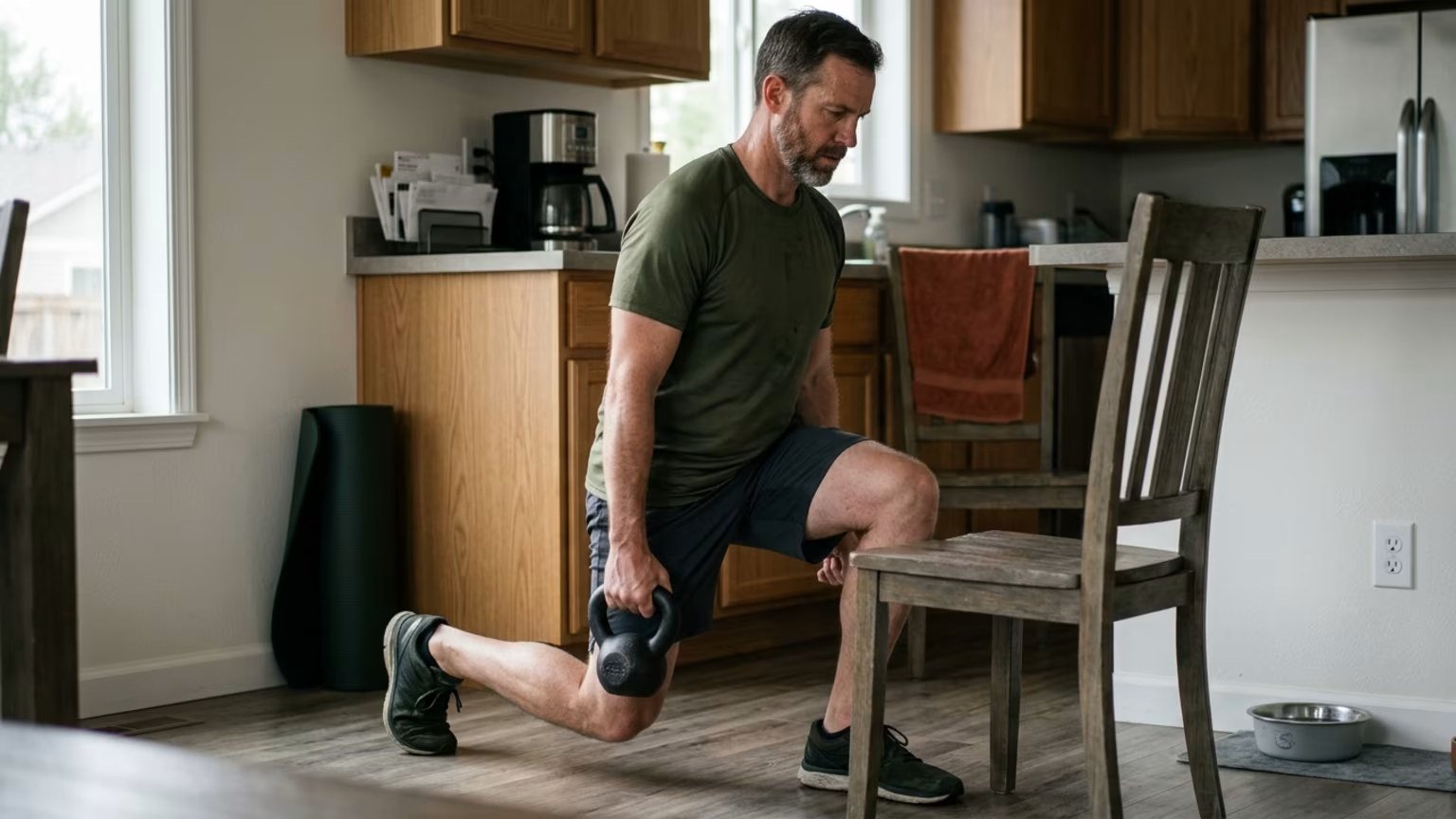
Recent reports highlight a 10-minute daily resistance habit for adults over 40. Learn how brief fitness routines compare to federal strength guidelines.

New European Association of Urology guidance outlines targeted early-morning testosterone, glucose, and lipid testing to properly evaluate men with symptoms.
Build better habits around strength, recovery, sleep, hormones and healthy aging with practical guidance for active military personnel and veterans.
Explore BattleVet