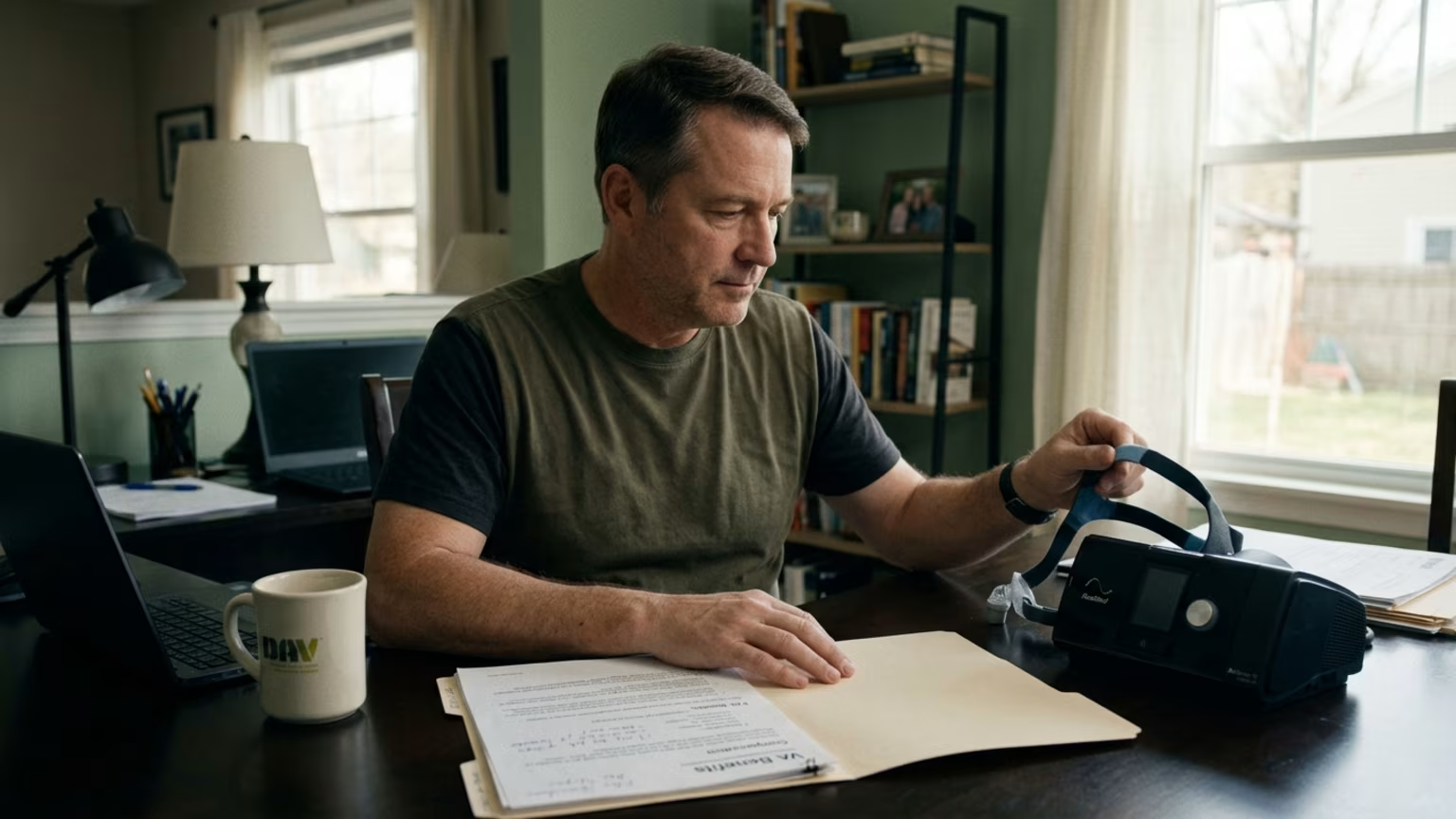

Disabled American Veterans (DAV) outlines how the VA evaluates sleep apnea. Learn the claims process, disability ratings, and long-term health implications.





The military often treats operating on zero sleep as a badge of honor, but ignoring chronic exhaustion will actively destroy your long-term physical capability. A veteran sits awake staring at the ceiling, convinced his gasping is just normal aging, and refuses to ask for help. This exact tension is why Disabled American Veterans (DAV) published an explainer on Aug. 24, 2026. The publication describes how veterans may establish service connection for sleep apnea and tinnitus while prioritizing their health.
Veterans frequently dismiss loud snoring, gasping for air, repeated awakenings and substantial daytime sleepiness as unavoidable consequences of their service. The traditional mindset encourages pushing through fatigue instead of seeking a proper medical evaluation. This flawed approach treats rest as a luxury rather than a fundamental biological requirement. By ignoring these warning signs, veterans allow a treatable condition to erode their physical capability and daily performance.
Transitioning back to civilian life often involves a steep learning curve regarding personal healthcare. During active duty, medical evaluations are heavily structured and mandated by command. Once discharged, former service members must navigate the healthcare system independently. This sudden shift often results in neglected care and dismissed symptoms. Many individuals simply stop tracking their physical recovery metrics entirely.
The consequences of this neglect compound over time and affect every aspect of daily living. A 2026 Military Medicine article links sleep deprivation to impairments in learning and processing speed. The same article notes associations with reduced reaction time and memory. It also highlights negative effects on vigilance, decision-making and reasoning. When you refuse to acknowledge poor sleep, you are actively compromising your cognitive function.
Furthermore, untreated sleep apnea places a massive burden on the cardiovascular system. The repeated oxygen deprivation forces the heart to work significantly harder during periods meant for rest. Medical professionals associate the condition with high blood pressure, heart disease and stroke. Treating the root cause of these breathing interruptions is a matter of basic physical preservation.
A significant misconception exists regarding the VA disability process. Many veterans believe that simply owning a breathing device automatically guarantees a high disability rating. They view the claims process as a financial transaction rather than a tool for managing long-term health. This perspective fails to address the underlying medical reality and complicates the process of securing actual benefits.
The numbers reveal a stark contrast between military and civilian populations regarding respiratory health. A VA-reported survey of nearly 20,000 people found sleep apnea in 21% of veterans and 9% of non-veterans. The same VA summary says veterans were diagnosed, on average, five years earlier than non-veterans. This accelerated timeline suggests that the physical demands of service create lasting structural or neurological changes.
Deployment history also appears to play a significant role in diagnosing the condition. VA Research also reports that veterans who had deployed had 64% higher odds of obstructive sleep apnea than veterans who had not deployed. These figures describe population-level associations and do not prove that deployment caused an individual veteran’s condition. Still, they emphasize the need for proactive medical screening among deployed personnel.
The neurological implications of chronic oxygen deprivation are becoming increasingly clear in large-scale studies. A separate VA-backed analysis examined more than 11 million veteran records from 1999 through 2022 and followed veterans for up to six years. The analysis found that veterans with obstructive sleep apnea had nearly twice the risk of developing Parkinson’s disease. Interestingly, beginning CPAP within two years of diagnosis was associated with an approximately 30% lower risk.
Because this was an observational records analysis, it does not prove that CPAP prevents Parkinson’s disease. The findings simply show a strong correlation between early treatment and better neurological outcomes. Veterans must understand that treating sleep apnea is a critical component of their overall physical maintenance. Proper respiratory care supports sustained neurological health as you age.
Environmental factors like burn pits add another layer of complexity to the diagnosis. A 2026 study summarized by MDedge found that burn-pit smoke exposure was not associated with greater overall sleep-apnea prevalence after adjustment. However, the highest-exposure group was diagnosed earlier. The reported adjusted hazard ratio for earlier diagnosis was 1.16, with a 95% confidence interval of 1.10 to 1.22. This evidence supports targeted screening but cautions against assuming burn-pit exposure automatically causes the condition.
Veterans must separate the clinical reality of their health from the administrative requirements of a benefits claim. DAV describes sleep apnea as repeated pauses in breathing during sleep that can occur when the airway collapses or becomes blocked. Diagnosing this condition is a medical process that requires a formal sleep study. DAV notes that a sleep study may be conducted in a laboratory or at home.
Establishing a service connection requires more than just a positive sleep study result. DAV says a typical direct-service-connection claim requires a current diagnosis, evidence of an in-service event and a medical nexus linking the condition to service. Veterans can also claim sleep apnea as a secondary condition when it develops from an already service-connected disability. For example, chronic sinusitis frequently causes chronic airway inflammation that eventually contributes to obstructive sleep apnea.
The VA evaluates the severity of the condition using specific criteria. DAV lists the following sleep-apnea rating levels based on documented impairment. A diagnosis with no symptoms warranting compensation receives a 0% rating. Persistent daytime hypersomnolence, or excessive daytime sleepiness, qualifies for a 30% rating.
More severe cases require significant medical interventions. A requirement for a breathing-assistance device such as a CPAP or BiPAP machine is associated with a 50% rating. Chronic respiratory failure with carbon-dioxide retention or a required tracheostomy meets the criteria for a 100% rating. A CPAP prescription is important evidence, but the claim still requires a proper service-connection theory.
The connection between auditory health and sleep quality often catches former service members by surprise. Tinnitus creates a constant neurological distraction that severely disrupts normal resting patterns. DAV states that tinnitus is commonly experienced as ringing, buzzing, hissing or roaring when no external sound is present. According to DAV, the maximum VA rating for tinnitus is 10%, regardless of how severe the ringing feels to the veteran.
Building a successful claim requires comprehensive documentation and expert guidance. VA guidance lists several forms of potential claim evidence. This includes medical records, test results and military records. Private-provider reports and supporting statements are also highly relevant. A spouse or roommate can provide a supporting statement describing witnessed breathing pauses or gasping.
It is crucial to maintain your prescribed treatments while pursuing any benefits claim. Some veterans mistakenly believe that showing severe symptoms requires abandoning their medical devices during the evaluation period. This is a dangerous and counterproductive strategy. Consistently using your prescribed CPAP machine demonstrates your commitment to your health and validates your clinical diagnosis. A pragmatic approach to recovery and sleep requires acknowledging these physiological limits.
The burden of proof in a VA claim rests on providing a clear and documented timeline. Your service treatment records are the foundation of any direct service connection argument. If you failed to report symptoms while on active duty, establishing that initial link becomes much more difficult. These personal accounts provide vital context for evaluators reviewing your sleep, stress and resilience history. DAV recommends that veterans consult an accredited DAV benefits advocate to help gather this evidence and navigate the complex administrative process.
Schedule a formal medical evaluation for your sleep symptoms today so you can protect your long-term health before you ever file a single piece of benefits paperwork.
Follow BattleVet for practical guidance on military and veteran health, strength, recovery, testosterone, sleep and healthy aging. Stay connected for new articles, research backed insights and clear information to help you stay capable for the years ahead.


Combat Stress’s workplace guidance emphasizes listening over diagnosis. Recent U.S. veteran insomnia research adds context for sleep and recovery concerns.


ErythroMer's reported storage design could matter for military care. An academic review still lists it as preclinical, with human evidence ahead.
A large veteran study links PTSD and documented social needs to later cognitive impairment, reinforcing the value of connected care planning.
Build better habits around strength, recovery, sleep, hormones and healthy aging with practical guidance for active military personnel and veterans.
Explore BattleVet