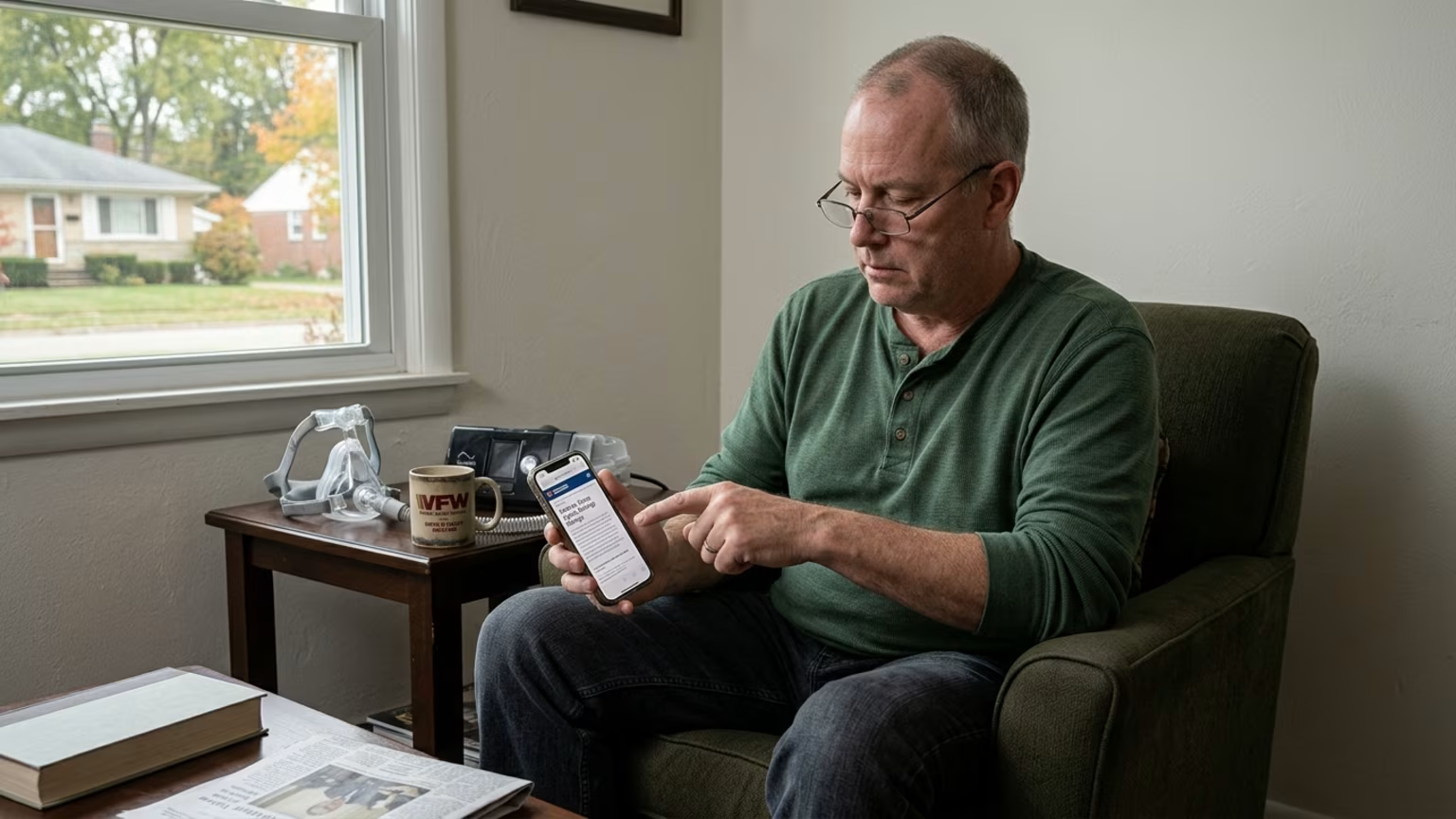

Congress.gov records show August 31 House floor activity did not advance VA sleep apnea rating changes. Learn what this means for your veteran benefits.





Exactly 13 bills and resolutions appeared on the Congress.gov House floor activity page for August 31, 2026. This fact matters deeply because not a single one changed how the Department of Veterans Affairs evaluates sleep apnea. Veterans tracking the legislative landscape often see confusing headlines regarding their earned medical benefits. The official record confirms that sweeping changes to sleep related compensation remain completely pending.
The August 31 activity list included several technical U.S. Code amendments. It also featured the Protecting American Industry and Labor from International Trade Crimes Act of 2026. The docket further included Kayleigh’s Law Act of 2026, the NDO Fairness Act, and the Hershel “Woody” Williams National Medal of Honor Monument Location Act. None of these measures altered VA disability evaluations for sleep apnea or any other chronic conditions.
A massive shift in disability evaluation is currently hanging over the entire veteran community. Newsweek reported that VA proposed changes to respiratory and auditory ratings in 2022. These sweeping regulatory changes remained identified as a proposed rule as of September 1, 2026. They have not yet taken effect as current law.
The 2022 proposal would change how sleep apnea is evaluated by focusing on treatment effectiveness rather than just the prescription of a continuous positive airway pressure machine. According to Newsweek, a veteran whose condition is asymptomatic with or without treatment would receive a zero percent evaluation. A 10 percent evaluation would apply where treatment produced incomplete relief. Higher ratings would be reserved for cases where treatment is ineffective or unusable due to another medical condition.
This proposed shift has drawn significant attention due to its massive potential scale. The Washington Examiner reported that a VA analysis cited by Disabled American Veterans estimated the changes could reduce future payments by as much as $57 billion over 10 years. That same analysis estimated the policy could potentially affect 1.5 million veterans. These specific figures are attributed estimates rather than independently confirmed outcomes.
There is also legislative activity moving on a parallel track regarding these exact evaluations. Newsweek identified H.R. 9237, the Take Care of America’s Veterans Act, as a bill that would write elements of the proposed sleep apnea and tinnitus criteria into law. The report noted this legislation would direct some anticipated savings toward other veterans benefits and healthcare services. However, H.R. 9237 was not on the August 31 House floor list.
Congress.gov shows that H.R. 9237 had not completed the legislative process. It had not changed any sleep apnea or tinnitus ratings for active personnel or veterans. For veterans managing long term health, this means the current rating rules still apply today. This provides essential time to read through Military health Articles and prepare adequate medical documentation.
Veterans are trying to figure out exactly when these changes might become final. VA Compensation Service Executive Director Nina Tann told a House subcommittee that the department anticipated publishing final rules by the end of fiscal year 2026. Fiscal year 2026 ends on September 30, 2026. This target date is an agency expectation rather than a strict statutory deadline.
The House returned to work on August 31 with government funding priorities squarely in focus. Holland & Knight reported that the House was expected to consider a continuing resolution extending funding beyond September 30. A September 1 statement from Representative Jen Kiggans indicated the continuing appropriations legislation would extend fiscal year 2026 funding levels through December 11, 2026. This funding measure included extensions for certain veterans healthcare authorities.
A continuing resolution for government funding should not be conflated with a revision to the VA Schedule for Rating Disabilities. Extending a program budget does not rewrite the disability compensation rulebook. The broader appropriations environment may affect the pace of veterans healthcare administration. However, it does not directly alter the clinical criteria used to evaluate respiratory conditions.
I remember waking up after a poor night of sleep and realizing that my training recovery was taking much longer than it used to. I realized that readiness is more than just pushing through the fatigue. It requires a dedicated approach to sleep and hormonal health, which completely shifted how I view long term capability. That mindset is exactly what veterans need when approaching these proposed VA changes.
The proposed VA criteria place a heavy emphasis on how well a prescribed treatment actually works for you. Veterans should not assume that merely owning a continuous positive airway pressure machine will secure their benefits or solve their health issues. You need to document your actual symptoms, treatment responses, and any functional limitations clearly. If a prescribed treatment provides incomplete relief, you must communicate that clearly to your medical team.
If another medical condition prevents you from using a continuous positive airway pressure machine, that specific conflict needs to be in your medical file. The proposed framework makes these precise details central to your future evaluation. The BattleVet team knows that proactive documentation is a vital part of maintaining your overall physical capability. Accessing reliable Recovery and sleep Articles can help you understand the daily management of these demanding conditions.
Do not change your current claim strategy based on news headlines about proposed rules. The final rule has not been published, and the exact effective date remains completely unestablished. We do not yet know exactly how pending administrative cases will be handled under the final regulations. Veterans should consult an accredited VA representative or a qualified attorney before altering or withdrawing a claim.
For those prioritizing long term physical performance, building a solid foundation using Sleep, stress and resilience Resources is highly recommended. Clear records of your sleep hygiene and treatment adherence provide critical evidence for your medical team. This approach ensures your healthcare decisions are based on actual physical data. It also prepares your file for any future administrative reviews.
Many veterans who already hold a rating for sleep apnea are worried about immediate compensation reductions. Tann told Congress that rating schedule revisions typically do not affect current beneficiaries. Newsweek reported the VA position is that an existing rating generally cannot be reduced solely because the schedule changes. A reduction would require medical evidence that the condition actually improved.
This stated protection is a vital caveat for current disability recipients. It provides administrative stability while you focus on managing your daily respiratory symptoms and overall physical health. However, this administrative protection does not guarantee that every pending claim or future application will automatically follow the old rules. The final published rule will define exactly how new and pending administrative cases are processed.
Veterans must deliberately separate routine healthcare administration from specific disability compensation policy. A short term funding extension keeps the hospital clinics open, but it does not alter the math on your monthly compensation check. Monitoring the Federal Register and official government websites is the best way to track actual policy changes. Rely on verified facts rather than social media rumors regarding these complex policy shifts.
The August 31 House floor record listed 13 bills, none of which finalized the debate over sleep apnea compensation. The legislative focus remains fixed on the upcoming end of the fiscal year and the unresolved VA rulemaking process. Veterans are left waiting for absolute clarity on their future benefits. As the government continues to weigh a $57 billion savings estimate against the physical realities of military service, how will the final rule balance treatment effectiveness with the true cost of long term fatigue?
Follow BattleVet for practical guidance on military and veteran health, strength, recovery, testosterone, sleep and healthy aging. Stay connected for new articles, research backed insights and clear information to help you stay capable for the years ahead.


Combat Stress’s workplace guidance emphasizes listening over diagnosis. Recent U.S. veteran insomnia research adds context for sleep and recovery concerns.


ErythroMer's reported storage design could matter for military care. An academic review still lists it as preclinical, with human evidence ahead.
A large veteran study links PTSD and documented social needs to later cognitive impairment, reinforcing the value of connected care planning.
Build better habits around strength, recovery, sleep, hormones and healthy aging with practical guidance for active military personnel and veterans.
Explore BattleVet