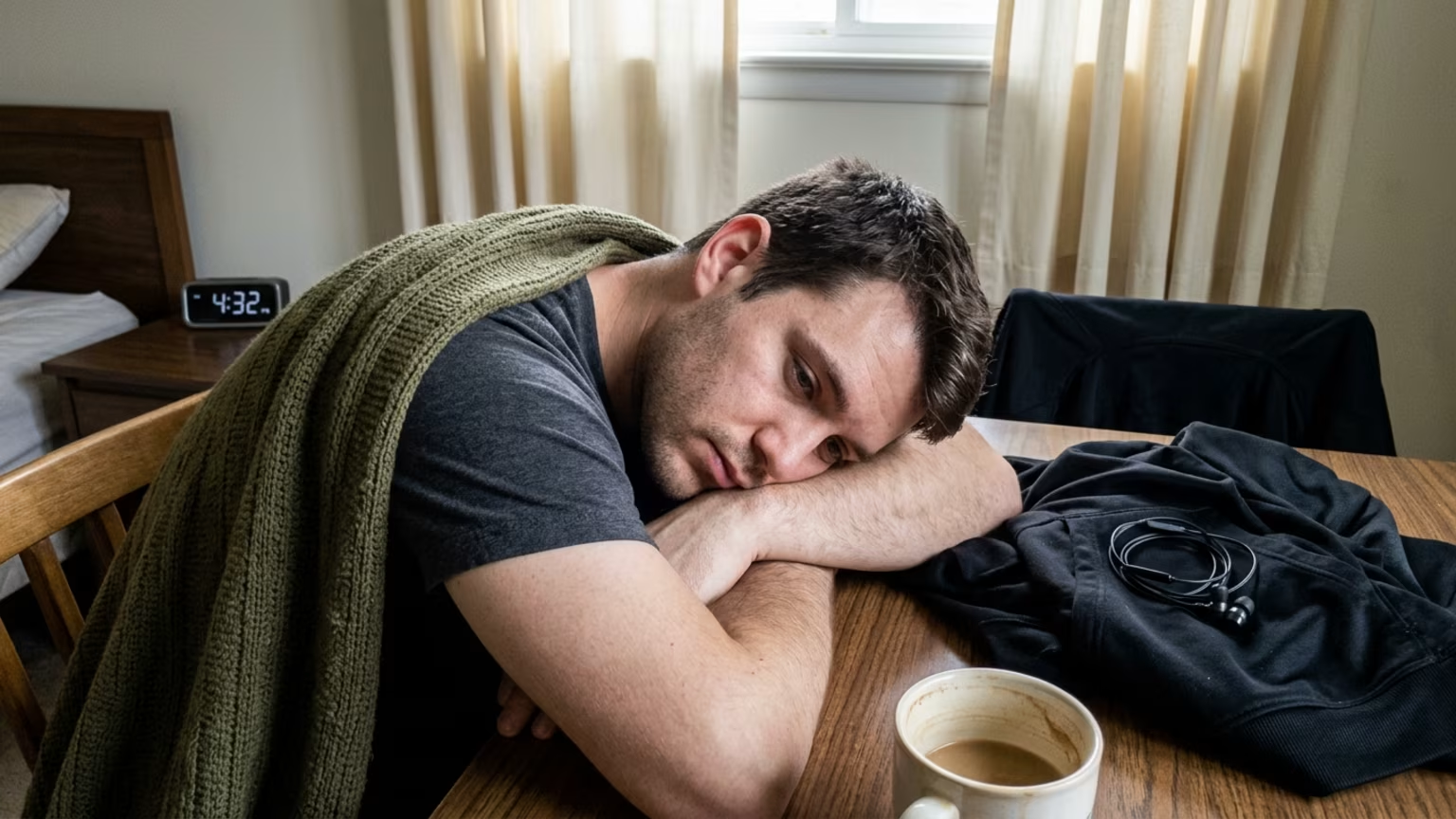

A McGill University study shows a 20-minute workout or a 90-minute nap can improve memory function by 22% after acute sleep loss.





It is 0300 hours on a training rotation, and the unit has been moving for over a day without rest. A service member has a brief window before the next briefing. The choice is whether to close their eyes against a rucksack or try to get the blood moving. A McGill University-led study offers new data on this exact decision.
The McGill study tested the effects of two different interventions on cognitive function. Researchers monitored 54 healthy young adults who remained awake for 30 consecutive hours under laboratory supervision. The team assigned participants to a 90-minute nap, a 20-minute cycling session, or a no-intervention control condition. This specific design allowed the researchers to measure how the brain handles acute sleep loss.
Following the 30 hours of wakefulness, the participants took tests measuring episodic memory. Episodic memory controls the ability to encode and later recall new information. This cognitive function remains critical for learning, planning, and decision-making during operations. On these memory tests, participants in the nap group achieved an average performance that was approximately 22% higher than that of the control group.
To understand the underlying mechanisms, researchers utilized electroencephalography to examine brain activity. The EEG readings showed that brain-state indicators associated with neural fatigue and sleep pressure heavily influenced memory performance after napping. The authors interpreted this pattern as evidence that napping helped restore a brain state more conducive to new learning. The rest period directly addressed the physical burden of staying awake.
The study was published in Proceedings of the National Academy of Sciences under the title “Protecting episodic memory after sleep loss: Similar benefits of exercise and naps via distinct neural contributions.” This research provides solid evidence that a dedicated rest block actively changes the brain state. However, the study involved a 90-minute nap. Shorter rest periods were not tested, so the exact cognitive benefit of a smaller window remains unverified by this specific data.
The 20-minute moderate-to-vigorous cycling session also yielded significant cognitive benefits for the participants. Individuals in the exercise group achieved an average performance that was approximately 22% higher than that of the control group. This mirrored the memory performance improvement seen in the nap group. The researchers found that the two interventions produced similar memory outcomes through completely different neural pathways.
After the exercise session, episodic-memory markers were the main contributors to cognitive performance. This suggested that exercise helped the sleep-deprived brain process information more efficiently. The physical activity did not substantially reduce the underlying sleep pressure. Instead, the workout forced the brain to optimize its remaining resources.
Senior author Marc Roig explained the practical value of these findings. He said that even a brief bout of exercise may help preserve memory when people cannot simply stop their activities and obtain more sleep. Getting the heart rate up can serve as a temporary bridge to maintain function. Still, the researchers emphasized that exercise cannot replace sleep completely.
This intervention addresses a widespread pain point for personnel who need to remain alert. A short burst of activity triggers physical systems to temporarily override the exhaustion. The cognitive boost allows individuals to encode new information during critical windows. This strategy provides an alternative tool for maintaining performance when sleep is impossible.
Implementing a 90-minute nap requires specific logistical conditions to be effective. A service member needs a safe environment, sufficient time, and the ability to recover from sleep inertia. These conditions are often absent during active operations or long civilian shifts. Napping is highly effective but demands a larger block of uninterrupted time.
Exercise offers a different logistical profile for sleep-deprived individuals. First author Madhura Lotlikar described exercise as accessible, inexpensive, and relatively easy to implement when a nap is not practical. A 20-minute workout requires no special equipment if modified for basic movements. It can be executed almost anywhere at any time.
The minimal cost and low barrier to entry make physical activity highly appealing. For individuals managing sleep debt, stepping away for a brief workout might be more accepted than lying down. This provides a flexible countermeasure against acute fatigue. Leaders and supervisors can integrate brief physical activity into long shifts easily.
Selecting between a short workout and a nap depends entirely on the operational environment. The research indicates that both methods work, but they function differently. Individuals must assess their available time, physical location, and current sleep pressure. A structured approach ensures the best cognitive outcome.
A planned nap is the best option when fatigue and sleep pressure are the dominant problems. It directly restores a brain state conducive to learning. This choice requires a safe space and enough time to wake up fully before resuming duties. It remains the closest thing to actual sleep recovery.
Exercise becomes necessary when time is short or the environment prevents sleeping. The 20-minute workout improves neural efficiency without clearing the sleep debt. This option fits perfectly into brief breaks during extended shifts. It serves as an active stopgap to keep the brain engaged.
Neither intervention provides a permanent solution to chronic sleep restriction. The study examined acute sleep loss in healthy young adults rather than clinical sleep disorders. Repeated reliance on these stopgaps may indicate an unresolved scheduling problem or an underlying health issue. The Military Health System places sleep within its Warfighter Performance Optimization and Total Force Fitness resources.
Veterans face elevated risks regarding chronic sleep conditions that require more than a temporary nap. VA research reported that obstructive sleep apnea was found in 21% of Veterans compared with 9% of non-Veterans in a survey of nearly 20,000 people. The same data showed deployed Veterans had 64% higher odds of obstructive sleep apnea than Veterans who had not deployed. Additionally, one VA resource reports that about one-third of U.S. adults get less than the recommended seven hours per night.
Mental health factors also complicate sleep recovery for many service members. One study of French active-duty and Veteran service members with PTSD found lower performance across inhibition, sustained-attention, and working-memory tasks. In that study, 36.6% of the PTSD group met the study’s normative threshold for executive impairment. Clinical evaluation is necessary if sleep issues persist.
Understanding how to optimize cognitive performance is essential for long term capability. A service member might use these tools to maintain function during a tough field exercise. A veteran might use them to manage acute fatigue after a single night of severe insomnia. In either case, the interventions are tools rather than permanent solutions.
In our experience, trying to maintain fitness years after leaving service required a completely new mindset. The goal changed from immediate tactical readiness to healthy aging and longevity. I learned that connecting short term performance with long term health, focusing on mobility and cardiovascular function, was the real key to staying capable. Building sustainable healthy sleep habits became a priority.
The military framework now explicitly views recovery as a core component of overall readiness. Leaders should prioritize protected recovery sleep whenever possible. Naps and workouts are practical tools for isolated incidents of fatigue. They should never be used to justify unsafe activities or chronic sleep deprivation.
Readers looking to build a better baseline can access our military and veteran health resources for guidance. Consistent sleep schedules remain the primary defense against cognitive decline. Temporary countermeasures simply buy time until real rest can occur. Train smart, prioritize recovery, and take the long view on your health.
Follow BattleVet for practical guidance on military and veteran health, strength, recovery, testosterone, sleep and healthy aging. Stay connected for new articles, research backed insights and clear information to help you stay capable for the years ahead.


Combat Stress’s workplace guidance emphasizes listening over diagnosis. Recent U.S. veteran insomnia research adds context for sleep and recovery concerns.


ErythroMer's reported storage design could matter for military care. An academic review still lists it as preclinical, with human evidence ahead.
A large veteran study links PTSD and documented social needs to later cognitive impairment, reinforcing the value of connected care planning.
Build better habits around strength, recovery, sleep, hormones and healthy aging with practical guidance for active military personnel and veterans.
Explore BattleVet