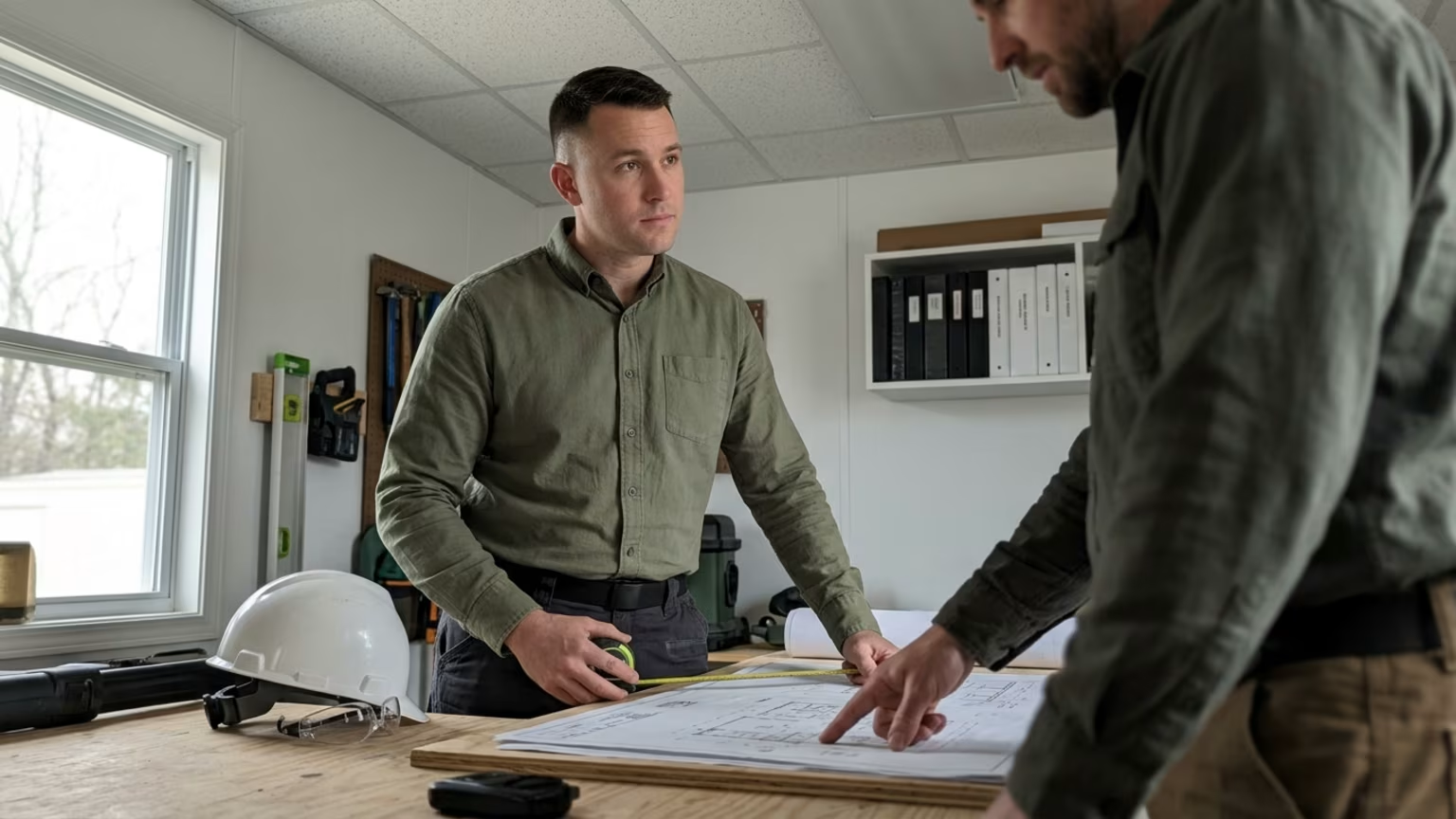

Meaningful work and a clear mission are critical for veterans navigating the transition to civilian employment. Learn how to balance purpose and salary.





If you are in immediate danger, call 911. If you are experiencing a crisis, dial 988 and press 1 for the Veterans Crisis Line, or text 838255.
The shift ends, and you walk out to the parking lot. The salary is good. The bills are covered. Still, the drive home feels completely empty without a clear objective and a unit that understands the objective.
On August 28, 2026, Mission Roll Call published “Why Purpose Matters More Than Pay” in its Transition section. The article argues that a financially adequate civilian job may still leave some veterans without the sense of purpose and connection they experienced in service. Many veterans find that replacing military income is easier than replacing military structure. Finding a civilian role that provides true meaning often requires deliberate planning and ongoing assessment.
Transitioning service members often follow a familiar post-separation sequence. They leave the military, find a well-paying job, and stabilize financially. This necessary focus on immediate income frequently forces them to postpone deeper questions about identity. The central warning from Mission Roll Call is that postponing these questions can allow a temporary job to become a permanent career.
Military service embeds purpose into daily operating routines. It provides a defined place to be, a specific task to perform, and colleagues who understand why the work matters. Mission Roll Call notes that the mission was not just a motivational concept on a wall. It was the actual operating system of daily military life.
Mission Roll Call does not suggest that veterans should accept exploitative wages for meaningful work. Financial stability remains highly important during the early years after separation. A responsible transition plan must compare salary, benefits, healthcare access, and household obligations alongside personal meaning. Purpose and pay are not mutually exclusive, and adequate compensation is required for a sustainable civilian life.
Reputable veteran-serving organizations recognize that employment provides benefits beyond income. The U.S. Department of Veterans Affairs states that work can support financial stability while offering social connection, confidence, and purpose. Work can also strengthen overall well-being and community engagement. The VA’s Careers and Employment portal directs veterans toward various practical resources to aid this process.
These portal resources include career counseling, resume support, training, and job placement. It also guides users toward vital entrepreneurship assistance. For veterans facing medical, mental-health, or housing-related barriers, the VA’s Compensated Work Therapy program provides direct assistance. This program offers job development, counseling, resume assistance, and help adapting to the work environment.
Current labor-market data illustrate the scale of the veteran workforce. In July 2026, the U.S. civilian veteran population aged 18 and over included approximately 7.819 million employed veterans. The same data recorded 339,000 unemployed veterans, resulting in a 4.2% unemployment rate for that group. The veteran labor-force participation rate sat at 48.2% for that month.
While these statistics track employment status, they do not measure whether individuals feel respected or aligned with their work. Finding reliable employment can be a pivotal step in overcoming severe transition challenges. For instance, the VA reported that 12,700 veterans were employed when they exited VA homeless programs and services in fiscal year 2025. Income provides housing stability, while the routine of work helps establish a predictable daily structure.
You can take active control of your transition by evaluating civilian work through the lens of personal values. Identifying what matters to you is the first step in finding a fulfilling role. Mission Roll Call points to healthcare, public safety, teaching, and nonprofit work as possible routes to purpose. You might also find meaning in private-sector technical or trades roles if the work aligns with your values.
If you are preparing to separate, build a transition plan with two parallel tracks. One track must ensure financial sustainability, while the other focuses on finding purpose. Identify the specific parts of military life that gave you energy. This might include leading people, solving urgent problems, or building complex systems.
Translate those elements into civilian job criteria like team structure, public impact, and measurable results. Use available federal resources to map out your employment options systematically. The VA’s Personalized Career Planning and Guidance program offers free educational and career counseling. It also provides resume assistance and help identifying suitable training opportunities.
The VA’s Veteran Readiness and Employment program provides career preparation, job-search support, and skills training. It also assists eligible veterans whose service-connected disabilities affect their ability to work. Veterans already in the civilian workforce can conduct a structured review of their current roles. Examine what your work contributes and which daily tasks actually feel useful.
Evaluate whether your dissatisfaction stems from the occupation, the organization, the manager, or a lack of community. Understanding the specific problem helps you adjust your career path without making reckless financial decisions. Treat persistent restlessness as useful information rather than a failure to adapt. A dramatic career change is not always the best immediate answer to feeling unfulfilled.
Mission Roll Call recommends beginning with attention and experimentation before resigning from a stable position. You can volunteer, join a professional association, or take a skills course to test new interests. Testing these options helps you understand what feels meaningful before you alter your primary source of income. Transitioning into civilian veteran life requires finding new systems that provide genuine structure and accountability.
Business ownership is a common pathway for veterans seeking greater control over their civilian routines. Mission Roll Call cites research from Syracuse University’s D’Aniello Institute for Veterans and Military Families. This research supports the idea that entrepreneurship can function as an identity pathway for some veterans. It helps individuals reconstruct the agency, accountability, and mission focus they experienced in service.
The D’Aniello Institute offers entrepreneurship programs to transitioning military personnel at no cost. By August 2026, IVMF programs had reached more than 235,000 individuals. These participants included veterans, service members, and military family members. Syracuse University’s Entrepreneurship Bootcamp for Veterans had graduated 467 entrepreneurs by the end of its 20th cohort.
You can research no-cost veteran entrepreneurship and training programs through the SBA’s Office of Veterans Business Development. However, entrepreneurship is not a universal solution for transition difficulties. Business ownership involves financial risk, long hours, and uncertain income. It must be evaluated practically rather than viewed strictly through the emotional appeal of being your own mission.
Accessing organized military and veteran health resources can help you make informed decisions about your capacity for this stress. Community connection is equally important for rebuilding a sense of belonging outside of work. The VA’s VetResources Community Network serves as a community-partnership channel connecting more than 370 outreach partners nationwide. These partners operate in areas including transition, employment, healthcare enrollment, and homelessness prevention.
Expanding your network through these channels provides vital social support. Peer support groups offer another excellent way to establish new routines and find shared understanding. VA peer groups provide opportunities for veterans to share experiences, exchange coping strategies, and build connections. You can participate at your own comfort level without pressure.
Connecting with peers helps replace the camaraderie of a military unit while you navigate your civilian career. Volunteer service provides another practical avenue for concrete social roles and visible contribution. Volunteering creates a reliable routine while directly benefiting other former service members. For example, the Cheyenne VA reports that volunteers help veterans with transportation, technology, and food distribution.
These volunteer-supported programs assist nearly 17,000 veterans, caregivers, and family members each month. Families often observe the negative impacts of an unfulfilling career long before the veteran identifies the issue. Work-related frustration can manifest as social withdrawal, irritability, or a lack of interest in weekend activities. Families should encourage open discussions about job satisfaction without framing the dissatisfaction as ingratitude.
Addressing the root cause of this restlessness early can prevent long-term strain on household relationships. Meaningful work supports well-being, but it is not a substitute for clinical care. Veterans experiencing depression, trauma symptoms, or severe functional impairment may need professional treatment alongside employment support. Finding a job that aligns with your values is a strong foundation for civilian life, but prioritizing military health remains paramount.
Transitioning successfully means balancing a reliable income with work that respects your capabilities and values. BattleVet encourages you to use available career resources, test new environments, and prioritize jobs that offer genuine connection. Your civilian career will span decades after you leave the military. Building a sustainable life requires honest assessment and a willingness to adjust course. A high salary is a great tool for achieving financial security. However, long-term health depends on finding a daily routine that reinforces your sense of purpose.
Follow BattleVet for practical guidance on military and veteran health, strength, recovery, testosterone, sleep and healthy aging. Stay connected for new articles, research backed insights and clear information to help you stay capable for the years ahead.


Combat Stress’s workplace guidance emphasizes listening over diagnosis. Recent U.S. veteran insomnia research adds context for sleep and recovery concerns.


ErythroMer's reported storage design could matter for military care. An academic review still lists it as preclinical, with human evidence ahead.
A large veteran study links PTSD and documented social needs to later cognitive impairment, reinforcing the value of connected care planning.
Build better habits around strength, recovery, sleep, hormones and healthy aging with practical guidance for active military personnel and veterans.
Explore BattleVet