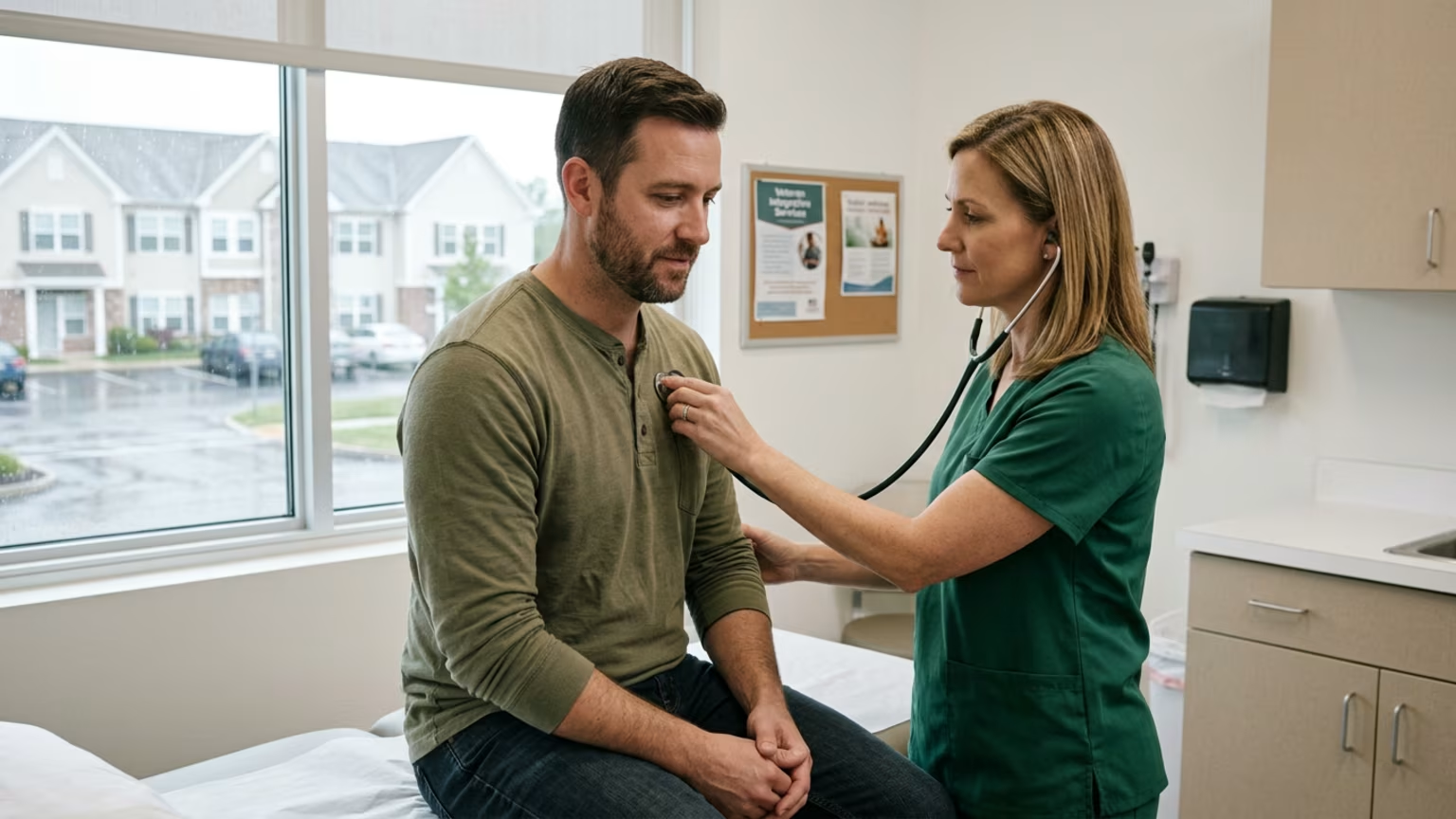

Baseline data from the BRAVO cohort highlights behavioral health disparities and the need for integrated care protocols among diverse post-9/11 veterans.





If you or someone you know is in crisis, call 911 for immediate danger. For confidential support, call 988 and press 1 to reach the Veterans Crisis Line, or text 838255. If you have access to means or firearms, work with a trusted person or clinician to arrange safe storage.
On September 12, 2026, a peer-reviewed article analyzed baseline data from the BRAVO cohort study. The research examined behavioral health, healthcare engagement, and demographic disparities among diverse post-9/11 veterans. The study was funded by a National Institute on Alcoholism and Alcohol Abuse grant awarded to Jordan P. Davis and Eric R. Pedersen. This new data provides a detailed look at how service-connected conditions are distributed.
Understanding these findings is essential for active personnel and veterans managing their long-term health. The research supports discussing physical performance and behavioral health together. I remember waking up after a poor night of sleep and realizing that my training recovery was taking much longer than it used to. I realized that readiness is more than just pushing through the fatigue.
It requires a dedicated approach to sleep and hormonal health, which completely shifted how I view long term capability. The authors note that post-9/11 veterans carry a heavy behavioral-health burden. This burden is not evenly distributed across demographic groups. Their findings show that healthcare needs must match clinical intensity.
Assuming that attendance at treatment automatically indicates adequate care can leave significant gaps. When veterans manage physical recovery alongside trauma symptoms or sleep disruption, isolated treatments often fall short. Eric Pedersen’s broader veteran-health work emphasizes that veterans may experience co-occurring alcohol-use and mental-health conditions. He also notes that many do not seek care through formal treatment settings.
This approach aligns with how military health policies are shifting to support long-term capability. The Department of War recently described its mental-health policy as supporting continuity of care for service members across different phases of their military careers. This includes transition-related coordination with Veterans Affairs. Maintaining strength and readiness requires addressing both mental and physical health as a unified system.
The final baseline sample for the BRAVO cohort included 2,083 post-9/11 veterans. Researchers intentionally oversampled women and racial or ethnic minority veterans to better understand diverse care needs. Women made up 37.3% of the participants, and the mean age of the full sample was 38.5 years. The group included 34.4% non-Hispanic White participants, 35.1% Hispanic participants, and 19.0% non-Hispanic Black participants.
Additional Asian, American Indian or Alaska Native, Native Hawaiian or Pacific Islander, and multiracial participants were included. Because these demographics were deliberately oversampled, the sample composition is not perfectly representative of the overall U.S. veteran population. However, this intentional design provides crucial data on groups that often remain understudied. This specific focus allows researchers to identify targeted healthcare disparities.
The baseline screenings revealed substantial behavioral-health needs across the sample. Probable depression affected 48.9% of the participants, and anxiety affected 44.6%. The study found that probable PTSD affected 44.4% of the group. Alcohol-use disorder affected 11.5% of participants, while elevated suicide risk affected 40.7%.
The accessible article information indicates these are screening-based measures rather than fully confirmed clinical diagnoses. Elevated suicide risk is a screening indicator rather than a mortality statistic. Participants also reported military sexual violence at a prevalence of 35.7%. Military sexual harassment was reported at 50.0%.
Adjusted analyses identified distinct demographic patterns in these health risks. Higher PTSD risk was found among several groups of women and among non-Hispanic Black men. Meanwhile, women had a lower alcohol-use-disorder risk than non-Hispanic White men. The study is observational and cross-sectional at baseline.
It identifies associations but cannot establish that military service directly caused each reported outcome. Hispanic men showed a lower prevalence of suicide risk than the reference group used in the adjusted comparisons. The study also highlighted disparities in how care is utilized. Women reported higher counts of treated healthcare problems.
However, their volume of mental-health visits did not increase proportionally with need after adjustment. The authors interpret this finding as a possible under-intensity of care relative to the actual clinical burden. This mismatch between burden and visit volume is a signal requiring further investigation. A lack of frequent mental-health visits should not be interpreted as evidence of low need.
These findings reinforce the need for comprehensive healthcare assessments during and after active service. Service members should ask clinicians to consider multiple needs together. Trauma symptoms, depression, hazardous alcohol use, and physical pain must be evaluated as interconnected issues rather than isolated complaints. Physical conditioning alone will not resolve trauma-related problems.
Recent guidance from the Pentagon reflects a broader approach to service member health. The Pentagon issued clinical guidance requiring mandatory testosterone blood testing for men aged 30 and older. The same guidance requires screening women for fatigue, menstrual disruption, and energy-availability concerns. Understanding testosterone and hormones helps providers address recovery barriers more accurately.
The Department of Defense has also faced resource constraints in completing required cognitive assessments for high-risk active-duty service members. One report found that 86% of required assessments were completed in the prior year. Identifying these gaps is crucial for maintaining operational readiness. Accurate screening allows for better long-term health planning.
A separate military mental-health screening study published in September 2026 evaluated new assessment tools. The report found that a 16-item Military Mental Health Risk Screen showed promise for assessing post-deployment PTSD and broader mental-health symptoms. This screening tool could support prevention and early intervention for service members. Early intervention helps maintain physical and mental capability over time.
For older veterans, the Department of Veterans Affairs is developing new physical therapy models. The VA is recruiting 126 veterans aged at least 60 for a nationwide telehealth physical-therapy study. The intervention schedules sessions three times weekly for 12 weeks, followed by four coaching sessions over the next 12 weeks. This ongoing research tests whether telerehabilitation and social support can improve physical function.
Veterans with mobility or strength limitations can monitor these VA rehabilitation opportunities. Transitioning service members must also verify their healthcare coverage as they separate. The Transitional Assistance Management Program provides 180 days of premium-free health and dental coverage to eligible personnel and families. A 2026 policy change expanded this potential access for some reserve-component members.
This coverage period is a critical window for establishing baseline care for veteran lifestyle and healthcare needs. Personnel leaving active service should verify eligibility before separation. Globally, allied health policies are also being reviewed to better match care intensity with clinical need. Australia’s Department of Veterans’ Affairs proposed changes to allied-health arrangements introducing a A$5,000 threshold from July 1, 2027.
After this threshold, additional spending would require demonstrated clinical need. The Australian government maintains that this threshold is not an absolute cap. The Australian DVA is consulting veterans and their families about the detailed design. Providers and ex-service organizations are also involved in these implementation discussions.
Women veterans and racial or ethnic minority veterans may benefit from care pathways that account for differing exposure histories. The study found meaningful disparities in PTSD, alcohol-use disorder, suicide risk, and military sexual harm. Recognizing these differences allows clinicians to provide more effective support. Persistent sleep disruption, depressed mood, anxiety, and trauma symptoms warrant professional assessment rather than being dismissed as ordinary training fatigue.
Editors and coaches must avoid promising that strength training alone will resolve behavioral-health problems. The BRAVO article supports integrated care rather than a single-intervention solution. Veterans navigating complex care needs require realistic guidance based on clinical evidence.
As the military community gains deeper insights from research like the BRAVO cohort, the focus is clearly shifting toward holistic capability. How will healthcare systems adapt to ensure that care intensity matches the true clinical burden for every veteran demographic?
Follow BattleVet for practical guidance on military and veteran health, strength, recovery, testosterone, sleep and healthy aging. Stay connected for new articles, research backed insights and clear information to help you stay capable for the years ahead.


Army dental leaders warn that preventable tooth problems could sideline troops and strain evacuation routes in future large-scale military conflicts.

A review of Executive Order 14426, which directs automatic sharing of military records to potentially reduce the wait for initial VA disability payments.
An analysis of the risks tied to unnecessary testosterone therapy, covering clinical reference baselines, fertility impacts, and the dangers of unregulated use.
Build better habits around strength, recovery, sleep, hormones and healthy aging with practical guidance for active military personnel and veterans.
Explore BattleVet