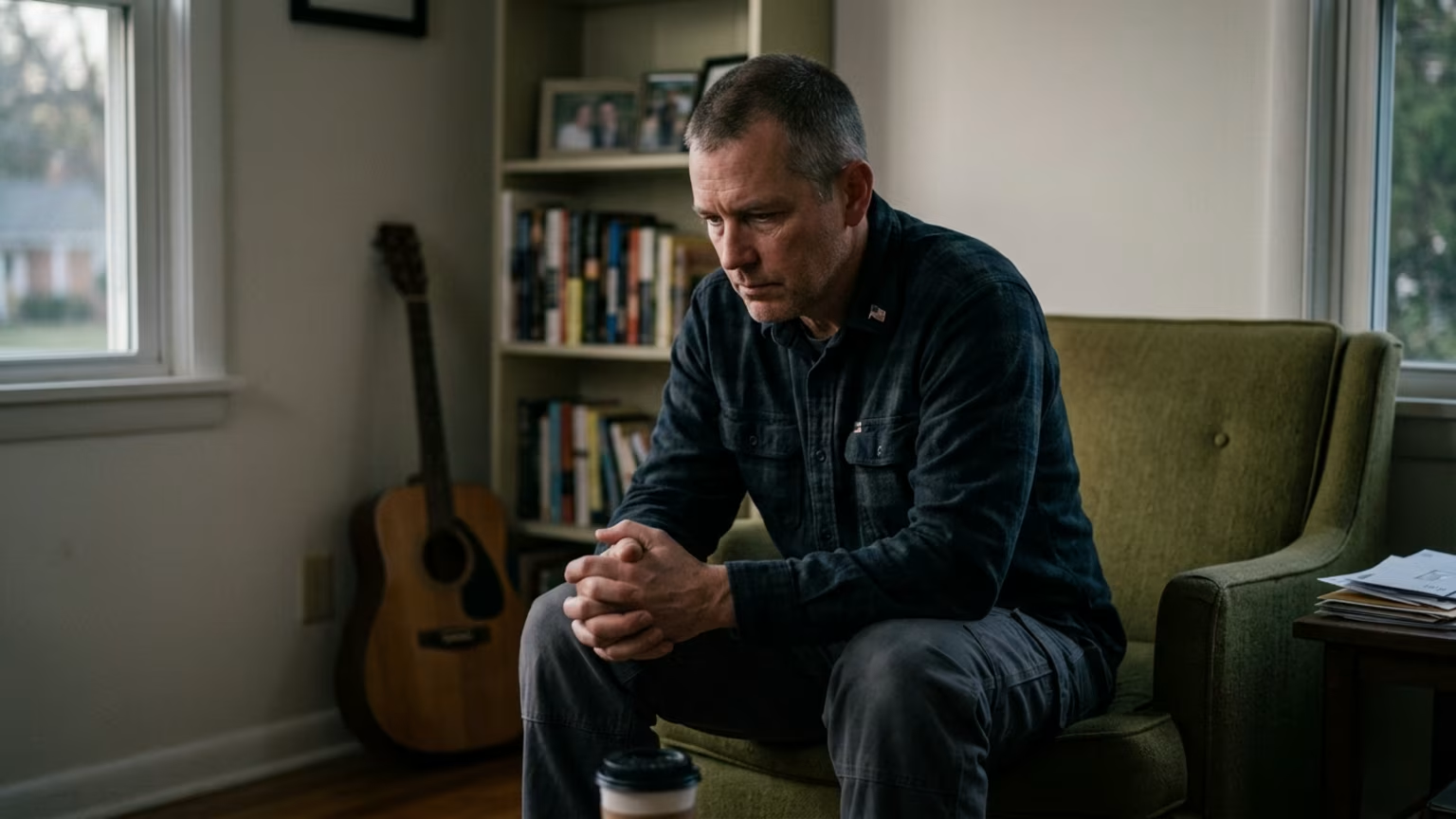

Veteran suicide prevention requires active community support beyond clinical care. Discover how connection, proper planning, and healthy habits build long term resilience.





If you are in immediate danger, call 911. For 24/7 support, call or text 988 and press 1 for the Veterans Crisis Line, or text 838255.
The healthcare system cannot solve veteran suicide by itself. Clinical treatment remains critical for survival. True resilience requires active involvement from local neighborhoods and civilian networks. Many veterans transition out of service and immediately wonder about their next steps.
How do we actually build support networks that prevent veteran suicide before it reaches a crisis point? This question sits at the center of modern transition planning. Validating the need for broader support structures is the first step toward building them. We must look beyond clinical settings to find sustainable solutions.
The isolation that follows military separation is a well documented phenomenon. Moving from a highly structured environment to total independence can be incredibly jarring. This sudden loss of daily direction leaves many individuals searching for new meaning. Without a clear mission, the daily challenges of civilian life can feel overwhelming.
An August 20, 2026 CBN News analysis by Damon Friedman highlights this exact shift in perspective. Friedman served more than 20 years in the military. His career was predominantly in special operations. He argues that veteran suicide should be treated as a community-wide responsibility.
According to his analysis, the effects of military service continue long after deployment. These effects often include chronic pain, trauma, broken relationships, and isolation. He emphasizes that veterans remain community members after leaving active service. Communities must recognize their role in providing ongoing support.
Friedman notes that the military instills a deep sense of brotherhood and shared purpose. That built in support system vanishes almost overnight upon discharge. Communities must actively work to recreate that sense of belonging for returning service members. It takes intentional effort from local leaders to bridge this critical gap.
Understanding the scale of this issue requires looking at verified reporting. CBN says the VA estimates that approximately 17.6 veterans die by suicide each day. This translates to more than 6,000 deaths annually. It is crucial to ground these discussions in specific data.
VA suicide prevention materials report that 6,392 veterans died by suicide in 2021. This represented an increase of 114 deaths from 2020. A 2020 comparison cited in regional reporting found that the veteran suicide rate was 57.3 percent higher than the non-veteran rate. These figures highlight the urgent need for comprehensive intervention strategies.
These statistics represent real families and communities dealing with profound loss. Behind every number is a story of a transition that lacked sufficient support. Tracking these metrics helps organizations allocate resources where they are needed most. Accurate data collection remains the backbone of any successful public health initiative.
Looking at recent data provides further context for these prevention efforts. Stars and Stripes recently reported on a study led by researchers from the National Center for PTSD and Yale School of Medicine. This study found increased suicidal thoughts among veterans. However, suicide attempts remained stable within that specific study population.
The same coverage reported that veterans aged 18 to 44 had the highest prevalence of suicide attempts in the study. The rate for this younger demographic was slightly above 11 percent. This figure is nearly twice the rate of the next highest age group. Such data shows why targeted support remains necessary for younger veterans transitioning to civilian life.
The data from Yale School of Medicine researchers highlights the complexity of mental health. Recognizing an increase in suicidal thoughts allows for earlier community intervention. We cannot wait for attempt rates to rise before taking decisive action. Proactive engagement is the only way to reverse these concerning trends.
Research summarized in the Journal of Veterans Studies identifies several distinct elements associated with suicide risk. These factors include prior suicidal behavior, depression, and severe isolation. A lack of access to adequate care also significantly increases vulnerability. Adverse social determinants create compounding pressure that makes recovery much more difficult.
Damon Friedman emphasizes that professionals and government agencies cannot replace grassroots support. Families, employers, and local civic organizations provide essential daily connection. Checking in with veterans and encouraging employers to hire them creates natural support structures. Mentors can begin difficult conversations long before a clinical intervention is necessary.
Treating practical problems as health concerns changes the prevention landscape entirely. Financial instability and employment difficulties often precede mental health crises. Relationship changes can quickly remove a veteran's primary source of emotional support. Addressing these daily friction points helps build a stronger foundation for long term resilience.
Physical capability directly influences mental resilience during the transition out of uniform. In our experience, trying to maintain fitness years after leaving service required a completely new mindset. The goal changed from immediate tactical readiness to healthy aging and longevity. I learned that connecting short term performance with long term health, focusing on mobility and cardiovascular function, was the real key to staying capable.
This shift in focus supports broader military health goals. Maintaining physical routines can help build a sense of daily purpose. A strong physical foundation often makes mental challenges easier to navigate. Consistent exercise provides a structured environment that mimics the positive aspects of military life.
Immediate support systems exist for those facing urgent mental health challenges. The Veterans Crisis Line is available by calling 988 and pressing 1. Veterans can also reach this service by texting 838255 or using the online chat function. The service is free, confidential, and available around the clock.
VA materials state that this support is accessible regardless of VA health care enrollment. Support does not have to wait until a crisis point is reached. Veterans and their families can use these resources to seek guidance early. Building a safety net requires knowing exactly who to call.
Standard prevention strategies do not always apply perfectly to every individual situation. The study reported by Stars and Stripes shows that suicidal thoughts and actual attempts do not always trend together. Younger veterans face unique challenges that older generations might not experience in the same way. The 11 percent attempt prevalence among the 18 to 44 age group illustrates this distinct risk profile.
Raw totals and national rates can sometimes obscure these important subgroup differences. A decline in total deaths can occur alongside an increase in specific demographic rates. Community support networks must account for these variations in risk. Effective assistance requires recognizing that each veteran brings a different history to the table.
Bringing up mental health concerns with a medical professional requires clear communication. Veterans should not wait for an active emergency to discuss their well being. Mentioning sleep problems or chronic pain can serve as an effective starting point. These physical symptoms are often closely tied to underlying mental health conditions.
Discussing these issues early helps doctors create comprehensive treatment plans. A VA provider or local suicide prevention coordinator can offer practical assistance with financial stress. They can also connect patients with resources for recovery and sleep improvement. Clear communication ensures that the healthcare team understands the full picture.
Many veterans feel hesitant to disclose mental health struggles due to lingering stigma. Framing these conversations around physical recovery can make the process less intimidating. Doctors are trained to look for connections between physical fatigue and mental exhaustion. Honesty in the exam room is a critical component of preventative care.
Families and friends play a critical role in encouraging these medical conversations. Caregivers can help veterans prepare specific questions before their appointments. Taking notes during medical visits ensures that important advice is not forgotten. Navigating the healthcare system is much easier with a trusted partner.
Creating a detailed plan before an emergency strikes is a critical prevention tool. The VA describes crisis response plans as essential tools for recognizing warning signs early. These plans help individuals identify trusted support networks ahead of time. Preparation removes the burden of decision making during highly stressful moments.
A solid safety plan should clearly outline actionable steps for difficult days. This might include a list of friends to call or places to visit. Having these resources written down makes them easier to access under pressure. Routine practice of these steps builds confidence in the overall prevention strategy.
What specific routines are you building today to support your physical and mental capability tomorrow? Evaluating your daily habits is the first step toward long term stability. Proper healthy aging and longevity planning requires consistent effort over time. True capability outlasts military service.
The transition back to civilian life tests endurance in quiet, unseen ways. Survival depends on noticing those quiet moments in ourselves and others. Sometimes the heaviest weight we carry is the belief that we must carry it alone. True strength is found in community.
Follow BattleVet for practical guidance on military and veteran health, strength, recovery, testosterone, sleep and healthy aging. Stay connected for new articles, research backed insights and clear information to help you stay capable for the years ahead.


Combat Stress’s workplace guidance emphasizes listening over diagnosis. Recent U.S. veteran insomnia research adds context for sleep and recovery concerns.


ErythroMer's reported storage design could matter for military care. An academic review still lists it as preclinical, with human evidence ahead.
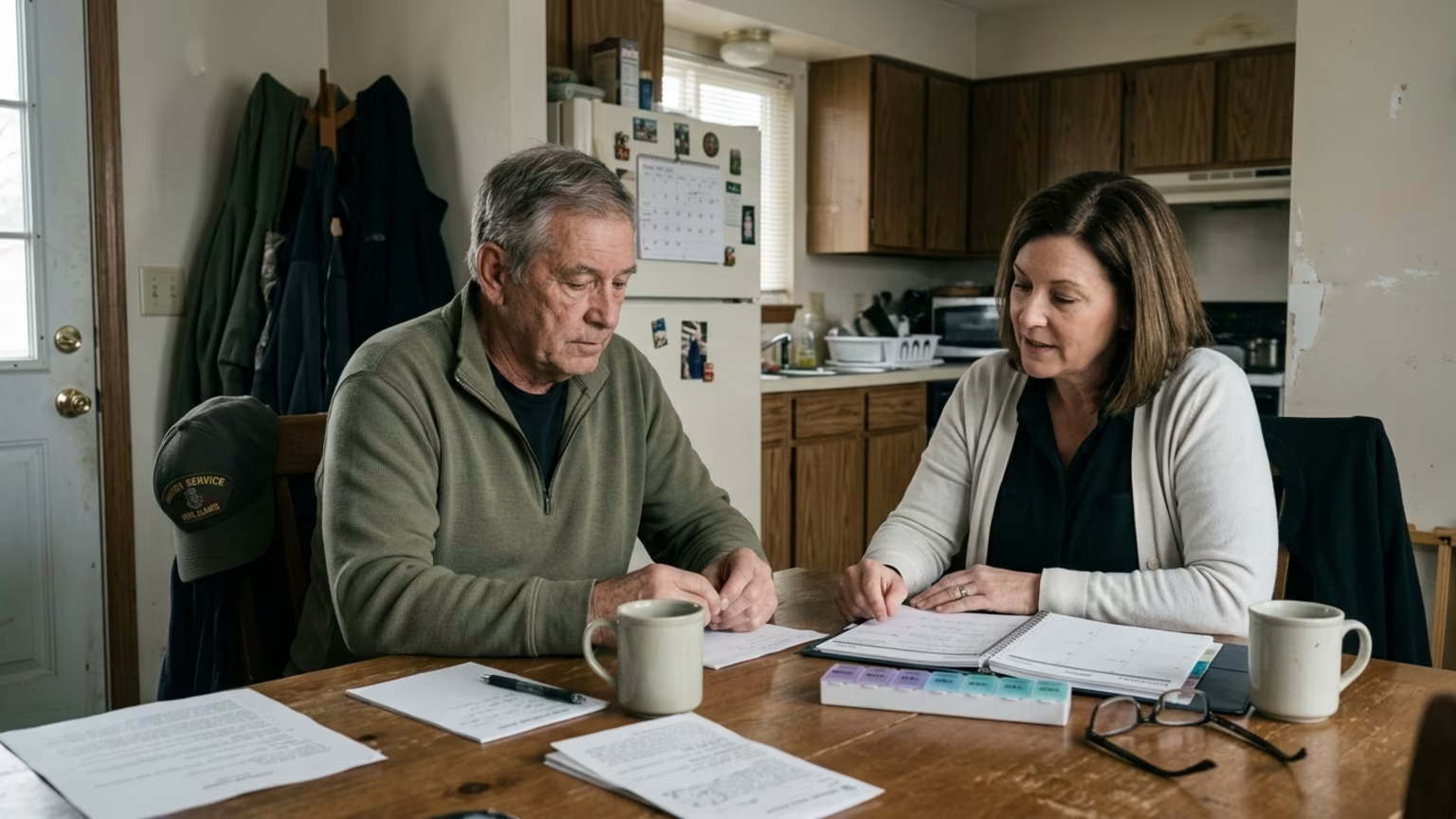
A large veteran study links PTSD and documented social needs to later cognitive impairment, reinforcing the value of connected care planning.
Build better habits around strength, recovery, sleep, hormones and healthy aging with practical guidance for active military personnel and veterans.
Explore BattleVet