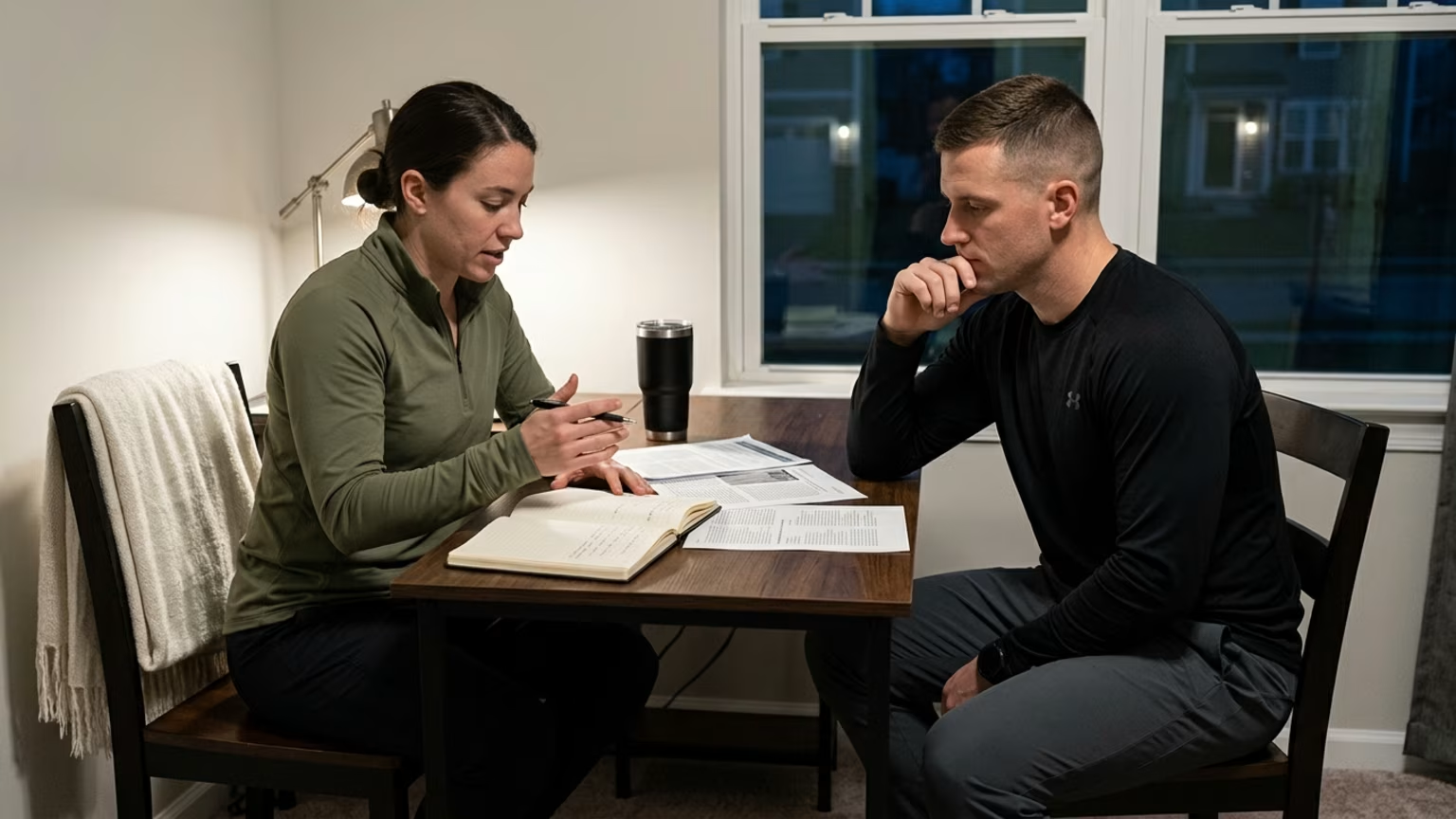

Military fitness leaders are establishing new guidance on sleep readiness. Learn how the latest military protocols address performance, recovery, and hormones.





In September 2026, military institutions released updated guidance on fatigue management and physical readiness. The Human Performance Resources by CHAMP published new sleep leadership recommendations for command levels. The U.S. Army also issued a specific sleep readiness update addressing operational fatigue. These publications outline how specific sleep targets influence physical preparation and training outcomes.
Concurrently, Muscle and Fitness featured insights from Walter Reed Army Institute of Research researchers Dr. Sara Algar and Dr. Tina Burke. Army Holistic Health and Fitness leader Colonel Jonathan D. Lesher also contributed to the coverage. They discussed the direct connection between rest, cognitive clarity, and physical recovery. This coverage reflects a growing focus on evidence based recovery protocols within the military.
Sleep is often treated as an afterthought during demanding operational schedules. However, military leaders now recognize rest as a foundational health metric. The Army Holistic Health and Fitness framework recently formalized this approach. It includes sleep as one of five core pillars.
The other four pillars are physical, mental, nutritional, and spiritual readiness. This structured framework elevates rest to the same level as physical conditioning and tactical training. Historically, physical training programs isolated strength and conditioning from recovery metrics. The inclusion of sleep as a defined pillar in the Army framework corrects that imbalance.
The model demands that these five elements are treated as interconnected systems. If one pillar fails, the entire structure of a service member's health is compromised. This integration matters deeply for active personnel and veterans because recovery dictates long term health. I remember waking up after a poor night of sleep and realizing that my training recovery was taking much longer than it used to.
I realized that readiness is more than just pushing through the fatigue. It requires a dedicated approach to sleep and hormonal health. This realization completely shifted how I view long term capability. I stopped treating sleep deprivation as a badge of honor and started viewing it as a physical vulnerability.
Without adequate rest, both cognitive function and physical repair simply stall. This shift highlights rest as a mandatory component of military physical preparation. It proves that health maintenance requires planned downtime. Service members cannot sustain peak output without giving their bodies time to rebuild.
Service members cannot optimize their strength or body composition if their hormonal foundation is compromised by exhaustion. Physical training only provides the stimulus for muscle growth and endurance adaptations. The actual physiological improvements occur entirely during deep sleep cycles. Without adequate rest, the body remains in a broken down state, leading to prolonged soreness and fatigue.
Recent military health publications highlight a significant disparity between recommended rest and reality. A 2026 Military Medicine article indicates that approximately two-thirds of soldiers sleep fewer than six hours nightly. This rate compares poorly to the civilian adult population. In the civilian sector, only about one-third of adults report similar sleep deficits.
The military environment clearly places unique constraints on sleep opportunity. Finding that a majority of the force operates at a recovery deficit is concerning. This is a massive departure from standard civilian health baselines. When a third of the civilian population experiences this deficit, it highlights how military schedules uniquely disrupt biological needs.
The Human Performance Resources by CHAMP confirms this exact trend with their own figures. Their data shows that about 70 percent of service members get fewer than six hours of sleep per night. They contrast this against about 30 percent of the general population. These figures demonstrate that chronic sleep restriction is a widespread issue across the military.
Overcoming this challenge requires more than just telling personnel to go to bed earlier. It demands a complete reevaluation of how units structure their daily training rhythms. The consequences of these restricted sleep windows are measurable and immediate. A recent U.S. Army article from September 2026 warns about the effects of acute sleep loss.
The Army states that even one night of compromised sleep can degrade reaction time. It also negatively affects judgment and emotional control. These variables are critical for safety and operational success in demanding environments. Fatigue impairs the very skills that keep service members safe during complex missions.
Furthermore, the Human Performance Resources by CHAMP echoes this concern regarding cognitive decline. They link inadequate sleep directly to impaired problem solving and reduced decision making capacity. Their reports also indicate that sleep deprived personnel face a greater vulnerability to stress. These metrics show a clear gap between required rest and actual recovery time.
The implications of these statistics extend far beyond basic fatigue. Operating on fewer than six hours of sleep forces the nervous system to run on stress hormones. This constant elevation of biological stress masks the physical symptoms of exhaustion in the short term. However, over months and years of service, this sustained tension accelerates physical wear and tear on the body.
To combat these deficits, military researchers are establishing clearer baselines for health and performance. Dr. Algar and Dr. Burke recommend a minimum of seven hours of sleep per night to support peak function. They warn that inconsistent or insufficient sleep carries broad consequences for service members. Specifically, they note it can negatively affect performance, cognitive function, and emotional regulation.
Establishing a seven hour baseline gives personnel a clear target for their nightly recovery. Crucially, these researchers also identify insufficient rest as a factor that disrupts hormonal health. They note that poor sleep directly affects testosterone production and slows down training recovery. This connection between rest and hormones is why sleep discipline is vital for maintaining testosterone levels as we age.
Testosterone production heavily relies on deep, uninterrupted sleep cycles. When Dr. Algar and Dr. Burke warn about inconsistent sleep, they highlight a critical biological vulnerability. Low testosterone can lead to decreased muscle mass, persistent fatigue, and longer recovery times. This biological reality proves that sleep is an active state of physical restoration.
To address these widespread sleep deficits, military organizations are recommending systemic scheduling changes. The September 2026 sleep leadership guidance from the Human Performance Resources by CHAMP outlines practical command level steps. These measures are designed to protect service members from unnecessary fatigue and operational burnout. One primary recommendation is delaying physical training when operational schedules permit it.
Leaders are also advised to implement stricter boundaries around communication during off hours. The guidance recommends avoiding non-emergency messages during protected sleep hours. Furthermore, it suggests planning shift work to respect natural circadian rhythms whenever possible. These changes represent a shift from treating sleep as an individual responsibility to managing it as an organizational priority.
The guidance addresses the physical environment and daily scheduling of military units. By planning shifts around natural circadian rhythms, commands can help personnel maintain a stable biological clock. These are highly practical adjustments that prioritize long term health over minor scheduling conveniences. Respecting these biological realities helps maintain a more resilient and capable military force.
The Army’s September 2026 sleep readiness article reinforces this systemic shift toward better fatigue management. It emphasizes prioritizing sleep opportunities and maintaining consistent timing as core readiness priorities. Consistent sleep timing helps regulate the internal clock, which improves the overall efficiency of rest. The military is beginning to recognize that sleep regularity is just as important as the total duration of rest.
These guidelines indicate a move away from relying on short naps to fix chronic sleep debt. Instead, they promote predictable physical recovery routines that protect dedicated sleep windows. For active duty personnel, these shifting protocols mean fewer unnecessary interruptions and better structured recovery periods. For veterans, applying these exact same principles of protected rest is essential for maintaining physical capability.
The shift toward treating sleep as a critical component of readiness represents a major change in military health culture. Research proves that adequate rest is necessary for cognitive clarity, hormonal balance, and injury repair. As the military implements these fatigue management protocols, it raises an important consideration for the future of post service care. Will the Department of Veterans Affairs and civilian healthcare providers adopt these same strict sleep readiness frameworks to prevent chronic health conditions in older veterans?
Transitioning service members often carry their chronic sleep restriction habits into civilian life. Addressing these patterns early through structural sleep guidance could drastically improve veteran health outcomes. The question remains how quickly our healthcare systems will pivot from treating the symptoms of fatigue to systematically repairing the underlying sleep deficits.
Follow BattleVet for practical guidance on military and veteran health, strength, recovery, testosterone, sleep and healthy aging. Stay connected for new articles, research backed insights and clear information to help you stay capable for the years ahead.


The Military Spouse Commission reviewed new directives for DoD-to-VA records transfers, childcare pilot programs, and healthcare access during transition.

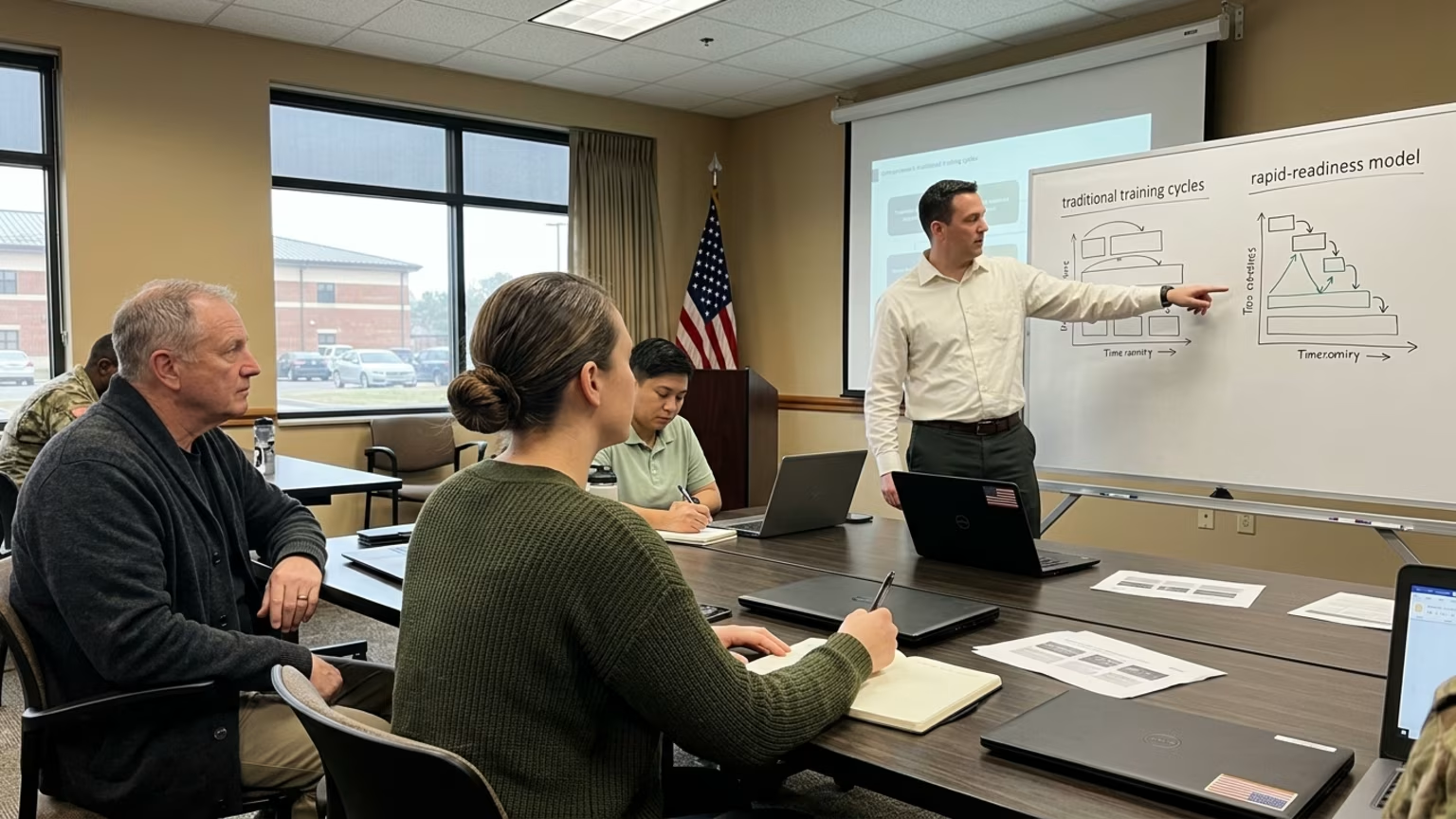
NATO instructors report that static training manuals are too slow for modern battlefields, highlighting the need for rapidly adaptable readiness programs.

Recent updates in cardiovascular guidance highlight ApoB testing and coronary artery calcium scoring for veterans seeking proactive health and longevity.
Build better habits around strength, recovery, sleep, hormones and healthy aging with practical guidance for active military personnel and veterans.
Explore BattleVet