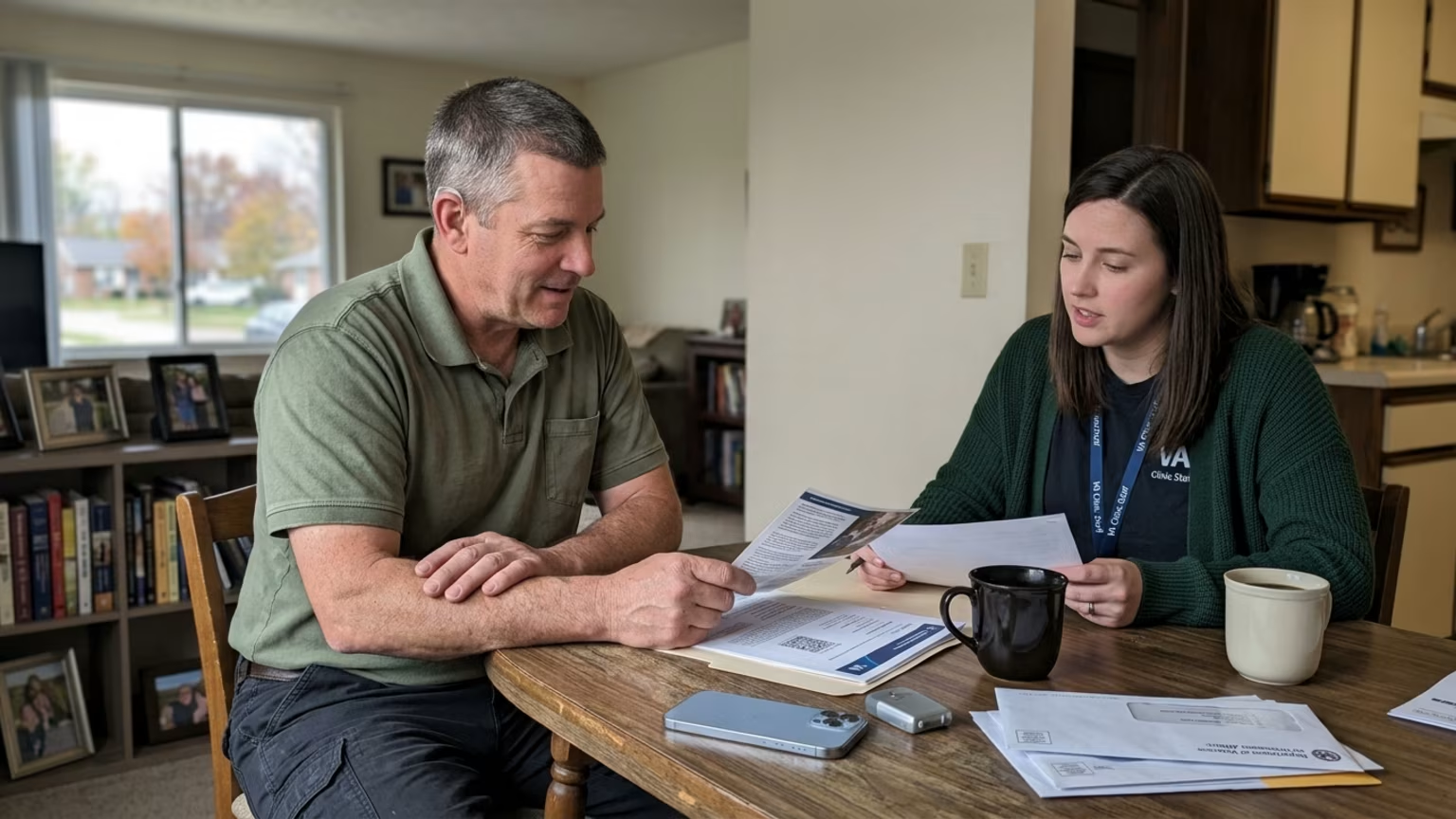

A breakdown of the October 2026 Hearing Health Foundation update on veteran hearing loss, tinnitus data, and proactive steps for long-term auditory care.





On October 1, 2026, the Hearing Health Foundation published its monthly newsletter roundup summarizing recent evidence concerning age-related and noise-related hearing loss. This publication is a curated summary rather than a new standalone clinical guideline. It directs attention to emerging areas of audiology research that impact long-term health. The foundation also links to external reporting on a large study regarding hearing loss and tinnitus among veterans.
The newsletter covers several distinct areas of scientific inquiry relevant to auditory preservation. One item discusses stem-cell-derived neurons that are intended to model inner-ear cells. Another item highlights a computational model designed to connect hearing test results with specific neuronal changes. The roundup also notes a reported interaction between a TECTB gene variant and noise trauma. Finally, the update points to research suggesting that age-related changes in the use of acoustic cues may begin in middle age.
Hearing capability directly impacts a veteran's physical function and daily communication skills. Active military service frequently involves exposure to hazardous noise environments. This constant exposure makes hearing protection an immediate occupational necessity during service. However, hearing health remains a critical priority long after the uniform comes off.
Maintaining the ability to hear clearly supports a veteran's overall quality of life and independence. The transition from active duty to civilian life requires a shift in healthcare priorities. BattleVet provides research backed guidance on military and veteran health to support these decisions. We focus on connecting physical performance with long-term health rather than treating them separately.
We recognize that hearing preservation is a crucial component of healthy aging and longevity. The latest research suggests that age-related auditory changes might start sooner than many people expect. Service members should view regular hearing evaluations as a standard part of their physical maintenance routine. We consistently cover topics related to physical preservation in our Healthy aging Articles | BattleVet.
Treating hearing as a vital part of communication prevents isolation and maintains social function. The newsletter emphasizes that age-related changes may affect speech understanding in noisy environments. A proactive approach to hearing care ensures that veterans remain capable and engaged in their communities. Veterans can find comprehensive resources for their long-term well-being in our Veteran lifestyle and healthcare Resources | BattleVet.
Understanding the risks associated with military noise exposure helps veterans make informed decisions. The October update places veteran hearing risk alongside broader topics like noise pollution and safer listening. You can read more about maintaining long-term physical readiness in our Military health Articles | BattleVet.
The external reporting linked in the October newsletter details a massive retrospective analysis of veteran health data. Researchers conducted a cross-sectional analysis using clinical audiometric records from VA facilities. A cross-sectional analysis looks at data to identify patterns and associations across a specific group. The data collection for this extensive study spanned from 1999 to 2021.
The researchers compared records from 267,395 veterans with a civilian clinical cohort of 40,912 adults. Among the veterans included in the analysis, 85.7 percent met the study's specific criterion for hearing loss. Furthermore, 47.6 percent of the veterans in this sample reported experiencing tinnitus.
These figures are striking, but they require proper context to understand their actual meaning. The data describes this particular study sample rather than the entire veteran population. The study participants were individuals who already had complete clinical audiometry on file at a VA clinic.
This specific veteran sample was predominantly older, and 94 percent of the participants were male. The researchers used a broad definition to classify hearing loss in their analysis. They defined it as having at least one threshold greater than 20 dB HL at any standard frequency in either ear.
Because of this broad threshold, a minor reading in one ear categorized a participant as having hearing loss. Therefore, the high percentage does not mean that 85.7 percent of all veterans have a disabling hearing condition.
However, the study did reveal clear and measurable differences between the veteran group and the civilian cohort. The analysis reported that hearing loss appeared earlier in veterans. The hearing declines were also more pronounced in the veteran group than in the age-matched civilian comparison. These pronounced differences were particularly notable at the 4 kHz frequency.
This specific 4 kHz frequency is highly associated with noise-induced hearing loss. The comparison with the civilian cohort is highly informative for understanding broader health patterns. It illustrates how the audiometric profiles of veterans differ from adults without military service histories. The data underscores the profound impact that a lifetime of occupational noise exposure can have on veterans.
The findings from this large analysis reinforce current guidance on proactive hearing protection. Tricia Ashby-Scabis is an audiology leader at the American Speech-Language-Hearing Association. In coverage of the study, she discussed the clinical significance of the 4 kHz findings. She described the pronounced declines at this frequency as consistent with noise-induced hearing loss.
Ashby-Scabis stated that these findings firmly support the use of hearing protection for people exposed to loud noise. Service members must treat hearing protection as a non-negotiable requirement when operating in loud environments. Consistent use of protective equipment during training and occupational duties mitigates long-term damage. The goal is to preserve maximum function for the years following active service.
For veterans already experiencing hearing changes, the VA provides specific care pathways and rehabilitation options. A practical example of available care is the VA Lexington audiology program. This specific program lists comprehensive services tailored to veterans with hearing and balance concerns. Their offerings include hearing and balance evaluations alongside hearing-aid and assistive-device services.
The VA Lexington program also provides dedicated tinnitus education, tinnitus management, and comprehensive aural rehabilitation. Veterans should take immediate proactive steps if they notice changes in their hearing or experience tinnitus. Seeking an evaluation is a practical measure for maintaining your long-term communication capability. If hearing or tinnitus is a concern, talk with a VA care team about scheduling an evaluation.
Getting accurate diagnostic information is the first step toward effective management and rehabilitation. Understanding your personal hearing profile allows you to make better choices about your ongoing care. The broad percentages reported in the study serve as a reminder to prioritize auditory evaluations. You can find more strategies for sustaining your health in our Veteran life Articles | BattleVet.
The October newsletter highlights how much we still have to learn about hearing preservation and cellular recovery. The foundation's updates on computational models and stem-cell-derived neurons show a push toward better understanding inner-ear mechanics. Researchers are also looking closely at how the TECTB gene variant interacts with noise trauma over time. As science clarifies the precise timeline of age-related auditory changes, how will future preventive care evolve to protect the long-term communication capability of tomorrow's service members?
Follow BattleVet for practical guidance on military and veteran health, strength, recovery, testosterone, sleep and healthy aging. Stay connected for new articles, research backed insights and clear information to help you stay capable for the years ahead.


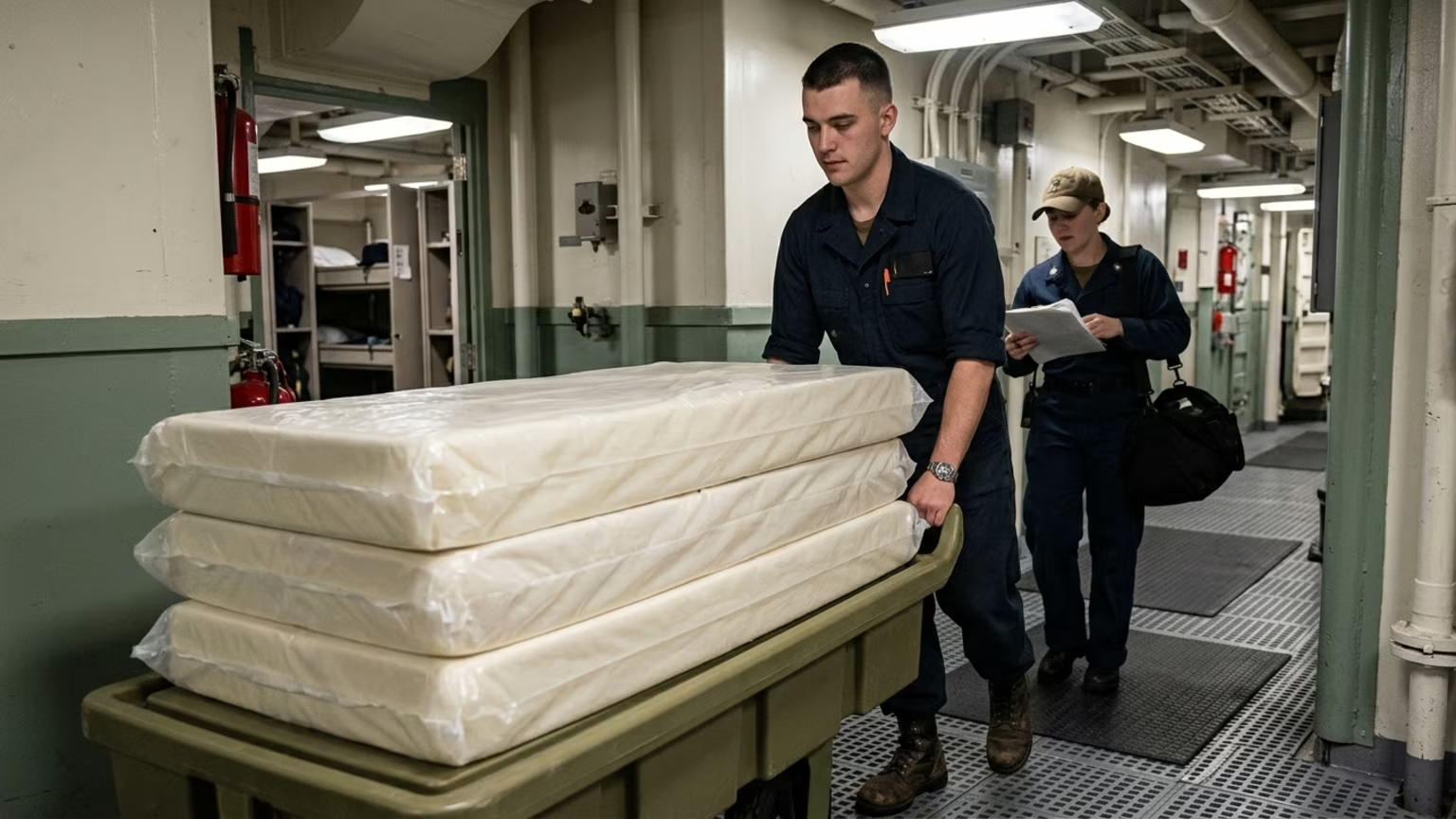
The Navy is evaluating engineered foam mattresses aboard USS Paul Hamilton to study shipboard sleep quality, rest and operational fatigue.

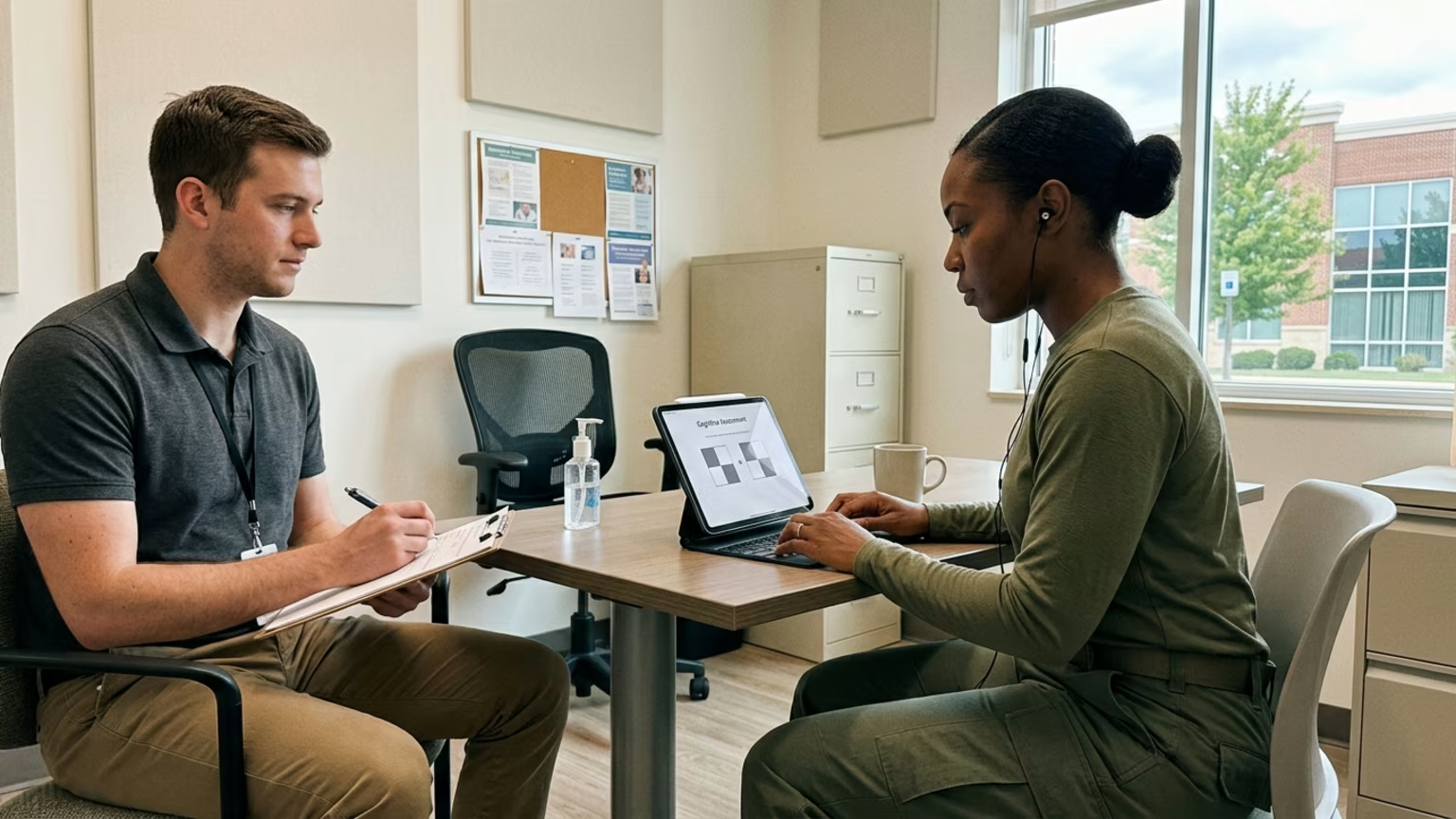
The Army reports 97 percent of Soldiers have completed its cognitive baseline assessment. Learn how this data tracks blast exposure and supports veteran health.
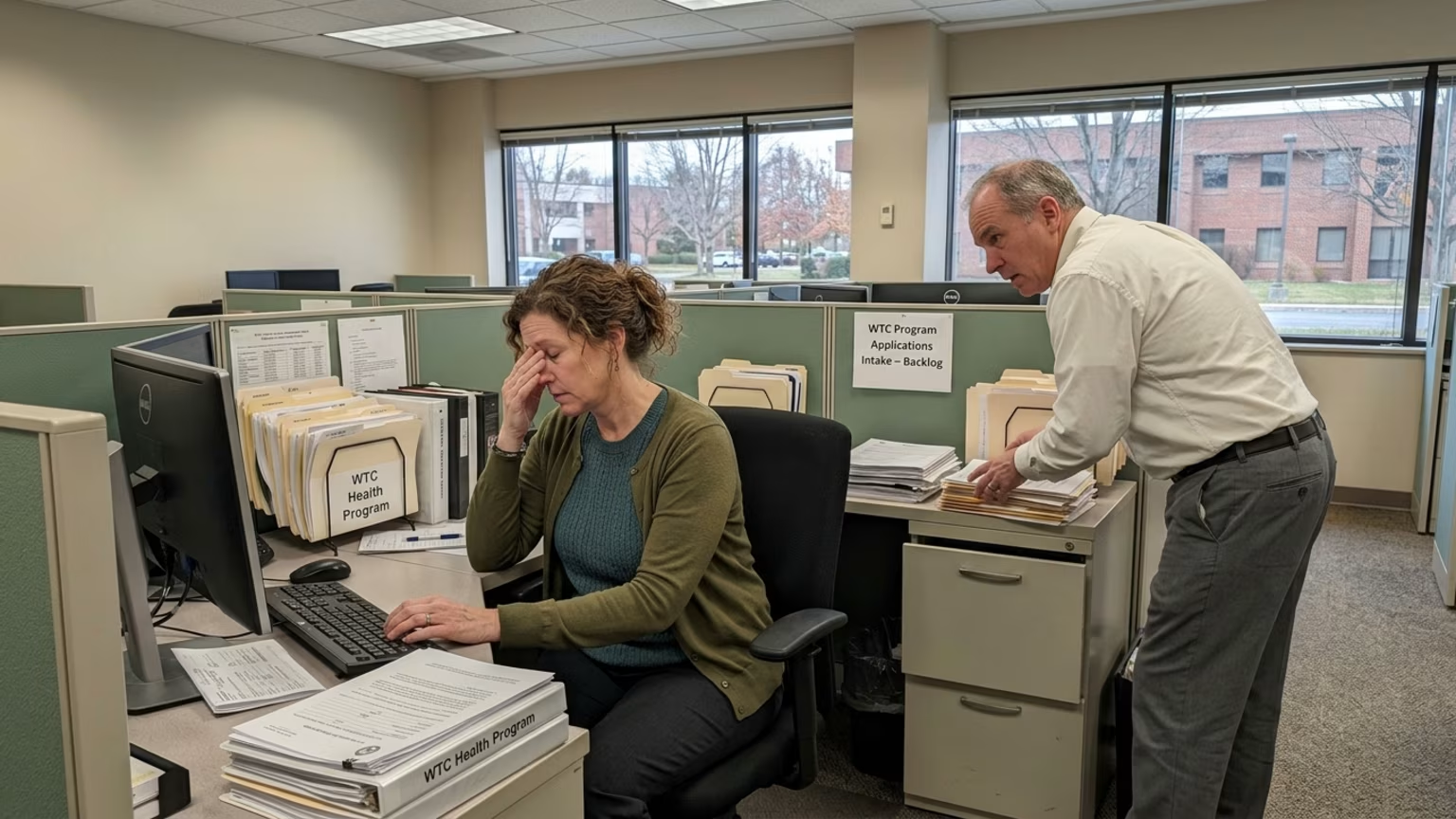
In August 2026, reports showed the World Trade Center Health Program operating 18% below its planned workforce. Learn how veterans can navigate these delays.
Build better habits around strength, recovery, sleep, hormones and healthy aging with practical guidance for active military personnel and veterans.
Explore BattleVet