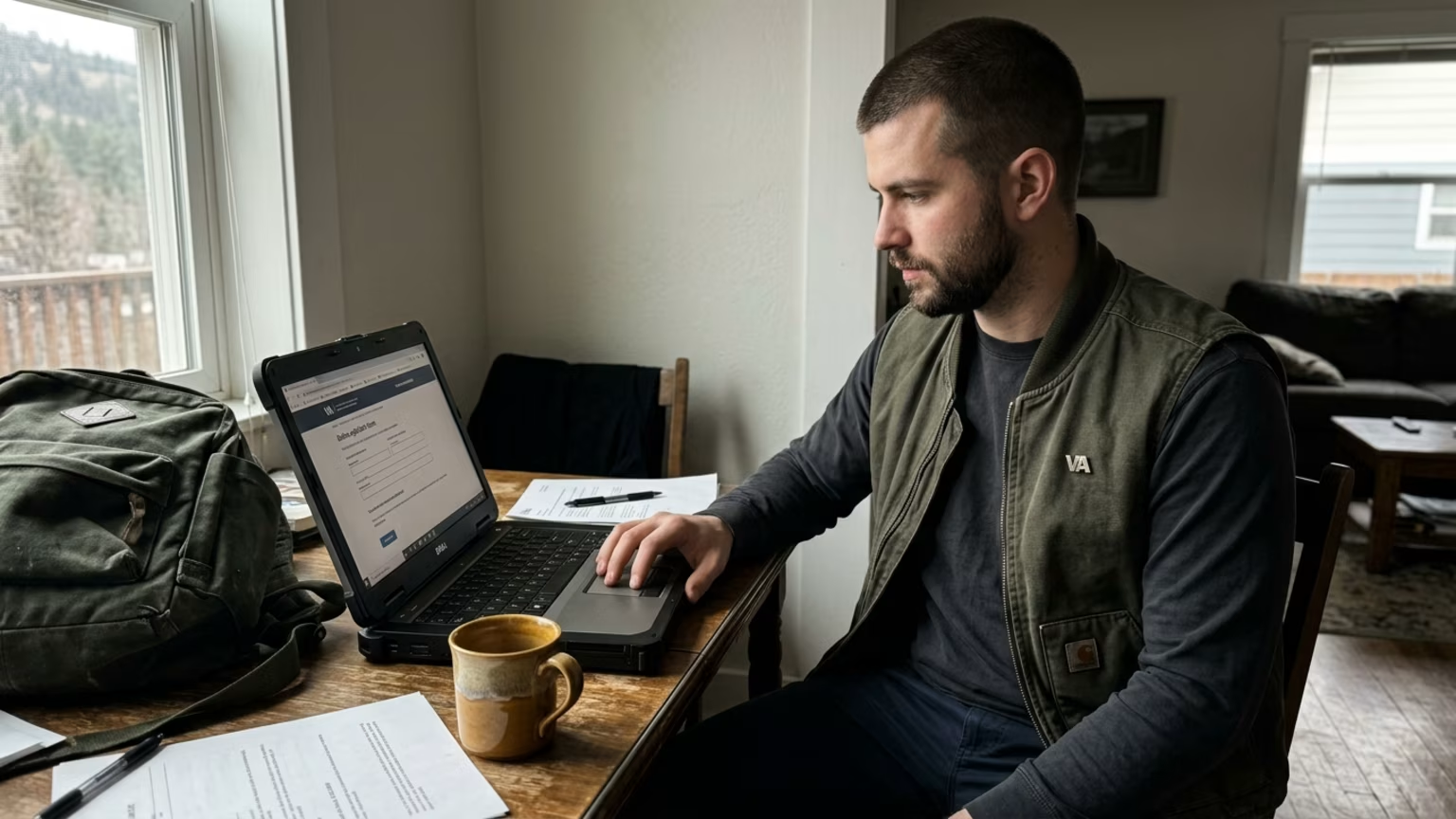

Applications are open for the 2027 Unbroken Spirit Veteran Program. Learn about the training phases, schedules, and how to prepare for this physical challenge.





Most people assume that physical readiness peaks during active service and slowly declines in civilian life. That assumption ignores how structured physical challenges can rebuild human capability years after discharge. On August 18, 2026, the U.S. Department of Veterans Affairs announced that applications are open for the 2027 Unbroken Spirit Veteran Program. This free initiative centers on challenge, personal growth, connection and service.
The VA describes the 2027 program as a free and yearlong initiative. It targets veterans seeking to test their physical and mental limits in a structured environment. The program was founded by veterans for veterans to address the isolation that often follows military separation. The official announcement outlines a progressive training model rather than a simple recreational trip.
In our experience, unstructured civilian fitness can quickly feel aimless for transitioning service members. The military provides a clear physical standard and a cohesive unit to train alongside. Removing those external motivators can severely impact physical maintenance and mental resilience. Programs like Unbroken Spirit provide exactly the kind of structured physical target needed to maintain readiness.
Trying to maintain fitness years after leaving service required a completely new mindset. The goal changed from immediate tactical readiness to healthy aging and longevity. I learned that connecting short term performance with long term health, focusing on mobility and cardiovascular function, was the real key to staying capable. Preparing for a prolonged wilderness challenge aligns perfectly with this mindset.
It forces individuals to prioritize joint health and cardiovascular endurance over superficial gym metrics. Understanding how military health priorities evolve is critical for long term wellness. The VA announcement does not present the program as a clinical treatment or a medical intervention. It does not provide evidence that participation prevents or treats post traumatic stress disorder, depression or traumatic brain injuries.
Instead, the VA framing emphasizes purpose, leadership, mentorship and peer connection. It is designed as a structured peer and outdoor development experience to build capability. Structured programming plays a vital role in maintaining function as we get older. Principles of healthy aging require consistent challenges to preserve muscle mass and joint integrity.
The Unbroken Spirit model encourages veterans to stay active and engaged with their own physical maintenance. By participating in a yearlong program, veterans establish habits that support long term wellness. The focus shifts from temporary achievements to building a resilient foundation for the decades ahead. It bridges the gap between solitary gym workouts and the collective endurance required in the field.
The 2027 Unbroken Spirit program is structured around three specific phases called Prepare, Challenge and Continue. The published program structure begins with 12 weeks of virtual leadership and personal development training. This initial phase is conducted entirely from home before any physical deployment. The VA says participants work with their team on body, mind and spirit during this window.
This preparation period ensures that participants build a baseline level of readiness and group cohesion. Phase two introduces the physical challenge in specific geographic environments. Wilderness backpacking participants spend six days in the mountains of western North Carolina. They hike, camp, work as a team and confront outdoor challenges together.
The adaptive sports track is intended specifically for veterans living with physical disabilities. This alternative track includes a week at the National Ability Center in Park City, Utah. Participants in this location will focus on adaptive winter sports and other outdoor activities. The phase three component, called Continue, extends well beyond the in person physical experience.
It focuses on mentorship, continued training, community engagement and service after returning home. The available announcement indicates that the program is designed to continue for roughly a year. However, the exact calendar differs significantly by team and extends into 2028 for both wilderness groups. This extended timeline reinforces that this is a prolonged development protocol rather than a single event.
The 2027 schedule lists three separate teams with overlapping operational calendars. The adaptive sports team runs from January 6 through September 29, 2027. Their phase two experience is scheduled for March 19 through March 25 in Park City. The summer wilderness backpacking team runs from April 7, 2027, through March 31, 2028.
Their six day phase two expedition is planned for June 15 through June 20 in western North Carolina. The final group is the fall wilderness backpacking team. This unit is scheduled from August 4, 2027, through June 30, 2028. Their specific phase two expedition takes place October 12 through October 17 in western North Carolina.
Veterans considering this initiative must adapt their training and performance routines immediately. The announcement describes activities that may challenge fitness, confidence and teamwork under field conditions. However, the VA does not publish standardized training loads, mileage, elevation gain or pack weights. It also does not outline specific strength benchmarks or mobility protocols required for entry.
This lack of published metrics means applicants must take the initiative to assess their own readiness. Prospective wilderness participants should ask the program for specific physical details before accepting a slot. You need to verify expected mileage, elevation changes and required equipment loads. Veterans with medical conditions, disabilities or prior injuries should obtain appropriate medical guidance before committing.
The program activities require sustained endurance and load bearing capabilities that demand proper physical conditioning. Interested applicants should seek medical clearance independent of the basic program application process. The adaptive sports track should not be treated as interchangeable with the wilderness backpacking tracks. It features a completely different participant population, geographic location and activity profile.
Veterans with physical disabilities should review the adaptive sports pathway specifically to ensure proper accommodation. Navigating veteran life often requires adjusting to new physical realities and limitations. Selecting the appropriate track ensures a challenging yet manageable environment for your current capability level. While the VA says there is no cost to veterans, applicants must perform personal due diligence.
The announcement does not state an application deadline or publish participant capacity figures. It also does not specify whether every possible travel, medical clearance or incidental expense is covered. Interested applicants should review the official announcement promptly and confirm all logistical requirements directly. Proper planning prevents unnecessary stress and ensures a smooth integration into the 12 week virtual training.
Endurance events in the wilderness also demand rigorous attention to physical restoration. Transitioning from a controlled home environment to sleeping on the ground introduces significant fatigue. Veterans should integrate strict recovery and sleep protocols during the virtual preparation phase. Arriving at the six day expedition with a sleep deficit increases injury risk and degrades performance.
Building good habits early ensures your body can handle the compounding stress of daily hiking. The core value of this program lies in its potential to build community and resilience. One unnamed veteran quoted by the VA described hiking the Appalachian Trail as a lifelong memory. That veteran noted that the program reinforced how resilience does not require facing difficult experiences alone.
While this testimonial represents one unnamed participant, it highlights the social benefits of group endurance events. Rebuilding connections with fellow veterans often provides as much value as the physical conditioning itself.
This multi stage model raises a forward looking question for veteran physical health and community programming. Will progressive preparation and sustained peer engagement become the standard operating model for future outdoor rehabilitation initiatives? The current structure shifts the focus from isolated adventures to sustained mentorship and community involvement. Coaches and military transition professionals can use this three phase structure as a practical discussion framework.
Preparation before exposure and graduated challenge during the event create a sustainable path forward. The transition from active duty strips away the familiar structures that keep service members capable. Rebuilding that capability requires time, deliberate effort and a community moving in the same direction. Physical readiness is a quiet, daily practice that endures long after the uniform is put away.
Follow BattleVet for practical guidance on military and veteran health, strength, recovery, testosterone, sleep and healthy aging. Stay connected for new articles, research backed insights and clear information to help you stay capable for the years ahead.


Combat Stress’s workplace guidance emphasizes listening over diagnosis. Recent U.S. veteran insomnia research adds context for sleep and recovery concerns.


ErythroMer's reported storage design could matter for military care. An academic review still lists it as preclinical, with human evidence ahead.
A large veteran study links PTSD and documented social needs to later cognitive impairment, reinforcing the value of connected care planning.
Build better habits around strength, recovery, sleep, hormones and healthy aging with practical guidance for active military personnel and veterans.
Explore BattleVet