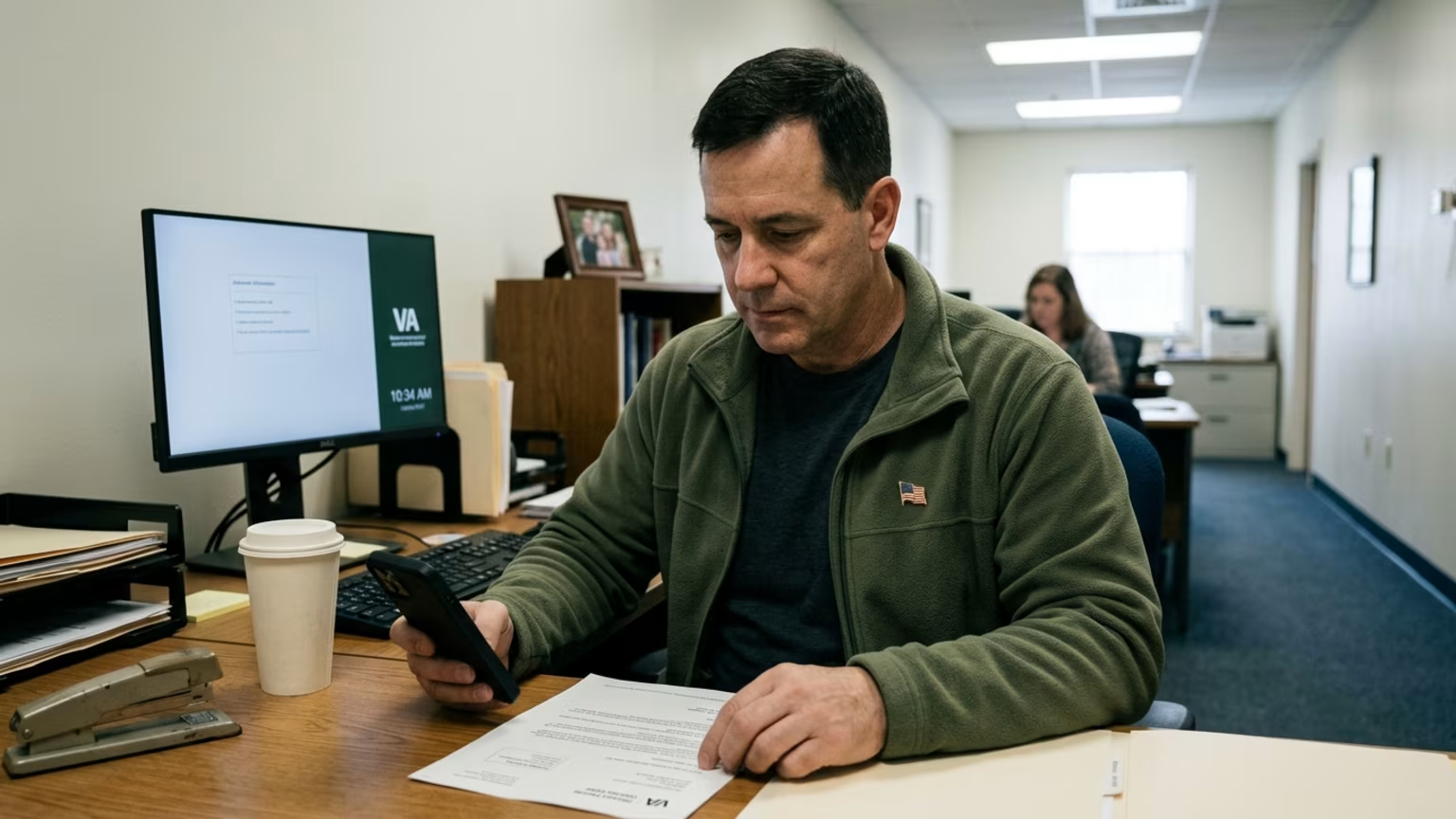

The VA processed over 3 million disability claims in fiscal year 2026. Read how updated decision timelines and evidence rules impact veteran healthcare access.





On September 18, 2026, the U.S. Department of Veterans Affairs announced it had processed more than 3 million disability benefits claims for the fiscal year. This milestone arrived with approximately one week remaining before the fiscal year officially ended. The department stated this volume had already surpassed its previous record of 3.001 million claims completed at the end of fiscal year 2025. By this September date, the agency reported awarding more than $207 billion in compensation and pension benefits to veterans and survivors.
VA Secretary Doug Collins stated the department aims to make benefits faster, better, and more convenient for veterans. These reported improvements in speed matter deeply for veterans navigating the health system after military service. A pending disability claim often acts as the primary gateway to consistent medical care and necessary financial stability. When the administrative system moves slowly, former service members face extended delays in securing the resources they need to maintain their health.
Faster decisions help veterans transition smoothly into civilian life and establish reliable medical routines. When veterans face an extended wait for a disability decision, they often delay seeking specialized treatment for physical injuries or chronic conditions. Quick processing allows individuals to confirm their medical coverage and move forward with structured rehabilitation or performance plans. The ability to access these resources promptly helps veterans maintain their strength, mobility, and fitness as they age. For guidance on maintaining your physical capability over time, read our healthy aging Articles.
Timely benefits decisions are a practical component of a long term health strategy. This update provides practical context for anyone preparing to file a new claim or currently waiting on a pending decision. Understanding how the agency handles these files helps applicants set realistic expectations for their own timelines. You can read more about navigating these transition systems in our veteran life Articles.
The definition of the backlog itself provides important context for anyone waiting on a decision. The department and related coverage define the benefits backlog strictly as claims pending for more than 125 days. This specific categorization means that newer claims may still sit pending in the system without being counted in that official backlog group. Recognizing how the agency measures its success helps you interpret the news without feeling frustrated if your own paperwork takes longer than the posted average.
While the agency reports better overall metrics, the internal timeline still depends heavily on how individuals prepare and submit their documentation. It is vital to separate the agency performance measures from your individual situation. The 3 million claim figure describes the total volume of claims the agency completed over the fiscal year. It does not mean that every veteran will see a rapid resolution.
The agency explicitly notes that newer claims may still sit pending without being counted in their official backlog numbers. Knowing this distinction helps veterans plan their healthcare steps without relying on generalized averages. For more perspectives on these processes, visit our military health Articles.
The department shared specific figures regarding its current efficiency and processing speed. The most prominent change involves the average time required to complete a disability decision. According to the agency, this average processing time fell to 75.6 days in September 2026. This is a noticeable drop from the 141.5 days reported on January 20, 2025.
This shift represents an approximate reduction of 46.5 percent in decision wait times over that period. Interestingly, a separate agency process page listed an even lower monthly measure of 68.4 days to complete claims in August 2026. The available reports do not explain the exact discrepancy between the August and September figures. This difference may stem from different reporting periods, varied claim populations, or alternative calculation methods.
Regardless of the exact reason, both numbers reflect a downward trend in processing duration compared to previous years. The agency also addressed the quality and volume of its decisions alongside these speed improvements. The department reported a claims processing accuracy rate of 94 percent, noting this as the highest rate in two years. Furthermore, the Veterans Benefits Administration continued to grant more than 60 percent of the claims submitted by veterans.
Conversely, approximately 3 percent of VBA decisions went to the Board of Veterans Appeals for formal review. Finally, the agency provided updated data on the benefits backlog. The department and related coverage define this backlog specifically as claims pending for more than 125 days. The agency reported this backlog had fallen by more than 70 percent since January 20, 2025.
The department noted this reduction followed a 24 percent increase during the prior administration. The agency attributed these recent performance figures directly to the current administration. Beyond disability claims, the agency presented this processing milestone alongside several other service access figures. The department stated it enrolled more than 270,000 new veterans in VA health care during 2026.
To support this growing population, the agency reported opening 41 new health care facilities since January 20, 2025. These health care access figures highlight a broader effort to expand capacity, though they do not prove that claims processing itself caused improved health outcomes. The agency also released data regarding its appointment volumes for the previous year. For fiscal year 2025, the department reported completing 82,083,918 direct care appointments.
This figure represents a 4.1 percent increase from fiscal year 2024. Additionally, the agency completed 59,989,662 community care appointments, which was up 12 percent from fiscal year 2024. To further improve accessibility, the agency said it had offered veterans more than 3.2 million appointments outside normal operating hours since January 20, 2025. The broader trend described by the department points toward a simultaneous increase in completed claims and available medical care.
However, the available reports do not publish a full monthly workload series or breakdowns by veteran demographic, service branch, or specific medical condition.
These updated performance figures reinforce the need for precise and timely action when you interact with the claims system. A lower average processing time does not guarantee a rapid decision for every individual veteran. The agency states that processing times vary based on claim type, complexity, and the number of claimed conditions. The timeline also depends heavily on how long it takes to collect necessary evidence.
The department identifies evidence gathering as usually the longest stage of the entire process. During this phase, the agency might ask you for more information, request private medical records, or schedule a claim examination. You can submit supporting evidence at any time, but doing so strategically is critical. The agency warns that submitting new evidence after the initial gathering stage can force your claim back into review.
To keep your claim moving efficiently, you must organize your documentation early. The department accepts VA medical records, private medical records, and supporting statements from familiar individuals. Fellow service members, family members, clergy members, and law enforcement personnel can provide these relevant statements. Consolidating this material prevents unnecessary delays later in the process.
Veterans generally have up to one year from the date the agency receives the claim to submit their evidence. You must also attend any examinations the department schedules for you during the review. The agency specifically advises claimants not to miss these claim exams arranged during the process. If you need to check your status, you should use the official online tool rather than relying only on physical mail.
The online platform displays the current stage of your claim and highlights any pending requests for additional information. For broader context on managing your health documentation and routines, visit our Veteran lifestyle and healthcare Resources. The status timeline shown online is not a guaranteed completion date. The agency explicitly says the timeline displayed on the portal can vary according to the complexity of the claim.
After the agency reaches a conclusion on your file, obtaining the result quickly allows you to plan your next steps. Once a decision is finalized, you can immediately review and download the decision letter through the official claim status tool. The agency will still send a physical copy to you by mail. The department says this mailed letter should arrive within 10 business days, although it may take longer depending on postal speeds.
If you receive an unfavorable decision issued on or after February 19, 2019, the agency offers three distinct decision review options. The appropriate route depends heavily on the circumstances of the decision and the evidence available to you. Veterans may want to seek help from an accredited representative or a veterans service organization before choosing a review option.
Will the department be able to sustain these record processing volumes and reduced wait times without compromising the thoroughness of complex medical evaluations in the coming years?
Follow BattleVet for practical guidance on military and veteran health, strength, recovery, testosterone, sleep and healthy aging. Stay connected for new articles, research backed insights and clear information to help you stay capable for the years ahead.


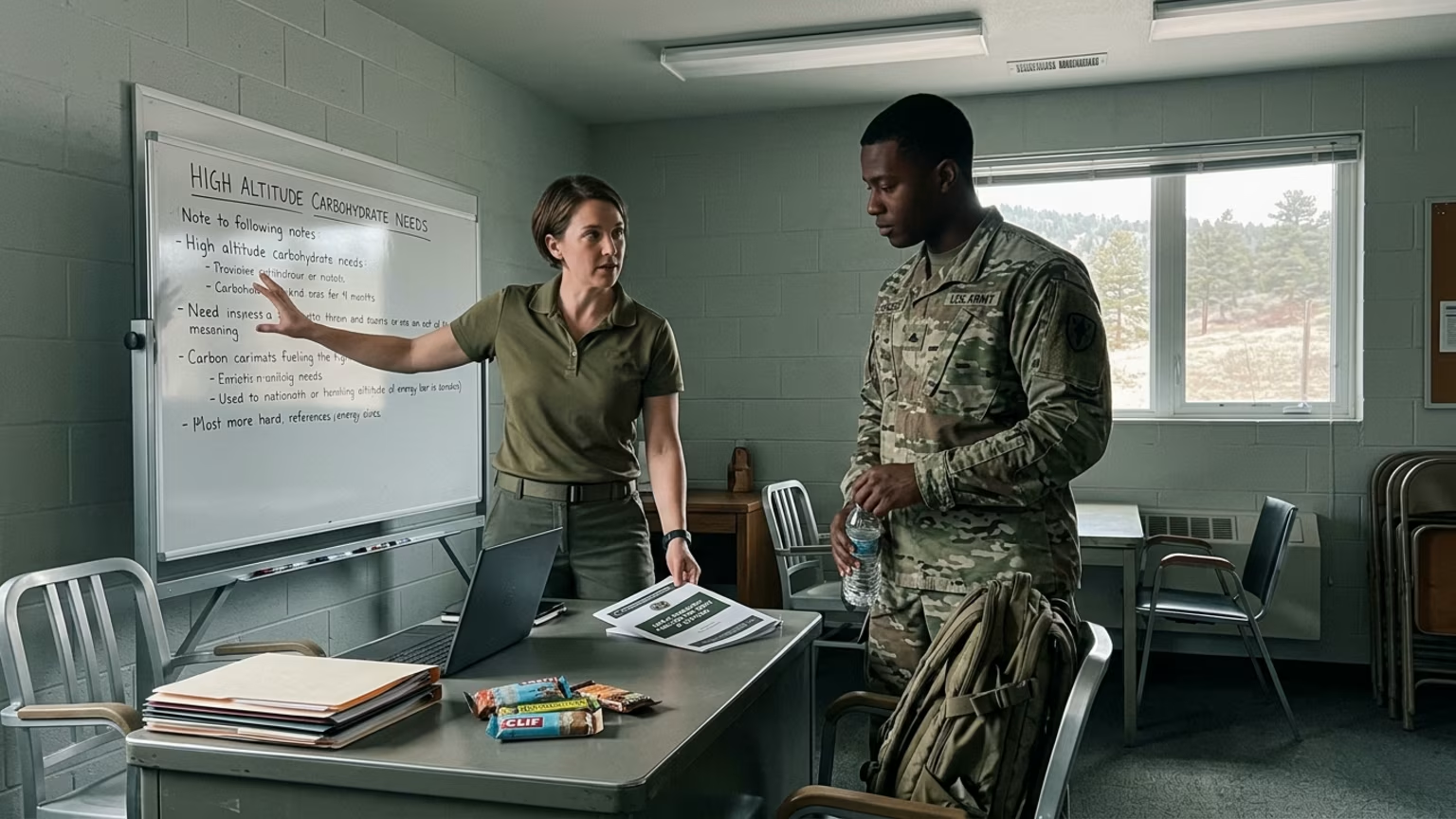
The U.S. Army highlights carbohydrates and adequate calories as practical field guidance for sustaining soldier performance during high altitude operations.


A recent KRDO feature and clinical research highlight trauma-sensitive yoga as a practical tool for veterans managing PTSD and stress recovery.

Men’s Journal recently published a 15-minute military core circuit. Discover how this bodyweight routine fits into broader functional readiness and recovery.
Build better habits around strength, recovery, sleep, hormones and healthy aging with practical guidance for active military personnel and veterans.
Explore BattleVet