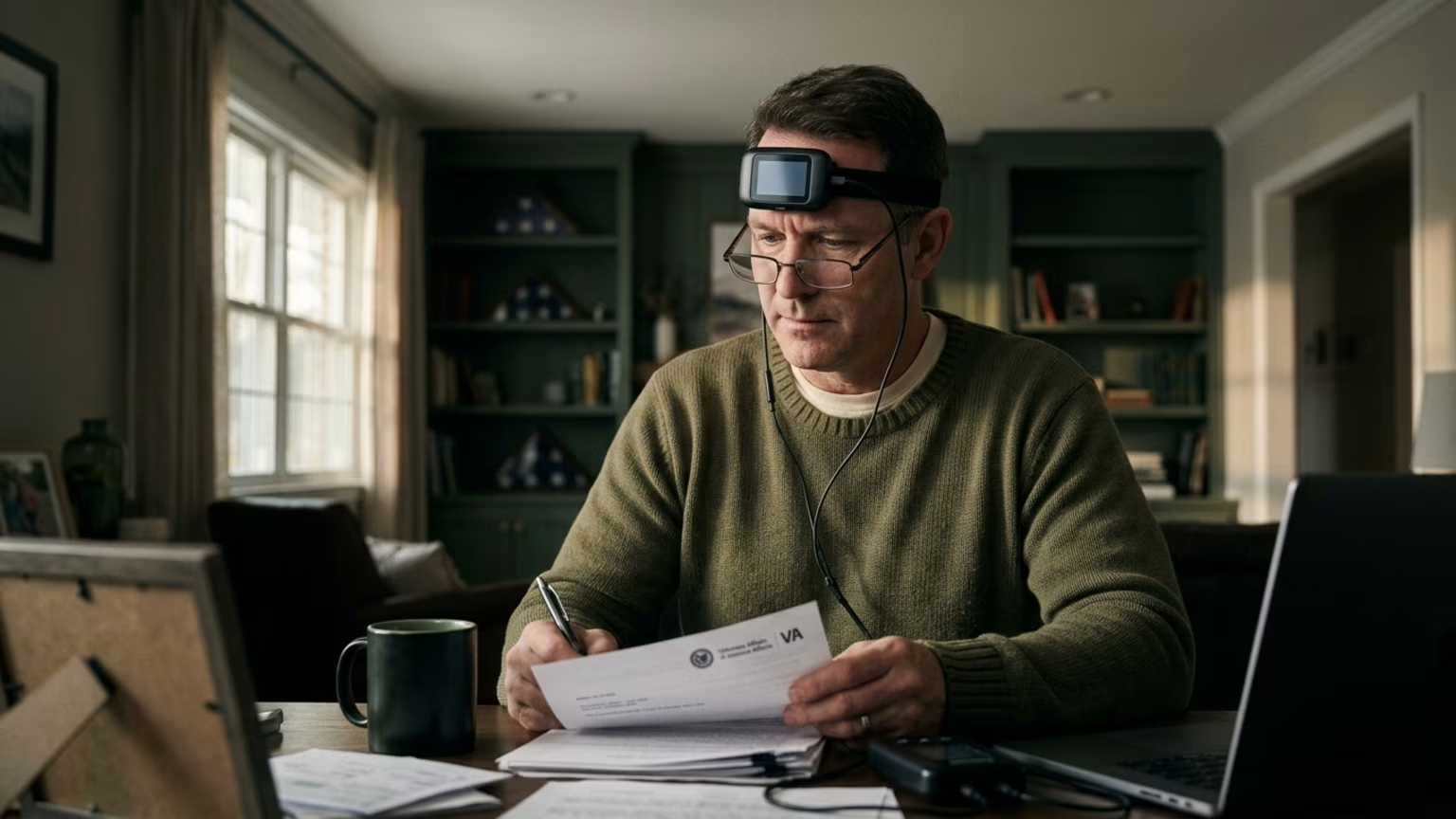

A new VA contract expands access to Neurolief's ProlivRx and RelivionMG neuromodulation therapies for veterans managing depression and acute migraines.





If you or someone you know is in immediate danger, call 911. For veterans experiencing a crisis, contact the Veterans Crisis Line by dialing 988 and pressing 1, or text 838255 for immediate support.
Neurolief has announced a new Department of Veterans Affairs contract covering two prescription neuromodulation therapies. The agreement includes ProlivRx for adults with major depressive disorder who have not achieved adequate relief from antidepressant medication, and it also covers RelivionMG for acute migraine treatment. ProlivRx received FDA approval in December 2025 as a prescription at-home brain-neuromodulation therapy. According to Neurolief, multiple VA medical centers have already begun prescribing the therapies through the Veterans Health Administration.
The VA serves approximately nine million enrolled veterans annually. A Neurolief-released description of the VA opportunity notes that roughly one in three veterans in VA primary care have symptoms of depression. Additionally, more than 500,000 veterans have been diagnosed with migraine in the VA system. A separate VA-affiliated research summary reports elevated symptoms of depression in 10% of veterans and generalized anxiety disorder in 8%.
These symptoms are closely linked with functional impairment and suicidality. A large cohort study of 1,582,834 veterans with major depressive disorder examined standard care patterns. The study found that most of these patients received recommended treatment. However, the proportion of veterans not receiving recommended treatment rose to 10.2% in 2025.
Depression and chronic migraines can severely disrupt a veteran's ability to maintain employment and engage in family life. When traditional medications fail to provide adequate relief, these disruptions often become more pronounced and difficult to manage. A lack of effective treatment options can lead to increased isolation and physical decline over time. By introducing new tools like neuromodulation, the VA aims to offer alternative paths to stability.
This trend highlights a need for practical interventions that fit into daily routines. Neurolief frames this new contract as a way to extend physician-supervised care beyond the clinic walls. The company suggests this provides a non-pharmacologic option for those facing barriers to frequent in-person visits. Veterans living in rural or underserved areas often struggle with consistent facility access.
Providing at-home treatment options could make consistent care more practical for these individuals. It represents a potential shift in how chronic symptoms are managed outside the hospital setting. Managing symptoms of depression and anxiety is a core part of building sleep, stress, and resilience after military service. The integration of non-invasive therapies may help bridge the gap for those struggling to find relief.
The pivotal MOOD study evaluated ProlivRx in a multicenter, double-blind, sham-controlled trial. The study involved 124 participants with a prior inadequate response to antidepressant treatment. Researchers measured outcomes at the eight-week mark to gauge device effectiveness. At eight weeks, 21.3% of participants receiving active ProlivRx achieved remission compared with 6.0% in the sham group.
The use of sham-controlled trials is an important standard in evaluating new medical technologies. In these trials, the sham group receives a simulated treatment that mimics the active device. This helps researchers determine if the actual neural stimulation is causing the improvement, providing a clearer picture of specific clinical impacts. Without these controlled comparisons, it would be difficult to isolate the true effect of the neuromodulation therapy.
The same MOOD study also measured overall clinical progress for the participants. It reported clinically substantial improvement in 61.7% of active-treatment participants versus 32.0% of sham-treatment participants at eight weeks. The reported p-value for this improvement was 0.0034.
According to Neurolief’s announcement, remission increased to 32% with continued treatment over time. Furthermore, the proportion of participants classified as having severe depression dropped significantly. It declined from 81% at baseline down to 15% during the trial. These ProlivRx results were published in the peer-reviewed journal Brain Stimulation.
For migraine treatment, RelivionMG was evaluated in the pivotal RIME study. This was a multicenter, double-blind, sham-controlled trial involving 131 participants. The headset uses three adaptive stimulation channels to target branches of the occipital and trigeminal nerves. These specific nerves are directly involved in migraine-related pain processing.
The company positions RelivionMG as a non-invasive, drug-free option for acute migraine treatment. Two hours after treatment initiation, 46% of active-treatment participants were pain-free. This compares with 11.8% of sham-treated participants at the exact same time point. Additionally, 47.2% were free of all migraine symptoms compared with 11.1% in the sham group.
The RIME announcement reported no serious adverse events during the clinical trial. However, patients must remember that no medical device is entirely risk-free or appropriate for everyone. RelivionMG is indicated specifically for acute migraine treatment in adults. It is not currently described as a preventive migraine therapy in the available source material.
This VA contract introduces new treatment variables for veterans managing chronic health conditions. However, it does not guarantee that every medical center stocks or prescribes the devices immediately. The announcement notes that multiple sites have begun prescribing them. It does not identify all participating locations or outline the specific operational process for obtaining a prescription.
Veterans should confirm device availability and eligibility directly with their local VA clinician. The VA policy defines treatment-resistant depression using specific clinical criteria. It describes this condition as major depressive disorder that does not adequately respond to at least two standard antidepressant trials from different pharmacologic classes. In contrast, ProlivRx is indicated for adults who have not achieved adequate relief from at least one antidepressant medication.
This gap between FDA indication and internal VA policy means prescribing pathways may vary. Veterans should ask their mental health professional how local protocols apply to their history. Patients need to bring a current medication list and detailed treatment history to their appointments. Tracking migraine frequency and prior side effects can also help clinicians assess these options.
If a provider recommends RelivionMG, veterans should clarify how it fits their existing plan. They should ask whether a non-invasive neuromodulation device is appropriate alongside their current medications. Veterans should also ask who will provide the necessary device training for proper home use. Understanding follow-up procedures and what to do if symptoms worsen is critical for safety.
Incorporating a new medical device into a daily routine requires commitment and clear communication with a care team. Veterans using an at-home system must follow the prescribed schedule exactly as directed by their physician. Skipping sessions or using the device incorrectly could compromise the potential benefits shown in the clinical trials. Patients should keep an active dialogue with their primary care provider regarding any new symptoms.
The VA is simultaneously testing other novel interventions for treatment-resistant depression. A randomized controlled psilocybin trial is currently underway for veterans with major depression at five VA sites. This psilocybin trial is registered as PIVOT, or Psilocybin Intervention for Veterans Overcoming Treatment-Resistant Depression. It is intended to evaluate both efficacy and safety in this specific population.
These concurrent developments show that neuromodulation is just one additional option. The VA is pursuing multiple research and treatment avenues for veterans. Complex conditions require comprehensive assessment rather than relying on a single piece of technology. Seeking veteran life articles and speaking directly to a provider can help set realistic expectations.
The integration of new technologies into the Veterans Health Administration reflects a changing approach to patient care. Devices like ProlivRx and RelivionMG bring supervised treatments directly into the home environment. They offer alternative avenues for those who have not found success with standard medications alone. Managing chronic pain and persistent mental health conditions requires a broad toolkit.
Staying informed on new developments is a regular part of following a military and veteran health blog. As multiple VA medical centers gain experience with these neuromodulation devices, more data will emerge. Clinicians will learn how these tools perform in real-world scenarios outside of controlled clinical trials. Tracking these outcomes will be essential for refining future health policies.
The introduction of home-based neuromodulation raises important considerations for long-term health management. Will the expanded use of at-home devices eventually redefine standard clinical protocols for depression and migraines across all VA facilities?
Follow BattleVet for practical guidance on military and veteran health, strength, recovery, testosterone, sleep and healthy aging. Stay connected for new articles, research backed insights and clear information to help you stay capable for the years ahead.


VA research raises questions about suicide-screening answer accuracy and supports clearer conversations, trust, and broader clinical assessment.

JAMA estimates low testosterone readings in active-duty Army men. See the threshold data, study limits, and implications for clinical follow-up.
The Army’s HVAC task force targets hot barracks. Here is what its project figures mean and how to assess future housing and sleep-related claims.
Build better habits around strength, recovery, sleep, hormones and healthy aging with practical guidance for active military personnel and veterans.
Explore BattleVet