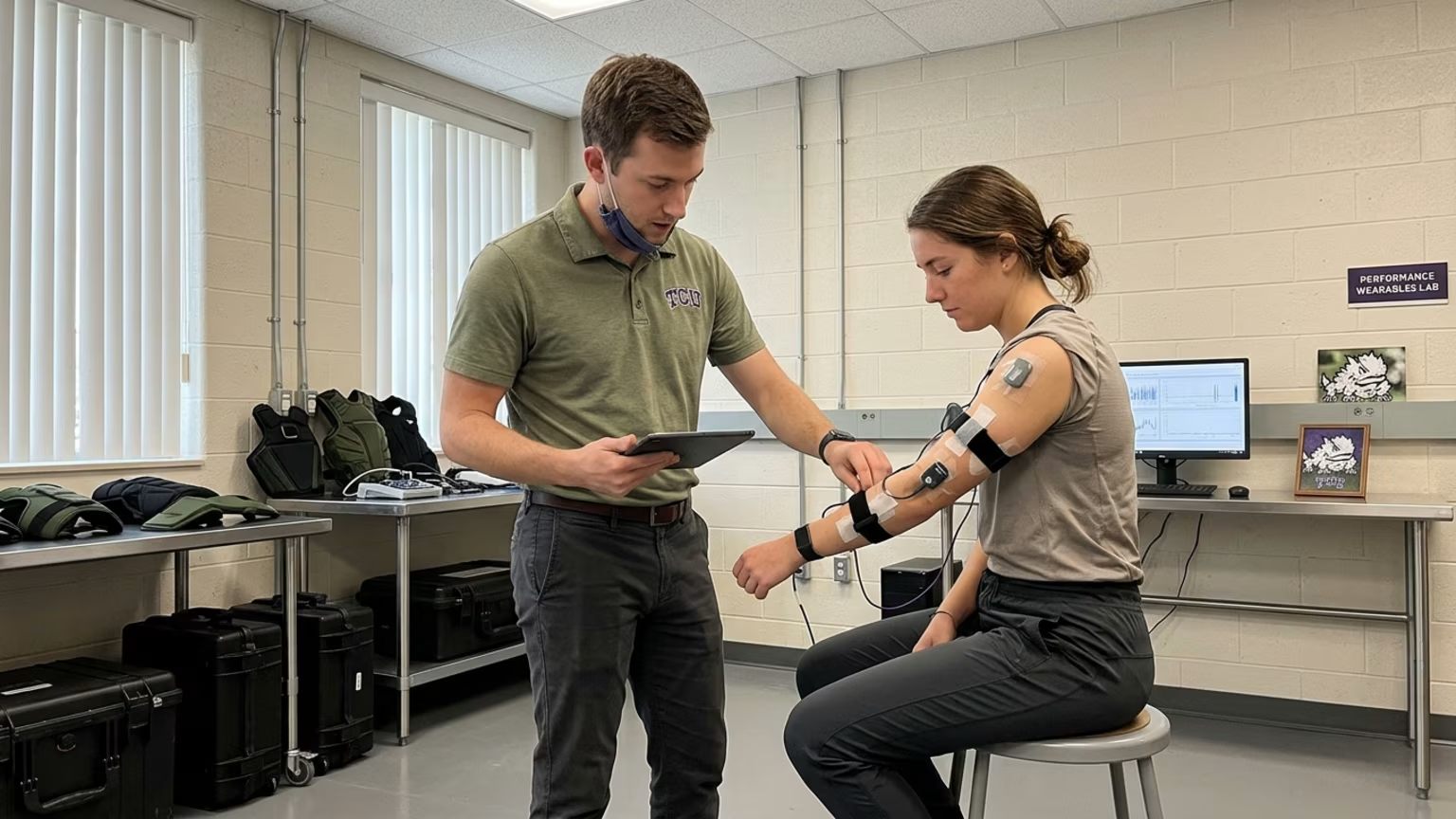

TCU launched a new lab to independently test military wearables and protective gear. Learn why independent validation matters for veteran recovery and sleep tech.





On September 4, 2026, Texas Christian University announced the launch of its Athlete Equipment and Materials Design Lab. This new research and testing facility operates within the university's Department of Fashion Merchandising. The lab focuses specifically on evaluating products used in extreme and demanding environments. TCU says researchers will examine how apparel and equipment manage sweat and heat. The team will also evaluate how wearable materials handle movement, friction, pressure and water exposure.
The new facility is directed by Charles Freeman, who serves as TCU’s professor and chair of fashion merchandising. Freeman is also the director of research and creative scholarship in the College of Fine Arts. The university says the facility will support research involving athlete performance and physical rehabilitation. The lab will also evaluate wearable health technologies, protective equipment and NASA-inspired soft goods. TCU describes the lab as a shared space for students, faculty, researchers and industry partners that features industry-level testing capabilities.
Freeman characterized the new facility as an industry lab rather than a conventional academic research lab. He stated that students should encounter equipment on campus that closely resembles what they will use in their first jobs. Freeman noted that garments create an environment around the body during intense physical activity. He explained that the way clothing handles heat, sweat and movement is critical. This material performance can directly affect comfort, recovery, physical capability and safety.
The U.S. Army has formally acknowledged that recovery, sleep, nutrition and training loads directly affect readiness and injury risk. However, the military branch also stated that its Holistic Health and Fitness program does not yet have an enterprise-wide solution for monitoring those factors. This lack of a unified tracking system means there is no clear standard for guiding targeted health interventions across the force. Service members are frequently left to navigate a crowded commercial market of fitness trackers and recovery tools on their own.
An independent academic facility like the new TCU lab provides a highly necessary filter for commercial equipment claims. Vendors frequently market their devices using large numbers and sweeping promises that lack independent clinical validation. For example, MRIGlobal describes a military-oriented wearable platform intended to transmit heart rate, respiration rate and core temperature. MRIGlobal says its platform tracks more than 400 metrics related to performance and physical fitness. The device also monitors physiological data linked to recovery, sleep and injury risk.
Those impressive figures are specific claims about one platform, and they should not be generalized to wearable technology as a whole. Wearables can generate massive quantities of physiological and environmental data very quickly. The fundamental problem is determining which pieces of data are actually actionable for the service member wearing the device. Adding another complex dashboard of metrics is completely useless if it does not lead to a practical change in a daily routine.
TCU says future work may include recovery products, wound-care materials and adaptive equipment. The lab may also evaluate smart integrated gear for military personnel, first responders and industrial workers. Independent testing helps distinguish tools that genuinely improve sleep and physical restoration from those that merely add digital noise. Service members need to know if a wearable can accurately identify excessive heat strain or support better clinical rehabilitation. Reliable information allows active personnel to make better health decisions without relying on aggressive commercial marketing.
Jim Weinstein, the director of the Roach Institute for Athlete Engineering, highlighted the value of connecting human measurements with specialized materials. Weinstein said the lab could connect human body measurements with the equipment closest to the skin. This includes tracking movement, heat strain, fatigue and overall physical performance. He noted that this connection could support research involving athletes, first responders, military personnel and others working in demanding environments. This targeted focus on real-world applications provides a strong foundation for future military health research.
Reuben Burch, TCU’s vice provost for research, noted that the lab adds a testing capability to Texas that was not previously available at the university. Burch stated that the facility could expand research beyond human performance into the specific equipment and materials worn by users. Understanding how a material interacts with the human body is essential for preventing friction injuries and heat casualties in the field. This capability represents a practical step toward developing better protective equipment for intense operational environments.
The recent announcement from Texas Christian University does not mean the school has already verified a specific military wearable. Service members should not interpret the news as an endorsement of any particular commercial recovery product or injury-monitoring system. TCU is actively building a new testing and research capability rather than publishing a list of validated consumer products. Users evaluating a recovery or monitoring device should always look for evidence that it has been tested against an accepted reference method.
Military consumers should make a careful distinction between a basic measurement claim and a validated clinical outcome claim. A device that reports heart rate, temperature or sleep duration is not automatically demonstrating that it improves readiness or physical recovery. You should ask whether a device study involved a relevant military or occupational population before trusting its output. The most critical requirement is that the device output actually changes a specific decision or health intervention for the user.
Privacy and command-use questions also require careful attention when specialized devices collect detailed physiological information. This is particularly important in military settings where health data may be transmitted to supervisors, medical teams or command posts. Service members must balance the desire for better health and longevity tracking with the operational risks of broad data collection. Independent academic labs can help establish standard protocols for determining what physiological data is truly necessary for unit readiness.
This rigorous approach to testing extends directly to specialized medical support and physical rehabilitation. TCU says the new lab will work closely with its engineering, physics and kinesiology programs to test integrated gear. Graci Finco, an assistant professor of kinesiology, noted the importance of specialized collaborations across different academic departments. The university’s Limb Loss & Difference Lab has already begun collaborations with Freeman and the Roach Institute for Athlete Engineering.
These cross-disciplinary collaborations are specifically intended to improve care and performance for people with limb loss and limb difference. Veterans and former service members considering wearables for rehabilitation should look for evidence drawn directly from their relevant patient population. The Roach Institute for Athlete Engineering is an existing TCU partner in this broader material testing effort. TCU says the Roach Institute was made possible by a $10 million gift from the Roach Foundation of Fort Worth.
The Roach Institute focuses on helping organizations in sports, healthcare, defense and public safety validate products and test technology in real-world conditions. The institute also says its work includes applied research, scientific validation, product and intervention evaluation, and real-world testing. The university expects the new lab to play a central role in expanding advanced material education over the next few years. TCU anticipates the facility will support a planned Ph.D. program in advanced soft goods and textile systems scheduled to launch in 2027.
Other research institutions are also conducting military-relevant research into sleep and physical readiness outside of standard laboratory settings. Researchers at the University of New Brunswick are currently investigating a wearable headband intended to monitor brain activity during sleep. They want to study whether precisely timed sound stimulation can increase slow-wave sleep in demanding environments. However, the lead researcher emphasized that this sleep-enhancement work remains at an early exploratory stage rather than being an established operational capability.
A 2026 Military Health System Research Symposium program featured several sessions on medical readiness and specialized physiological monitoring. The symposium included detailed research on sleep quality among UH-60 aircrew members operating under demanding schedules. It also featured research on sleep’s role in symptom reduction after a concussion among active-duty service members. A separate 2026 military-relevant research presentation described wearable sensing and physiological monitoring as tools for characterizing heat strain in challenging environments.
These ongoing scientific studies reinforce the need for independent facilities that can test how specialized clothing and equipment handle real-world operational stress. A clinical-trial record involving Marines describes the use of smartwatches and analyte sensors to track physiological and sleep measures. The trial pairs this monitoring with information about activity, cognition and emotional state to better understand overall readiness. The Army’s stated need for better monitoring helps explain why independent testing of fitness and body composition tools remains highly relevant to military users.
The creation of independent testing facilities represents a necessary step toward validating the equipment used by active personnel and first responders. Clear evidence linking a wearable’s measurements to practical health actions will become crucial as these devices grow more advanced. Better data on sweat management, heat strain and physical friction could eventually drive significant improvements in how standard issue gear is designed. As researchers continue to evaluate how materials perform under extreme physical stress, will future military procurement eventually require independent academic validation to ensure service members receive equipment that genuinely supports their long-term health?
Follow BattleVet for practical guidance on military and veteran health, strength, recovery, testosterone, sleep and healthy aging. Stay connected for new articles, research backed insights and clear information to help you stay capable for the years ahead.


VA research raises questions about suicide-screening answer accuracy and supports clearer conversations, trust, and broader clinical assessment.

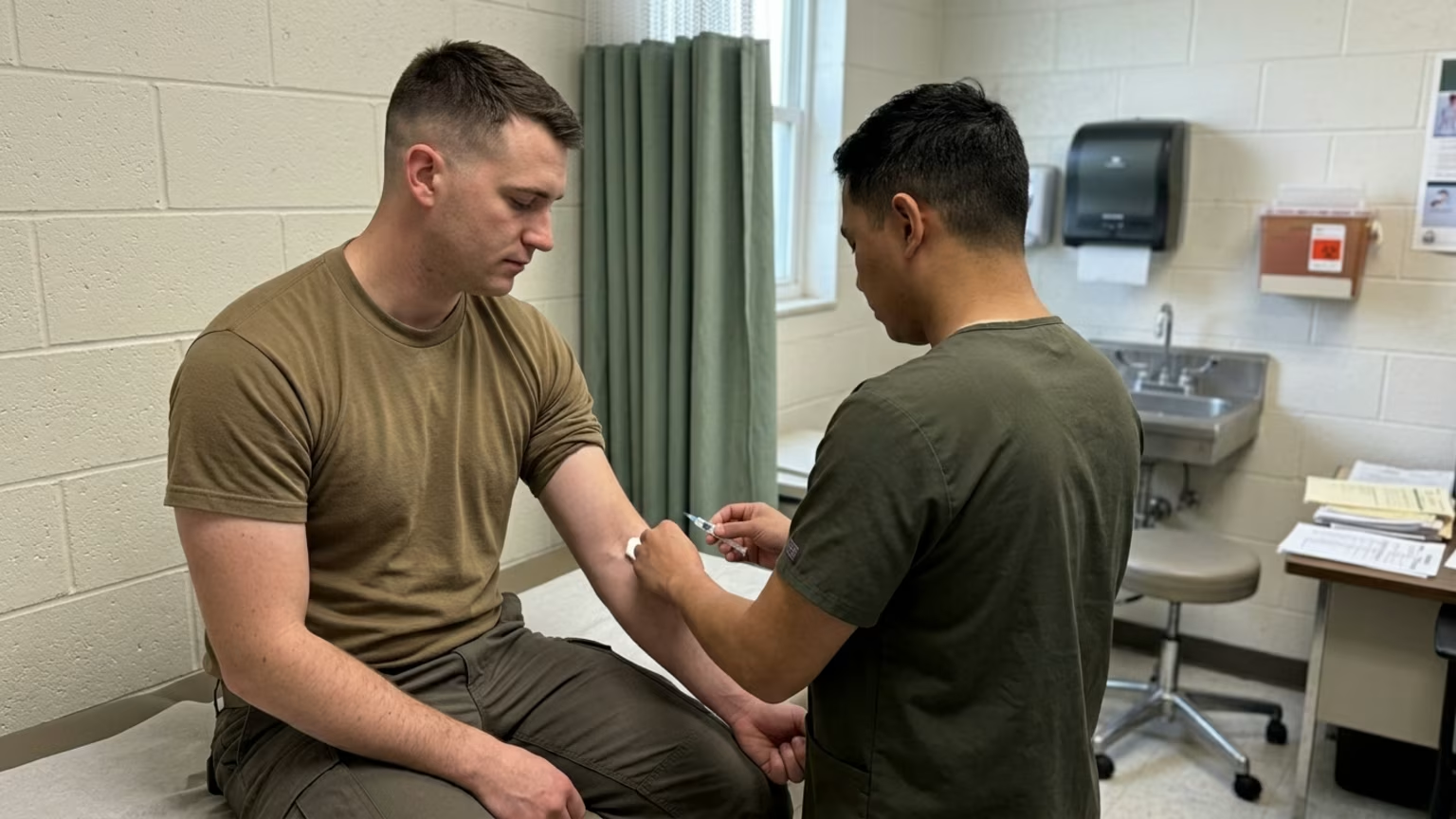
JAMA estimates low testosterone readings in active-duty Army men. See the threshold data, study limits, and implications for clinical follow-up.
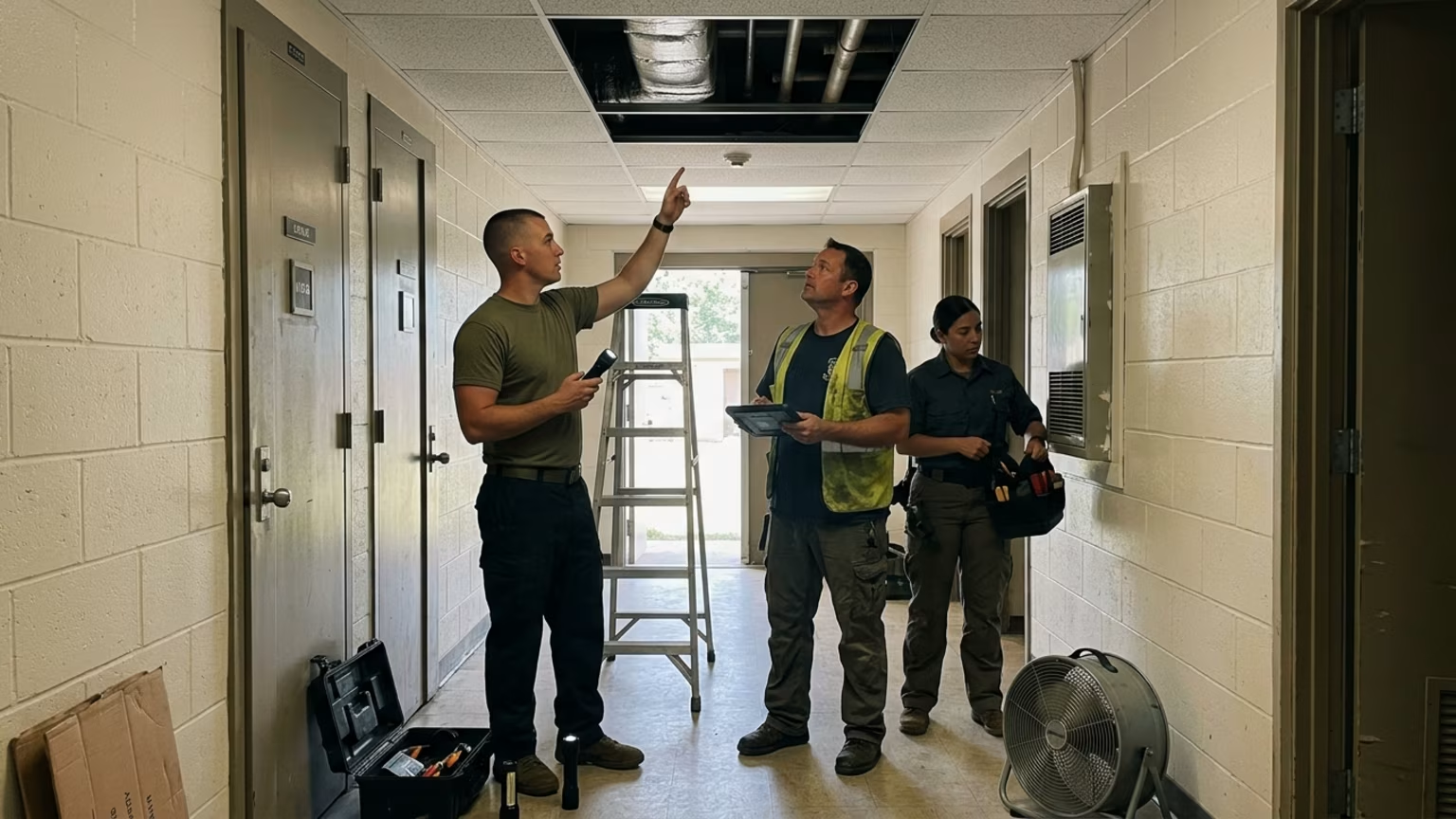
The Army’s HVAC task force targets hot barracks. Here is what its project figures mean and how to assess future housing and sleep-related claims.
Build better habits around strength, recovery, sleep, hormones and healthy aging with practical guidance for active military personnel and veterans.
Explore BattleVet