
The VA has launched the PIVOT trial, a Phase 3 study testing psilocybin for 240 veterans with treatment-resistant depression across five medical centers.





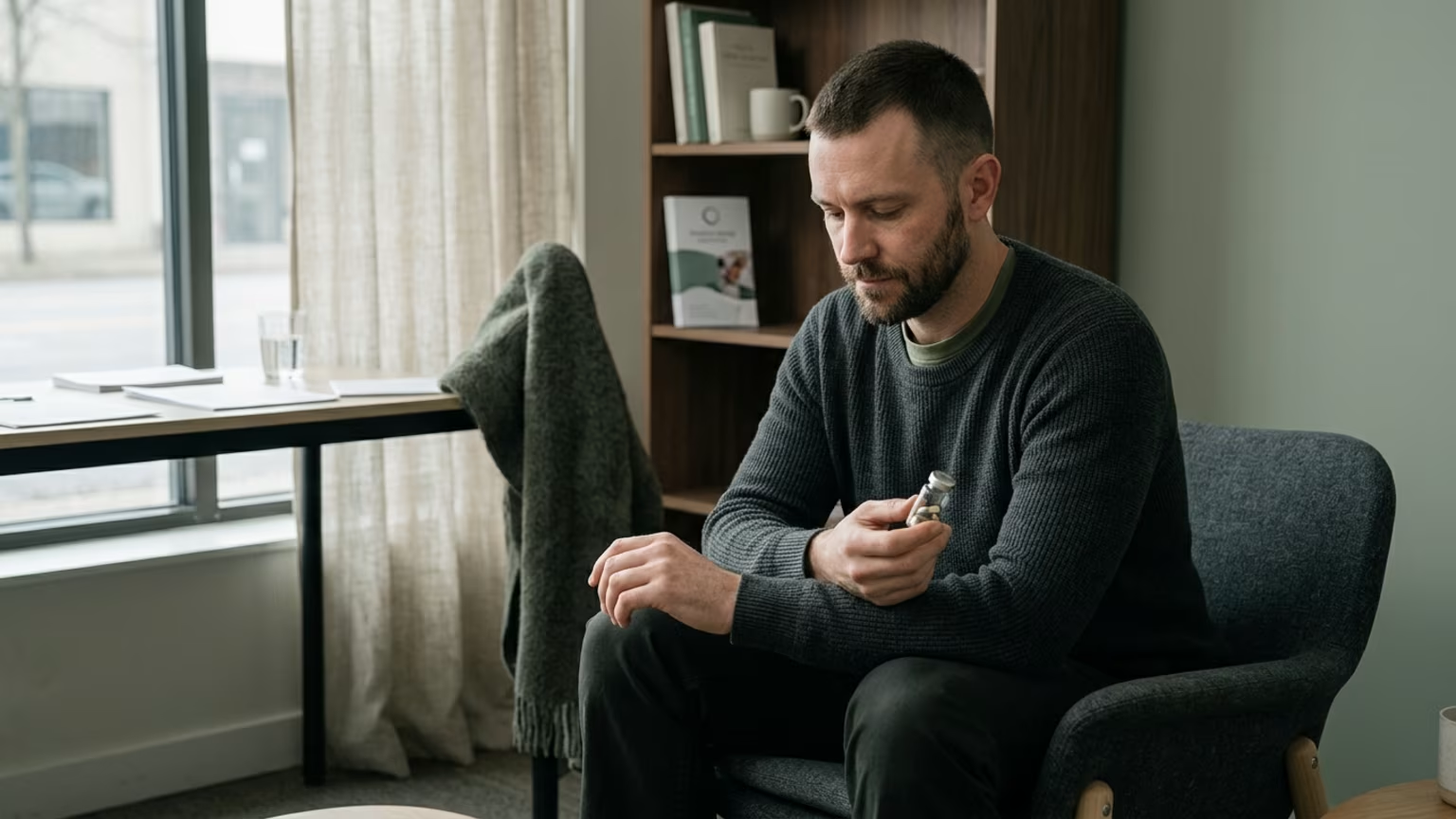
A veteran sits in a quiet, clinical room instead of a standard doctor's office. A structured dosing session replaces a routine prescription pickup. The Department of Veterans Affairs has officially launched the Psilocybin Intervention for Veterans Overcoming Treatment-Resistant Depression, or PIVOT, trial. This Phase 3 study targets 240 veterans whose major depressive disorder has not responded to standard care.
Trial enrollment began on August 3, 2026, marking a significant step in alternative mental health research. Researchers designed the study to evaluate how this compound affects depression symptoms. Participants will receive two psilocybin dosing sessions in a controlled clinical setting. Psychological support is provided alongside the drug intervention.
The primary outcome is the change in the Montgomery-Åsberg Depression Rating Scale, or MADRS, score two weeks after dosing. This precise metric allows clinicians to measure initial symptom shifts. The study is listed under the identifier NCT07226232. Secondary coverage identifies the VA Office of Research and Development as the primary sponsor.
The project focuses strictly on veterans who have exhausted conventional medical options. Following these clinical trials helps readers navigate their military health decisions with accurate information. The trial does not mean psilocybin is available for routine medical use. Veterans with major depressive disorder often battle overlapping mental health conditions.
The PIVOT study will include some veterans who also have post-traumatic stress disorder. The inclusion of complex psychological profiles makes this research highly relevant. Researchers aim to track post-traumatic stress disorder symptoms alongside the primary depression metrics. By gathering this data, researchers hope to build a clearer picture of chemical efficacy.
The trial has drawn attention from top political leadership. VA Secretary Doug Collins noted the trial could offer meaningful relief for those who have worn the uniform. This statement reflects official optimism rather than established clinical proof. The objective of the study is to gather that necessary scientific proof.
The need for new medical approaches stems from clear population data. According to 2025 statistics, approximately one-third of veterans with major depressive disorder experience treatment-resistant depression. The primary report defines this condition specifically. It is depression that has not improved after at least two antidepressants taken at the appropriate dosage for approximately six to eight weeks.
Standard medications clearly leave a large portion of the veteran community without relief. The VA is aggressively expanding its focus beyond traditional pharmaceutical interventions. VA researchers are currently involved in more than 20 psychedelic-related research efforts. This indicates that PIVOT is part of a broader clinical strategy rather than an isolated project.
The overarching goal is generating more evidence-based treatment options for depression among veterans. These scientific efforts aim to improve mental health and overall well-being. Medical professionals are examining how this compound alters brain function. Physician Kristen Fuller notes that psilocybin is believed to affect the brain’s serotonin system.
It may disrupt negative thinking patterns and increase neuroplasticity. This mechanistic explanation provides a theory for why the drug might work. It is not yet a definitive explanation of clinical benefit. Understanding how these treatments operate requires looking at the trial design.
According to secondary analysis, both study groups will receive COMP360 psilocybin. The main comparison involves testing two different doses during the first clinical session. This design helps researchers understand dose efficacy rather than comparing the drug to an inactive placebo. The definition of treatment resistance highlights a frustrating cycle.
Veterans are often left waiting for relief while their symptoms persist. These individuals face months of trial and error with conventional prescriptions. A clinical trial offers a potential new avenue for patients lacking options.
Clinical trials require strict eligibility criteria to ensure safety and accurate data. The PIVOT study includes U.S. military veteran status as a baseline requirement. Participants must be between the ages of 18 and 75. They must also be experiencing a current major depressive episode with a MADRS score of at least 20.
Additionally, candidates must have failed at least two distinct antidepressant treatments. The study is geographically limited to five specific regions. The participating systems include the Birmingham VA Health Care System and Tuscaloosa VA Medical Center in Alabama. The VA Portland Health Care System in Oregon is also participating.
The Corporal Michael J. Crescenz VA Medical Center in Pennsylvania and the VA Puget Sound Health Care System in Washington complete the list. Veterans outside these areas cannot currently access the trial. Because the trial requires close clinical monitoring, geographic proximity is essential. Participants must attend structured appointments for their two dosing sessions.
These physical visits require significant time commitments from the veteran. Potential participants should confirm all demographic and medical requirements directly with a participating research team. The trial is designed to capture safety data across a broad adult lifespan. The screening process for clinical trials is incredibly rigorous.
A MADRS score of at least 20 indicates a specific severity of depression. Researchers use this metric to ensure the study targets those who need intervention most. Candidates must provide detailed medical histories during the initial screening phase. The research team will carefully evaluate each applicant to prevent severe adverse events.
The geographic limitation means many interested veterans cannot simply volunteer. Traveling to Alabama, Oregon, Pennsylvania, or Washington for repeated dosing sessions is highly impractical. Participants need reliable transportation and the ability to commit to lengthy clinical appointments. The two dosing sessions require intense supervision by trained medical staff.
Veterans should separate controlled clinical research from general substance use. The PIVOT trial administers doses in a highly controlled setting with strict psychological support. Psilocybin remains federally classified as a Schedule I controlled substance. Available reporting does not identify an FDA-approved psilocybin product on the market.
Trial participation is the only approved avenue for this specific VA treatment protocol. It is crucial to understand the long timeline of clinical research. Registry data estimates primary completion of the trial in December 2030. The overall study completion is projected for June 2031.
Even positive findings would not automatically make the drug available through routine care. Veterans should continue using established psychiatric and therapeutic treatments in the meantime. Outside of the VA system, other organizations are observing how people react. A separate Oregon Health & Science University-led observational study followed 346 people.
These individuals used psilocybin through licensed facilitators between November 2024 and June 2026. In that study, 91.5 percent of participants said they benefited from the service. Furthermore, 64.9 percent ranked the experience among the ten most meaningful experiences of their lives. While these numbers are interesting, they come with clear medical caveats.
The Oregon study reported that four first-time users experienced adverse behavioral reactions requiring medical attention. Researchers did report no serious physical-health event linked to the compound. Veterans must realize that an observational study of civilian programs differs greatly from a clinical trial. The Oregon findings cannot be treated as a substitute for rigorous Phase 3 trial data.
The Oregon observational study provides useful supplementary context. The study tracked reductions in moderate-to-severe anxiety, depression, and PTSD symptoms at three months. Participants also reported general improvements in mental wellness and life satisfaction. These real-world findings reflect the experiences of individuals using licensed state services.
They do not mirror the strict environment of a federal medical facility. The distinction between clinical and real-world settings is incredibly vital. The Oregon participants were not exclusively selected for treatment-resistant major depression. Differences in participant screening, drug dosing, and psychological support limit direct comparisons.
The VA trial uses a highly specific framework to measure exact medical outcomes. Relying on civilian observational data to predict trial success is not recommended. Veterans must approach this emerging topic with clinical caution. You cannot view the PIVOT trial as permission to self-treat your symptoms.
The intervention is not unsupervised drug use. Trial participants receive professional monitoring in a safe environment. Accessing reliable BattleVet resources can help you understand the importance of medical supervision. If you are struggling with standard therapies, you have actionable steps available.
Talk to your current VA provider about legitimate research referrals or clinical trials. Ask detailed questions about medication washout requirements and psychiatric exclusions. Ensure you understand the psychological support protocols and follow-up duration. Managing your veteran life involves making informed, careful choices about new medical opportunities.
If you are currently experiencing a mental health crisis, immediate help is necessary. Do not wait for trial enrollment to seek psychiatric care. Use established emergency services and crisis pathways immediately. The PIVOT study is a scientific investigation, not an immediate crisis intervention.
The launch of a 240-veteran Phase 3 trial marks a serious scientific step, showing that structured clinical research will ultimately determine if psilocybin offers a safe, long-term solution for treatment-resistant depression.
Follow BattleVet for practical guidance on military and veteran health, strength, recovery, testosterone, sleep and healthy aging. Stay connected for new articles, research backed insights and clear information to help you stay capable for the years ahead.


Combat Stress’s workplace guidance emphasizes listening over diagnosis. Recent U.S. veteran insomnia research adds context for sleep and recovery concerns.


ErythroMer's reported storage design could matter for military care. An academic review still lists it as preclinical, with human evidence ahead.
A large veteran study links PTSD and documented social needs to later cognitive impairment, reinforcing the value of connected care planning.
Build better habits around strength, recovery, sleep, hormones and healthy aging with practical guidance for active military personnel and veterans.
Explore BattleVet