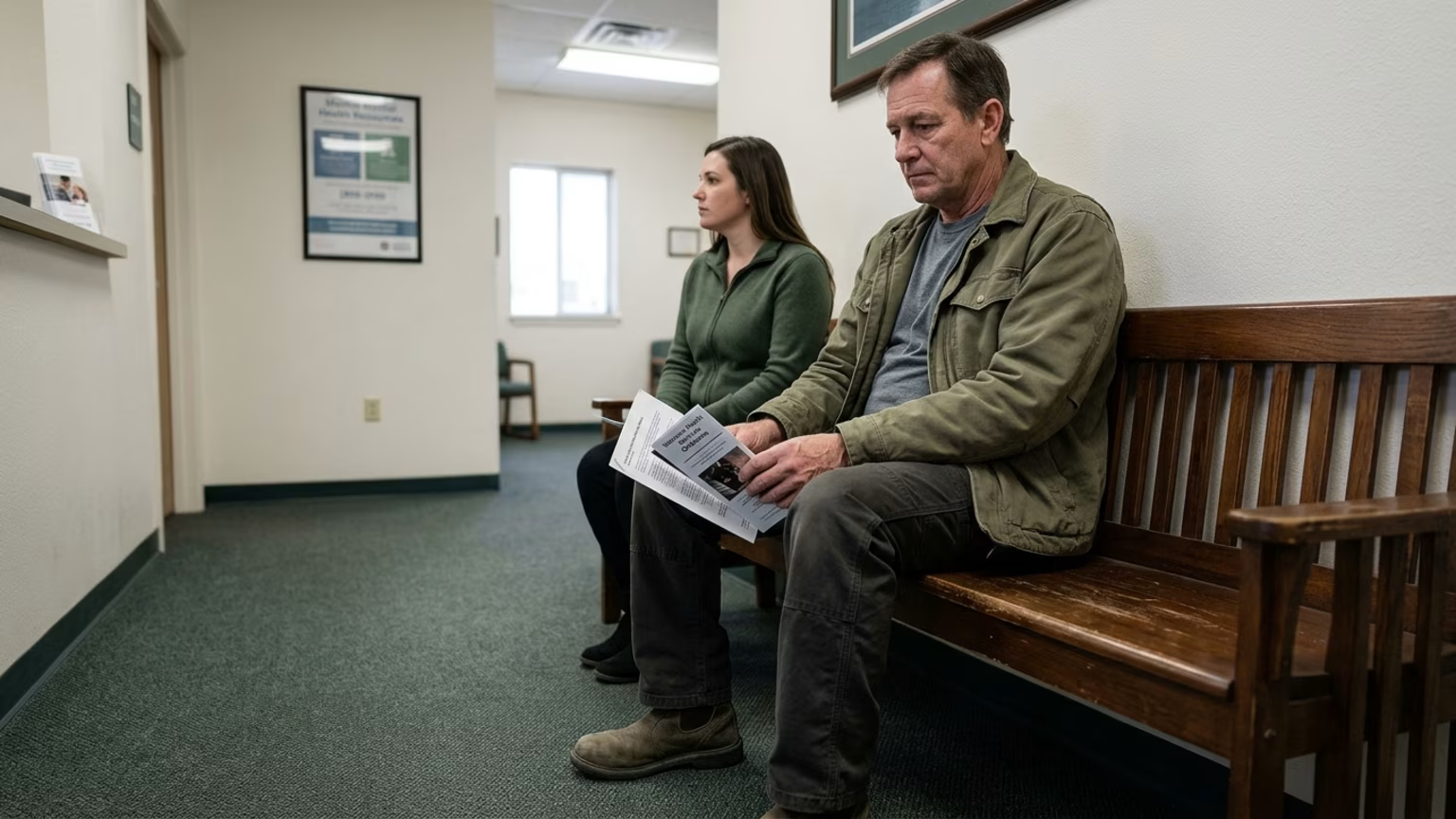

Oklahoma lawmakers recently reviewed access barriers and average mental health appointment waits for veterans. Learn how these factors impact health decisions.





If you or a veteran you know is in immediate danger, call 911. For immediate crisis support, dial 988 and press 1 to reach the Veterans Crisis Line, or text 838255.
On September 22, 2026, Oklahoma lawmakers convened a Senate interim study to examine the state's response to veteran suicide. The exploratory meeting was led by Senator Jo Anna Dossett. Lawmakers reviewed current access barriers and appointment delays facing former service members. This hearing did not enact immediate policy changes but was designed to assess existing resources.
State interim studies provide a forum for evaluating data before formal legislative sessions begin. During this particular meeting, officials analyzed how local care infrastructure meets the demands of former service members. The session brought together policy analysts and medical facility coordinators to review recent statistics. This collaborative review highlighted multiple potential intervention points for future planning.
Understanding how to navigate healthcare systems is a critical part of military health. At BattleVet, our team knows that long-term capability depends on reliable and timely access to care. We focus on connecting physical performance with long-term health rather than treating them as separate subjects. When medical support systems experience delays, the impact often extends to physical restoration and stress recovery.
I remember waking up after a poor night of sleep and realizing that my training recovery was taking much longer than it used to. That realization shifted how I view readiness and proactive medical support. It showed me that maintaining peak capability requires a dedicated approach to both sleep and systemic health factors. Recognizing the limits of local care resources is the first step in building a resilient personal routine.
When state governments assess their local care infrastructure, it highlights the real logistical challenges veterans face on a daily basis. Transportation limits and scheduling delays can quickly become significant hurdles for individuals trying to maintain healthy aging. Recognizing these barriers allows veterans to plan ahead when seeking support for persistent physical or mental stress. Clear awareness of local resources helps former service members make informed health decisions without unnecessary frustration.
The current policy discussion in Oklahoma is highly relevant to veterans navigating the transition into civilian life. Establishing reliable medical access is just as important as maintaining strength and mobility. Knowing how to efficiently secure appointments ensures that minor physical or stress-related issues do not compound over time. Veterans who understand the administrative landscape are better prepared to protect their long-term health.
Transitioning out of active service often means moving from a highly structured medical network into a decentralized civilian system. On active duty, health readiness is monitored and managed by the unit command. In civilian life, the responsibility for scheduling and follow-up falls entirely on the individual veteran. This shift requires former service members to become proactive managers of their own health outcomes.
Data presented during the study showed that Oklahoma had the third-highest veteran suicide rate in the nation in 2023. Healthy Minds Policy Initiative analyst Juli Leber provided context for these numbers during the hearing. Leber said the Oklahoma veteran suicide rate was 61 percent higher than the national veteran rate. She also reported it was 104 percent higher than the state general population rate, and 212 percent higher than the national general population rate.
These comparative figures illustrate the distinct challenges faced by former service members within the state. Access to clinical care emerged as a central theme in the data reviewed by the lawmakers. According to reporting from KGOU, nearly two-thirds of veterans who died by suicide in 2023 had not received VA healthcare during the previous year. This statistic underscores the importance of encouraging routine medical engagement among the veteran community.
Geographic distance also plays a significant role in reaching these specialized facilities. Only about 20 percent of Oklahoma is within a 30-minute drive of a VA facility that provides mental health services. Lawmakers also reviewed specific wait times for new mental health appointments during the exploratory meeting. Leber reported average waits of 37.7 days in Oklahoma City and 26.3 days in Eastern Oklahoma.
These reported averages contrast with a 20-day VA access standard for health services. To address immediate crisis intervention needs, lawmakers allocated nearly $6 million in 2025 to keep local 988 call centers operating. The 988 system originally launched in July 2022 and has connected more than 178,000 residents with crisis support. Ongoing funding and state investment remain critical factors in sustaining these immediate support networks.
The findings from this interim study reinforce the need to clearly understand how local VA systems operate. Published wait time averages are only a guide for expected delays across a specific region. They do not automatically determine a veteran's eligibility for external community care options. If an appointment delay is becoming a problem, veterans should ask their VA care team about expected waits for their specific clinic.
Knowing the actual timeline helps in planning appropriate health decisions and managing personal recovery routines. Understanding emergency protocols is just as important as knowing standard appointment schedules. Daphne Hillhouse, a suicide prevention coordinator at VA Eastern Oklahoma, clarified the specific limits of facility resources. She told lawmakers that her facility does not provide emergency transportation for civilians.
Hillhouse also noted that veterans are civilians who cannot be compelled against their will to receive treatment. Veterans seeking urgent care need to clarify local transport options before a crisis occurs. Safe storage of household medications and firearms is also an important step to arrange alongside a trusted person or clinician. These practical measures ensure that individuals are not caught off guard by systemic limitations.
Veterans should also recognize the practical differences in available crisis response networks across the state. The local 988 system and the Veterans Crisis Line operate as distinct pathways with different procedures. Depending on the service contacted, the response capabilities might vary based on your specific location. Having a clear plan and understanding these distinct systems supports long-term resilience and physical restoration.
Navigating these administrative delays requires a steadfast commitment to personal health management. While waiting for formal appointments, maintaining consistent physical routines can help manage daily stress. Prioritizing fundamentals like proper nutrition and regular physical activity builds a solid foundation for overall well-being. Readers interested in practical strategies can read our military health articles for evidence-led guidance.
Sleep quality is another critical factor that veterans can actively control while dealing with scheduling hurdles. Consistent rest directly impacts hormonal balance and the body's natural ability to recover from stress. Building an environment optimized for uninterrupted sleep is a practical step that requires no external medical approval. Reviewing our recovery and sleep articles can provide insights into establishing effective nighttime habits.
When external systems are complex, focusing on controllable variables provides a sense of agency. Consistent strength training and mobility work contribute significantly to healthy aging and physical capability. The goal is to remain strong and capable while the larger healthcare infrastructure evolves. Finding actionable strategies in our veteran lifestyle and healthcare resources helps bridge the gap between clinical visits.
At BattleVet, our editorial standard focuses on providing clear explanations of healthy aging relevant to military populations. We understand that sorting through systemic delays can be exhausting and discouraging. However, separating credible evidence from administrative noise helps veterans focus on actionable steps. By understanding the data presented to lawmakers, veterans can better anticipate bottlenecks in their own care journeys.
As state lawmakers gather data on wait times and facility access, the focus remains on closing the gaps between veterans and the care they need. Will exploratory studies like this one lead to stronger coordination between VA facilities and local community clinics in the coming years?
Follow BattleVet for practical guidance on military and veteran health, strength, recovery, testosterone, sleep and healthy aging. Stay connected for new articles, research backed insights and clear information to help you stay capable for the years ahead.


NYU Langone Health details an integrated preventive care model for veterans, connecting primary care, nutrition, and mental health support during transition.


A 2026 study found highly resilient WTC responders show stronger reward-circuit brain activity. Learn how positive anticipation impacts long-term trauma recovery.
A 14-year longitudinal analysis links physical decline and frailty to later cardiovascular events, providing veterans with a new timeline for tracking health.
Build better habits around strength, recovery, sleep, hormones and healthy aging with practical guidance for active military personnel and veterans.
Explore BattleVet