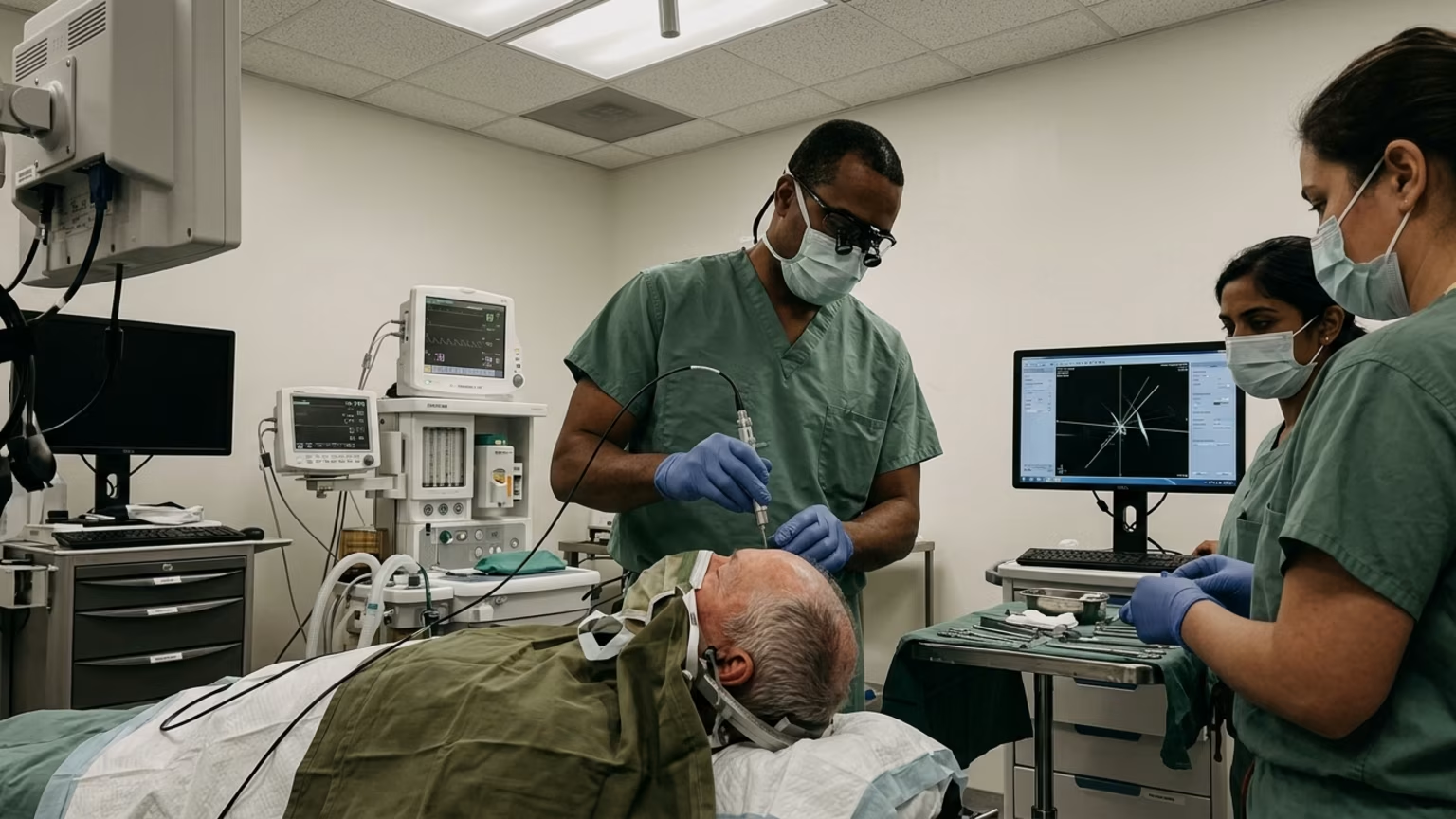

The Houston VA completed its first Visualase V2 minimally invasive laser ablation for a veteran with drug-resistant epilepsy, expanding neurosurgical options.





The Visualase V2 system is a form of minimally invasive laser ablation that operates through a 3.2-millimeter opening in the skull. For veterans managing drug-resistant epilepsy, this exceptionally small access point represents a monumental shift in available neurosurgical care. It allows specialized medical teams to treat the brain directly while bypassing the extensive physical trauma of traditional open surgery.
Reviewing my blood work for the first time felt overwhelming. There was so much confusing information out there about testosterone and hormones. I wanted clear facts and evidence based guidance, not a sales pitch. That experience showed me how critical it is to separate established science from marketing hype. The exact same standard of scrutiny applies when evaluating new medical procedures and surgical interventions.
The Michael E. DeBakey VA Medical Center in Houston has reported the first use of the Visualase V2 laser-ablation system on a patient anywhere in the VA health system. Surgeons use this advanced system to deliver concentrated laser energy directly into the brain. They accomplish this through a thin fiber-optic catheter inserted through the small opening in the skull. The VA describes the opening as smaller than a pencil eraser.
During the procedure, the surgical team uses real-time MRI guidance to monitor tissue temperatures continuously. This constant monitoring allows doctors to adjust the treatment while safely targeting the precise tissue causing the seizures. The technology ensures that surrounding healthy brain structures remain protected from the heat energy. This precision is commonly described as laser interstitial thermal therapy.
Robert Lindemann became the first patient in the VA system to undergo this specific procedure. He has a long history of military service after enlisting in the Army National Guard in 1980. Lindemann served nearly 33 years in uniform before facing his most complex health challenges. He lived with focal epilepsy and continued experiencing seizures despite trying numerous medications over the years.
His symptoms initially presented as losing periods of time and feeling completely disconnected from events occurring around him. Eventually, he experienced a major seizure that escalated his need for specialized medical intervention. Persistent seizures despite medication trials often prompt referrals to dedicated military health treatment centers.
After years of unsuccessful treatment, Lindemann was referred to the Houston VA epilepsy center of excellence. Detailed diagnostic testing was required to identify the exact origin of his neurological symptoms. This comprehensive evaluation included the temporary implantation of electrodes deep within his brain. Monitoring these electrodes over time allowed physicians to map his brain activity during actual seizure events.
The testing successfully identified the seizure source deep in his right temporal lobe. Locating the exact anatomical origin is a strict requirement before any targeted ablation can take place. Dr. Garrett Banks and the medical center neurosurgery, neurology and radiology teams collaborated to perform the resulting procedure. The VA indicated that Visualase had previously been used at a limited number of leading academic epilepsy centers but had never been used at a VA facility.
To understand the significance of this development, patients must look at what a conventional intervention normally involves. The conventional surgical option for Lindemann would have been a craniotomy. This traditional approach involves the physical opening of the skull and the physical removal of a substantial portion of the right temporal lobe. Lindemann described that prospect as frightening because it would have involved removing a chunk of his brain.
Craniotomies typically demand extended hospital stays in intensive care units followed by long periods of careful physical recovery. By contrast, the minimally invasive Visualase procedure offered a vastly different immediate recovery timeline. Lindemann was discharged home just two days after the procedure. He subsequently reported feeling great four days afterward.
These early recovery observations are highly encouraging for the veteran community. However, the VA article does not report a long term seizure-free result or provide a formal comparative complication rate. Dr. Banks characterized Visualase as a way to treat focal epilepsy with very little trauma. He stated his main objective was preserving the cognitive abilities, dignity and well-being of the veteran.
Dr. Banks also noted that the technology could expand VA treatment options across the country. He mentioned potential applications for veterans with focal epilepsy, deep-brain tumors and radiation necrosis. Beyond Visualase, the Houston VA has also reported the first use of a separate NeuroOne electrode system. This tool is utilized for veterans dealing with drug-resistant epilepsy.
The VA describes the FDA-approved NeuroOne technology as a stereo-electroencephalography system. It combines diagnostic recording, stimulation and therapeutic ablation into a single electrode-based platform. This system can create a targeted ablation while monitoring local brain temperature. It can be utilized in an epilepsy monitoring unit without general anesthesia or a conventional operating room procedure.
Together, these announcements suggest that VA epilepsy care is adding more targeted options at specialized centers. However, it is vital to recognize that neither technology is currently available at every VA medical center. Accessing these advanced therapies requires meeting strict clinical criteria documented by your care team. Reviewing veteran life articles can help patients understand how to navigate the broader VA referral system.
A VA community care document illustrates the broader treatment pathway for medically refractory seizures. It describes coverage criteria for vagus-nerve stimulation that include a confirmed seizure diagnosis. Patients must also document persistent seizures despite more than one medication trial or debilitating medication side effects. These policies reinforce that treatment selection heavily depends on documented diagnosis and prior medication responses.
Neurological care is incredibly critical for those who have served in the armed forces. VA research materials have highlighted the deep connection between neurological injury and severe epilepsy outcomes. The research reported that veterans who had a traumatic brain injury within six months of epilepsy onset faced severe long term risks. These specific veterans had a five-times-greater hazard of death than people with neither epilepsy nor a traumatic brain injury.
This finding underscores why precise neurological care is uniquely relevant to military and veteran populations. Evaluating treatments means looking past the immediate hospital discharge to focus on sustained functional capability. Lindemann noted that he hoped to become seizure free in the future. The published report correctly frames seizure freedom as a future goal rather than a currently guaranteed outcome.
Veterans facing persistent seizures should ask their neurologist about specialized epilepsy center evaluations. Patients should ask whether their specific seizure focus is anatomically suitable for a minimally invasive procedure. It is also important to ask about expected seizure-control rates, cognitive testing and possible complications. Understanding potential medication changes and long term monitoring requirements is equally essential.
Dr. Banks noted that Lindemann was an ideal candidate for this specific approach. That description proves that patient candidacy is highly individualized rather than automatic for everyone. Veterans must gather complete information to make the best possible decisions for their long term health. Discussing these topics with professionals helps secure the best possible outcomes.
The information provided here is designed strictly for educational purposes. Veterans must always consult a qualified physician or VA provider before self-diagnosing or altering any treatment plan. Every neurosurgical procedure involves risks that require careful evaluation by a trained medical professional. Your care team can determine if a specialized referral is the right choice for your specific health history.
Returning to the image of a 3.2-millimeter opening smaller than a pencil eraser, the physical impact of brain surgery is fundamentally changing. The key takeaway is that minimally invasive laser ablation offers carefully selected veterans a modern, targeted option to preserve their cognitive function and independence.
Follow BattleVet for practical guidance on military and veteran health, strength, recovery, testosterone, sleep and healthy aging. Stay connected for new articles, research backed insights and clear information to help you stay capable for the years ahead.


Combat Stress’s workplace guidance emphasizes listening over diagnosis. Recent U.S. veteran insomnia research adds context for sleep and recovery concerns.


ErythroMer's reported storage design could matter for military care. An academic review still lists it as preclinical, with human evidence ahead.

A large veteran study links PTSD and documented social needs to later cognitive impairment, reinforcing the value of connected care planning.
Build better habits around strength, recovery, sleep, hormones and healthy aging with practical guidance for active military personnel and veterans.
Explore BattleVet