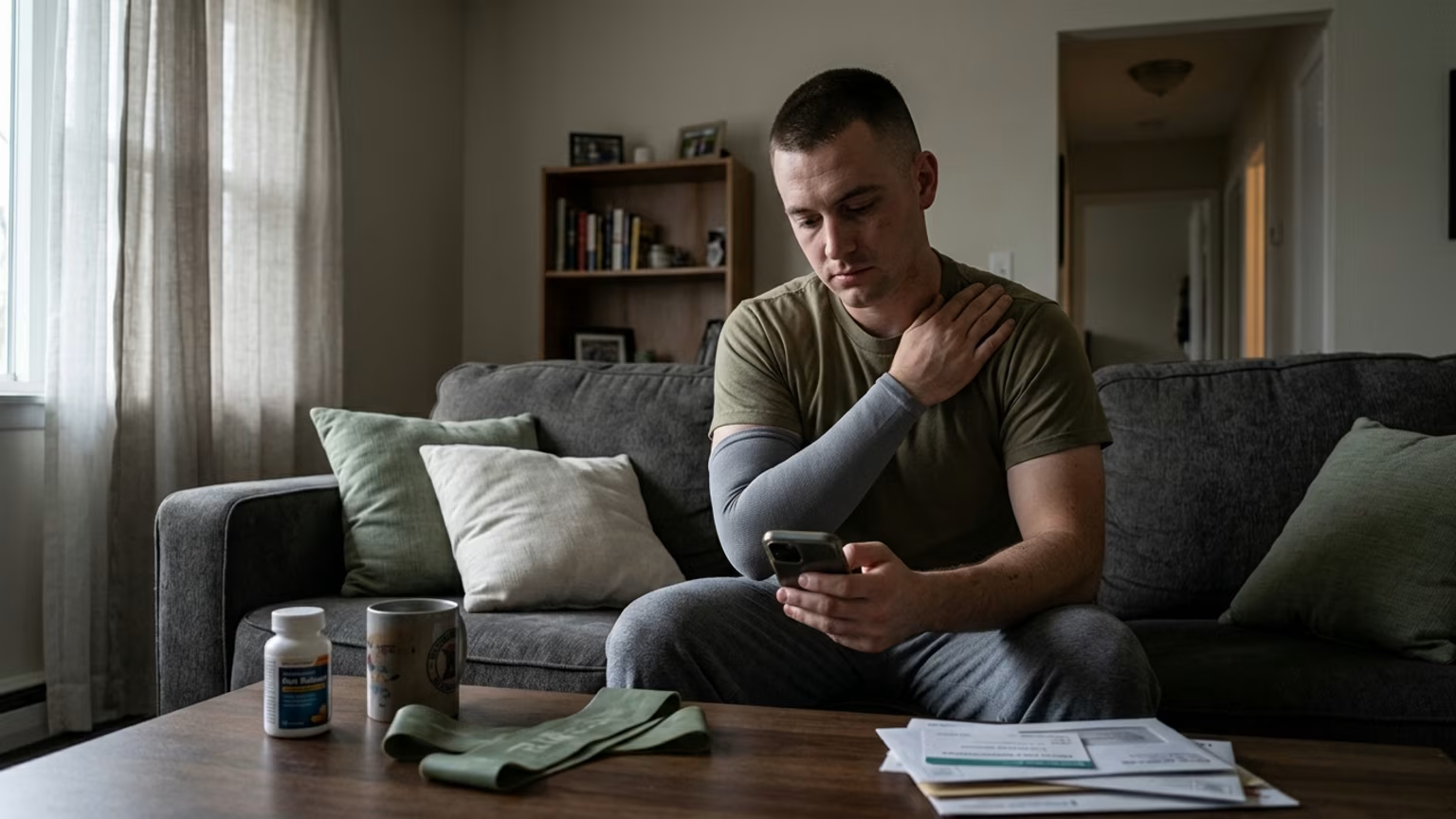

Learn how to identify when training soreness becomes a true injury. Understand symptom patterns, self care limits, and when to book a clinical appointment.





A service member finishes a heavy ruck with a sharp twinge in their knee. They ignore the discomfort, assuming it is just a normal part of their military job. The common belief is that all pain during physical training is standard soreness that personnel must push through. In reality, there is a clear difference between an expected response to training and a mechanical tissue injury that requires professional medical assessment.
This misunderstanding often comes from outdated training manuals, intensive military culture, and fitness marketing. For decades, training programs emphasized mental toughness over physical preservation. Instructors praised personnel who ignored warning signs, while early reporting was treated as a lack of resilience. This approach resulted in generations of veterans dealing with preventable joint damage and chronic mobility issues.
I remember waking up after a poor night of sleep and realizing that my training recovery was taking much longer than it used to. I realized that readiness is more than just pushing through the fatigue. It requires a dedicated approach to sleep and hormonal health, which completely shifted how I view long term capability. Without this perspective, many individuals turn manageable training issues into severe problems.
The operational cost of this mentality is massive. Military Health System officials identify musculoskeletal health as a leading cause of lost duty time and nondeployability. A Military Medicine report states that more than half of active component soldiers sustained at least one musculoskeletal injury in 2017. These injuries accounted for an estimated 8 million limited duty days in 2018.
The same report cites 2.4 million medical encounters and $548 million in direct care costs associated with musculoskeletal injuries in 2018. These figures demonstrate the immense scale of joint problems across the force. A manageable training issue is usually mild, predictable, and linked to a recent change in workload. Soreness spread across muscles after an unusually hard session behaves differently from sharply localized pain.
A practical rule is to stop treating pain as normal soreness when it changes movement mechanics, limits ordinary activities, or keeps worsening. Recognizing these patterns is essential when looking for military health guidance. Overuse problems develop gradually during running, rucking, lifting, or prolonged standing. Patellofemoral pain around the kneecap is a meaningful military example.
In one analysis of active duty service members from 2016 through 2022, 85,023 people received an initial patellofemoral pain diagnosis. That figure came from an analyzed population of 2,477,394 personnel, which equals 3.4% of the group. The authors reported an incidence rate of 0.94 per 100 person years. Low back pain is another substantial concern for physical longevity.
Separate studies cited in Military Medicine reported a low back pain incidence of 40.5 cases per 1,000 person years in active duty personnel. Another specified study reported a prevalence of 34.7% among active duty soldiers. If gradual pain repeatedly appears during your physical training routines, you should review your volume, recovery, and occupational demands. Deep, highly localized pain that becomes consistent with weight bearing impact requires serious caution.
Pain that progresses from appearing only during activity to occurring at rest is unsuitable for a tough mentality. A clinician should evaluate suspected bone stress injuries because continuing high impact movements can worsen the problem. A strain affects muscle or tendon tissue and may occur during sprinting, lifting, jumping, or sudden acceleration. Pain that starts abruptly during a particular effort should be treated cautiously.
A sprain involves ligaments around a joint and commonly follows a twist, awkward landing, fall, or collision. Swelling, bruising, instability, a catching sensation, or an inability to use the joint normally increases the need for assessment. Minor sprains and strains may be appropriate for urgent care evaluation rather than an emergency department. Severe injury, major trauma, or a suspected serious fracture are listed among situations requiring emergency care by NHS guidance.
Pain accompanied by pins and needles, numbness, burning, radiating symptoms, heaviness, or weakness may indicate nerve involvement. This is fundamentally different from simple muscle soreness. NHS guidance lists arm or leg weakness, pins and needles associated with neck pain, and rapidly worsening severe neck pain as reasons for urgent medical advice. A medical professional must evaluate these neurological warning signs properly.
Plantar fascia pain commonly affects the underside of the foot. It may be aggravated by running, marching, prolonged standing, or unsupportive footwear. Mayo Clinic self care guidance includes supportive shoes, avoiding worn out athletic shoes, temporarily switching to lower impact activity, and using ice. They recommend applying a cloth covered ice pack for 15 minutes three or four times daily while stretching the arch, calf, and Achilles region.
Self care should never become an excuse to continue an activity that steadily worsens symptoms. Persistent pain, altered gait, marked swelling, or an inability to bear weight warrants professional evaluation. Over the counter medication may help some people, but medication choice depends on medical history, kidney and stomach health, blood pressure, and other medicines. Mayo Clinic lists ibuprofen and acetaminophen as possible options for sacroiliac pain.
Pain can be separated into three practical categories for decision support. Green means monitor and modify. Pain may be a manageable response when it is mild, does not alter your technique, and improves when the aggravating load is reduced. You can often manage this by temporarily switching to lower impact activities while continuing to maintain comfortable movement.
Amber means arrange an assessment. You should book an appointment with a professional when pain persists despite sensible self care. Seek an assessment if your strength is reduced, symptoms recur when training resumes, or swelling is present. Mayo Clinic recommends preparing a symptom timeline, relevant medical history, medication details, and specific questions before an appointment.
Red means seek urgent or emergency care. Seek urgent medical help for rapidly worsening severe pain, substantial loss of function, or a significant traumatic event. For neck or back symptoms, emergency warning signs include new walking difficulty, loss of bladder or bowel control, sudden coordination problems, or significant new weakness. New difficulty walking, loss of bladder or bowel control, or sudden loss of coordination are emergency warning signs in the NHS guidance.
Future military medical research will likely monitor how sleep protocols, nutritional strategies, and advanced recovery management impact long term musculoskeletal resilience. Start paying attention to any joint pain that lasts longer than three days, and modify your training load immediately until you can consult a qualified clinician.
Follow BattleVet for practical guidance on military and veteran health, strength, recovery, testosterone, sleep and healthy aging. Stay connected for new articles, research backed insights and clear information to help you stay capable for the years ahead.


Combat Stress’s workplace guidance emphasizes listening over diagnosis. Recent U.S. veteran insomnia research adds context for sleep and recovery concerns.


ErythroMer's reported storage design could matter for military care. An academic review still lists it as preclinical, with human evidence ahead.
A large veteran study links PTSD and documented social needs to later cognitive impairment, reinforcing the value of connected care planning.
Build better habits around strength, recovery, sleep, hormones and healthy aging with practical guidance for active military personnel and veterans.
Explore BattleVet