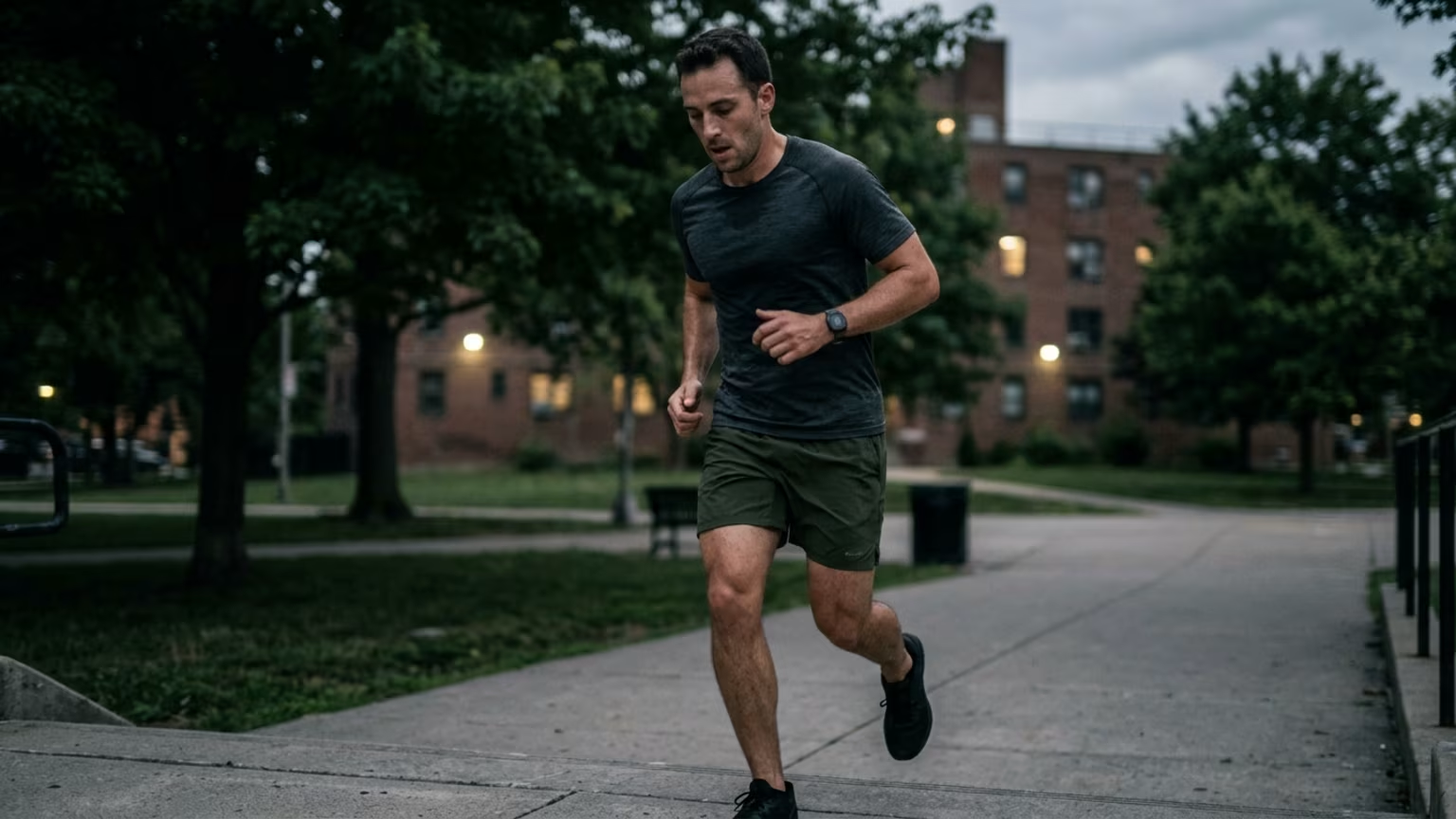

A Rockefeller University study found that three minutes of intense sprinting can trigger massive changes in blood proteins linked to heart health and slower ageing.





The alarm goes off before dawn for another hour of steady cardiovascular work. Many veterans wonder if a shorter session could deliver similar biological results when time is limited. Researchers at Rockefeller University recently set out to answer that exact question by testing a highly concentrated sprint protocol. They investigated whether short intervals could trigger meaningful molecular changes compared to long endurance training.
A recent study compared short bursts of intense effort directly against a traditional endurance workout. The protocol required participants to complete six 30-second all-out cycling sprints. Researchers then compared this brief effort to 90 minutes of moderate continuous cycling. The goal was to measure immediate molecular changes in the blood following both types of exercise.
The underlying paper is titled "Exercise intensity modulates interorgan communication and is associated with cardiometabolic health outcomes in humans." It was published as an article in press in Cell Reports Medicine under DOI 10.1016/j.xcrm.2026.102988. The study stands out because it looked far beyond standard fitness measures. Instead, it examined large-scale changes in circulating proteins, metabolites, and the predicted communication between internal organs.
The molecular changes following the short sprints were vast and immediate. According to reporting from TBS News on the Rockefeller University findings, the sprint protocol altered nearly one-quarter of the measured blood proteins. In contrast, 90 minutes of moderate continuous cycling altered fewer than one-quarter of 1% of proteins. Specifically, the study recorded changes in 714 of 2,884 measured plasma proteins after sprinting.
Moderate cycling only changed seven proteins immediately after the exercise session concluded. Sprinting also changed more than 200 metabolites, which included molecules closely associated with acute energy metabolism. Moderate exercise produced a much more delayed molecular response overall. Notable fatty-acid and liver-derived protein changes only began appearing about three hours later in the endurance group.
The proteins that increased immediately after sprinting play critical roles in bodily maintenance. They were involved in blood-vessel growth, tissue remodeling, and complex hormonal signaling. Researchers proposed that some of these proteins reach the bloodstream rapidly through a process called ectodomain shedding. In this process, portions of proteins already attached to cell surfaces are cleaved and released rapidly rather than being newly synthesized.
The study went beyond immediate blood tests to look at broader population health data. Researchers compared the exercise-responsive proteins with health information from more than 53,000 UK Biobank participants. The analysis focused heavily on 33 exercise-responsive proteins associated with a lower risk of obesity, type 2 diabetes, and related metabolic conditions. The data showed that 32 of those proteins were altered by sprinting, compared with only three after moderate exercise.
More than one-quarter of those specific proteins were also associated with biological profiles linked to slower ageing. This data supports healthy aging and longevity by highlighting how intense effort stimulates cellular pathways. However, these findings are strictly molecular and associative rather than direct clinical outcome data. The study did not establish that a short sprint session outright prevents heart attacks or permanently reverses ageing.
The researchers also wanted to understand how post-exercise blood affects other tissues in the body. When human fat cells were exposed to post-sprint blood plasma, the cells showed extensive changes in gene activity. These cellular changes involved essential functions like fuel processing, hormone responses, and nutrient sensing. The Rockefeller report indicates that this response affected more than 1,600 genes.
Meanwhile, post-moderate-exercise plasma produced much smaller gene-activity changes in the laboratory fat cells. Paul Cohen, head of the Weslie R. and William H. Janeway Laboratory of Molecular Metabolism at Rockefeller, provided context. Cohen stated that just a few minutes of intense exercise can trigger a significant molecular response. This highlights how rapidly the body reacts to short, vigorous intervals.
Luke Olsen, the postdoctoral fellow who conducted the studies, added further biological context. He noted that exercise-released proteins and metabolites appear to be highly sensitive to exercise intensity. These molecules, often called exerkines, may help mediate the physiological effects of short vigorous exercise throughout the body.
A common question in fitness research is whether the body stops responding once it adapts to a routine. Cohen noted that the molecular response remained visible after eight weeks of training. This suggests the protein release was not simply a stress reaction to an unfamiliar exercise. It indicates that training and performance adaptations do not completely dull the immediate biological signal of intense work.
While this persistence is encouraging, it does not automatically prove that the molecular response guarantees long-term clinical benefits. Still, it provides a strong rationale for using short intervals when long endurance sessions are not feasible. Active duty schedules, caregiving responsibilities, and limited facility access often make traditional workouts difficult to complete. Micro-sprint conditioning offers a time-efficient way to demand a high physiological response when you only have a few minutes.
The study utilized stationary bikes for both the high-intensity sprints and the moderate endurance work. This choice allowed researchers to strictly control the power output and measure the exact metabolic cost of the effort. Cycling removes the heavy impact forces associated with sprinting on a track or treadmill. This makes it an ideal testing modality for isolating cardiovascular responses without introducing severe muscle damage.
The phrase "three-minute workout" is potentially misleading for anyone planning their daily routine. The protocol contained three minutes of actual sprint work, but these were separated by four-minute recovery periods. The complete session took substantially longer than three minutes and would normally require proper preparation and a cool down. This protocol is not a magic shortcut that entirely eliminates the time commitment of training.
The comparison between the two groups was also not a perfectly equal-dose test. The sprint group performed maximal efforts, while the comparison group cycled continuously at a strictly moderate intensity. Intensity, duration, metabolic demand, and recovery requirements all differed significantly between the two cohorts. The researchers acknowledged that their exercise design could not fully separate the effects of exercise intensity from the effects of duration.
Furthermore, the human exercise cohorts were small. The available study details indicate they were composed of young, active, metabolically healthy men. Nine participants were in one exercise group and 10 in the other. Because the study focused on healthy men, the findings cannot automatically be generalized to older veterans or women. The findings also require further testing for people taking cardiometabolic medications or individuals returning to exercise after injury.
Finally, researchers could not always determine whether measured proteins had been newly secreted or released through cleavage. Some in-vitro sprint simulations may increase cell damage and release cytosolic proteins into the bloodstream. This means that not every protein detected after intense exercise should automatically be interpreted as a beneficial signaling molecule. The study components should not be conflated with a clinical trial demonstrating guaranteed treatment benefits.
Veterans should view this research as a promising model to discuss with their healthcare team rather than a universal prescription. If you have known heart disease, uncontrolled blood pressure, or unexplained exercise-related chest pain, you need individualized clinical guidance. Bring this topic up during your next checkup to ensure max-effort intervals fit safely into your veteran life. Ask your doctor if there are any specific heart rate limitations you should observe.
You can mention that you are interested in time-efficient conditioning methods like stationary cycling intervals. Your provider can help you adapt the intensity, resistance, and recovery periods to match your current medical status. Stationary cycling is especially relevant because it was the exact mode used for the six 30-second sprints in the study. Readers should not assume that maximal running sprints place the same mechanical or injury demands on the body.
For someone returning from deployment, surgery, or prolonged inactivity, lower-impact intervals are often safer. Cycling, rowing, incline walking, or controlled calisthenic efforts may be more appropriate starting points than all-out running. The available evidence supports an individualized exercise prescription rather than treating high-intensity work as automatically safe for everyone. A short interval session should complement progressive aerobic conditioning and strength work, not entirely replace it.
Intense intervals offer a powerful way to stimulate your cardiovascular system when you are short on time. However, building long-term capability still requires a mix of steady aerobic exercise, strength training, and proper recovery. Cohen specifically noted that combining different exercise types is generally a wise approach. As you evaluate your current fitness routine, consider whether you are relying too heavily on a single style of training.
Are you prepared to integrate short, high-intensity intervals while still maintaining the steady foundation your body needs?
Stay strong, stay capable, and keep moving forward with BattleVet.
Follow BattleVet for practical guidance on military and veteran health, strength, recovery, testosterone, sleep and healthy aging. Stay connected for new articles, research backed insights and clear information to help you stay capable for the years ahead.


Combat Stress’s workplace guidance emphasizes listening over diagnosis. Recent U.S. veteran insomnia research adds context for sleep and recovery concerns.


ErythroMer's reported storage design could matter for military care. An academic review still lists it as preclinical, with human evidence ahead.
A large veteran study links PTSD and documented social needs to later cognitive impairment, reinforcing the value of connected care planning.
Build better habits around strength, recovery, sleep, hormones and healthy aging with practical guidance for active military personnel and veterans.
Explore BattleVet