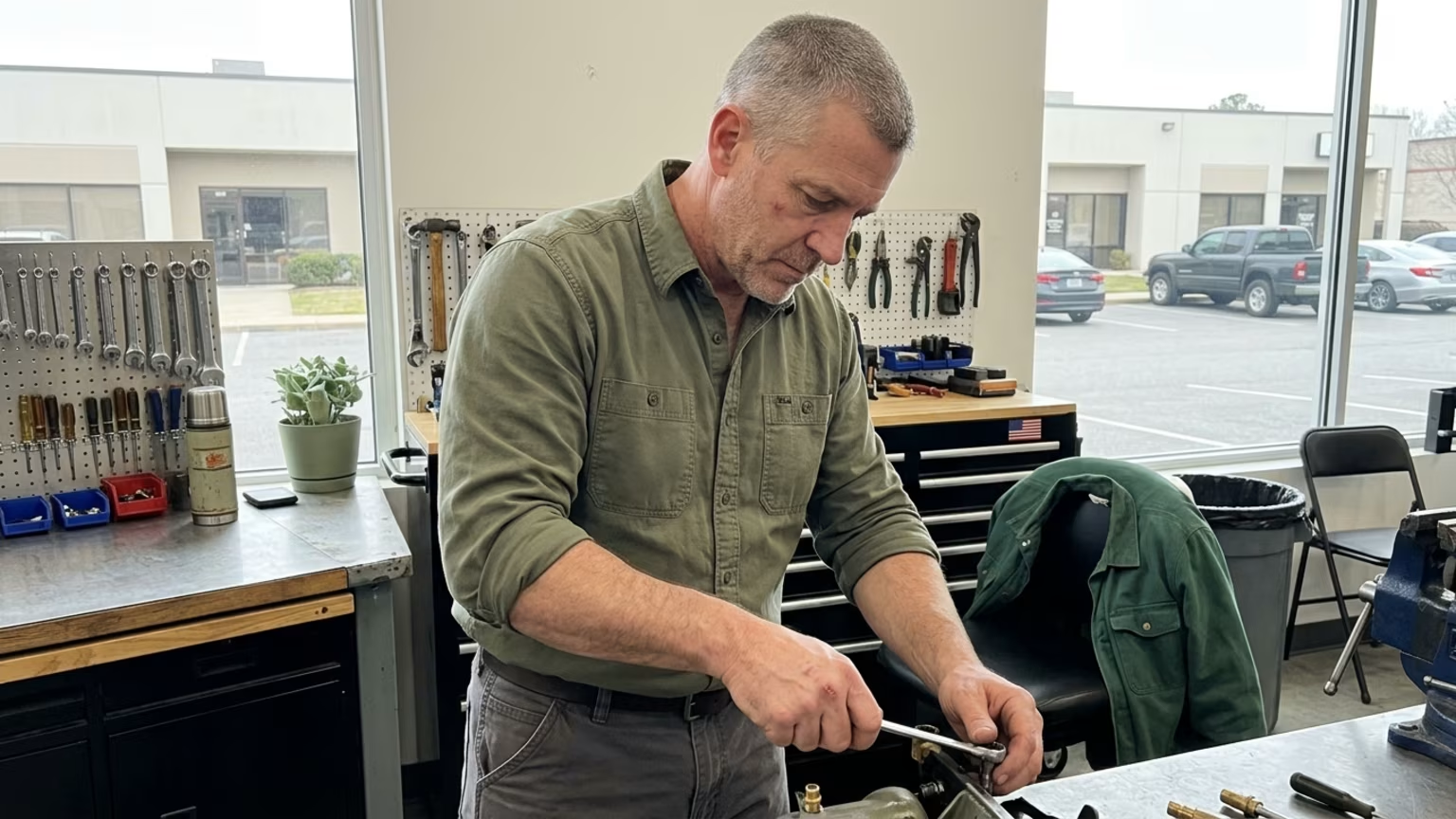

Learn the essential strength qualities that matter most after military service and how to build a scalable training protocol for long term physical capability.





Heavy barbell numbers alone do not make you capable in the real world. Military service required moving bodies, equipment, and unstable loads over long distances. Civilian life removes that built-in occupational conditioning. This leaves a physical gap that traditional gym routines often fail to fill.
Trying to maintain fitness years after leaving service required a completely new mindset. The goal changed from immediate tactical readiness to healthy aging and longevity. I learned that connecting short term performance with long term health, focusing on mobility and cardiovascular function, was the real key to staying capable.
A solid post service protocol requires these specific steps:
The biological mechanisms behind physical capability involve more than just sheer muscle size. Moving under heavy load requires your nervous system and musculature to operate together seamlessly. A Military Medicine review found that greater lean mass and favorable muscle distribution were generally associated with better strength, power, load carriage, and cardiorespiratory performance. Higher body fat levels were generally associated with poorer functional performance.
This physical foundation supports the body against the severe stresses of heavy work. Without sufficient conditioning, the body rapidly loses stability during demanding tasks. A 2026 systematic review and meta-analysis reported acute reductions in trunk strength, lower body strength, lower body power, and postural stability after military foot marches. This acute fatigue highlights exactly why building a resilient physical baseline is so necessary for long term health.
Relative strength dictates how well you move your own body in space. It becomes critical when you must climb, step over obstacles, or carry heavy equipment. Pull-ups, getting up from the ground, and moving efficiently uphill become difficult when your strength fails to match your mass. The goal is to build enough useful force in relation to your weight so that routine tasks remain easy.
Trunk control involves resisting unwanted motion while your hips and shoulders produce force. This control matters deeply during lifting because your trunk connects your legs to the load. It also matters in daily civilian life when you lift a child, move furniture, or carry groceries from an awkward stance. Planks, dead bugs, and suitcase carries are highly effective tools for building this necessary stability.
Unilateral strength acts as the bridge between gym exercises and real movement. Real world tasks are almost always asymmetrical in nature. People step over obstacles, turn while lifting, and recover from unexpected slips with one leg taking the majority of the force. Unilateral training exposes hidden weaknesses while allowing you to train hard with less absolute weight.
Power adds the vital element of speed to your foundation of strength. It becomes highly relevant when you need to stand up rapidly, catch a sudden balance error, or respond to an immediate physical demand. This quality can easily decline when your training becomes exclusively slow or focused solely on muscle size. Medicine ball throws, kettlebell swings, and light jump squats help preserve this explosive capability.
Grip and carrying capacity connect your strength directly to practical tasks. Grip affects whether you can hold a bar, control a climbing position, or safely drag a heavy object. Carrying integrates your grip with trunk control, gait mechanics, and overall conditioning. Farmer's carries and sandbag holds challenge your breathing while encouraging symmetrical loading across the body.
This template requires a commercial gym setup and focuses on heavy compound movements. Train two or three days per week while leaving at least one recovery day between demanding full body sessions. Consistency matters far more than unnecessary complexity when building your weekly schedule. You can integrate these movement patterns into broader principles of healthy aging over time.
You can build serious capability with just adjustable dumbbells, a pull-up bar, and a heavy backpack. If your available weight is light, you can increase the difficulty by using a slower lowering phase or longer ranges of motion. This scalable approach fits perfectly into strength, fitness and body composition plans.
This minimalist circuit requires only a sturdy step, a towel, and some floor space. Complete two to four total rounds while stopping with controlled repetitions still available. Progress by adding load to your backpack, increasing the range of motion, or adding an extra round over time.
You should always start below the physical level you remember from your active service days. Past military experience does not guarantee your current readiness, particularly after years of reduced activity, chronic pain, or changes in body weight. Current guidance emphasizes starting with small amounts of activity, building your tolerance gradually, and seeking professional help when symptoms arise. Respecting your current starting point prevents frustrating setbacks and keeps you in the game longer.
Many former service members mistakenly treat every workout as a brutal test of endurance. A 2026 systematic review and meta-analysis found significant impairments in strength and power lasting up to 96 hours after military training activities. Pushing through this type of severe fatigue repeatedly leads to burnout and joint pain. Recovery is just as important as the physical effort itself.
Another common execution error is prioritizing absolute strength over fundamental movement quality. Chasing a heavy barbell deadlift while ignoring basic trunk control often results in unnecessary back pain. Veterans must adapt their training frequency around their current sleep, nutrition, and daily stress levels. Finding this balance is a critical part of navigating veteran life successfully.
You must intentionally alternate the physical stressors placed on your body throughout the week. Avoid scheduling a maximal deadlift session, a high volume ruck, and heavy grip work on consecutive days. The nervous system requires adequate time to process and recover from these intense, compounding demands. Smart programming relies on monitoring your actual performance rather than assuming that more daily fatigue always produces better conditioning.
You must also keep your explosive power work entirely separate from your metabolic fatigue. Perform your dynamic work early in the session, use low repetitions, and take enough rest to preserve your movement speed. If jumping aggravates your knees or ankles, you can substitute medicine ball throws or fast step-ups safely. Always treat any sharp or progressive pain as a clear signal to seek professional clinical assessment.
The bottom line is that physical capability after service requires consistent baseline training rather than extreme, sporadic efforts. You must commit to a scalable routine that addresses relative strength, trunk control, and unilateral balance. You also need to maintain your power and practical grip capacity over time. Heavy barbell numbers alone might look impressive on paper, but true capability is measured in how you handle unexpected real world loads.
Follow BattleVet for practical guidance on military and veteran health, strength, recovery, testosterone, sleep and healthy aging. Stay connected for new articles, research backed insights and clear information to help you stay capable for the years ahead.


Combat Stress’s workplace guidance emphasizes listening over diagnosis. Recent U.S. veteran insomnia research adds context for sleep and recovery concerns.


ErythroMer's reported storage design could matter for military care. An academic review still lists it as preclinical, with human evidence ahead.
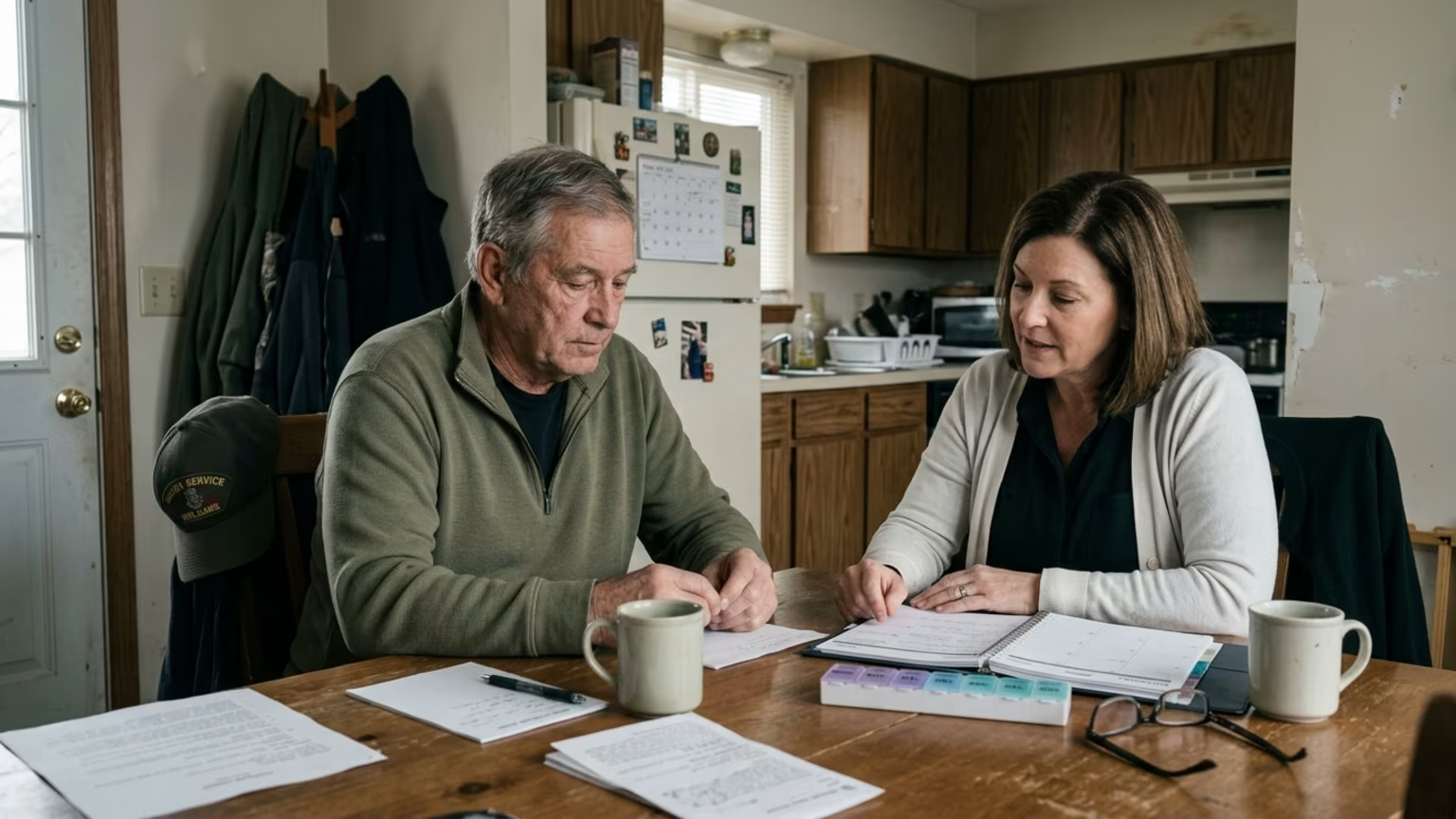
A large veteran study links PTSD and documented social needs to later cognitive impairment, reinforcing the value of connected care planning.
Build better habits around strength, recovery, sleep, hormones and healthy aging with practical guidance for active military personnel and veterans.
Explore BattleVet