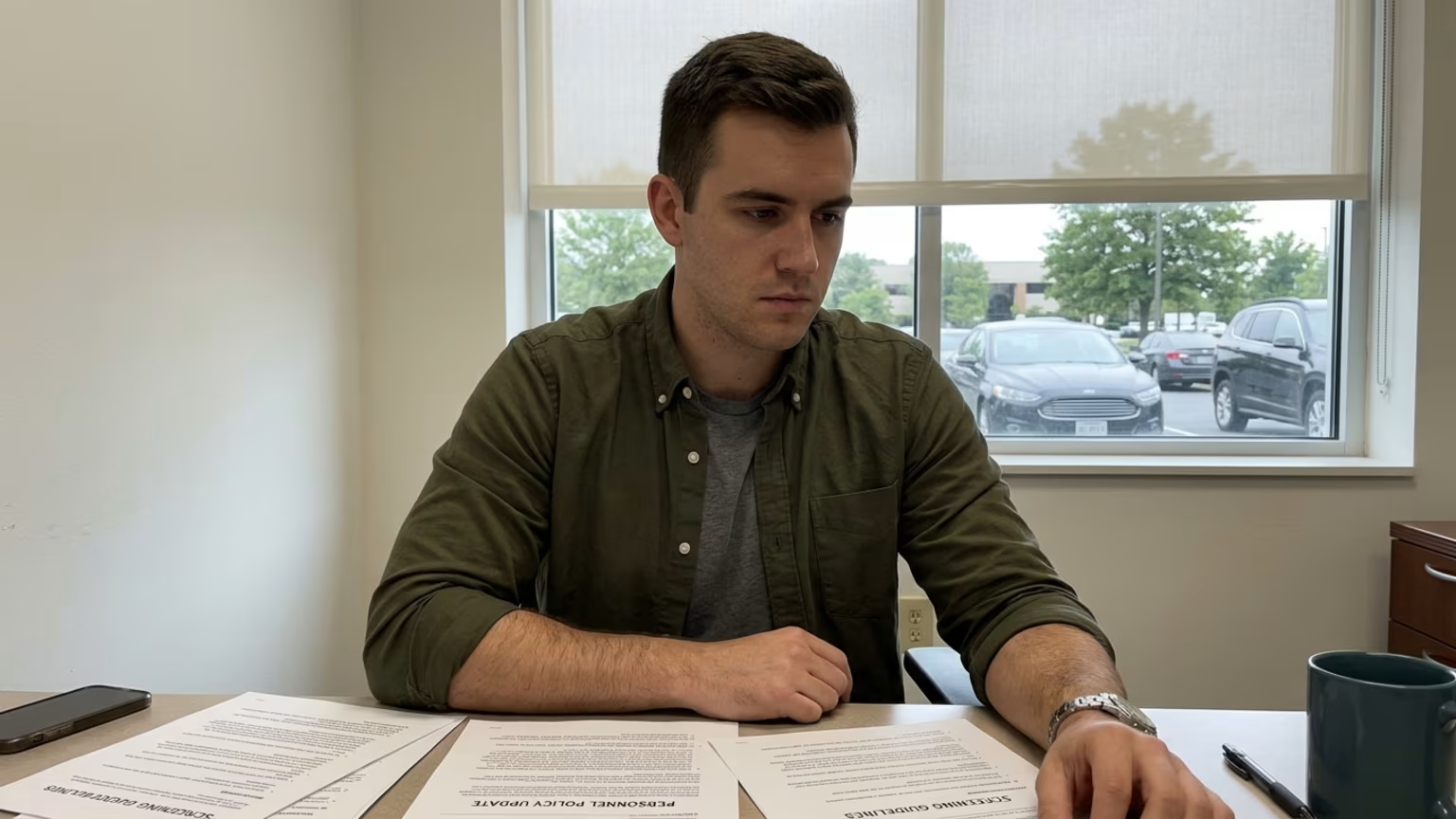

An overview of the reported military mandate for testosterone testing. Understand how medical guidelines work and what this policy could mean for your career.





An infantry squad leader turns 30 and hears rumors about mandatory hormone blood draws. He wonders if a single lab result will suddenly define his career capability. The tension is real, but the facts are still unfolding.
"Is the military really going to mandate testosterone testing for everyone over 30, and what does it mean for my career?"
This is the primary question many service members are asking right now. It is a valid concern for anyone prioritizing their long term capability. The reported policy has sparked discussions about medical privacy, career impacts, and healthy aging. You need clear information to navigate these potential changes effectively.
Military personnel constantly monitor their physical readiness and performance. A nationwide testing mandate introduces new variables into how health is measured across the force. Understanding the difference between a screening requirement and a medical diagnosis is crucial. This distinction helps you maintain control over your own healthcare decisions.
The Washington Post reports that Defense Secretary Pete Hegseth announced in July a mandatory testing program for service members aged 30 and older. The plan would offer voluntary testosterone replacement therapy to those who test low. A trade publication reports that Hegseth cited taking care of service members' long term health as the rationale. The initiative has generated significant interest across the military community.
However, a publicly accessible implementation directive is not yet available to verify the precise rules. The available reporting identifies the plan as an announcement rather than a fully documented operational policy. We do not yet know how frequently this testing would occur. We also do not know whether it would be conducted during routine medical examinations.
Service members are left waiting for formal guidelines to understand how this impacts them daily. Without a published directive, medical officers cannot establish standardized protocols for their units. This creates a gap between the reported political announcement and ground level medical reality. Until the Pentagon releases official documents, the scope of the mandate remains theoretical.
The Washington Post opinion piece reporting this policy was written by Leonard Sax. He is identified as the author of Boys Adrift: The Six Factors Driving the Growing Epidemic of Unmotivated Boys and Underachieving Young Men. His article argues for a different approach to the issue of hormone health. He frames the proposed program as a topic requiring careful medical scrutiny.
The accessible report does not identify his complete list of consulted experts. It simply highlights the need for a more careful medical strategy. Claims about a broad medical consensus should be made cautiously based on the available reporting. The story serves as a useful starting point for understanding your health options.
Opinion pieces often shape public perception before official policies are fully implemented. Sax's article underscores the tension between aggressive health screening and cautious medical practice. It reminds readers that medical decisions should not be driven solely by policy mandates. Independent clinical judgment remains essential for protecting individual health outcomes.
No. The reported policy clearly separates the testing requirement from the treatment phase. According to the reported plan, testing would be mandatory, while testosterone treatment would be voluntary for personnel with low results. You will not be forced to take medication based on a single screening.
However, voluntary choices in the military can sometimes carry unspoken pressure. Service members might worry that declining therapy could affect perceptions of fitness or career progression. Active duty personnel naturally have questions about whether treatment might affect their deployability or medical waivers. The available sources do not establish any formal link between treatment decisions and personnel actions.
The distinction between mandatory testing and voluntary treatment is a critical safeguard. It ensures that the final medical decision remains in the hands of the service member. However, the culture of military compliance can make any official recommendation feel mandatory. Service members must remember that they retain the right to informed medical consent.
The Washington Post says the reported mandate appears to include women. This detail is crucial because hormone physiology varies widely across different clinical circumstances. Diagnostic criteria and treatment indications differ significantly between men and women. A policy applying to both sexes requires careful medical implementation.
Because of this complexity, it is unlikely that one fixed testing threshold could apply identically to every service member. The inclusion of women adds another layer of medical nuance to a broad screening initiative. It shows that the initiative is not simply a male only issue. It requires individualized clinical evaluation for every patient.
Women in the military face unique physiological demands that require specialized endocrine care. Applying a generalized hormone screening protocol across the entire force risks oversimplifying these differences. Medical officers will need highly specific guidelines to interpret test results for female personnel. Blanket policies often struggle to accommodate the complex realities of human endocrinology.
Medical professionals caution against diagnosing low testosterone from a single number or from symptoms alone. A summary of a 2026 Endocrine Society statement provides clear guidance on this issue. It says diagnosis should combine compatible symptoms with consistently low, accurately measured testosterone levels. It is vital to measure these levels carefully before making a diagnosis.
A separate report on international clinical guidance provides further context. It says diagnosis generally requires two independent morning measurements on different days alongside relevant symptoms. Relying on a single test can lead to inaccurate conclusions about your health. Proper diagnosis requires patience and clinical precision.
The time of day a blood draw occurs significantly impacts the final laboratory result. Testosterone levels naturally peak in the early morning and decline throughout the day. Taking a test in the late afternoon could artificially suggest a deficiency where none exists. This is why standardized testing conditions are non negotiable for an accurate medical assessment.
A Pituitary Network news roundup notes that many endocrinologists consider the reported mandatory testing approach problematic. One major concern is the diagnostic gray zone. Patients can fall into this zone where symptoms and borderline laboratory results do not clearly establish a deficiency. Automatically testing everyone above a particular age does not itself establish that treatment is medically indicated.
Medical sources emphasize monitoring and diagnostic confirmation rather than treatment based solely on age. Hormone levels naturally fluctuate based on sleep, stress, and physical exertion. A broad screening program might flag individuals who simply need better recovery rather than lifelong medication. Proper understanding of testosterone and hormone health is essential for your long term capability.
Treating a laboratory number without treating the patient often leads to unnecessary medical interventions. Endocrinologists warn against ignoring the broader lifestyle factors that influence natural hormone production. A holistic approach prioritizes fixing sleep and nutrition before introducing exogenous hormones. Automatic age based treatment bypasses this critical evaluation phase entirely.
Testosterone therapy requires ongoing medical supervision and regular safety monitoring. A report says American Urological Association guidance recommends checking hemoglobin and hematocrit before treatment. The guidance also recommends continuing to monitor them during therapy. It reports a hematocrit monitoring goal below 54 percent in the AUA guidance.
Any military program offering treatment would need clear prescribing standards and follow up protocols to ensure safety. Treatment is not a simple fix that ends with a single prescription. It requires a commitment to ongoing clinical evaluations. Service members must be aware of these monitoring requirements before beginning therapy.
Elevated hematocrit levels can increase the risk of cardiovascular complications if left unchecked. This makes regular blood draws a mandatory part of any safe hormone replacement protocol. Patients must be willing to comply with this continuous medical oversight for the duration of treatment. It is a serious medical commitment that goes far beyond simply taking a medication.
The available sources do not establish that broad age based screening improves military readiness or health outcomes. There is no publicly verified claim that testosterone treatment improves combat performance, strength, morale, or retention. These benefits should be presented as possible objectives rather than demonstrated results.
Maintaining high levels of training and physical performance requires a comprehensive approach to health. Medication alone cannot replace consistent physical conditioning and proper recovery protocols. Service members should view hormone health as just one component of their overall capability. The military relies on well rounded fitness rather than single metrics.
Focusing too heavily on a single hormone can distract from other critical areas of physical readiness. Mobility, cardiovascular endurance, and tactical proficiency matter just as much as raw strength. A balanced approach to military fitness integrates proper nutrition alongside targeted medical care. Health optimization requires addressing the entire body as an interconnected system.
Several practical questions remain unanswered about the reported military health initiative. The available sources do not provide reliable figures for how many active duty personnel currently have clinically diagnosed hypogonadism. We also do not know how much a broad Defense Department screening program would cost. The exact testosterone thresholds and repeat testing rules remain unverified.
It is also unclear how treatment would affect medical privacy or disability determinations. The available search results do not independently verify a detailed official Pentagon implementation document. We do not know if the program has been formally approved, funded, or implemented. Service members should continue to seek verified updates through official channels.
The financial implications of implementing this policy across the armed forces are entirely unverified. Funding a massive testing and treatment apparatus would require significant budgetary allocations. Until these logistical details are publicly confirmed, the policy remains a subject of debate. Transparency regarding these operational realities is necessary for a successful medical program.
Standard answers regarding hormone replacement do not always apply perfectly to military personnel. Certain edge cases require very specific medical evaluation. For example, severe physical exhaustion or sleep deprivation from deployment can cause temporary hormonal shifts. Medical providers must rule out temporary environmental stressors before diagnosing a permanent deficiency.
The Endocrine Society guidance summarized in the reports advises clinicians to assess reversible causes before prescribing testosterone. Active duty personnel facing high operational stress might simply need physical restoration rather than medication. A young service member recovering from an intense training cycle might show low levels that recover naturally. Automatically prescribing medication in these edge cases could ignore potentially reversible causes.
Combat injuries and traumatic brain trauma also present unique complications for hormone regulation. These specific injuries can disrupt the endocrine system in unpredictable ways that require specialist care. A standardized screening policy might fail to account for the nuanced medical history of wounded veterans. Individualized medical evaluations are crucial for protecting our most vulnerable service members.
Navigating this potential policy requires clear communication with your medical provider. If you undergo mandatory screening and receive a low result, do not panic. Ask your doctor whether the test was performed under standardized conditions. You should request a second early morning measurement before discussing treatment options.
Patients considering therapy must ask about baseline blood counts and potential medication interactions. Active duty personnel should seek clarification about confidentiality and personnel consequences before consenting to treatment. Understanding your veteran lifestyle and healthcare options helps you maintain control over your medical records. You must be your own advocate in the examination room.
Veterans should use a qualified clinician through the VA or an accredited medical provider. Avoid relying on commercial supplement claims or unverified online prescribing services. The available sources support clinical confirmation and monitoring rather than over the counter solutions. Staying informed through a dedicated military health and veteran wellness platform can help you make better health decisions.
Taking proactive ownership of your health records ensures you are prepared for any policy changes. Always request copies of your laboratory results to track your baseline over time. Engaging directly with your medical providers builds a stronger foundation for your long term care. Educated patients consistently achieve better outcomes when navigating complex medical bureaucracies.
Are you relying on a single test result to define your health, or are you looking at the complete picture of your physical capability?
If you receive a low test result, ask your physician to schedule a second early morning blood draw before making any treatment decisions.
Follow BattleVet for practical guidance on military and veteran health, strength, recovery, testosterone, sleep and healthy aging. Stay connected for new articles, research backed insights and clear information to help you stay capable for the years ahead.


Combat Stress’s workplace guidance emphasizes listening over diagnosis. Recent U.S. veteran insomnia research adds context for sleep and recovery concerns.


ErythroMer's reported storage design could matter for military care. An academic review still lists it as preclinical, with human evidence ahead.

A large veteran study links PTSD and documented social needs to later cognitive impairment, reinforcing the value of connected care planning.
Build better habits around strength, recovery, sleep, hormones and healthy aging with practical guidance for active military personnel and veterans.
Explore BattleVet