
A single low testosterone test after a TBI does not prove permanent pituitary damage. Learn why proper evaluation requires repeat testing and hormone monitoring.





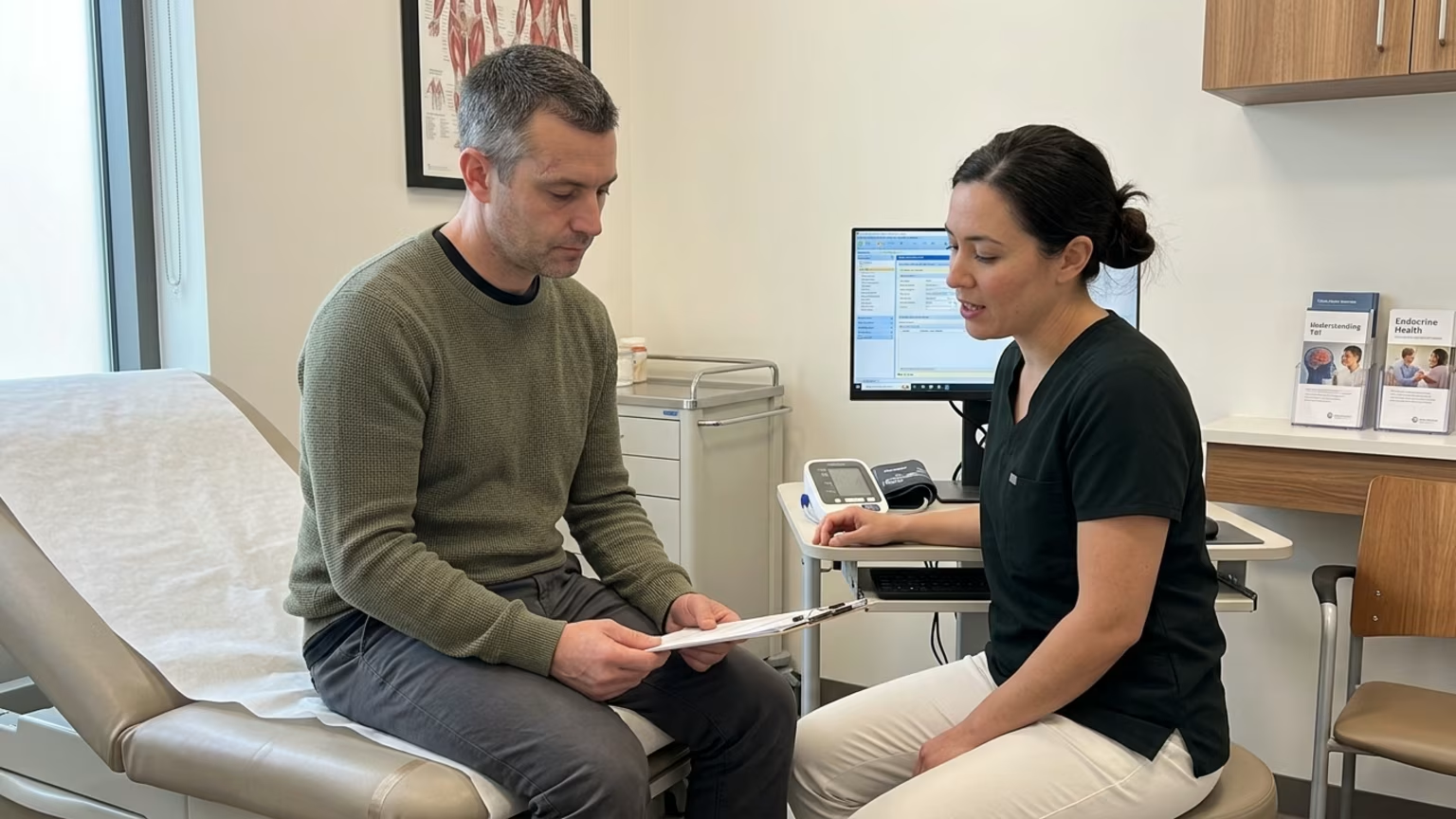
A veteran sits in a clinic exam room looking at a single lab result from an afternoon blood draw. The paper shows a low testosterone number, and the immediate assumption is a past concussion is to blame.
There is a widespread misconception that a single low testosterone result after a head injury proves permanent pituitary damage. In reality, traumatic brain injury can disrupt signals between the brain and testes, but one test is never enough to diagnose this. Proper evaluation requires repeat early morning testing and a broader look at pituitary function before starting any treatment.
I remember waking up after a poor night of sleep and realizing that my training recovery was taking much longer than it used to. I realized that readiness is more than just pushing through the fatigue. It requires a dedicated approach to sleep and hormonal health, which completely shifted how I view long term capability. Testing properly became my priority over guessing.
The confusion often starts with a basic misunderstanding of the human endocrine system. The network linking the hypothalamus, pituitary gland, and testes relies on a delicate chain of communication. The hypothalamus stimulates the pituitary gland to release luteinizing hormone and follicle stimulating hormone. Luteinizing hormone then stimulates the testes to produce testosterone.
A head injury can disrupt this system at more than one level. Trauma may affect the hypothalamus, pituitary gland, or the blood supply to those structures. This physical disruption reduces the critical signals that regulate testosterone and sperm production. When the brain fails to provide adequate stimulation, the resulting condition is called secondary hypogonadism.
People often mistake this secondary failure for primary testicular damage, leading to rushed conclusions about lifelong therapy. This misunderstanding is also fueled by changing administrative policies that prioritize mass screening. A 2026 Department of Defense memorandum made annual testosterone testing mandatory for active military personnel aged 30 and older. Younger troops have the option to participate in this screening.
While this policy brings needed attention to hormonal health for veterans, a screening result is just a starting point. The American Urological Association position quoted in reporting says there is insufficient evidence for population-level testosterone screening of asymptomatic men. A low screening result should act as a prompt for deeper evaluation rather than an automatic diagnosis.
Evidence about how frequently brain trauma causes hormone deficiency varies wildly based on injury severity. A military health report cites one study in which as many as 80 percent of men with severe TBI experienced low testosterone. However, that specific figure applies strictly to severe cases. It should not be generalized to all people with mild concussions or general blast exposure.
A recent European Journal of Endocrinology case report underscores that post-traumatic pituitary dysfunction can be delayed. This report cites prior research finding antipituitary antibodies in 44.8 percent of patients three years after TBI. In that selected cohort, pituitary dysfunction occurred in 46.2 percent of antibody-positive patients. This compared with just 12.5 percent of antibody-negative patients.
These exact findings show a real, measurable risk for specific groups of patients. However, studies often differ in injury severity, timing, laboratory methods, and patient demographics. Consequently, prevalence estimates should be viewed as study specific findings. Assuming that every service member with a concussion has a permanent hormone deficiency is scientifically inaccurate.
Shedding the myth of the single definitive test changes how you should approach your medical evaluation. Do not rely on one afternoon blood draw, because testosterone naturally drops later in the day. The American Urological Association guidance uses a total testosterone concentration below 300 ng/dL as a reasonable diagnostic threshold. Crucially, they recommend two early morning measurements on separate occasions.
A diagnosis must combine compatible symptoms with consistently low biochemical results. Symptoms like persistent fatigue, poor concentration, and low mood can have multiple routine causes. Sleep disruption, acute illness, major training stress, and obesity can all influence hormone levels. You must account for these lifestyle factors, which is a core part of healthy recovery and sleep.
Your clinician must look beyond just total testosterone to get an accurate picture. Total levels may not tell the whole story when sex hormone binding globulin is abnormal. Your doctor may need to assess this globulin and calculate free testosterone. Luteinizing hormone is also a key branch point test after confirmed low testosterone.
Follicle stimulating hormone is particularly important when fertility matters to the patient. It provides vital information about the pituitary signal involved directly in sperm production. Additionally, prolactin should be considered when low testosterone is accompanied by low luteinizing hormone. Elevated prolactin can suppress hypothalamic reproductive signaling and may indicate another distinct pituitary disorder.
You must discuss fertility goals before accepting any exogenous hormone treatment. Exogenous testosterone can suppress the internal signals that maintain natural sperm production. The Endocrine Society recommends against testosterone therapy in men who are planning fertility in the near term. If you want biological children, tell your doctor before starting treatment so they can prioritize fertility preserving approaches.
Referral to an endocrinologist is highly recommended when results suggest secondary hypogonadism. You should also seek specialist care if more than one pituitary axis appears abnormal. A broader pituitary review might include morning cortisol and thyroid hormones. If your doctor suspects broader veteran health complications, a specialist can manage the complex testing required.
The European Journal of Endocrinology case report states that post-traumatic hypopituitarism can occur or be recognized many years after injury. The authors emphasize the distinct need for longitudinal hormonal and radiologic monitoring. Future clinical studies will likely clarify the best screening intervals for veterans as they age.
We expect upcoming research to further standardize how specialized pituitary assessments are conducted. Medical guidelines continue to evolve regarding how we monitor cortisol, thyroid function, and growth hormone long after a patient leaves the military. BattleVet will continue to track these clinical updates so you can make informed decisions about your long term capability.
Follow BattleVet for practical guidance on military and veteran health, strength, recovery, testosterone, sleep and healthy aging. Stay connected for new articles, research backed insights and clear information to help you stay capable for the years ahead.


Combat Stress’s workplace guidance emphasizes listening over diagnosis. Recent U.S. veteran insomnia research adds context for sleep and recovery concerns.


ErythroMer's reported storage design could matter for military care. An academic review still lists it as preclinical, with human evidence ahead.

A large veteran study links PTSD and documented social needs to later cognitive impairment, reinforcing the value of connected care planning.
Build better habits around strength, recovery, sleep, hormones and healthy aging with practical guidance for active military personnel and veterans.
Explore BattleVet