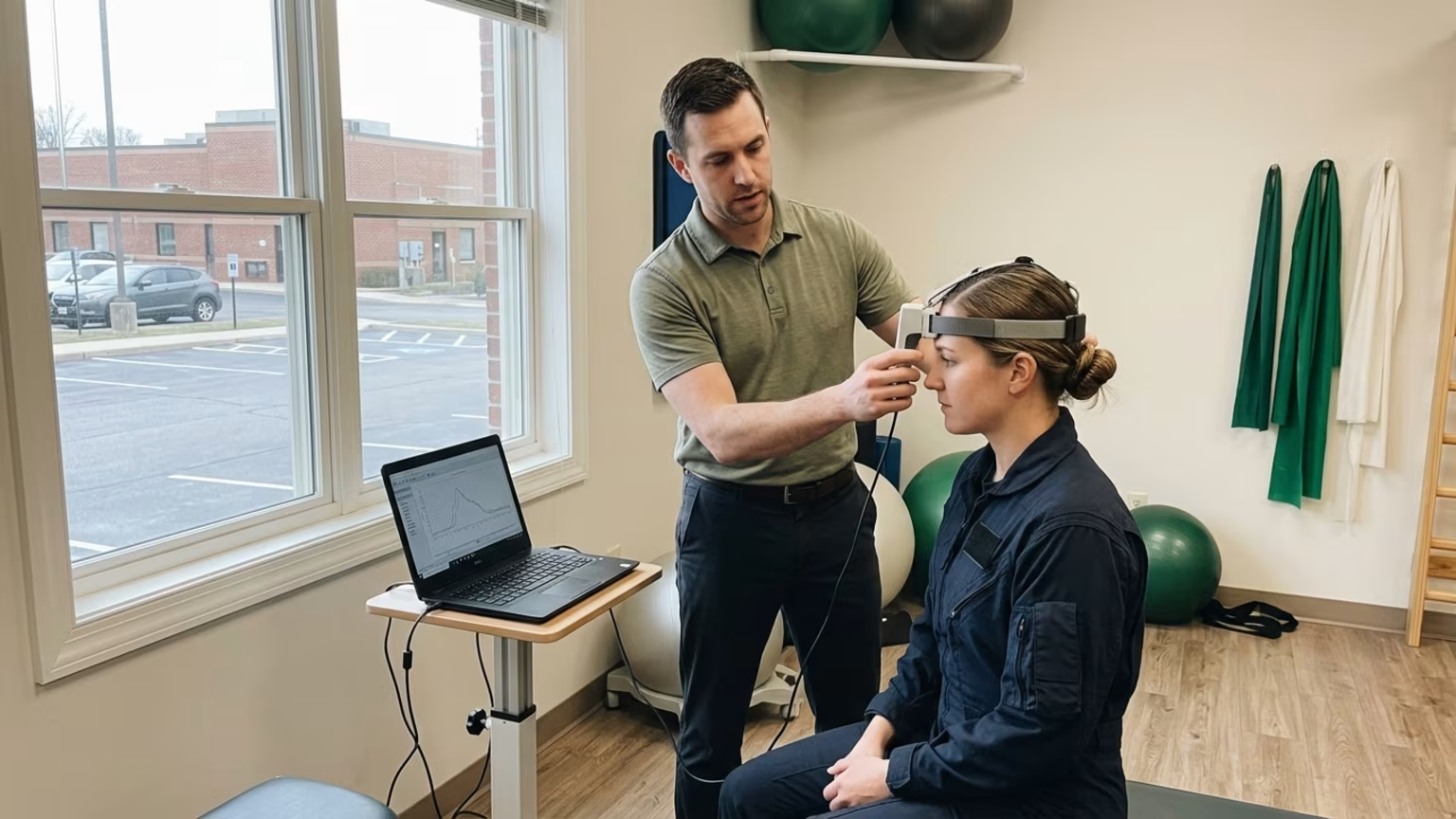

A recent practitioner report details an ongoing, task-specific neck-training program for F-16 student pilots using quantifiable testing and loading methods.





On October 3, 2026, a SimpliFaster article described an ongoing neck-training approach for student pilots preparing to fly the F-16. The publication provided a practitioner account of an in-progress strength program designed specifically for military aviation. This report details how a training staff is currently testing and loading the neck muscles of incoming aviators. It serves as an observation of current practices rather than a report of proven injury prevention or improved flight performance.
Preparing the human body for tactical flight requires addressing highly specific physical demands. A 2026 review in Frontiers in Physiology details the factors contributing to cervical and lumbar loading in fighter aviation. The review identifies repeated positive-Gz exposure, restraint geometry, and prolonged static postures as significant sources of physical stress. The mass and inertia of helmet-mounted systems compound these issues, especially when aircrew reposition their heads and trunks during flight.
These physical demands have clear implications for both immediate operational readiness and long-term military health. The Frontiers in Physiology review notes that musculoskeletal symptoms can negatively affect head mobility and fatigue levels. These issues may also impair visual acquisition, concentration, sleep quality, and a pilot's tolerance for subsequent sorties. Understanding and mitigating these physical stressors is a priority for active personnel and those transitioning into veteran life.
Despite the known physical toll of tactical aviation, standard practices for neck conditioning remain inconsistent across the military. Relatively little research has evaluated specific neck-training interventions within military aviation populations. Many personnel are left to navigate strength, fitness and body composition programming without clear task-specific guidelines. The SimpliFaster article highlights one attempt to introduce quantifiable measurement into a structured training environment.
The ongoing program detailed in the SimpliFaster article involves a specific cohort of military personnel. The current group comprises eight student pilots, consisting of seven men and one woman. These participants range in age from 25 to 35 years old. The small sample size reflects the specialized nature of the F-16 student pilot pipeline.
Before conducting any baseline strength assessments, the training staff required the pilots to complete preliminary preparation. Participants completed two familiarization sessions prior to the testing phase. These initial sessions covered proper neck harness fit, correct body positioning, and the safe execution of the required movements. Establishing this baseline competence was necessary before applying measurable resistance.
A core component of this practitioner approach is the use of direction-specific baseline testing. During the initial assessment, each participant performed a maximal pull in four distinct directions. These testing directions included neck flexion, neck extension, left lateral flexion, and right lateral flexion. Recording strength across multiple planes provides a more complete profile of cervical capacity.
The training staff uses these resulting individual maximums to guide the programming for each pilot. To monitor the applied resistance accurately, the practitioners utilize a specialized setup. The program pairs a standard neck harness with a portable luggage scale to quantify the pulling force. This methodology is intended to make loading more quantifiable and easier to track over time.
The neck-conditioning protocol is not an isolated routine but rather part of a comprehensive physical preparation plan. The student pilots attend supervised strength and conditioning sessions three times per week. Within these broader workouts, the neck work is carefully integrated as accessory training. This structure ensures that cervical strengthening complements rather than disrupts the overall fitness regimen.
The weekly accessory schedule is divided into distinct movement categories to address different muscular demands. The described program includes a dedicated isometric day for static holds. It also features a loaded flexion and extension day, followed by a loaded diagonal flexion and extension day later in the week. This varied approach attempts to mimic the complex head movements required during flight operations.
Tracking progress requires consistent reassessment throughout the duration of the training block. The authors of the SimpliFaster article plan to retest the participants' maximal pulls at the program midpoint. A final round of retesting is scheduled to occur just before the student pilots begin their actual flying duties. These planned assessments will provide data on how the specific loading protocols influenced measurable neck strength.
While the protocol offers a structured approach to loading, it is critical to distinguish an ongoing program from a validated intervention. The SimpliFaster article does not provide specific training loads, sets, repetitions, or hold durations. It also lacks any published retest results to confirm the effectiveness of the luggage-scale method. The article describes what the specific group is doing, not what has been proven to work universally.
The current account does not report changes in pain levels, range of motion, or injury incidence. It provides no data on whether the physical conditioning translates to improved flight performance or greater tolerance to G-forces. The authors explicitly state they do not yet know whether the approach reduces injury risk or improves operational performance. Readers should view this methodology as a developing approach rather than established clinical guidance.
The luggage-scale measurement tool is an interesting practical adaptation for a strength facility. However, the article does not establish that this specific method is validated for predicting injury risk. It also does not prove that this program's specific exercises are superior to other conditioning approaches. Military personnel must recognize the limits of early practitioner reports when evaluating new training and performance strategies.
Focusing solely on physical conditioning ignores other critical variables in military aviation health. The Frontiers in Physiology review emphasizes that strength training is only one potential countermeasure against cervical loading. The review recommends considering conditioning and movement-strategy training alongside robust equipment and ergonomic measures. An integrated approach is necessary to manage the severe physical stresses of modern tactical flight.
Equipment modifications play a major role in protecting the cervical and lumbar spine. The 2026 review highlights the importance of helmet mass-distribution optimization to reduce structural strain. It also points to seat and restraint design as vital components for minimizing prolonged static posture issues. Proper equipment fit across different sexes and anthropometric ranges remains a necessary focus for military aviation safety.
Despite these recognized ergonomic and physical factors, comprehensive evidence remains scarce. The Frontiers in Physiology review notes that comparative trials establishing optimal protocols for fifth-generation aircrew remain limited. The aviation community understands the plausibility of cervical loading as a serious concern, but definitive evidence for optimal countermeasures is still developing. BattleVet consistently advocates for relying on verified evidence when making health and performance decisions.
For active duty personnel and veterans considering neck training, the most defensible takeaway centers on measurement and uncertainty. The reported pilot program demonstrates the value of direction-specific baseline testing and individualized loading. However, the specific outcomes of this methodology have not yet been reported or scientifically validated. There is not enough detail provided to safely reproduce the program independently or determine appropriate loads for another person.
The F-16 student pilot protocol is heavily supervised and deeply embedded in a specialized training environment. Attempting to replicate an incomplete protocol without proper oversight carries inherent physical risks. Neck strengthening should not be presented as a demonstrated way to prevent injury, preserve flight status, or definitively improve operational performance. It is simply one physical variable within a much larger occupational health equation.
Readers experiencing neck symptoms or other relevant medical concerns should prioritize professional care. It is always advisable to seek qualified medical or rehabilitation advice rather than treating a pilot physical training program as a validated treatment. Clear, research-backed guidance is essential for making safe and effective choices regarding military health.
As research into tactical physical preparation continues, the integration of quantified strength testing in aviation presents new possibilities. Will future comparative trials establish optimal neck-conditioning protocols that definitively protect military aviators from the physical demands of modern flight?
Follow BattleVet for practical guidance on military and veteran health, strength, recovery, testosterone, sleep and healthy aging. Stay connected for new articles, research backed insights and clear information to help you stay capable for the years ahead.


An ABC investigation highlighted concerns over DVA-funded medicinal cannabis and esketamine prescribing for veterans, leading to tightened rules and oversight.

Recent reports highlight a 10-minute daily resistance habit for adults over 40. Learn how brief fitness routines compare to federal strength guidelines.

New European Association of Urology guidance outlines targeted early-morning testosterone, glucose, and lipid testing to properly evaluate men with symptoms.
Build better habits around strength, recovery, sleep, hormones and healthy aging with practical guidance for active military personnel and veterans.
Explore BattleVet