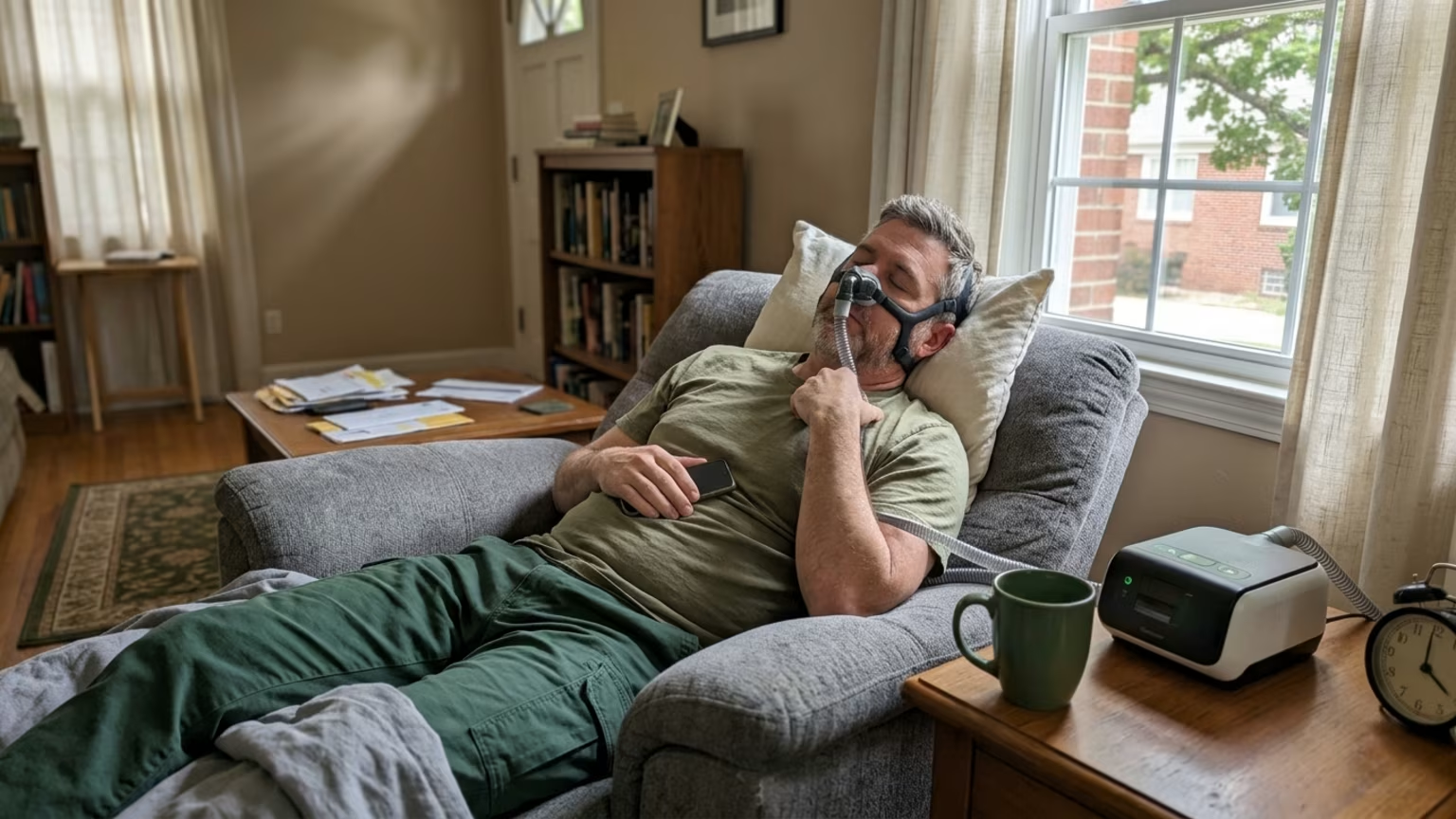

A 2026 study reveals the optimal caffeine nap protocol for drivers with sleep apnea. Learn how veterans on CPAP can safely manage fatigue during long drives.





If you are in immediate danger, call 911. For 24/7 support, call or text 988 and press 1 for the Veterans Crisis Line, or text 838255.
A caffeine nap is a targeted fatigue countermeasure that pairs a rapid dose of caffeine with a short period of sleep. In a 2026 simulator experiment involving 21 drivers with obstructive sleep apnea, this precise combination significantly reduced driving errors compared to caffeine alone. Understanding how this protocol works helps explain why treated sleep apnea can still leave drivers vulnerable to severe fatigue.
The 2026 study by Ashleigh J. Filtness and colleagues at Loughborough University’s Transport Safety Research Center examined driver sleepiness in people with obstructive sleep apnea. All 21 drivers in the experiment were actively receiving continuous positive airway pressure treatment. Known commonly as CPAP, this treatment keeps the airway open to prevent breathing interruptions.
The researchers restricted the participants to four hours of sleep before placing them in a driving simulator. They then monitored brain activity, eye movements, and overall driving behavior. The central finding was that CPAP compliance does not necessarily mean a person has had enough sleep to drive safely. Participants could drive safely when fully alert but showed clear impairment after their sleep was restricted to four hours.
This distinction is crucial for military veterans who face long drives or irregular schedules. Using a prescribed device perfectly during a four-hour sleep window still results in a severely sleep-deprived driver. Fatigue management requires both effective clinical treatment and adequate total time asleep.
Driving safety is a particularly important issue because sleepiness can significantly impair attention and decision-making. People are strictly advised not to drive or perform safety-sensitive work when they are too sleepy to remain alert. That caution applies directly to military and veteran audiences. Operational duties frequently involve vehicle operation, convoy travel, and heavy equipment operation under demanding conditions.
The research team published their findings in Scientific Reports under the title “Optimising the caffeine nap for counteracting driver sleepiness in CPAP treated obstructive sleep apnoea patients.” They specifically set out to test variables like caffeine quantity and nap duration. The researchers compared the effects of one coffee against two coffees. They also tested a 15-minute nap against a 30-minute nap.
Two coffees produced significantly better alertness and fewer driving errors than a single coffee. The study identified a 250-milliliter canned iced coffee as one highly practical option. A canned beverage provides a consistent dose and can be consumed quickly before a nap. The study did not specify an exact caffeine dose in milligrams, so this should be treated as a tested condition rather than a universal prescription.
Professor Filtness noted that earlier research on countermeasures for driver sleepiness had generally used participants without obstructive sleep apnea. The team wanted advice for patients to be based on evidence from people actually living with the condition. This makes the findings more directly relevant to CPAP users than generic fatigue management advice.
Extending the nap from 15 minutes to 30 minutes produced no additional observed benefit under the study conditions. The practical protocol recommends pulling over safely, consuming two iced coffees, and taking a 15-minute nap. If time is severely limited, a driver can consume two coffees and skip the nap entirely. However, the researchers still encourage the 15-minute nap whenever it is safe and feasible.
The absence of extra benefit from a 30-minute nap does not prove that longer naps are never useful. It simply means that, under this study’s specific conditions, extending the nap produced no additional observed benefit. Coffee strength, serving size, sugar content, and individual caffeine sensitivity can all vary widely. Because of these variables, “two coffees” should be viewed as the study’s tested condition rather than a definitive medical dose.
The combination of two coffees and a brief nap produced modest additional improvements over caffeine alone. The experiment used simulated driving after deliberate sleep restriction rather than ordinary driving on public roads. Simulator performance provides useful safety evidence, but it cannot reproduce every factor involved in real-world military travel. Monotony, darkness, severe weather, and mission stress are complex variables that simulators cannot fully replicate.
This approach gives active duty personnel and veterans a structured way to handle emergency fatigue. Simply pushing through drowsiness is dangerous, especially during highway travel or heavy equipment operation. A planned stop for caffeine and a short rest provides a much safer alternative.
Understanding this protocol requires a clear picture of what normal physiological alertness looks like. A healthy baseline involves sufficient continuous sleep where the brain completes multiple uninterrupted rest cycles. When a person achieves this baseline, they do not require supplemental stimulants to maintain focus during daytime tasks. Normal alertness means sustaining attention on safety-sensitive tasks without fighting the urge to close your eyes.
For individuals with obstructive sleep apnea, normal sleep architecture is only possible with effective clinical intervention. A CPAP machine normalizes nighttime breathing, but the patient must still allocate enough time in bed. The participants in the 2026 study demonstrated that treated sleep apnea combined with normal rest allows for safe driving. The impairment only surfaced when researchers artificially restricted their normal sleep duration to four hours.
Veterans should view natural unassisted daytime alertness as their primary physical baseline. Needing a caffeine nap to survive a standard daily commute indicates that the baseline has not been met. Temporary countermeasures cannot replace the physiological restoration that occurs during a full night of normal sleep.
The study reflects a broader clinical concern about residual sleepiness after sleep apnea treatment. People may continue to experience daytime alertness problems even when a machine has been prescribed and is being used. Patient-information sources advise that persistent sleepiness warrants a thorough evaluation of nightly equipment use. Mask leaks, pressure problems, and insufficient sleep can all disrupt your recovery.
Veterans receiving care through the Department of Veterans Affairs have specific resources available for these challenges. VA materials identify sleep studies, CPAP devices, CPAP supplies, and follow-up support as primary avenues for sleep problems. Any veteran who remains sleepy despite treatment should discuss their equipment use and symptoms with a clinician. The appropriate next step for ongoing fatigue is clinical follow-up, not simply increasing daily caffeine consumption.
The VA’s sleep outreach materials establish a practical pathway for veterans who remain sleepy despite initial treatment. Appropriate follow-up care can evaluate factors like poor mask fit, incorrect pressure settings, or co-occurring medical conditions. Relying on caffeine to mask these issues prevents the clinical team from identifying and solving the root cause of the fatigue. Managing these variables is an essential part of veteran lifestyle adjustments following active service.
The transition to civilian life often involves changes to sleep environments, stress levels, and daily routines. Staying proactive about medical equipment maintenance ensures that the underlying condition remains effectively controlled.
If you are struggling with severe physical distress, mental health challenges, or thoughts of self-harm, immediate help is available. Call 911 for immediate emergency danger. Veterans can reach the Veterans Crisis Line by calling 988 and pressing 1, or by texting 838255. Clinical care teams can safely guide you through complex healthcare decisions and ensure your treatment matches your needs.
BattleVet provides this information for educational purposes to support veteran health awareness. This article does not replace professional medical instruction, clinical diagnosis, or personalized care. Veterans experiencing chronic fatigue, persistent sleepiness, or sleep apnea symptoms must consult a qualified physician or VA provider. Never adjust prescribed medical equipment, alter treatment plans, or self-diagnose based on internet research.
The researchers explicitly stated that people with treated obstructive sleep apnea should obtain as much sleep as possible. They also noted that patients should continue sleeping without their machine if necessary in certain unavoidable circumstances. However, any questions about equipment interruption, travel logistics, or persistent symptoms must be directed to your treating clinician.
Proper recovery and sleep strategies are foundational to maintaining physical performance and cognitive sharpness. The caffeine nap is a tactical tool designed to bridge a temporary gap in alertness during critical tasks. It is highly effective for a specific purpose, but it is not a cure for chronic sleep deprivation.
Professor Filtness emphasized that the caffeine nap remains temporary and cannot replace a good night’s sleep. The research team specifically wanted their advice to be based on evidence from people actually living with the condition. By testing this protocol on CPAP users, the study fills a critical knowledge gap for patients managing respiratory sleep disorders.
Driving safety demands high levels of attention, quick reaction times, and reliable decision-making capabilities. Sleepiness directly impairs all of these functions, making fatigue management a vital safety skill. Recognizing your own physical limits and knowing how to apply a structured countermeasure can prevent catastrophic accidents on the road.
The most effective way to utilize this research is to plan ahead for long stretches of driving. Keep a consistent caffeine source readily available, identify safe rest areas along your route, and monitor your fatigue levels honestly. Two 250-milliliter canned iced coffees and a 15-minute rest might be the exact intervention needed to finish a journey safely.
The single most important takeaway is that successful sleep apnea treatment only works when paired with adequate total sleep duration. Returning to the simulated driving experiment from 2026, the 21 drivers were all fully compliant with their medical treatment. Yet, when restricted to four hours of sleep, that compliance could not override their exhaustion or prevent driving errors. A caffeine nap is a highly practical countermeasure, but only sufficient sleep can truly restore physical readiness.
Follow BattleVet for practical guidance on military and veteran health, strength, recovery, testosterone, sleep and healthy aging. Stay connected for new articles, research backed insights and clear information to help you stay capable for the years ahead.


Combat Stress’s workplace guidance emphasizes listening over diagnosis. Recent U.S. veteran insomnia research adds context for sleep and recovery concerns.


ErythroMer's reported storage design could matter for military care. An academic review still lists it as preclinical, with human evidence ahead.
A large veteran study links PTSD and documented social needs to later cognitive impairment, reinforcing the value of connected care planning.
Build better habits around strength, recovery, sleep, hormones and healthy aging with practical guidance for active military personnel and veterans.
Explore BattleVet