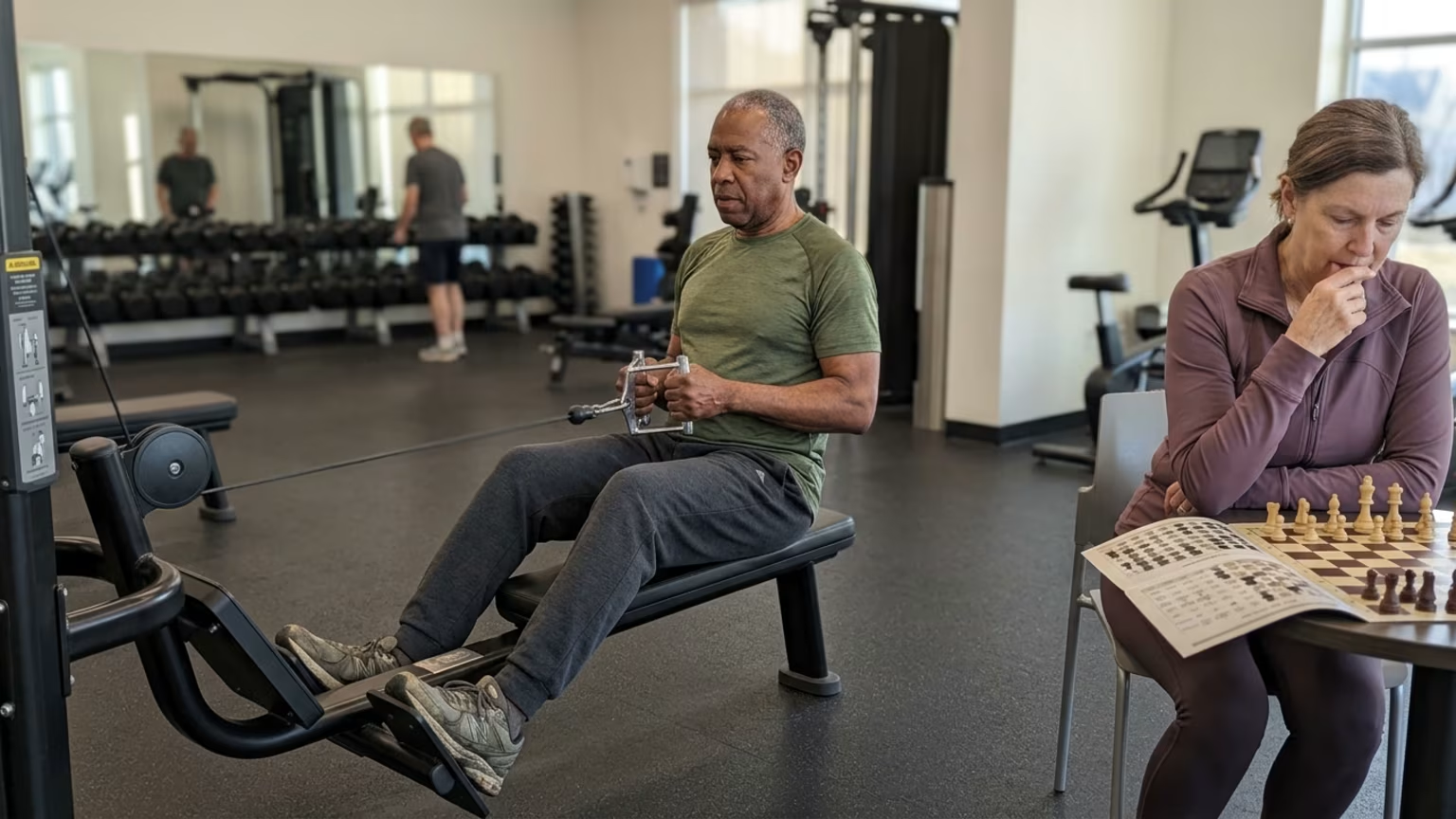

A four-year Japanese cohort study reveals that strength training and cognitive sports may lower dementia risk significantly more than walking in older adults.





Physical decline often signals its arrival quietly. A missed step on a familiar staircase or a sudden hesitation in a busy parking lot can be the first warning. We often rely on a simple daily walk to hold off these physical changes. But recent data suggests that preserving cognitive health requires a much heavier physical stimulus.
A study published in the August issue of Geriatrics & Gerontology International challenges the idea that low-intensity walking alone is enough to protect the brain. Researchers from Nippon Sport Science University and the University of Tsukuba tracked residents aged 65 and older in Kasama, Japan. The four-year cohort study evaluated 5,074 participants to see how different physical activities impacted cognitive decline. The findings showed that older adults who prioritize strength training or cognitively engaging sports have a significantly lower dementia risk compared with those who do not exercise.
Veterans often carry a lifetime of physical conditioning that shifts dramatically after service. Active duty demands a high volume of physical stress. When service ends, the sudden drop in structured physical output can rapidly accelerate muscle loss. This loss of muscle directly impacts metabolic and cognitive function over time.
The default transition strategy is usually a reduction in training intensity. Walking programs and light calisthenics become the standard prescription for aging safely. While cardiovascular movement remains important, treating all exercise as interchangeable might leave critical vulnerabilities in long-term cognitive health.
Many former service members adopt running or walking as their primary physical outlet. While excellent for heart health, continuous steady-state cardio does not effectively challenge fast-twitch muscle fibers. These specific fibers are crucial for balance and explosive movement as we age. Losing them increases the risk of falls and physical decline.
I remember waking up after a poor night of sleep and realizing that my training recovery was taking much longer than it used to. I realized that readiness is more than just pushing through the fatigue. It requires a dedicated approach to sleep and hormonal health, which completely shifted how I view long term capability.
Similarly, long-term cognitive resilience requires a dedicated, specific approach rather than just generalized movement. The Japanese cohort findings suggest that complex motor control and muscle strengthening provide a necessary stress response for the brain. Activities that force the brain to judge target locations or coordinate heavy movement may trigger biological adaptations that simple endurance cannot match.
This is highly relevant for veterans managing post-service aging. A training plan must intentionally challenge both the central nervous system and the muscular system. Relying solely on a daily walk for cardiovascular health is fine, but treating it as a comprehensive healthy aging strategy is mathematically flawed based on the latest observation.
The research team surveyed participants’ lifestyle and health conditions in June 2013. They later assessed typical exercise habits in August 2017. Finally, they followed dementia outcomes for up to four years through July 2021. The study focused heavily on a population in Ibaraki Prefecture. This specific demographic provided a stable environment to track long-term movement habits.
The analysis grouped participants into five distinct exercise categories. Each category contained over 150 participants. The groups included calisthenics, walking, golf, and strength training. A final group combined participants who played gateball and park golf.
During the follow-up period, 430 participants developed dementia. This represented 8.5% of the total 5,074 cohort members. The researchers adjusted the data for multiple variables. These factors included age, sex, education, and economic status. They also accounted for sleep duration, memory decline, depression, and chronic illness. Body-mass index was also included in the adjustment.
The most significant finding centered on resistance exercise. The strength-training group had a reported 74% lower risk of dementia than the non-exercising group. This specific adaptation suggests that loading the skeletal system creates unique protective benefits. The researchers noted that improved blood flow to the brain and increased production of substances involved in nerve growth could explain these outcomes.
Strength training might actively stimulate the production of neurotrophic factors. These specific proteins support the survival and growth of neurons in the brain. Loading the skeletal system forces the body to adapt both physically and neurologically.
The study also highlighted the value of sports that demand both physical and cognitive effort. Participants who played gateball or park golf had a reported 32% lower dementia risk than non-exercisers. These activities require complex motor control. Players must accurately strike a target while managing movement and coordination.
Complex sports create a specific neuroplastic effect by forcing the brain to calculate movement in real time. The researchers also noted that these sports are commonly played in groups. This suggests that social interaction could have contributed to the lower dementia risk observed among participants.
Interestingly, the study found no statistically significant difference in dementia risk between non-exercisers and participants who reported walking, calisthenics, or golf. The researchers noted that walking subgroups did not clear the specific threshold for distinct dementia prevention in this dataset. However, a broader systematic review reported that high levels of physical activity were associated with a 20% lower risk of all-cause dementia over 10 years compared with the lowest activity level.
This does not suggest that walking lacks cardiovascular value. A broader evidence base still supports walking for general longevity. However, it may lack the acute neurological stress required to force optimal cognitive adaptation.
These observations reinforce a critical shift in how we approach aging and physical capability. Movement is not automatically protective against cognitive decline if it lacks progressive resistance or cognitive demands. Veterans should view strength training as a mandatory complement to their cardiovascular routines rather than an optional hobby.
Building a structured training portfolio is the most effective strategy. A veteran might schedule two days of dedicated resistance work focusing on major compound movements. They could then fill the remaining days with brisk walking or light cardiovascular work to maintain aerobic capacity. This ensures both energy systems receive adequate stimulus.
A balanced weekly plan needs a clear division of labor. Walking remains an accessible way to build a baseline of physical activity. Yet, international health guidelines consistently recommend muscle-strengthening activity involving major muscle groups on at least two days per week. For those with poor mobility, incorporating balance-focused activity on at least three days per week is crucial.
Physical tasks should occasionally demand active mental engagement. This aligns with the dual-task concept seen in gateball and park golf. Veterans can integrate cognitive enrichment by selecting activities that require decision-making, precision, and coordination. Group sports or supervised target games force the brain to rapidly process spatial information while managing physical output.
Not everyone has access to a gateball court or a golf course. Veterans can adapt the dual-task concept in any commercial gym or garage setup. Combining physical balance exercises with memory tasks or reaction drills provides a similar cognitive load. Even navigating varied outdoor terrain during a hike forces the brain to actively assess physical risk.
It is vital to recognize the observational nature of these findings. The study does not prove that lifting weights directly prevents dementia. Older adults must prioritize safety over aggressive intensity. Veterans managing chronic joint issues or historical injuries should avoid heavy, unguided lifting.
Starting with controlled movements like sit-to-stand exercises or resistance bands builds a safe foundation. Any new protocol should involve consultation with a healthcare professional or physical therapist. This is especially true for those dealing with balance limitations or traumatic brain injuries.
Professional guidance helps tailor the intensity to an individual specific needs. A tailored approach ensures that the neuromuscular system is challenged without risking severe tissue damage. This structured progression is the foundation of lifelong physical resilience.
The relationship between mechanical load, cognitive processing, and neurological resilience is becoming clearer. As researchers continue to untangle how resistance training supports healthy aging, clinical guidelines will likely evolve. If basic strength protocols and complex motor tasks provide such distinct advantages, will future veteran rehabilitation programs prioritize heavy, dual-task physical training over standard mobility maintenance?
Capability requires continuous adaptation. Stay strong, stay sharp, and keep training for the long term.
Follow BattleVet for practical guidance on military and veteran health, strength, recovery, testosterone, sleep and healthy aging. Stay connected for new articles, research backed insights and clear information to help you stay capable for the years ahead.


Combat Stress’s workplace guidance emphasizes listening over diagnosis. Recent U.S. veteran insomnia research adds context for sleep and recovery concerns.


ErythroMer's reported storage design could matter for military care. An academic review still lists it as preclinical, with human evidence ahead.
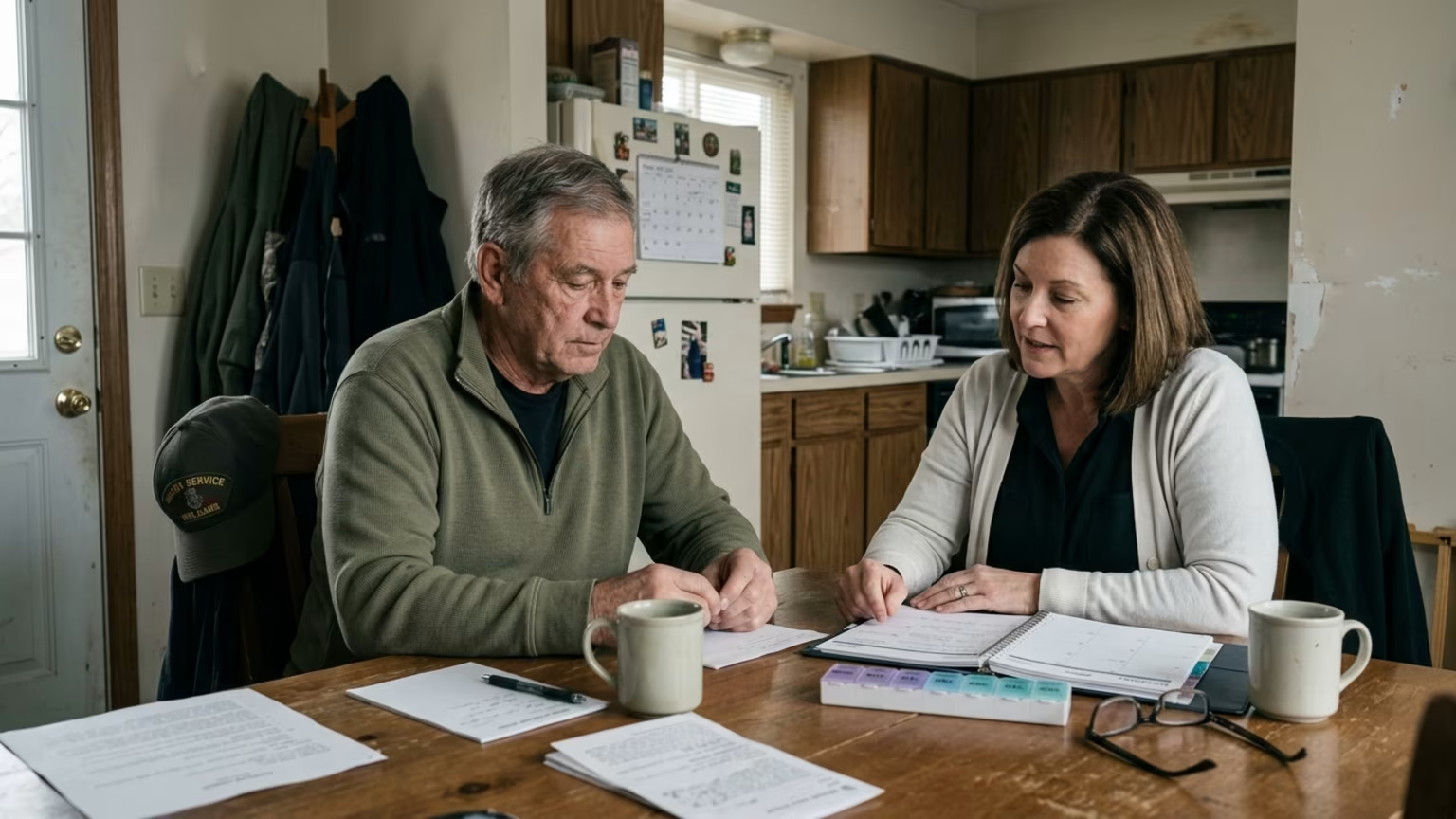
A large veteran study links PTSD and documented social needs to later cognitive impairment, reinforcing the value of connected care planning.
Build better habits around strength, recovery, sleep, hormones and healthy aging with practical guidance for active military personnel and veterans.
Explore BattleVet