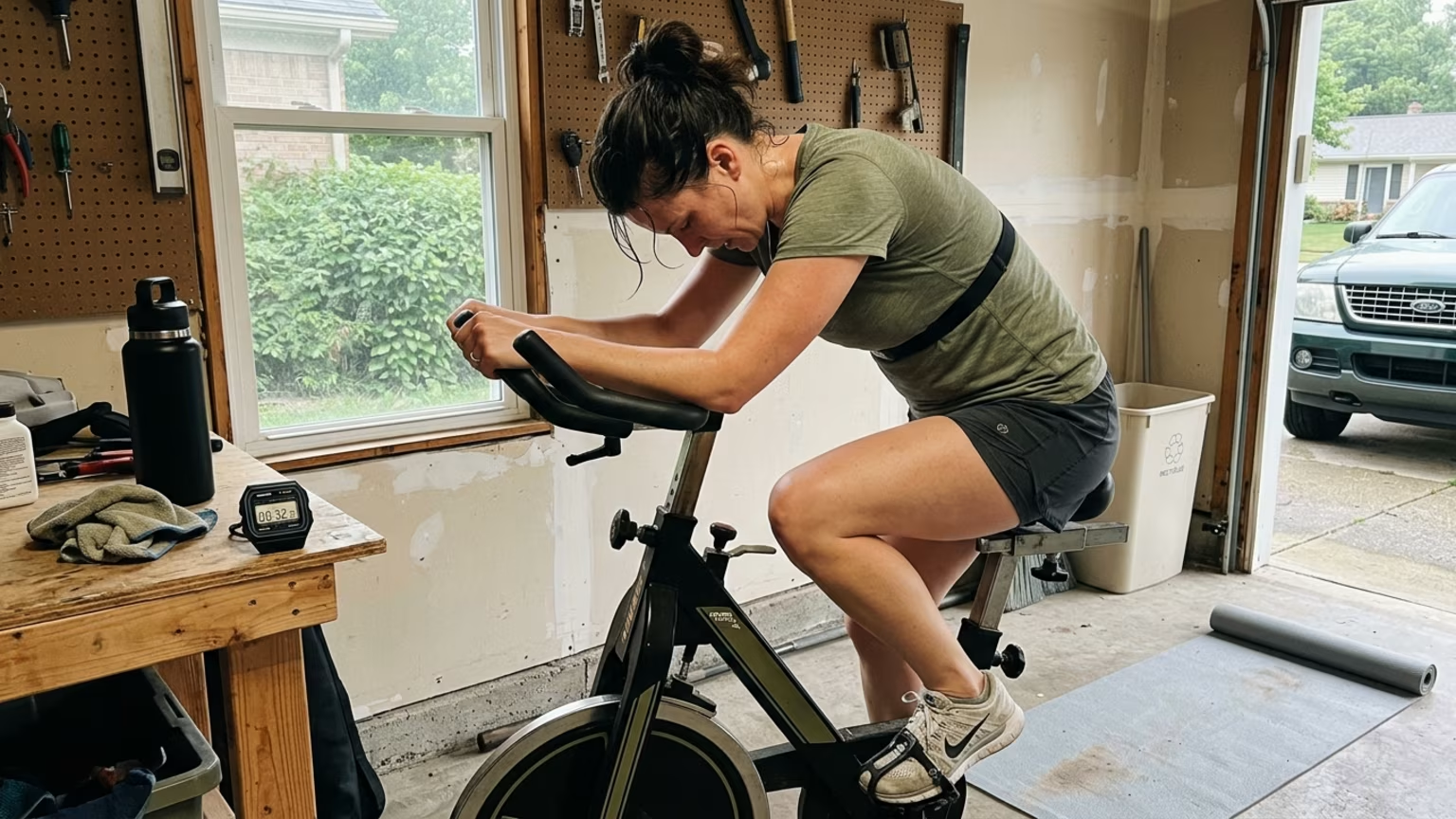

Research shows that short sprint intervals trigger biological markers linked to slower cardiovascular aging. Learn how to execute this protocol safely.





The stationary bike hums quietly in a corner of the garage. It looks like a basic piece of equipment for passing time. Today it serves as a precise tool for driving biological adaptation.
Trying to maintain fitness years after leaving service required a completely new mindset. The goal changed from immediate tactical readiness to healthy aging and longevity. I learned that connecting short term performance with long term health, focusing on mobility and cardiovascular function, was the real key to staying capable. This shift in perspective aligns closely with recent clinical research.
A study published in Cell Reports Medicine measured how exercise intensity affects circulating proteins and inter-organ signaling. The research provides a fascinating look at the immediate biological impact of intense effort. It highlights a stark contrast between short maximal sprints and prolonged moderate exertion. The clinical exercise experiment involved 19 healthy young men.
The participants completed either six 30-second all-out cycling sprints or 90 minutes of continuous moderate cycling. The sprint protocol contained only three total minutes of maximal effort work. The required recovery periods between intervals made the complete session longer than three minutes. Researchers collected blood samples before exercise, immediately afterward, and three hours later.
According to a feature in Women's Health UK, six 30-second sprints changed nearly one-quarter of the measured blood proteins. In contrast, 90 minutes of moderate cycling changed less than 0.25% of the proteins measured immediately after exercise. This massive disparity suggests that intensity acts as a distinct biological trigger. The body responds to maximal effort by rapidly altering its internal signaling environment.
The sprint session also changed more than 200 metabolites. Metabolites are small molecules produced or used during metabolism. The altered proteins included signals involved in blood vessel growth, tissue remodeling, and hormonal signaling. Researchers describe these exercise-responsive proteins and metabolites as exerkines.
These exerkines help coordinate communication among organs throughout the body. For example, a contracting muscle may signal the liver to release fuel needed to sustain exercise. Paul Cohen, the study's senior author, noted that a few minutes of intense exercise can trigger a significant molecular response. He suggested these molecules might mediate the cardiovascular benefits of vigorous exercise.
Measuring immediate protein shifts provides only one part of the picture. The research team needed to understand how these acute changes might relate to long term health outcomes. They compared the exercise-responsive proteins with health data from more than 53,000 UK Biobank participants. This massive database allows scientists to look for statistical connections between biological markers and disease rates.
The results of this cross reference were striking. Researchers identified 33 proteins associated with a lower risk of obesity, type 2 diabetes, and other metabolic disorders. Sprinting altered 32 of those specific proteins. Moderate exercise altered only three of them.
Furthermore, more than one-quarter of those 33 proteins were associated with slower biological aging in the population data. This result does not prove that sprinting directly slows aging in humans. It indicates that some proteins changed by sprinting were statistically associated with aging-related health measures. It is an observational link rather than guaranteed disease prevention.
The duration of this molecular response also surprised the research team. According to Cohen, sprint-related molecular responses remained detectable after eight weeks of training. The persistence of this response suggests it is not merely an acute reaction to unfamiliar physical stress. Veterans looking for strategies to maintain peak physical resilience can view this as evidence of lasting physiological adaptation.
Translating a clinical experiment into a weekly routine requires practical adjustments. The concept of brief, vigorous exercise snacks is gaining traction for a good reason. Irregular schedules and daily responsibilities often make long formal workouts difficult to maintain. A highly compressed protocol offers a realistic alternative for busy individuals.
The study utilized a stationary bicycle for the intense intervals. Using a bike provides a practical way to introduce faster efforts without the repetitive impact of running. This is a critical consideration for older veterans managing joint wear or previous orthopedic injuries. A stationary bike still places substantial cardiovascular and muscular demands on the body.
The effort level in the study was defined as all-out for 30 seconds. You do not need to mimic this maximum effort exactly to benefit from higher intensity work. A safer progression involves scaling the effort to your current fitness level. You can try brisk uphill walking, increasing resistance on a bike, or adding faster intervals during swimming.
Veterans managing known cardiovascular disease require a highly structured approach to physical activity. Iowa City VA researchers reported that home-based cardiac rehabilitation was safe and effective for managing cardiovascular disease in a 2026 VA research brief. This highlights the importance of guided, measured progression over random high intensity efforts. You should always prioritize medical guidance when adjusting your routine.
Measure your capability by looking at readiness for daily tasks rather than just workout duration. Sustainable participation, improved aerobic capacity, and preserved strength matter most. Finding methods for fueling your body after hard efforts will ensure you recover properly. The goal is to build a capable body that handles stress efficiently.
The biggest mistake readers make is assuming this study invalidates moderate exercise. Cardiologist Socrates Kakoulides cautioned that these findings should not be interpreted as a replacement for regular exercise. The study measured immediate molecular changes rather than long term clinical outcomes. Moderate physical activity remains highly valuable for baseline cardiovascular function.
Another typical error involves jumping straight into maximal intervals without a foundation of fitness. The exercise experiment involved 19 healthy young men. The researchers did not establish that a veteran population, older adults, or people with metabolic conditions respond identically. Attempting an absolute maximum effort without prior conditioning invites unnecessary injury risk.
Ignoring the need for medical clearance is a serious oversight. Sports medicine physician Joshua Scott noted that higher-intensity exercise should be undertaken under the direction of a healthcare professional when appropriate. Veterans with hypertension, rhythm disorders, or unexplained exertional symptoms must discuss intense intervals with a clinician first. Safety always precedes performance.
Finally, overtraining by performing sprints too frequently will compromise your recovery. The clinical protocol used only three total minutes of maximal effort. Pushing beyond reasonable limits does not necessarily trigger better biological adaptations. BattleVet emphasizes that physical performance requires adequate rest to drive physiological changes.
Treat the study as a signal rather than a universal prescription. The most defensible takeaway is that brief, vigorous cycling produced a large acute molecular response. It is not evidence that every veteran should perform six maximal sprints daily. You must scale the intensity to fit your current physical reality. Those interested in longevity should explore strategies for extending capability over time to round out their approach.
The bottom line is that while high intensity sprints create a powerful biological signal, lasting health requires a baseline of consistent movement. You cannot out-sprint a generally sedentary lifestyle. Incorporating brief, vigorous intervals can make a healthy routine more time-efficient, provided you stick with it week after week. True physical capability is built on reliable habits, sensible progression, and a commitment to longevity.
Focus on the big picture of your health. Secure the right medical clearance, scale your intervals appropriately, and prioritize your recovery. The most effective protocol is always the one you can execute safely and consistently for years to come.
Follow BattleVet for practical guidance on military and veteran health, strength, recovery, testosterone, sleep and healthy aging. Stay connected for new articles, research backed insights and clear information to help you stay capable for the years ahead.


Combat Stress’s workplace guidance emphasizes listening over diagnosis. Recent U.S. veteran insomnia research adds context for sleep and recovery concerns.


ErythroMer's reported storage design could matter for military care. An academic review still lists it as preclinical, with human evidence ahead.
A large veteran study links PTSD and documented social needs to later cognitive impairment, reinforcing the value of connected care planning.
Build better habits around strength, recovery, sleep, hormones and healthy aging with practical guidance for active military personnel and veterans.
Explore BattleVet