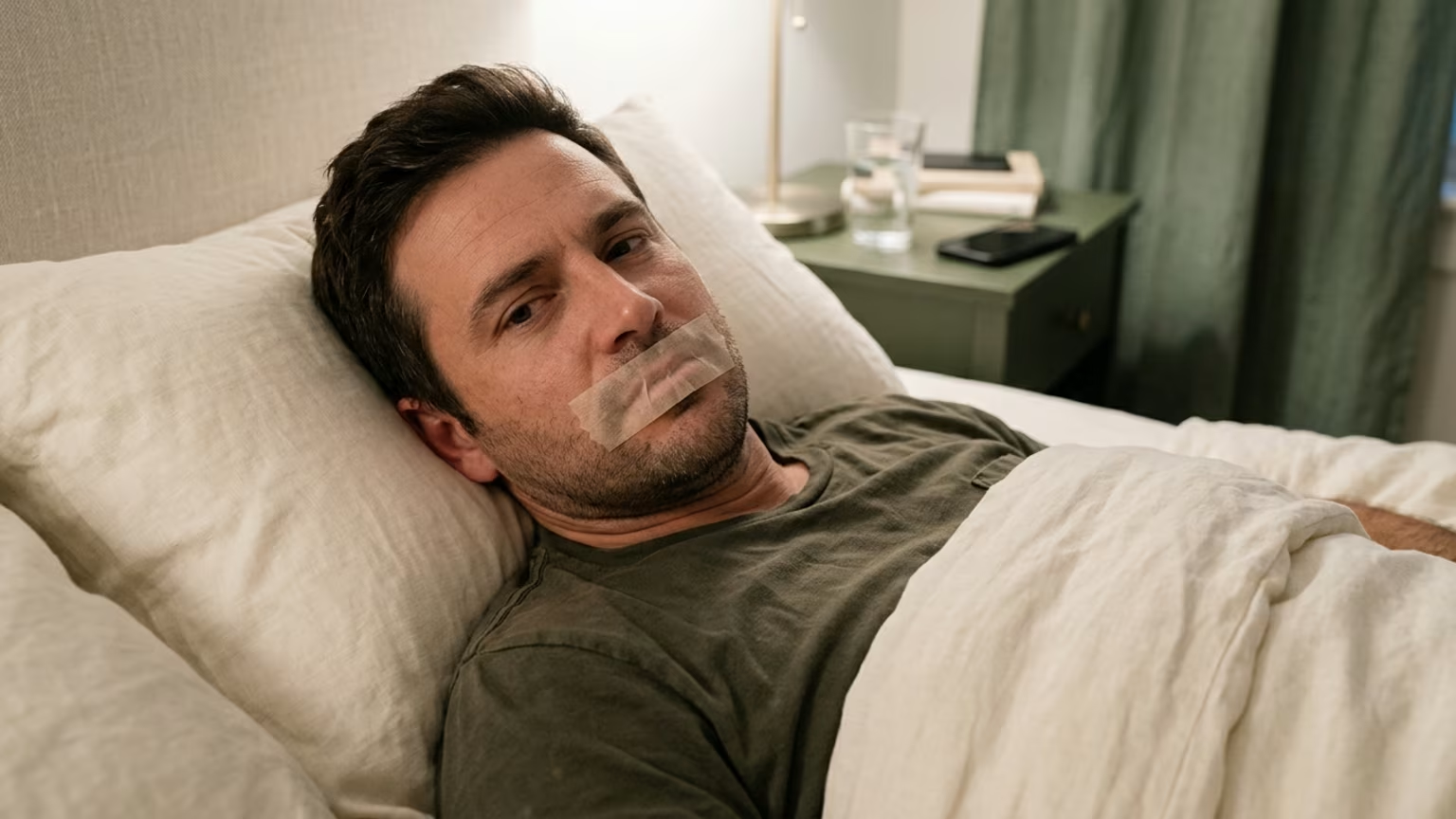

A clinical review of sleepmaxxing reveals limited evidence for mouth taping and highlights potential airway risks for veterans dealing with sleep apnea.





A fitness influencer with millions of followers tapes his mouth shut before bed. He claims this simple routine optimizes recovery and builds better sleep habits. Veterans dealing with broken sleep watch these videos and wonder if a piece of tape can fix years of exhaustion. The primary question readers are asking is whether viral sleep hacks actually improve rest or if they carry hidden risks for people with underlying airway issues.
It is entirely reasonable to look for accessible ways to sleep better. Service members and veterans often face significant sleep disruptions that directly affect daily performance. When traditional advice feels insufficient, the appeal of a quick physical intervention is completely understandable. However, relying on social media routines requires separating biological facts from internet trends.
Online fitness culture has recently expanded from exercise and nutrition into recovery tracking and airway practices. A trend known as sleepmaxxing promotes various routines intended to improve physical performance and daytime alertness. Fitness influencer Ashton Hall has aggressively promoted sleep-related practices like taping the mouth and the bridge of the nose. Medscape reports that Hall has more than 31 million followers online.
These massive audiences make unvalidated routines seem like standard medical advice. For military personnel focused on readiness, these interventions can look like easy tools for sustaining daily physical restoration.
Mouth taping is frequently promoted online to stop snoring and force nasal breathing. The strongest clinical result highlighted by Medscape came from a very small 2022 study. This study involved only 20 patients who had mild obstructive sleep apnea. Their median apnea-hypopnea index fell from 8.3 events per hour to 4.7 events per hour while using mouth tape.
The researchers noted that the patients' minimum oxygen saturation also increased during the taping period. While this finding sounds promising, it does not mean the practice is universally safe or effective. Because the study included only 20 people with mild disease, the findings cannot establish that mouth taping improves sleep quality in people without the condition.
Despite the small 2022 study, current medical evidence does not support routine or indiscriminate mouth taping. A 2025 systematic review examined methods of keeping the mouth closed during sleep. This review found that mouth taping could actually worsen sleep apnea in people with nasal obstruction or unfavorable airway anatomy. Obstructive sleep apnea is caused by upper-airway collapse.
Simply closing the lips does not reliably correct a physical obstruction located elsewhere in the airway. Furthermore, many studies in the 2025 review excluded people who experienced shortness of breath or anxiety while mouth taping. This means the available clinical evidence may not fully capture the risks experienced by real-world users. Medscape cautions against using mouth taping when a person has not been evaluated for an underlying sleep or airway disorder.
Nasal strips are another extremely common component of viral sleepmaxxing routines. These adhesive strips appear far less concerning than mouth tape regarding airway restriction and breathing safety. A systematic review found that external nasal strips generally improved people's perception of nasal airflow. However, they did not significantly improve objective medical measures like the apnea-hypopnea index or overnight oxygen saturation.
A separate meta-analysis also failed to find a consistent or statistically significant reduction in snoring from nasal strips in pooled results. While nasal strips might make breathing feel slightly easier, they are not a reliable treatment for severe snoring or sleep apnea.
Beyond airway restrictions, influencers often promote environmental changes and specific gadgets for better rest. Evidence for white noise machines and weighted blankets remains inconsistent across major clinical studies. Medscape also reports insufficient evidence for red light therapy as a reliable sleep-improvement tool. Many sleep routines heavily feature dietary supplements as well.
Medscape reports insufficient evidence for non-melatonin dietary supplements as reliable sleep aids. The lack of robust data means these products should not replace established medical treatments or consistent sleep hygiene practices.
Melatonin requires particular caution because many online products lack basic quality control. Some influencer-promoted products, including popular gummy variants, may not contain the exact amount of melatonin stated on the label. This makes accurate dosing incredibly difficult for the average consumer. Medscape notes that melatonin does have proven evidence for selected uses like jet lag and delayed sleep-wake phase disorder.
It also has more limited evidence for treating insomnia in adults aged 55 years or older. It is absolutely not a universal supplement intended for all forms of poor sleep.
The simplest interventions often have the strongest clinical support backing them. Some conventional sleep-hygiene measures are far more reliable than viral internet hacks. Medscape identifies setting regular bedtimes as a highly reasonable measure for improving sleep conditions. They also recommend keeping a dark, quiet, and cool bedroom to support natural sleep cycles.
Maintaining the room at approximately 20 degrees Celsius is strongly supported by current evidence. Consistent sleep schedules and a properly cooled environment provide more measurable benefits than taping your mouth closed.
The mismatch between simple online advice and complex sleep disorders is particularly relevant to the military community. A Department of Veterans Affairs research summary highlights massive disparities in sleep health among former service members. A survey of nearly 20,000 people found sleep apnea in 21 percent of Veterans compared with just 9 percent of non-Veterans. The same summary reports that deployed Veterans had 64 percent higher odds of obstructive sleep apnea than Veterans who had not deployed.
Veterans were also diagnosed with sleep apnea an average of five years earlier than non-Veterans. This incredibly high prevalence means that military health practices must prioritize proper diagnosis over lifestyle fixes. If a veteran attempts to treat loud snoring or gasping with mouth tape, they might delay identifying a serious medical condition. For military and veteran health, untreated sleep apnea severely undermines recovery and total-force performance.
The Military Health System describes its Warfighter Performance Optimization initiative as part of the total force fitness goals. Sleep is closely tied to readiness and sustained performance in these demanding environments. The high prevalence of breathing disorders reported among veterans makes sleep screening a critical priority. Treating viral sleep content as a purely lifestyle issue ignores the physiological realities of the military population.
Treating severe sleep problems requires accurate medical assessment rather than internet trends. A person who snores loudly, wakes gasping, or experiences significant daytime sleepiness should seek a professional clinical evaluation. Questionnaires can help identify warning signs, but they absolutely do not replace a true diagnosis. The 2025 VA and Department of Defense guideline is summarized as strongly recommending objective testing for these issues.
This testing should involve polysomnography or home sleep-apnea testing when sleep apnea is clinically suspected. If testing confirms a diagnosis, proven treatments are highly effective. The American Academy of Sleep Medicine strongly recommends positive airway pressure for adults with diagnosed sleep apnea and excessive sleepiness. Following up with a doctor ensures that the equipment works and that adherence remains high.
The VA reports that starting continuous positive airway pressure within two years of diagnosis was associated with approximately a 30 percent risk reduction. For chronic insomnia without clear sleep apnea symptoms, the VA and Department of Defense recommend cognitive behavioral therapy as a first-line treatment. They clearly note that basic sleep-hygiene education alone is not adequate treatment for chronic insomnia. Achieving quality recovery and sleep requires working alongside a medical professional.
When you look at your own sleep baseline over the past month, are you masking a mechanical breathing issue with a lifestyle hack?
BattleVet provides practical, evidence-led clarity to help you maintain lasting operational capacity.
Follow BattleVet for practical guidance on military and veteran health, strength, recovery, testosterone, sleep and healthy aging. Stay connected for new articles, research backed insights and clear information to help you stay capable for the years ahead.


The BRIDGE Act proposes a whole-family military transition pilot. Read who it would serve, what support it includes, and what remains unresolved.


Combat Stress’s workplace guidance emphasizes listening over diagnosis. Recent U.S. veteran insomnia research adds context for sleep and recovery concerns.

ErythroMer's reported storage design could matter for military care. An academic review still lists it as preclinical, with human evidence ahead.
Build better habits around strength, recovery, sleep, hormones and healthy aging with practical guidance for active military personnel and veterans.
Explore BattleVet