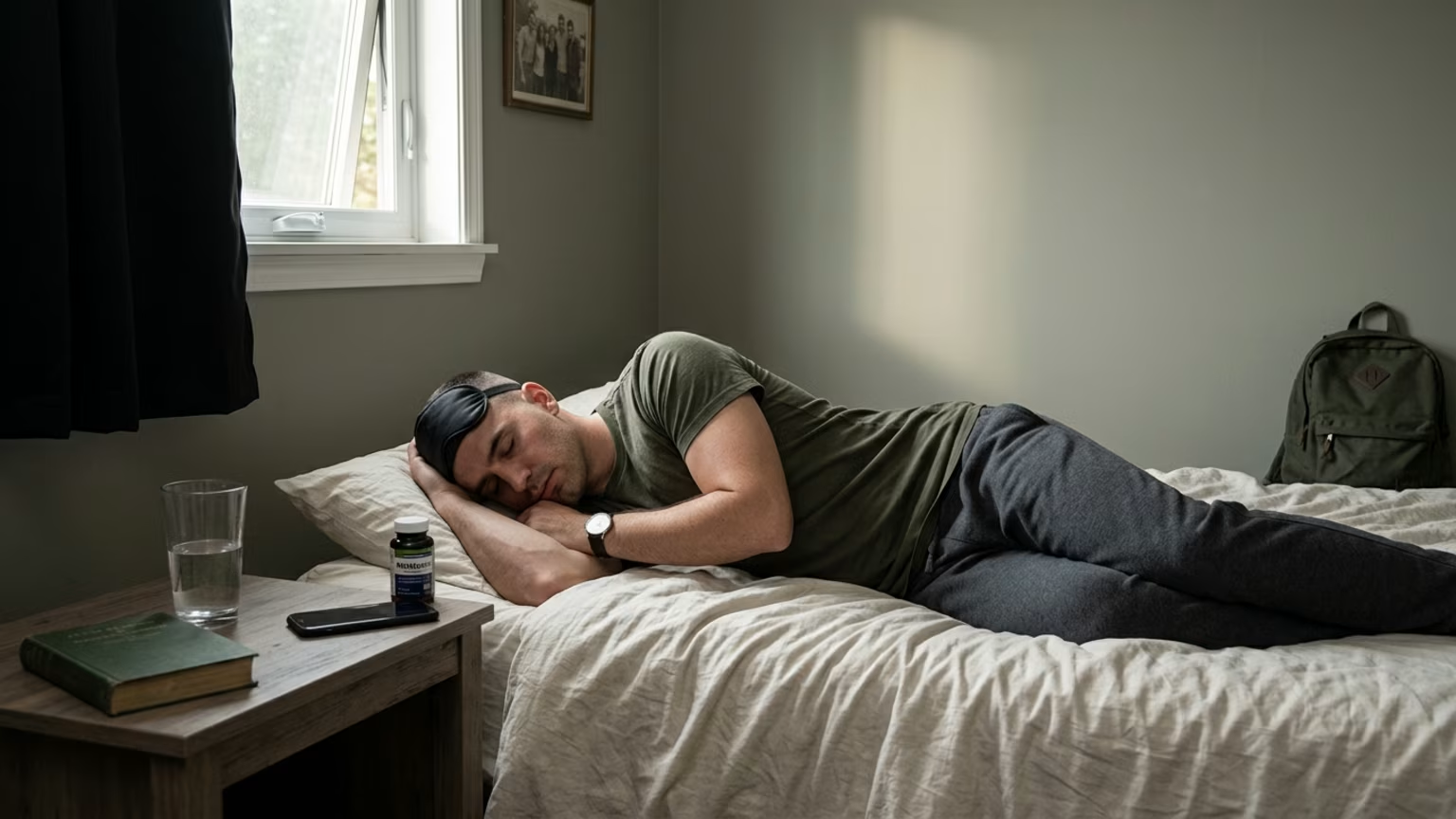

Learn how military personnel and veterans can manage sleep on irregular schedules, navigate shift work, and protect physical capability through proper recovery.





About two-thirds of U.S. Army soldiers chronically receive less than seven hours of sleep per day. The pace of military duties frequently places demanding work directly at odds with the human body's natural need for rest.
In August 2026, a study published in Military Medicine documented severe sleep disruption among active duty personnel. This disruption stems from prolonged wakefulness, night work, travel, and duty periods lasting 24 to 32 hours. The research frames this irregular sleep as a major operational risk rather than a personal weakness. It highlights how specific schedule adjustments can improve overall sleep health and readiness for service members.
Service members report insufficient sleep at twice the rate of civilians. This ongoing lack of rest impairs cognition, elevates stress, lowers morale, and increases the risk of illness and injury. For active personnel, these factors directly threaten operational capability and decision making. For those navigating veteran lifestyle and healthcare, chronic sleep disruption can complicate the transition to civilian life and obscure underlying medical conditions.
Active duty personnel face structural challenges that make it nearly impossible to maintain a normal biological rhythm during deployments. The operational problem involves both total sleep time and schedule regularity. Timing matters because watches, night operations, and early physical training repeatedly place sleep at odds with the body's natural circadian rhythm.
Many service members eventually realize that ignoring fatigue has diminishing returns. I remember waking up after a poor night of sleep and realizing that my training recovery was taking much longer than it used to. I realized that readiness is more than just pushing through the fatigue. It requires a dedicated approach to sleep and hormonal health, which completely shifted how I view long term capability. Treating sleep as a carefully managed resource is essential for any long term military health strategy.
The recent research provides exact figures on how military service affects long term rest. VA researchers reported sleep apnea in 21 percent of veterans versus 9 percent of non-veterans in a survey of nearly 20,000 people. In that same VA reported study, veterans who had deployed had 64 percent higher odds of obstructive sleep apnea than veterans who had not deployed.
The survey findings also indicate that veterans were diagnosed with sleep apnea an average of five years earlier than non-veterans. This data supports a low threshold for discussing snoring, witnessed breathing pauses, morning headaches, and excessive daytime sleepiness with a clinician. The findings do not establish that deployment itself directly causes obstructive sleep apnea. However, they demonstrate a clear association that warrants early screening.
Additionally, the VA summarized an observational study associating insomnia in veterans with a 32 percent greater risk of atrial fibrillation. These numbers emphasize why prompt medical screening is vital for healthy aging and longevity.
The guidance around military rest is shifting from individual habits to organizational sleep protection. A proposed fatigue management framework for the U.S. Navy recommends circadian watchbills where watch, work, and sleep periods occur at consistent times each day. The framework also recommends protected sleep periods totaling at least eight hours in every 24 hour period.
A related maritime analysis emphasizes that fatigue should be treated as a risk factor in operational and maintenance decisions. This analysis recommends expert review of watch rotations, formal sleep education, unit level sleep expertise, and policies addressing recovery. Commanders and supervisors can improve sleep health by reviewing watch rotations, avoiding unnecessary schedule changes, and protecting post watch sleep.
Schedule design can produce measurable improvements for active duty personnel even when total rest time remains the same. In one soldier study, shifting physical training to the afternoon improved several sleep health and morale measures even though total sleep duration did not significantly change. By moving demanding tasks away from biological low points, units can help protect essential rest periods and reduce daytime sleepiness.
The physical environment also plays a major role in recovery and physical restoration. Darkness, reduced noise, ventilation, and temperature control are specifically identified in fatigue management recommendations for watch standers. In practice, this means using eye masks, ensuring proper ventilation, and establishing a phone free wind down period before rest. The proposed Navy framework also recommends additional sleep during recovery from extreme deprivation.
A transition to a normal daytime schedule can be difficult after months or years of rotating watches. The available military literature confirms that irregular schedules and night work create chronic sleep deprivation risk. However, there is no universally correct number of days for circadian readjustment. A practical post service plan should focus on consistent behavioral habits.
Veterans should choose a realistic wake time, expose the daytime routine to normal light, and keep exercise and meals regular. They should also avoid repeatedly switching between a nocturnal schedule on workdays and a daytime schedule on days off. Former service members must distinguish between simple circadian misalignment and a clinical sleep disorder. Trouble sleeping after a rotating schedule may improve when timing stabilizes.
Persistent gasping, loud snoring, or continued insomnia despite adequate rest opportunity warrant professional medical evaluation. A thorough screening conversation with a provider should cover sleep timing across duty days, leave periods, and weekends. It should also include any history of night shifts, witnessed breathing pauses, restless legs, and the use of prescribed medications. VA sleep services specifically diagnose and treat insomnia, narcolepsy, restless legs syndrome, and sleep apnea.
For veterans and active personnel experiencing persistent issues, recognizing when to seek professional medical evaluation is crucial. The American Academy of Sleep Medicine states that clinical questionnaires should not independently diagnose obstructive sleep apnea in adults. Diagnosis requires clinical evaluation plus objective testing, such as laboratory polysomnography or a technically adequate home sleep apnea test. If a home test is negative but clinical suspicion remains, further evaluation through polysomnography is necessary.
When addressing chronic insomnia, medication is not always the best first step. Cognitive behavioral therapy for insomnia is the recommended first line treatment to discuss for chronic insomnia. This approach addresses the behaviors and beliefs that perpetuate sleeplessness without relying solely on sedating medication. Veterans can begin with primary care or VA health care to request a proper evaluation for sleep medicine.
Dangerous fatigue requires immediate action to prevent accidents during high risk tasks. An Army safety source advises obtaining seven to eight hours of sleep before travel, avoiding driving immediately after a full duty shift, and taking regular breaks. Personnel should pull over when heavy eyelids, frequent yawning, or lane drifting occur.
Fatigue should be treated as a serious safety risk in aviation, weapons handling, and maintenance operations. The framework establishes the need for fatigue based go or no go criteria when exhaustion creates unacceptable operational risk. Anyone experiencing dangerous sleepiness while driving should stop and rest rather than attempting to push through the exhaustion.
About two-thirds of U.S. Army soldiers are still operating on a chronic sleep deficit today. If military leaders continue to test protected sleep periods and circadian watchbills, we must ask how these policies will shape the long term health of future veterans. Will future research finally push military culture to treat structured recovery as a non-negotiable operational requirement?
Follow BattleVet for practical guidance on military and veteran health, strength, recovery, testosterone, sleep and healthy aging. Stay connected for new articles, research backed insights and clear information to help you stay capable for the years ahead.


Combat Stress’s workplace guidance emphasizes listening over diagnosis. Recent U.S. veteran insomnia research adds context for sleep and recovery concerns.


ErythroMer's reported storage design could matter for military care. An academic review still lists it as preclinical, with human evidence ahead.
A large veteran study links PTSD and documented social needs to later cognitive impairment, reinforcing the value of connected care planning.
Build better habits around strength, recovery, sleep, hormones and healthy aging with practical guidance for active military personnel and veterans.
Explore BattleVet