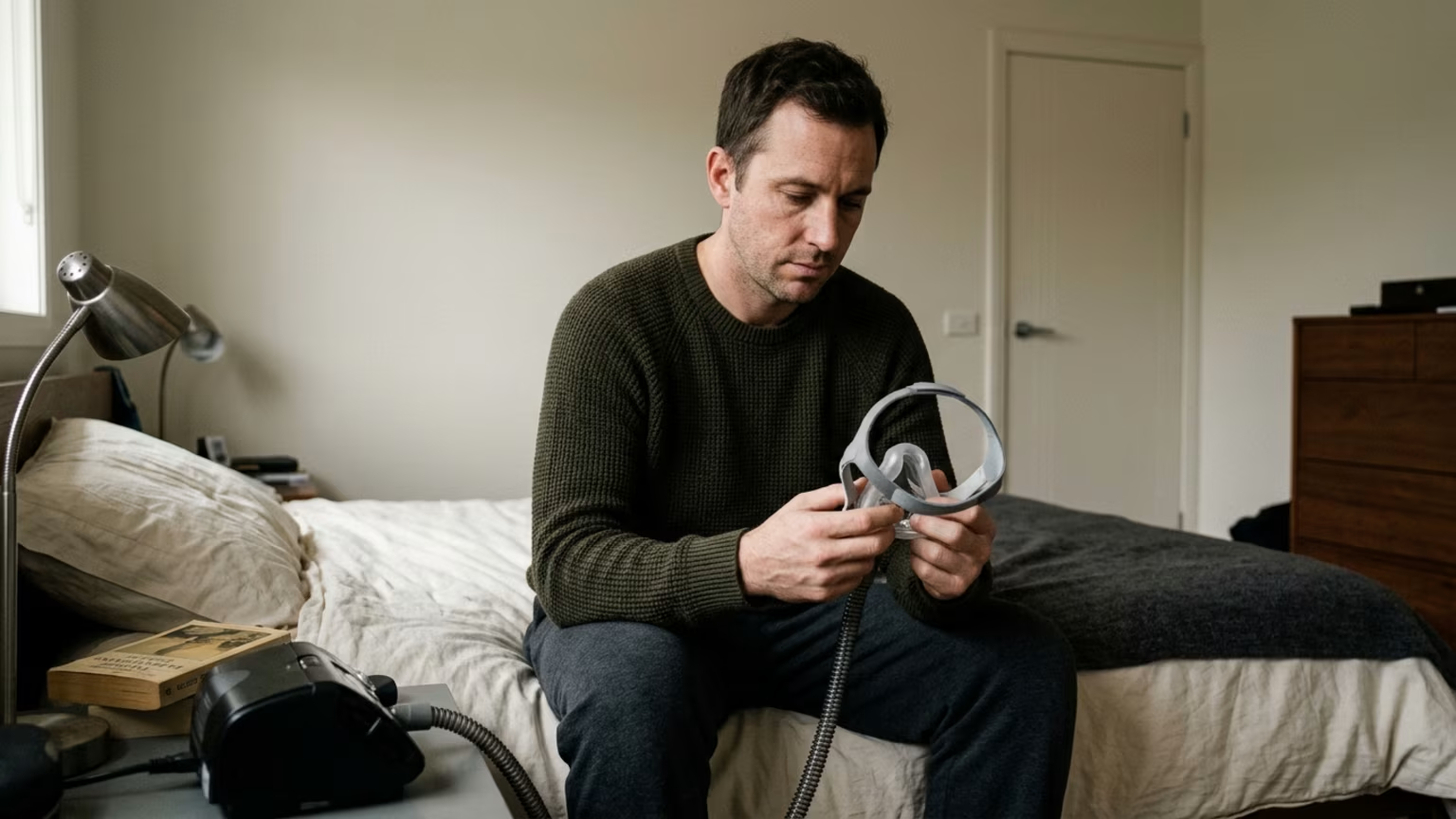

Learn why veterans must evaluate sleep apnea before starting testosterone. Discover how breathing issues mirror low T and why airway health comes first.





The alarm goes off at 0500, but it feels like you never slept. Your head throbs. Your focus is scattered before you even put on your boots. It is tempting to blame your testosterone levels and look for a quick fix.
Obstructive sleep apnea occurs when the upper airway repeatedly obstructs during sleep. This physical blockage disrupts normal breathing and oxygenation. A 2024 review measures obstructive sleep apnea severity using the apnea-hypopnea index (AHI). Mild OSA involves 5 to 15 events per hour. Moderate OSA is 15 to 30 events per hour. Severe OSA is anything above 30 events per hour.
The symptoms created by this nighttime stress overlap heavily with what many men attribute to low testosterone. The available sources directly support morning headaches, fatigue, impaired concentration, and excessive daytime sleepiness as OSA-related symptoms. When sleep is highly fragmented, your physical recovery suffers. Your body does not get the deep rest required to maintain baseline energy.
This overlap creates a complex situation for men seeking hormone therapy. The Endocrine Society recommends against starting testosterone in men with untreated severe sleep apnea. A peer-reviewed review concludes that TRT should probably be avoided in severe untreated OSA because it may worsen breathing in some patients. Studies summarized in a review have reported worsening sleep-breathing measures in some men receiving testosterone.
The biological mechanisms behind this worsening effect are still being researched. Proposed mechanisms involve effects on ventilatory responses to low oxygen and elevated carbon dioxide. They also include airway-dilator muscle control, oxygen consumption, and central respiratory regulation. The evidence is not uniform, but the clinical risk is significant enough to require caution.
Treating the airway issue can actively support your long term hormone goals. OSA-related hypoxia and sleep disruption may associate with lower testosterone. An Oxford Academic conference report found that CPAP increased testosterone and reported the greatest effect with combined CPAP and TRT. Identifying the root cause provides a clearer path forward for your health.
Reviewing my blood work for the first time felt overwhelming. There was so much confusing information out there about testosterone and hormones. I wanted clear facts and evidence based guidance, not a sales pitch. That experience showed me how critical it is to separate established science from marketing hype.
The first step in separating facts from hype is getting objective data about your sleep. Snoring, witnessed pauses, morning headaches, and persistent daytime sleepiness are warning signs that warrant evaluation for OSA. The combination of snoring with witnessed pauses, gasping, morning headaches, or persistent sleepiness is concerning and warrants clinical assessment. You must bring these specific symptoms to your medical provider.
Your provider will likely recommend specific testing protocols. For adults with signs and symptoms suggesting moderate-to-severe OSA, the AASM recommends either polysomnography or a technically adequate home sleep-apnea test. You should not rely on a questionnaire alone. Questionnaires and clinical prediction tools should not be used by themselves to diagnose OSA. A proper military health plan requires concrete diagnostics rather than guesswork.
Veterans have access to dedicated resources for this testing. The Veterans Health Administration provides sleep-apnea care, including positive-airway-pressure treatment and related equipment at VA facilities. The VA Palo Alto Health Care research page specifically lists snoring, stopping breathing during sleep, and daytime sleepiness among common symptoms. VA research materials also describe studies focused on improving CPAP use among veterans with OSA and PTSD.
If you are already managing hormone therapy, you must keep your clinician informed about your sleep quality. You should report any new instances of loud snoring, witnessed apneas, gasping, or worsening daytime sleepiness. The clinical review recommends objective assessment by polysomnography when OSA symptoms develop during TRT. This proactive communication ensures you are building strength safely.
A major error service members make is assuming a negative at-home test completely rules out sleep apnea. Home sleep tests have become more common, but they are not flawless. If a home test is negative or inconclusive but symptoms remain concerning, AASM guidance supports follow-up polysomnography. The AASM favors laboratory polysomnography over home testing in people with significant cardiorespiratory disease or severe insomnia.
Another common mistake is treating fatigue purely as a testosterone and hormones issue while ignoring safety risks. Unexplained sleepiness is not merely a quality of life complaint. Falling asleep during driving, duty, training, watch-standing, or equipment operation creates an immediate safety concern. You cannot simply supplement your way out of severe sleep deprivation or chronic oxygen restriction.
Patients also err by rushing to stop prescribed treatments without consulting their medical team. You should never discontinue testosterone or CPAP therapy without professional medical advice. The evidence supports clinician-directed monitoring and potential dose reduction if OSA worsens. Treating these conditions requires a managed, coordinated effort between you and your doctor.
Veterans also frequently misunderstand the nuanced relationship between testosterone formulations and breathing. The review explicitly notes a lack of convincing evidence that TRT aggravates OSA universally. It distinguishes large doses of exogenous testosterone from replacement doses and states that the effects may not be identical. However, bypassing a medical evaluation to self-medicate based on internet advice remains a dangerous execution error.
Finally, patients often underestimate the power of treating their breathing first. Taking testosterone without resolving a collapsed airway ignores the mechanical root of the problem. A compromised airway limits the oxygen you need for tissue repair, brain function, and metabolic health. You must secure your recovery and sleep baseline before adjusting your hormone profile.
Finding the root cause of fatigue requires a sequential, objective approach. You must address airway function before relying on hormone replacement. Bypassing a sleep evaluation can mask a serious respiratory issue. It can also introduce unnecessary risks if you start testosterone with untreated severe obstructive sleep apnea.
Commit to getting the right objective tests and prioritizing your fundamental rest. Treat the breathing problem first, monitor your symptoms closely, and work with your clinician to safely manage your care. Stay objective, follow the established evidence, and stay capable.
Follow BattleVet for practical guidance on military and veteran health, strength, recovery, testosterone, sleep and healthy aging. Stay connected for new articles, research backed insights and clear information to help you stay capable for the years ahead.


Combat Stress’s workplace guidance emphasizes listening over diagnosis. Recent U.S. veteran insomnia research adds context for sleep and recovery concerns.


ErythroMer's reported storage design could matter for military care. An academic review still lists it as preclinical, with human evidence ahead.
A large veteran study links PTSD and documented social needs to later cognitive impairment, reinforcing the value of connected care planning.
Build better habits around strength, recovery, sleep, hormones and healthy aging with practical guidance for active military personnel and veterans.
Explore BattleVet