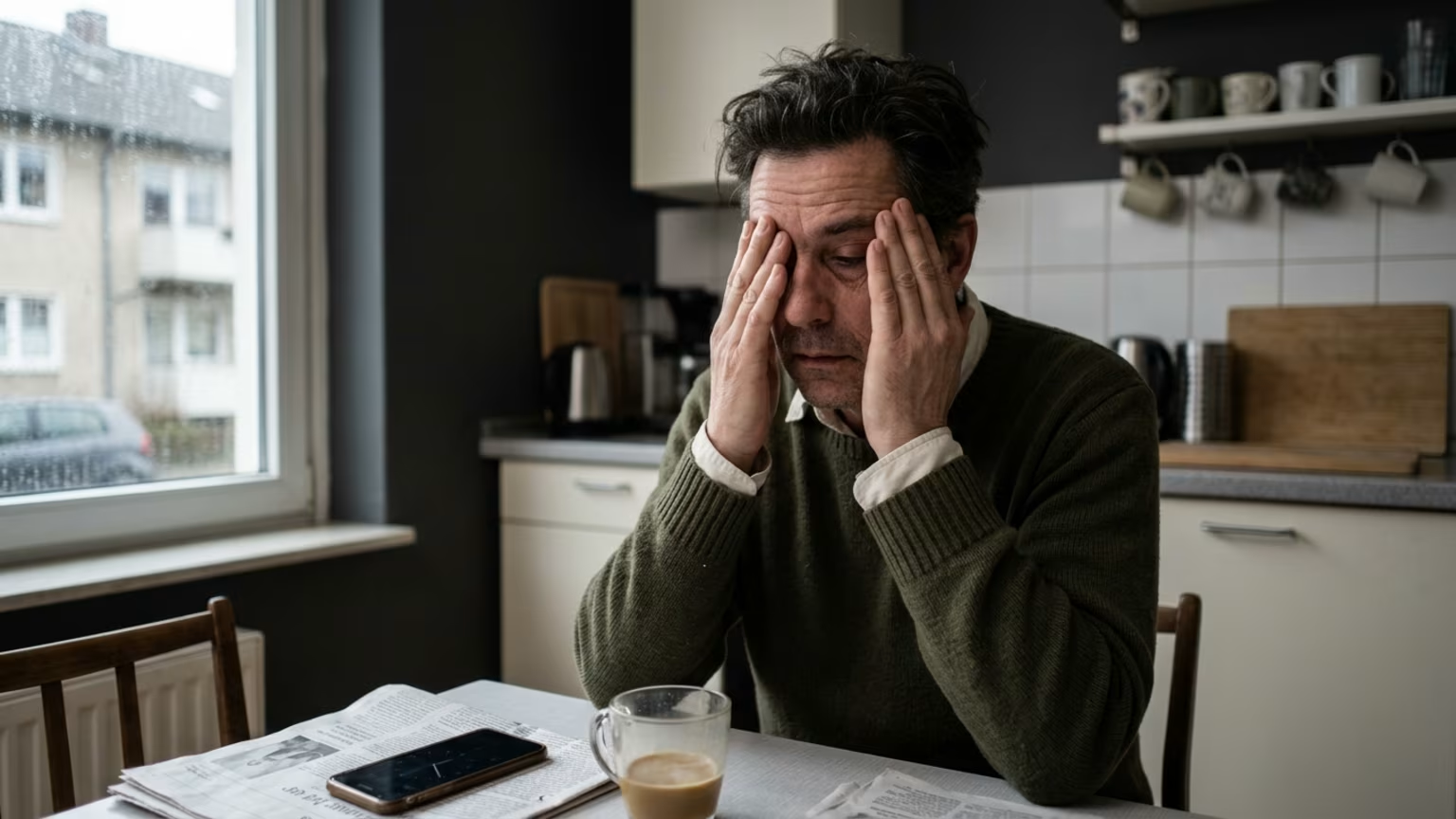

A study reveals severe sleep disturbances can shorten working-life expectancy after 50. Learn how veterans can address insomnia to protect career longevity.





Toughing out a bad night of rest is often worn as a badge of honor, but it is actually a fast track to ending your career early. A recent analysis covering working life between ages 50 and 68 reveals the actual cost of chronic insomnia. The findings show a clear connection between fragmented rest and a shortened timeline in the workforce.
You sit at the edge of the bed after staring at the ceiling for hours, calculating whether you can safely handle heavy equipment on just three hours of broken rest. I remember waking up after a poor night of sleep and realizing that my training recovery was taking much longer than it used to. I realized that readiness is more than just pushing through the fatigue. It requires a dedicated approach to sleep and hormonal health, which completely shifted how I view long term capability.
The research team, from the University of Turku, used data from the Finnish Public Sector study and the Health and Social Support study. They defined sleep disturbance using symptoms reported for the previous four weeks. These included difficulty falling asleep, difficulty staying asleep, waking too early, and non-restorative sleep. Among people reporting no sleep disturbances, working-life expectancy at age 50 was approximately 13 years and five months.
The estimate fell to approximately 13 years for people with moderate sleep disturbances. For those with severe disturbances, working-life expectancy dropped to 12 years and 10 months. In comparison with participants reporting no sleep problems, moderate disturbance was associated with nearly five fewer months of expected working life. Severe disturbance was associated with approximately eight fewer months.
This impact was seen regardless of gender or broad job type. The job categories evaluated in the analysis were professional, intermediate, and routine. The shortest estimate in the study's reported comparisons was almost 12.5 years, which was observed among men in routine jobs with severe sleep disturbances. Conversely, the longest working-life expectancy was almost 14 years, observed among professional women who reported no sleep disturbances.
The study classified short sleep as less than seven hours per night, and mid-range sleep as seven to 8.5 hours. Long sleep was categorized as nine hours or more. Short and mid-range sleepers had similar estimated working-life expectancy, sitting at about 13 years and two months after age 50. Meanwhile, people sleeping at least nine hours had an estimated working-life expectancy of 12 years and five months.
Among Finnish Public Sector participants, sleeping at least nine hours per night was associated with roughly nine fewer months of working life than sleeping seven to 8.5 hours. In the broader Health and Social Support sample, the corresponding difference was reported as more than 30 months. This wide gap shows that the long-sleep result varied substantially between datasets. The association between long sleep and shorter working careers requires careful interpretation.
Sleeping nine or more hours may reflect underlying illness, recovery from sleep debt, medication effects, or reduced activity. It is not necessarily the direct reason someone leaves work earlier. The study's lead investigator specifically noted the link between long sleep and poorer health outcomes as a possible explanation. The finding does not establish that sleeping longer directly causes people to leave work prematurely.
Addressing these disturbances requires structured interventions rather than simply hoping for better rest. The study team highlighted cognitive behavioral therapy for insomnia as a potential way to support workforce participation. This intervention targets the underlying habits and thought patterns that disrupt nighttime recovery. It is often delivered through occupational-health services or dedicated workplace health-promotion initiatives.
The U.S. Department of Veterans Affairs has explored similar clinical programs for military veterans. VA reports that veterans with chronic insomnia using a smartphone app called CBT-i Coach reported improvements in sleep quality and insomnia symptoms. These benefits were reported among veterans with and without PTSD or sleep apnea. Digital tools make this behavioral intervention highly accessible for older veterans still in the workforce.
Focusing on sleep behaviors is essential for comprehensive veteran lifestyle and healthcare. Establishing a relaxing bedtime ritual helps signal the body that it is time to wind down. Consistent behavioral routines create a stable foundation for long-term health and occupational longevity. Small adjustments to your evening habits can yield significant improvements in daytime alertness.
Behavioral changes alone might not be enough when physical blockages disrupt breathing at night. Sleep problems often coexist with conditions common in service populations, including post-traumatic stress symptoms and sleep-disordered breathing. VA researchers have also studied programs combining cognitive behavioral therapy with positive airway pressure. This dual approach is designed for people experiencing both insomnia and obstructive sleep apnea.
Airway pressure devices keep the breathing passages open, while behavioral therapy addresses the psychological resistance to using the machine. VA reports that the approach improved both insomnia and CPAP adherence in the relevant study. Treating both conditions simultaneously prevents one issue from undermining the treatment of the other. It is a highly effective method for restoring normal sleep architecture.
For veterans experiencing repeated awakenings, asking for a medical evaluation is a crucial step. Underlying medical conditions or chronic pain can complicate sleep, making dual treatments a necessary consideration. Sleep-related impairment is especially consequential in roles involving weapons, machinery, or emergency response. Identifying physical airway obstructions early can prevent severe safety hazards in the workplace.
It is important to note that the study found associations between sleep patterns and working-life expectancy. It did not prove that disturbed sleep directly causes earlier retirement, disability, or unemployment. The Guardian explicitly reports that the researchers could not account for several potentially influential factors. Unmeasured factors included physical health, mental health, risky health behaviors, and working conditions such as shift work.
Any of these unmeasured variables might affect both sleep quality and the ability to remain employed over time. A veteran with severe insomnia may remain employed well beyond the group estimate. Meanwhile, someone with apparently adequate sleep might leave work due to completely unrelated conditions. Statistical averages provide useful insights, but they do not guarantee an individual forecast.
The study used Finnish population and public-sector datasets rather than a veteran-specific cohort. Military personnel and veterans may have distinctive exposures, including deployment-related schedules, rotating shifts, and service-connected conditions. The available sources do not show how those unique factors altered the Finnish estimates. Applying these findings to a veteran population requires recognizing these important differences in background.
Selecting the right path depends entirely on the specific symptoms you experience at night. The findings emphasize that short sleep and disturbed sleep were separate measures in the reported analysis. Short sleep was not shown to reduce working life compared to mid-range sleep in the reported results. However, frequent symptoms like difficulty falling asleep or early waking clearly signaled a problem.
If your primary struggle involves a racing mind or poor sleep habits, behavioral therapy is the logical starting point. The CBT-i Coach app provides practical techniques to manage nighttime anxiety and establish better routines. Workplace sleep education can also reinforce these behavioral adjustments during the day. Addressing psychological barriers early helps prevent chronic insomnia from taking root.
If your sleep is interrupted by choking sensations or heavy snoring, screening for sleep apnea is mandatory. Attempting to fix a mechanical airway obstruction with behavioral therapy alone will not work. A combined approach of therapy and positive airway pressure ensures that both the physical and mental barriers are removed. Evaluating your sleep structure is a core component of healthy aging and longevity.
Building a repeatable wind-down routine is highly recommended for anyone looking to protect their working life. VA guidance advises using repeated activities to signal that it is time to wind down. Applying relaxation techniques when waking during the night can also help restore normal sleep cycles. A structured routine limits the impact of irregular schedules and daily stressors.
Occupational-health services may offer specific interventions to help older adults remain active in their careers. Discussing workplace adjustments, such as fatigue-risk management, can provide temporary relief while undergoing clinical treatment. Short sleepers should not panic if they feel fully rested on less than seven hours. Focus on restorative sleep, daytime alertness, safety, and the root cause of any persistent problem.
Prioritizing these elements is key for maintaining high standards in training and performance. Proper sleep architecture supports both mental clarity and long-term physical resilience. Taking action early ensures that minor disturbances do not compound into career-ending deficits. Rest is the ultimate force multiplier for longevity.
Persistent sleep disruption must be treated as a serious health and readiness issue. Ignoring repeated awakenings or non-restorative sleep should never be accepted as normal aging or military culture. The data clearly associates poor sleep with a shorter expected working life after age 50. Addressing these issues with medical evaluation and workplace adjustments can help preserve your career.
The days of ignoring exhaustion eventually catch up with us all. Time spent awake in the middle of the night quietly takes its toll on the years ahead.
Follow BattleVet for practical guidance on military and veteran health, strength, recovery, testosterone, sleep and healthy aging. Stay connected for new articles, research backed insights and clear information to help you stay capable for the years ahead.


Combat Stress’s workplace guidance emphasizes listening over diagnosis. Recent U.S. veteran insomnia research adds context for sleep and recovery concerns.


ErythroMer's reported storage design could matter for military care. An academic review still lists it as preclinical, with human evidence ahead.
A large veteran study links PTSD and documented social needs to later cognitive impairment, reinforcing the value of connected care planning.
Build better habits around strength, recovery, sleep, hormones and healthy aging with practical guidance for active military personnel and veterans.
Explore BattleVet