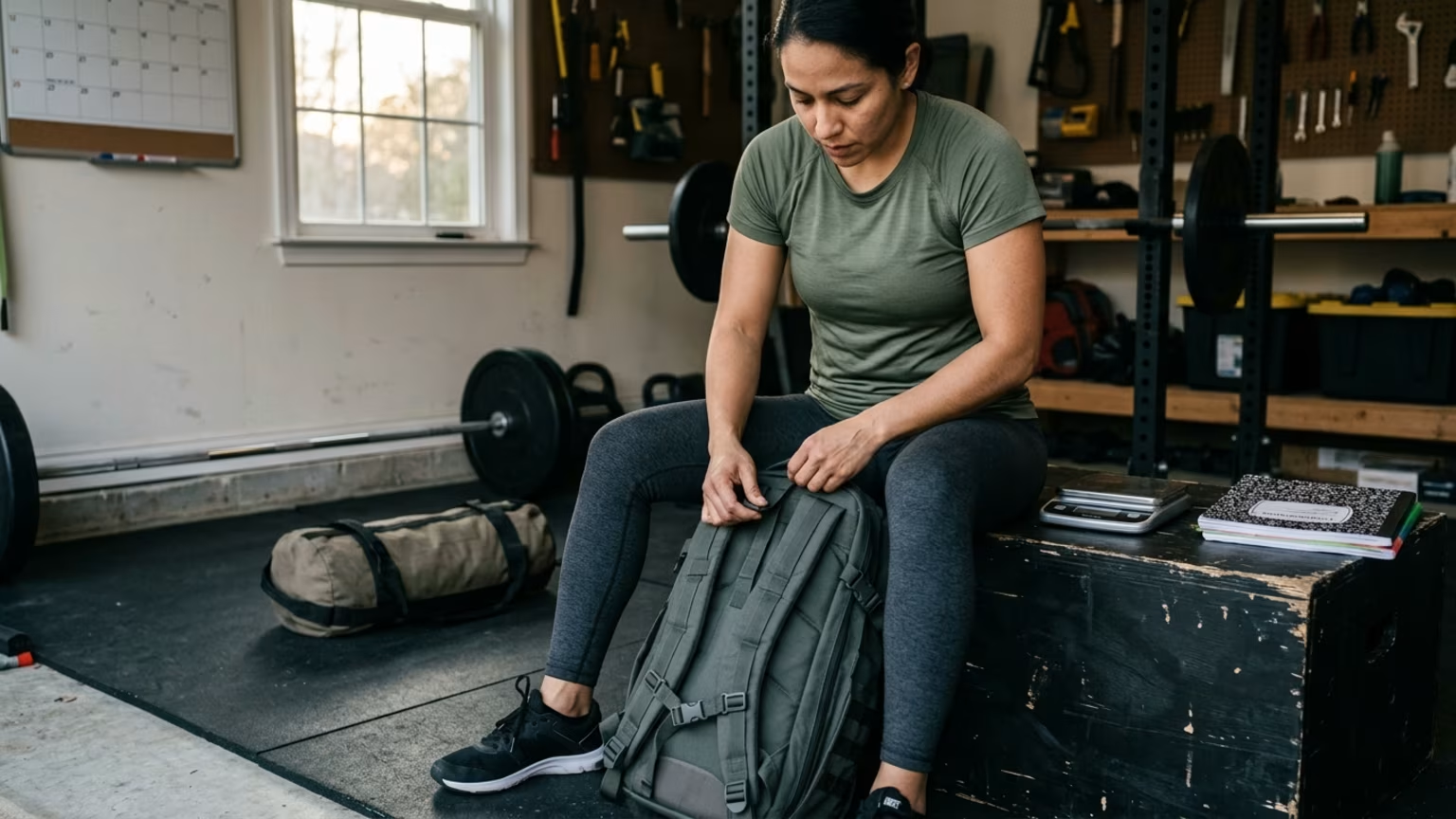

Learn a practical progression model for rucking that safely increases distance, load, pace, and terrain while managing military injury risks and recovery.





You pull the shoulder straps tight in the early morning dark. The pack shifts slightly as you adjust the hip belt. The first steps onto the pavement feel heavy and stiff. Many veterans and active personnel eventually ask the same practical question: How do I rebuild my rucking capacity without accumulating unnecessary injuries?
This is a valid concern because carrying heavy loads places massive mechanical stress on the body. A military health report describes musculoskeletal health as a leading cause of lost duty time and nondeployability. Building training and performance capacity requires a practical progression model rather than treating every session as a test.
Before loading a pack, you must prove you can walk briskly without pain or limping. Start with unloaded walking on flat and predictable ground. Keep the effort conversational while focusing on posture and stable foot placement. The goal is to establish that your feet, knees, hips, and back tolerate repeated time on your feet.
You should complete ordinary daily activity without symptoms that are worsening. Perform basic lower-body and trunk strength work without sharp pain. Tolerate your intended boots or shoes during unloaded walking. The objective is not to prove fitness, but to confirm basic readiness.
A practitioner-oriented load-carriage review by Tactical Vitality suggests beginning around 10 to 15 percent of your body weight. You should adjust this based on your individual readiness and active symptoms. Ensure the load is secured close to your back so the hip belt and shoulder straps share the weight. This prevents excessive trunk lean and reduces unwanted pack movement.
A common mistake is beginning with the load required for a test or mission. A target load is an end point, not proof that your body is ready for it. Training weight should represent the task being prepared for without carrying unnecessary items like loose metal plates. Always secure the load before walking.
Tactical Vitality reports an injury rate of 62 per 1,000 hours of road marching compared with 13 per 1,000 hours of general physical training. Rapid increases in marching volume and loads above roughly 25 percent of body weight are reported risk factors. A practical load-carriage framework recommends changing one training variable at a time. Establish your distance at a stable load before you try adding more weight.
Available practitioner guidance describes adding approximately 0.5 to 1 mile per week as a conservative option. You should view this as an upper planning reference, not an automatic weekly entitlement. A smaller increase may be more appropriate for a deconditioned trainee. A mission-specific load may eventually exceed the 25 percent threshold, but preparation should be highly individualized.
Pace should only become a primary focus after you can handle your target load and distance easily. Begin with short segments at a required pace and separate them with easier walking. Avoid turning every ruck into a race. Faster movement increases the demand on tissues that are already managing compression, impact, and fatigue.
Terrain should be introduced progressively. You should start with flat, even surfaces before moving to gentle inclines. Next, you can introduce rolling terrain and uneven trails. Steeper climbs and event-specific surfaces should come last. Terrain changes the mechanical demand on your body even when the load and distance remain unchanged.
Footwear should be selected for the actual task and introduced before your hardest sessions. In one recruit study, basketball shoes were associated with fewer foot overuse injuries than infantry boots. However, the study found that overall overuse injuries did not differ between the two groups. Test your chosen boots or shoes during unloaded walking before committing to them under a heavy pack.
Inspect your footwear for heel slip, toe pressure, arch irritation, rubbing at the ankle, and hot spots. Keep your socks, lacing, and insoles consistent during early testing. Do not wait for a blister to become severe before changing the setup. For operational preparation, your final weeks should include the required boots.
Begin with one easy ruck per week using a stable load and flat terrain. Support this session with a program emphasizing strength, fitness and body composition. Focus on squats, hinges, calf work, and trunk endurance. Add a second ruck only after the first is well tolerated and recovery is predictable.
Use a simple traffic-light system to gauge readiness between sessions. Proceed with a green light when walking mechanics are normal and soreness is mild. Hold the current level during a yellow week when a hot spot appears or soreness lasts longer than expected. Stop the session entirely for sharp bone pain or significant swelling. Pay close attention to mild soreness and ensure it is improving before your next loaded march.
Veterans returning after years without loaded marching should avoid comparing current capacity with past military standards. Adjusting to veteran life means acknowledging that prior experience improves your pacing, but it does not automatically preserve your tissue tolerance. A safe return requires re-establishing unloaded walking and keeping the first loaded sessions short. You must rebuild tissue tolerance before attempting the loads you remember from active service.
A safer return sequence involves a few critical steps. Repeat the same light load until recovery is predictable. Increase your time or distance before adding meaningful weight. Reintroduce your boots separately from your load progression. Finally, rehearse the specific mission or event load last.
Standard progression rules change when you prepare for a specific military test. The Army describes the Norwegian Foot March as an 18.6-mile event carrying a 24-pound ruck with age- and gender-dependent timing standards. An event like this should be treated as a performance objective that requires dedicated preparation. It is not a suitable baseline workout for general weekly conditioning.
Specificity should be introduced in small doses. Use easier sessions between your most demanding efforts. You must practice the required pace under controlled conditions. This ensures your body can handle the exact mechanical demands of the event without breaking down prematurely.
If you experience sharp bone pain or symptoms that change your gait, stop training immediately. Explain the exact nature of your ruck training to your VA doctor or physical therapist. Mention the specific weight, distance, and terrain you use so they understand the mechanical demands. Working with a professional helps ensure you return to loaded movement safely.
Military culture often rewards persistence, but pain that changes your gait is a signal to modify the plan. It is not a test of character. Health.mil lists Rx3 as a resource for service members and veterans recovering from bone, joint, and muscle injuries. Former service members with a known history of stress fractures or knee problems should always obtain individualized advice.
Are your current strength levels and recovery habits sufficient to support the repetitive stress of carrying a loaded pack? Assessing your baseline honestly allows you to build a progression plan that actually works. Training should prepare you for the required task without causing preventable harm. Stay capable, train smart, and monitor your recovery.
BattleVet.
Follow BattleVet for practical guidance on military and veteran health, strength, recovery, testosterone, sleep and healthy aging. Stay connected for new articles, research backed insights and clear information to help you stay capable for the years ahead.


Combat Stress’s workplace guidance emphasizes listening over diagnosis. Recent U.S. veteran insomnia research adds context for sleep and recovery concerns.


ErythroMer's reported storage design could matter for military care. An academic review still lists it as preclinical, with human evidence ahead.
A large veteran study links PTSD and documented social needs to later cognitive impairment, reinforcing the value of connected care planning.
Build better habits around strength, recovery, sleep, hormones and healthy aging with practical guidance for active military personnel and veterans.
Explore BattleVet