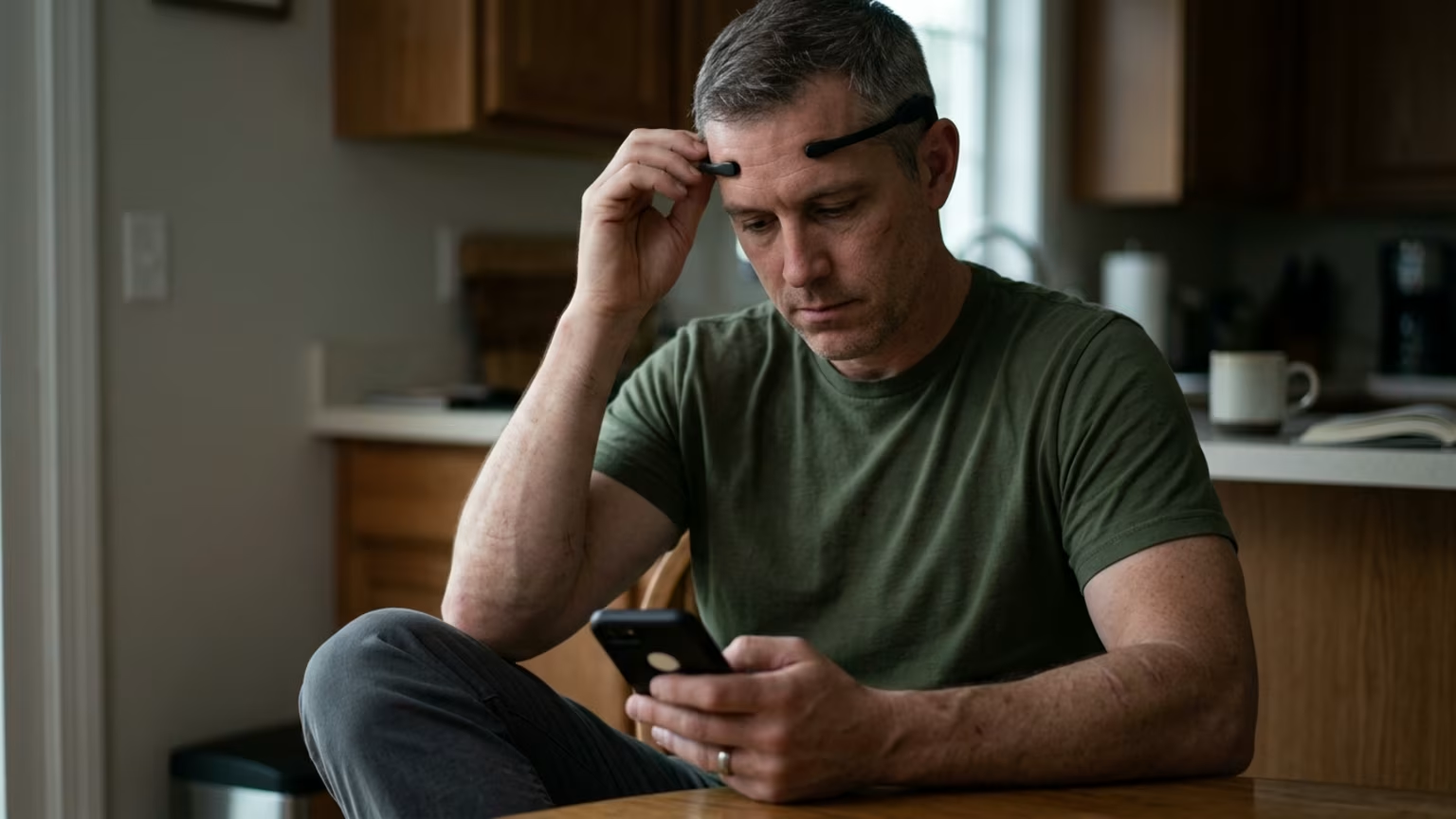

A recent clinical trial in Nature Mental Health shows the Modius Spero device reduces PTSD and insomnia severity, offering a new prescribed option for veterans.





If you or a veteran you know is in immediate danger, call 911. For the Veterans Crisis Line, call 988 and press 1, or text 838255.
Believing you can simply exhaust your body into sleeping through trauma is a biological misunderstanding. A veteran stares at the ceiling at 3:00 a.m. while realizing that physical fatigue cannot outwork an active nervous system. This nightly tension shows that pushing through exhaustion ignores the actual mechanics of trauma. Now, Neurovalens has introduced the Modius Spero device as a prescribed option.
Many people assume that poor sleep is just a matter of bad habits or insufficient daily activity. This view leads veterans to try extreme physical exhaustion to force their bodies to sleep. However, trauma alters the nervous system in ways that standard physical fatigue cannot fix. Treating PTSD and insomnia as entirely separate issues often leaves the core problem unresolved.
During active service, personnel are often trained to function on minimal rest. This operational conditioning makes it incredibly hard to transition back to civilian life. Many veterans believe they should just handle sleep problems on their own without medical help. They might use excessive caffeine or intense physical training to mask the constant exhaustion.
These temporary fixes can actually make chronic sleep disruption much worse over time. Prolonged sleep deprivation directly harms your body composition, recovery, and immune function. When trauma is involved, the brain remains in a constant state of high alert. This hyperarousal prevents the nervous system from naturally shifting into deep rest.
Standard advice like turning off screens completely misses this biological reality. Trying to force sleep through sheer willpower only increases frustration and nighttime anxiety. This cycle of stress further degrades both physical performance and long-term health. Readers can review these health patterns in our recovery and sleep articles.
Recent developments highlight new methods for managing these complex symptoms. Neurovalens reported that its Modius Spero device was evaluated in a major clinical trial. This study was published in the peer-reviewed journal Nature Mental Health. The double-blind, randomized clinical trial evaluated electrical vestibular system stimulation versus a sham condition.
Researchers at the University of California, San Diego, led this specific clinical investigation. According to coverage by Sync NI, the study involved 383 U.S. adults aged 22 and older. All of these participants had a diagnosis of post-traumatic stress disorder. The findings offer compelling data for non-invasive treatment options.
Sync NI reports that the study found statistically and clinically significant reductions in PTSD symptom severity. The active treatment group also saw clinically significant reductions in insomnia severity. These outcomes suggest that targeting the vestibular system can influence trauma responses directly. Federal records confirm the regulatory status of this specific neurostimulation equipment.
The FDA database lists Modius Spero under De Novo number DEN250013. Neurovalens Limited is identified as the company holding this specific medical classification. While these results are promising, a single study does not establish a universal remedy. The accessible report confirms the participants were U.S. adults with PTSD.
The accessible report does not confirm that the group was exclusively military personnel. The available research does not publish full adverse event tables or long-term follow-up data. Therefore, patients must view this as a potential option rather than definitive proof. Rigorous methodologies are essential for proving that any clinical intervention actually works.
The announcement by Neurovalens notes that the device is prescribed for patients. Sync NI reports it is now available to veterans through the VA. This creates a new non-drug option that can be used at home. However, an at-home prescription does not eliminate the need for professional medical supervision.
Veterans must confirm local availability and eligibility directly with their VA clinician. The VA continues to support multiple established care pathways for trauma. VA materials describe trauma-focused psychotherapy as a cornerstone of standard care. They specifically identify EMDR as one of the most studied treatments for PTSD.
For veterans with co-occurring substance use disorders, the VA recognizes the COPE program. The VA Health Services Research and Development program describes COPE as an evidence-based integrated treatment. It is recognized as a first-line treatment for these overlapping conditions. Patients should view new technology as a potential addition to these established therapies.
A new device might help manage symptoms between scheduled therapy sessions. It should never automatically replace trauma-focused therapy or prescribed medication management. Stopping established therapies to test new equipment is never a recommended medical approach. For more context on clinical frameworks, review our military health articles.
The VA also tests new avenues for complex cases through controlled research. For example, the VA announced a randomized controlled trial evaluating psilocybin for veterans. This separate trial focuses on treatment-resistant depression in veterans with concurrent PTSD. These initiatives show a growing willingness to test non-traditional medical interventions.
Treating sleep disruption requires identifying the actual root cause of the problem. Trauma can cause insomnia, but other physiological conditions might also disrupt rest. Sleep problems can reflect sleep apnea, chronic pain, or circadian rhythm issues. VA materials list sleep studies, CPAP machines, and lifestyle coaching among their approaches.
The VA also offers specialized cognitive behavioral therapy for insomnia. Veterans should ask their doctor for a comprehensive sleep medicine evaluation. A complete assessment ensures that physical blockages are not ignored during treatment. Chronic sleep disruption accelerates physical decline and worsens metabolic health over time.
Veterans face unique challenges as they age due to their past service requirements. Consistently poor rest impairs muscle recovery, immune function, and overall cognitive sharpness. When PTSD is involved, the constant physiological stress puts enormous strain on the heart. Treating trauma and insomnia simultaneously helps protect cardiovascular health in the long run.
This dual approach prevents isolated symptoms from compounding into larger medical crises later. You can review the connections between recovery and longevity in our healthy aging articles. Proactive symptom management allows veterans to maintain their strength and independence longer. Tools like vestibular stimulation might offer a new way to break the cycle of stress.
By lowering baseline anxiety, patients can often engage more effectively in physical fitness. Better sleep directly supports better daily nutrition, hydration, and exercise habits. These lifestyle factors are essential for preserving mobility and body composition with age. A capable body requires consistent physical restoration to function properly.
Before pursuing a new device, patients should ask their clinician specific questions. You should verify the required daily use and any known side effects. Ask about device contraindications and the expected duration of the treatment plan. It is vital to know what steps to take if symptoms do not improve.
A clear medical plan ensures that you are tracking the right health outcomes. You should monitor both nighttime sleep metrics and daily operational functioning. Track your time to fall asleep, nighttime awakenings, and overall alertness during the day. This data helps your provider determine if the vestibular stimulation is actually working.
Veterans have more tools than ever to manage complex physical and mental stress. Understanding the available options allows you to make informed decisions about your health. Schedule an appointment with your VA provider to review all available sleep interventions rather than accepting chronic exhaustion as a permanent condition.
Follow BattleVet for practical guidance on military and veteran health, strength, recovery, testosterone, sleep and healthy aging. Stay connected for new articles, research backed insights and clear information to help you stay capable for the years ahead.


Combat Stress’s workplace guidance emphasizes listening over diagnosis. Recent U.S. veteran insomnia research adds context for sleep and recovery concerns.


ErythroMer's reported storage design could matter for military care. An academic review still lists it as preclinical, with human evidence ahead.
A large veteran study links PTSD and documented social needs to later cognitive impairment, reinforcing the value of connected care planning.
Build better habits around strength, recovery, sleep, hormones and healthy aging with practical guidance for active military personnel and veterans.
Explore BattleVet