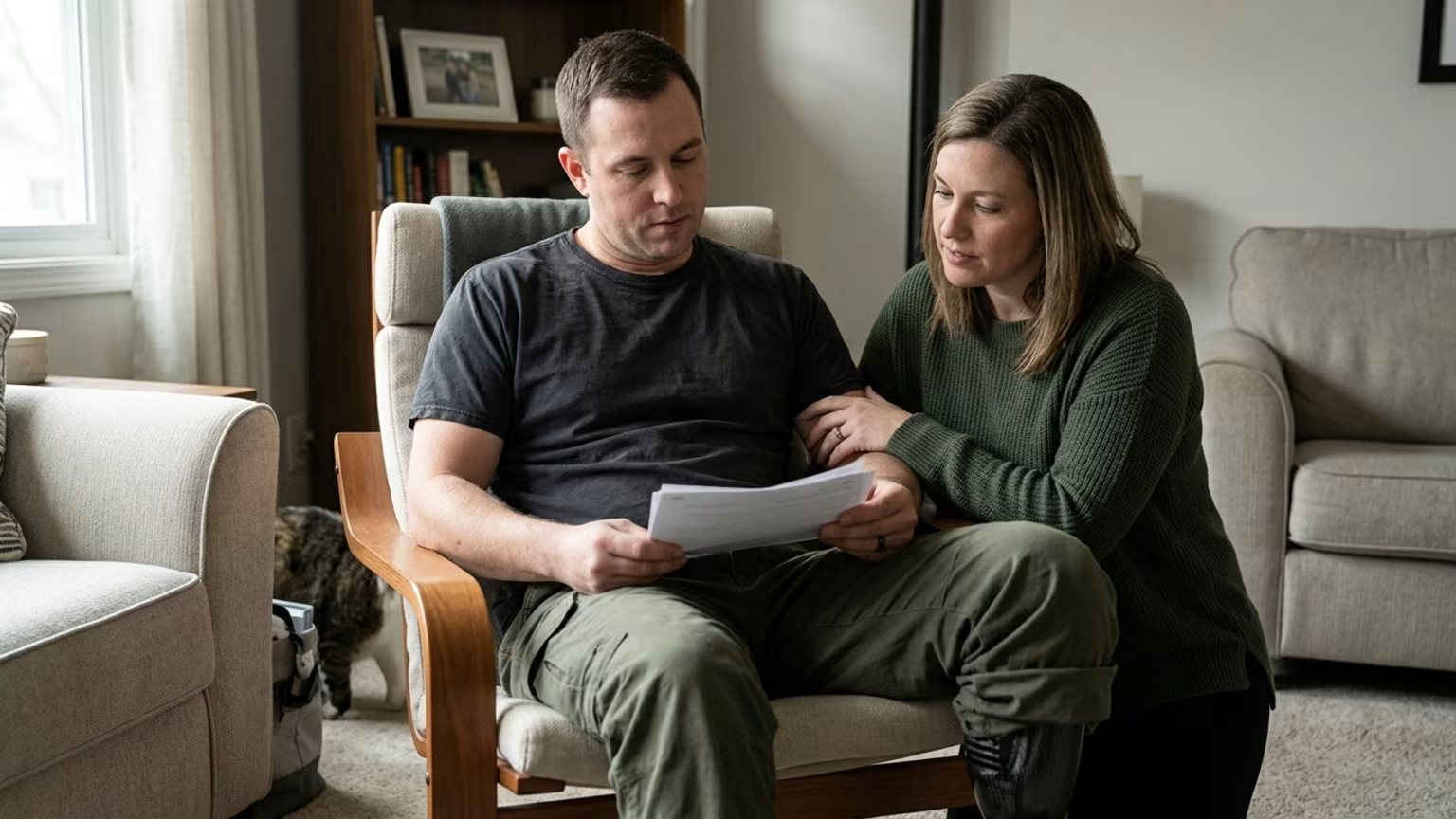

A proposed veterans benefits package aims to increase support for severely injured veterans and their families. Learn what caregivers need to know today.





Liana Redshaw was five months pregnant with her third child when her family required a massive transition. Her husband Ryan served 12 years in the Army National Guard and attained the rank of sergeant. He suffered a head injury during a training jump and later received a diagnosis of a rare early-onset Alzheimer's disease. Redshaw left her career in clinical social work, sold the family's Florida home, moved to Algonquin, and began coordinating his long-term care.
On August 29, 2026, Redshaw published a letter in the Chicago Sun-Times detailing her family's changing circumstances. She used her situation to publicly advocate for a proposed legislative package called the Take Care of America's Veterans Act. She specifically asked Illinois senators Tammy Duckworth and Dick Durbin, along with the rest of the state's congressional delegation, to support the measure. The proposed omnibus package groups several distinct measures focusing on veteran care, severe injury compensation, and survivor benefits.
Understanding these proposed changes is relevant for personnel and families navigating complex veteran lifestyle and healthcare decisions. The legislation described in the letter spans both health-related and financial issues for severely injured veterans. It addresses brain-injury research, caregiver reemployment assistance, compensation for severe injuries, and military-retirement pay. These measures attempt to solve connected pressures that occur when a veteran requires permanent household care.
A primary component mentioned in the letter is the Sharri Briley and Eric Edmundson Veterans Benefits Expansion Act. Redshaw describes this measure as a way to increase support for the most catastrophically injured veterans. The proposal is also described as a measure that would raise benefits for surviving spouses and children. According to the letter, surviving spouses and children have not received the referenced increase in three decades.
Long-term caregiving frequently disrupts civilian employment and reduces household income for military families. Redshaw highlights the proposed Veteran Caregiver Reeducation, Reemployment, and Retirement Act as a solution. According to the letter, the proposed caregiver act is intended to help caregivers rebuild employment, income, and retirement security. Redshaw argues that caregivers should not have to choose between paying for medical care and maintaining a home.
The transition from active employment to full-time caregiving often happens abruptly, leaving families little time to prepare. When caregivers leave the workforce, they forfeit their current salary, employer-sponsored healthcare, and crucial contributions to retirement accounts. The Veteran Caregiver Reeducation, Reemployment, and Retirement Act aims to offset these systemic financial losses. According to the letter, caregivers eventually become survivors and require a secure financial foundation to maintain their independence in later years.
The legislative package also targets clinical advancement through the Precision Brain Health Research Act. The author describes this legislation as a mechanism to fund federal research into traumatic brain injury and dementia. It would also encourage information sharing between the Department of Veterans Affairs and the Department of Defense. Redshaw notes this brain-injury research proposal might not benefit her husband directly, but it could assist future service members facing similar injuries.
Another significant component of the proposed package addresses military-retirement compensation for veterans. The letter characterizes the Major Richard Star Act as an effort to end what it calls the wounded veteran tax on combat-injured retirees. Redshaw acknowledges that her own household would not benefit from this specific act. However, she argues that thousands of Illinois veterans would benefit from changing the treatment of earned retirement pay.
The debate over military-retirement compensation reflects broader concerns about how the government treats earned benefits. The letter describes the Major Richard Star Act as a direct response to policies that currently penalize combat-injured retirees. Modifying the treatment of earned retirement pay would alter the financial trajectory for many households managing service-connected disabilities. While the exact number of affected individuals is not independently verified in the available text, the proposed change targets a specific structural gap in military compensation.
To illustrate the scale of these issues, the letter cites an estimate of roughly 14.3 million Americans currently caring for wounded, ill, or injured service members or veterans. Redshaw identifies herself as a 2025 Dole Caregiver Fellow in her correspondence. Caregivers who leave the workforce often lose out on both current wages and future retirement security. The proposed bills aim to bridge the gap between providing dedicated daily care and maintaining financial stability.
The broader legislative effort has gained attention among established veterans organizations. The American Legion reported that the Take Care of America's Veterans Act was a subject of discussion at multiple levels during its national convention in Louisville. This organizational attention highlights the importance of caregiver support, survivor benefits, and military-retirement compensation within the veteran community. However, this organizational discussion does not establish that the package has passed or that its provisions are finalized.
While the proposed acts address significant challenges, current guidance for military families remains anchored in established law. Families navigating military health challenges must treat the proposed package as pending and unconfirmed. The Chicago Sun-Times publication is an advocacy letter rather than an independent legislative analysis or verified policy document. The source does not provide an official bill number, legislative text, projected costs, eligibility rules, or expected implementation dates.
Severely injured veterans and their caregivers should base immediate financial and medical decisions on currently available resources. Caregivers should not assume that a proposed reemployment or retirement measure will immediately replace lost wages. The letter offers no verified benefit schedule, and it does not define what qualifies as the most catastrophically injured veterans. Families should continue utilizing current frameworks provided by the Department of Veterans Affairs, the Defense Department, insurance policies, and state benefits.
Evaluating eligibility for future benefits requires consulting an accredited veterans service organization or a qualified benefits adviser. Proposed legislation can undergo significant revisions during committee consideration, negotiations, or the final appropriations process. The exact monthly dollar increase proposed for catastrophically injured veterans is not identified in the available source. Because no official legislative status record is provided, readers must verify details through official congressional channels before acting.
The specific details of the survivor benefits increase remain undefined in the published correspondence. The article does not identify which exact survivor benefit is referenced, nor does it specify the proposed dollar increase. Furthermore, the claim regarding a three-decade stagnation lacks a specific baseline for comparison within the available documentation. Families should avoid making long-term financial plans based on the assumption that a significant benefit increase is guaranteed to pass.
From a clinical perspective, the push for the Precision Brain Health Research Act highlights a continued focus on cognitive preservation. If enacted, encouraging data sharing between military and veteran health systems could improve how early-onset dementia is tracked over time. However, this remains a proposed framework rather than an active diagnostic protocol for patients today. Veterans seeking care for head injuries should continue following the diagnostic testing pathways currently approved by their medical providers.
The interconnected nature of these proposed bills shows how deeply physical injuries impact household stability over decades. Caregivers consistently absorb the financial and emotional costs of long-term medical care, often becoming survivors who rely on fixed benefits. Advocacy efforts like the letter in the Chicago Sun-Times highlight a clear demand for comprehensive legislative support that extends beyond the immediate patient. Understanding how these factors connect is essential for families preparing for life after service.
Preparing for long-term health challenges requires a realistic assessment of available state and federal resources. Families facing severe injury diagnoses must build a support network using the verified tools currently accessible to them. Relying entirely on proposed legislative fixes can leave households vulnerable if those bills fail to clear committee or secure funding. Effective planning involves understanding current VA benefits, utilizing community support structures, and maintaining open communication with accredited health providers.
Discussions surrounding the Take Care of America's Veterans Act reveal the complex layers of modern veteran life. The proposed legislation attempts to recognize that severe military injuries require a lifelong, multi-generational support structure. The importance of the proposed package lies in its attempt to address care costs, employment disruption, retirement insecurity, and survivor income simultaneously.
Understanding these interconnected factors helps military households build resilience using verified resources today. BattleVet remains focused on translating these complex policy discussions into clear, practical guidance for military families. As the veteran population ages, how will federal policies adapt to secure the financial stability of the families providing daily medical support?
Follow BattleVet for practical guidance on military and veteran health, strength, recovery, testosterone, sleep and healthy aging. Stay connected for new articles, research backed insights and clear information to help you stay capable for the years ahead.


Combat Stress’s workplace guidance emphasizes listening over diagnosis. Recent U.S. veteran insomnia research adds context for sleep and recovery concerns.


ErythroMer's reported storage design could matter for military care. An academic review still lists it as preclinical, with human evidence ahead.
A large veteran study links PTSD and documented social needs to later cognitive impairment, reinforcing the value of connected care planning.
Build better habits around strength, recovery, sleep, hormones and healthy aging with practical guidance for active military personnel and veterans.
Explore BattleVet