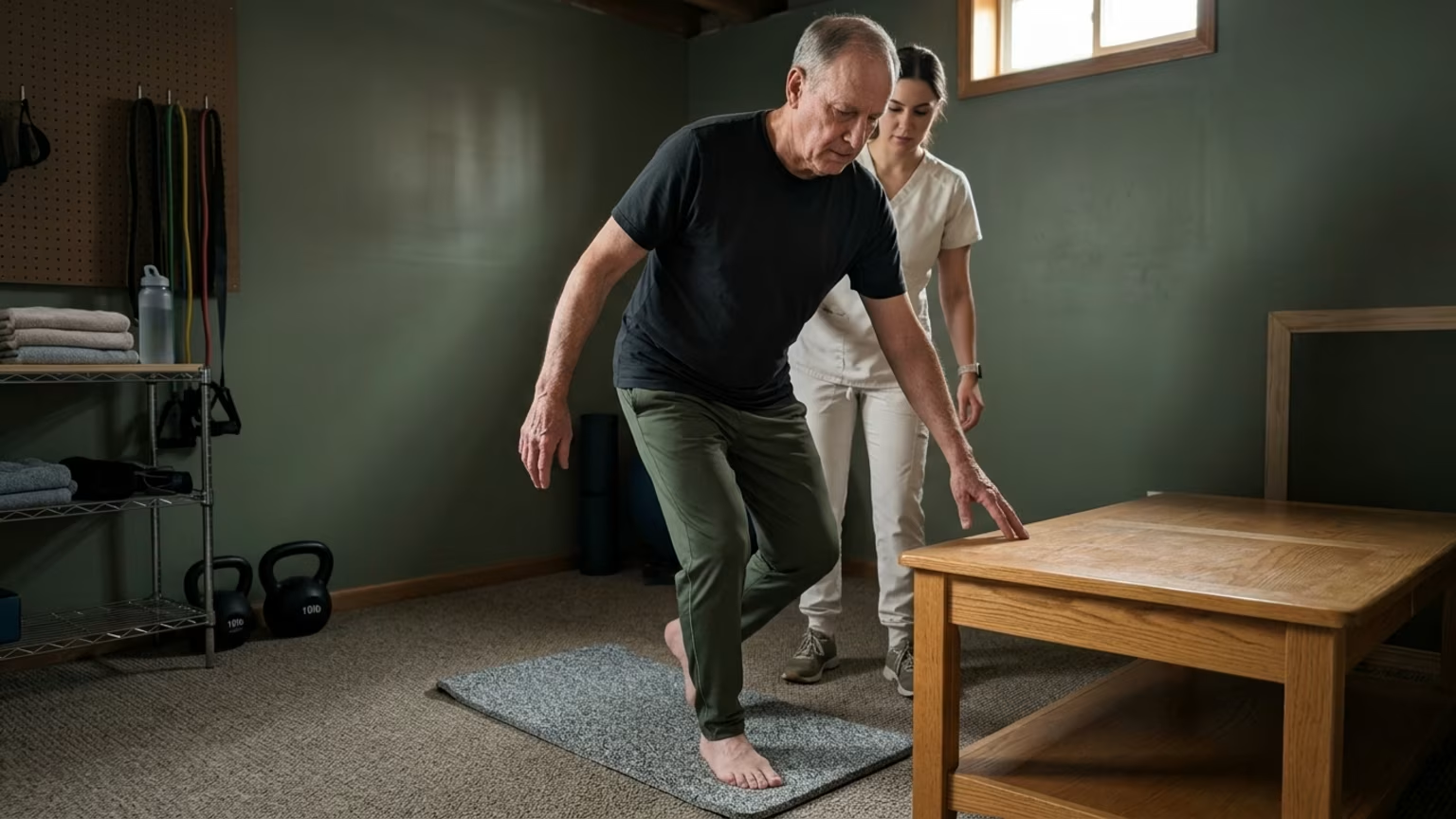

A new cohort study of 13,423 older adults highlights the link between functional physical fitness, balance, strength and lower all-cause mortality.





A recent cohort study of 13,423 older adults found that those who performed best on an 8-foot up-and-go test had an adjusted mortality hazard ratio of 0.41 compared to the lowest performers. This statistic challenges the idea that step counts are the only valid measure of physical health. Daily walking remains useful, but maintaining independent function requires strength and balance.
On August 3, 2026, JAMA Network Open published a nationwide cohort study examining physical fitness and all-cause mortality. Researchers assessed 13,423 community-dwelling adults aged 65 or older in Taiwan. The participants had a mean age of 72.9 years, and women made up 62.5% of the tested group. A total of 1,631 participants died during a median 7.0-year follow-up period.
The researchers linked fitness assessments conducted between January 2015 and November 2016 with Taiwan National Health Insurance records through December 31, 2022. According to the Warfighter Performance Optimization webpage, the study assessed four broad fitness domains through seven physical tests. The 2-minute step test evaluated cardiorespiratory fitness, while arm curls and chair stands measured muscular strength. The back scratch, chair sit-and-reach, one-leg stance and 8-foot up-and-go tests evaluated flexibility and balance.
The researchers observed that objectively measured fitness was associated with lower all-cause mortality. Compared with participants in the lowest performance quintile, those in the highest quintile had lower adjusted mortality hazards. The 8-foot up-and-go test produced a hazard ratio of 0.41, with a 95% confidence interval of 0.33 to 0.51. The corresponding hazard ratio was 0.50 for the one-leg stance test.
The 30-second chair stand showed a hazard ratio of 0.55. The 2-minute step test resulted in a hazard ratio of 0.58. A composite fitness index combined sex-specific percentile rankings across all seven functional assessments. This composite index showed the strongest association with mortality, presenting an adjusted hazard ratio of 0.39 compared with the lowest-performing group.
The researchers noted this index represents approximately 61% lower mortality hazard in relative terms. However, they stressed this is an observational association rather than proof that improving fitness directly prevents death. The strongest individual relationships involved balance and agility. Lower-body strength and cardiorespiratory fitness followed closely behind these balance metrics.
These hazard ratios offer a compelling look at the connection between functional movement and human longevity. A hazard ratio of 0.41 indicates a significantly lower observed risk for those who move well. The data clearly shows that those who maintained their balance and agility outlived those who struggled. This reinforces the idea that physical capability extends far beyond traditional gym metrics.
The study models adjusted for sociodemographic factors, comorbidities and self-reported physical activity. Even with these adjustments, people who scored higher on functional tests showed consistently lower observed risk. The authors concluded that objectively measured fitness was associated with lower all-cause mortality in a graded manner. This means that better performance generally corresponded to lower observed risk across the entire fitness distribution.
These findings carry practical importance for veteran life and maintaining physical independence. Readiness and independent living depend on multiple physical capacities functioning simultaneously. Lower-body power and balance contribute to daily function alongside agility, mobility, strength and aerobic endurance. While the VA frequently emphasizes healthy aging and longevity, walking alone does not build every necessary physical attribute.
Many modern fitness trackers focus entirely on daily step counts to measure physical activity. Walking remains an incredibly useful tool for cardiovascular health and joint lubrication. However, the study suggests that a step total alone does not capture all relevant dimensions of aging. True physical capacity requires the ability to stabilize your own bodyweight during dynamic movements.
It is important to remember that reverse causation remains a strong possibility in observational research. Undiagnosed or developing diseases may have weakened participants before their initial fitness assessments. This would make low fitness partly a marker of existing illness rather than an independent cause of mortality. A hazard ratio acts as a relative statistical measure rather than a personal prediction of lifespan.
Underlying illness and frailty can reduce both test performance and survival. Neurological disease, medication effects and prior injuries can also alter these physical test results. A high test score does not eliminate medical risk, and a low score does not guarantee poor health. Factors like genetics and lifetime occupational stress could easily influence these final outcomes.
The researchers conducted sex-specific analyses to understand how different fitness domains related to mortality among men and women. These detailed breakdowns showed that upper-body strength and flexibility were less strongly associated with mortality than those domains. A report published by the CDC highlights these specific demographic findings. The data indicates that not all physical capabilities carry the same predictive weight for different groups of people.
Among men, balance and agility demonstrated the strongest associations with mortality outcomes. Cardiorespiratory fitness followed closely behind as the next strongest factor. This suggests that maintaining coordination and aerobic capacity serves as a primary health indicator for older men. Programs that focus entirely on heavy weightlifting might miss critical vulnerabilities in lower-body power and physical balance.
The data presented a slightly different pattern for female participants. Among women, lower-body strength, balance and agility showed similarly strong relationships with lower mortality. Cardiorespiratory fitness was also associated with lower mortality in this group. This broad distribution of physical requirements reinforces the value of a comprehensive training approach for female veterans.
The cohort consisted entirely of community-dwelling older adults in Taiwan. Because of this demographic focus, the results may not automatically generalize to U.S. veterans or active-duty service members. No publicly verified evidence showed that this study included a specific military subgroup analysis. The findings do not demonstrate that increasing a particular test score will produce a specific percentage reduction in mortality.
The reported hazard ratios compare groups with different measured performance rather than showing actual intervention effects. The study does not prove that balance training is more important than strength or aerobic training for every individual. A combined program of strength, aerobic, mobility and balance work offers the most robust preparation for aging.
Service members and veterans can use these findings to make better choices about their physical routines. The first step involves treating functional fitness as a dashboard of different physical skills. You should prioritize the capabilities most directly highlighted by the primary study. These include balance and agility, lower-body strength and cardiorespiratory fitness.
Training can translate into controlled sit-to-stands, step-ups, loaded carries and moderate aerobic work. You must progress these exercises according to your current ability and medical guidance. The specific tests used in the study should not become unsupervised fitness challenges. One-leg standing and timed agility work can easily provoke dangerous falls.
Chair stands or step tests may be inappropriate for people with acute illness, severe balance impairment, uncontrolled cardiopulmonary disease or recent injury. You should seek recovery and physical restoration guidance before starting a new testing protocol. Veterans experiencing physical difficulties in daily life have access to structured support. The VA is currently publicizing a structured multicomponent telerehabilitation program.
This telerehabilitation program is designed to address strength, mobility, social engagement and exercise participation through technology. VA Whole Health services also offer individualized exercise and wellness resources. These options include VA Gerofit, tai chi and yoga. Coaching and weight-management support are also available through these services.
You can ask a primary-care provider or qualified exercise professional to help select appropriate tests. VA Gerofit describes an individualized program combining strength, balance, flexibility and cardiovascular exercise. This program assesses functional limitations and develops a plan aligned with the participant’s unique goals. For veterans managing pain or weakness, supervised options provide safer alternatives to standard testing.
Separate VA-reported research has linked lower-leg power and grip strength with future fall-injury risk in older men. More than 5,000 older men participated in that study, and 40% experienced at least one fall injury over nine years. This evidence concerns fall injury rather than all-cause mortality, but it highlights the importance of maintaining strength. Building fall prevention into your routine requires training balance near a stable support and checking footwear.
Using this research as a baseline requires an adjustment in perspective for many former service members. You should use fitness test results as a starting point for progression rather than a strict pass or fail judgment. Moving from very low function toward moderate function serves as a highly realistic training objective. This approach proves particularly valuable for older adults or those managing service-related physical injuries.
You do not need to pursue elite performance to see meaningful health changes. The authors suggested that incorporating objective fitness assessments into routine practice might improve risk stratification. This objective testing can help guide function-oriented interventions for veterans of all ages. Incorporating these simple tests can provide a clear view of where your physical capability currently stands.
Maintaining your physical independence requires a combination of aerobic work, muscular strength and dedicated balance practice. You can maintain your physical capability by focusing on the functional movements that matter most in daily life. A well-rounded physical program builds resilience and prepares the body for the unpredictable demands of aging. The research supports a broad approach over a single-component exercise routine.
The gap between a high performer and a low performer on an 8-foot up-and-go test represents more than just a speed difference. That brief transition from sitting to walking fundamentally reflects an older adult's capacity to navigate the physical world safely and independently.
Follow BattleVet for practical guidance on military and veteran health, strength, recovery, testosterone, sleep and healthy aging. Stay connected for new articles, research backed insights and clear information to help you stay capable for the years ahead.


Combat Stress’s workplace guidance emphasizes listening over diagnosis. Recent U.S. veteran insomnia research adds context for sleep and recovery concerns.


ErythroMer's reported storage design could matter for military care. An academic review still lists it as preclinical, with human evidence ahead.
A large veteran study links PTSD and documented social needs to later cognitive impairment, reinforcing the value of connected care planning.
Build better habits around strength, recovery, sleep, hormones and healthy aging with practical guidance for active military personnel and veterans.
Explore BattleVet