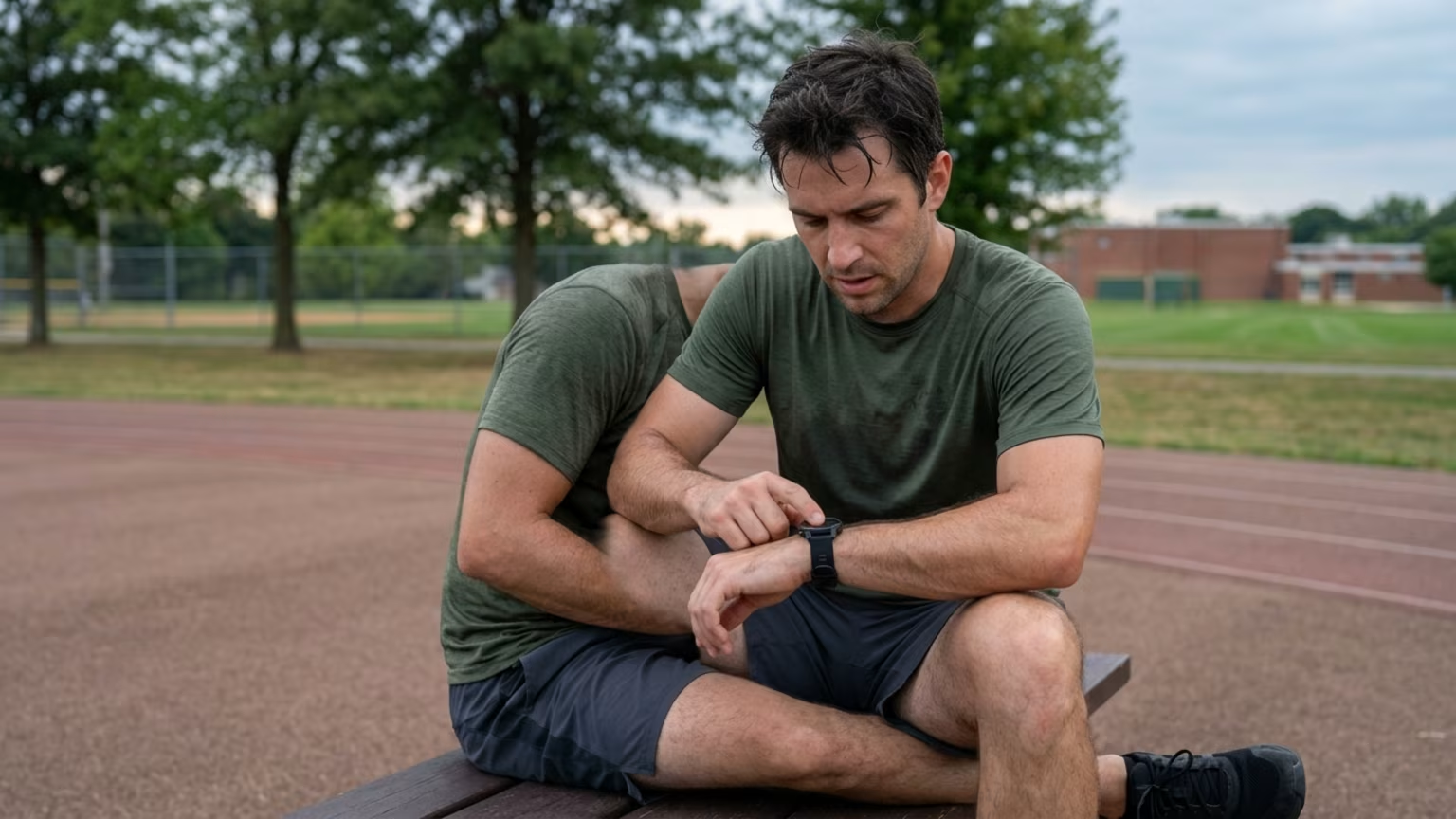

Acıbadem Health Point recently published guidance on tracking one-minute heart rate recovery. Learn how veterans can use these metrics and VA telehealth data.





Recently, Acıbadem Health Point published an evidence-based patient guide explaining how to calculate one-minute heart rate recovery. The publication details how this metric changes with age and outlines practical threshold values. The guide provides specific calculation methods for tracking cardiovascular fitness over time. It clarifies the critical differences between active and passive recovery measurements.
Tracking cardiovascular recovery is a central component of maintaining operational capability. Many active-duty personnel and veterans use fitness trackers to monitor their workouts. Interpreting those numbers correctly requires proper context and an understanding of human physiology. Understanding the difference between a normal recovery and a delayed one helps service members adjust their training loads safely.
In our experience at BattleVet, readiness requires more than just pushing through the fatigue of daily training. I remember waking up after a poor night of sleep and realizing that my training recovery was taking much longer than it used to. I realized that a dedicated approach to sleep and hormonal health was necessary. This completely shifted how I view long term capability and physical restoration.
A delayed heart rate recovery can indicate fatigue or inadequate rest. Monitoring this specific metric provides a concrete way to measure physical stress. Veterans can use these daily readings to decide whether to push harder or prioritize rest. Connecting this data to broader training and performance concepts builds a more sustainable fitness routine over time.
Acıbadem Health Point offers a clear example of how to calculate this physical readiness metric. If a person finishes their workout at 150 beats per minute and drops to 128 beats per minute one minute later, their recovery value is 22. The guide defines this metric simply as the fall in pulse during the first minute after exercise ends. This creates a highly repeatable self-test that individuals can use in their own homes.
The guide's suggested home procedure requires exercising at an appropriate steady intensity. You record the pulse immediately after stopping the exercise. You then record it again exactly one minute later and subtract the second value from the first. Finally, you log whether the recovery was active or passive.
Active recovery produces a specific set of expectations for physical restoration. The Acıbadem guide presents a fall of approximately 18 beats per minute or more after active recovery as a broad reference. This reference point applies to many adults continuing to walk or pedal gently after exercise. It is a general benchmark rather than a strict medical requirement.
Passive recovery involves coming to a complete stop and produces different numerical results. The article notes that some clinical studies use a threshold of approximately 12 beats per minute or more after complete rest. The article does not identify those specific studies or explain their patient populations. The guide warns heavily against comparing active and passive results as though they were equivalent.
Age plays a direct role in maximum heart rate calculations and subsequent recovery measurements. The guide estimates a maximum heart rate of approximately 150 beats per minute for a 70-year-old using the standard formula of 220 minus their age. Another formula of 208 minus 0.7 times their age yields an estimate of approximately 159 beats per minute for a 70-year-old. These are broad population estimates rather than strict personal limits.
The Acıbadem guide explicitly rejects the idea of a universal age chart for this metric. Universally accepted normal values do not exist for every single age decade. No single validated target applies perfectly to every age group. Instead, the focus shifts to establishing a personal baseline and tracking it consistently.
A physically active 70-year-old may recover much faster than a sedentary 40-year-old. Because of this individual variation, personnel should use their own historical data as their primary guide. Rebuilding fitness requires consistency over time rather than chasing a specific demographic average. Understanding strength, fitness and body composition principles helps put these numbers into practical context.
To get accurate data, you must repeat the test under broadly comparable conditions. You should use the same activity and aim for approximately the same exercise intensity. You must also use the same active or passive recovery method every single time. Changing any of these variables will make the resulting measurements difficult to compare.
Many factors outside of general physical fitness can alter a reading on any given day. The guide identifies exercise intensity, dehydration, fatigue, and sleep deprivation as potential sources of variation. Caffeine, nicotine, emotional stress, and medication can also change how quickly a pulse drops. Veterans managing these factors should account for them when reviewing their weekly trends.
A home test performed after brisk walking or cycling cannot automatically be compared with a supervised clinical test. The workload, monitoring, recovery instructions, and patient populations will differ significantly. Wearable readings can also be affected by simple movement or poor skin contact. Irregular heart rhythms, smoking, and diabetes are additional potential sources of variation identified in the guide.
Medication requires special consideration when tracking cardiovascular metrics at home. Beta-blockers and other rate-lowering medicines can alter the expected heart rate response. Personnel taking these medications need individualized exercise guidance from their healthcare providers. Age-predicted targets become significantly less reliable when prescription drugs control the physical heart rate.
A smaller recovery number does not automatically establish the presence of heart disease. It is not a standalone diagnostic test for blocked arteries, heart failure, or irregular rhythms. A favorable recovery number also does not entirely rule out heart disease. This is especially true when symptoms or substantial risk factors are present.
The U.S. Department of Veterans Affairs has reported extensively on remote cardiovascular monitoring. Iowa City VA researchers found home-based cardiac rehabilitation to be safe and effective for managing cardiovascular disease. This provides highly relevant context for remote monitoring and self-management among veteran populations. Tracking metrics at home is rapidly becoming a standard part of modern cardiovascular care.
VA-affiliated researchers are currently recruiting at least 126 veterans aged 60 or older for a telehealth physical therapy study. This telehealth study will evaluate whether remote rehabilitation improves and sustains physical function over time. Participants in the study will receive Fitbit activity tracking devices. This highlights the growing clinical interest in wearable data for aging veterans.
Veterans engaging in home-based rehabilitation should view heart rate metrics as a supplementary observation. You should follow the rehabilitation plan and the clinician-set workload carefully. Consumer wearables provide useful data but cannot replace a proper clinical assessment. Integrating this information into your overall recovery and sleep strategies supports a much safer return to baseline capability.
Perceived effort and physical symptoms remain the safest practical guides for many older adults. This is particularly true for veterans returning to exercise or managing chronic conditions. Severe breathlessness, fainting, dizziness, or chest pressure warrant immediate medical attention. Self-testing should never replace professional medical assessment when serious symptoms occur.
A repeated decline from an individual's normal results warrants closer attention. A noticeable reduction in exercise tolerance is a valid reason to arrange a non-urgent clinical review. Recurring unusual wearable readings should prompt a professional evaluation rather than an automatic change in training intensity. Personnel should never substitute a consumer wearable reading for a proper clinical diagnosis.
This approach aligns with broader healthy aging and longevity methods designed for former service members. The safest operational use is to combine this specific metric with an awareness of symptoms and functional performance. It serves as just one tool to help manage recovery quality and guide safe training decisions.
As remote cardiovascular care expands across the veteran health system, will standardized personal trending eventually replace rigid age-based fitness testing entirely?
Follow BattleVet for practical guidance on military and veteran health, strength, recovery, testosterone, sleep and healthy aging. Stay connected for new articles, research backed insights and clear information to help you stay capable for the years ahead.



A private ayahuasca retreat for 47 veterans highlights demand for alternative PTSD care, but clinical evidence and safety protocols remain unverified.

A new UK Biobank study links higher estimated REM and deep sleep to lower risk for 83 diseases. We explain what this means for veteran health and recovery.
A new study involving over 600,000 patients found that equal access to structured VA oncology care effectively eliminates racial survival gaps among Veterans.
Build better habits around strength, recovery, sleep, hormones and healthy aging with practical guidance for active military personnel and veterans.
Explore BattleVet