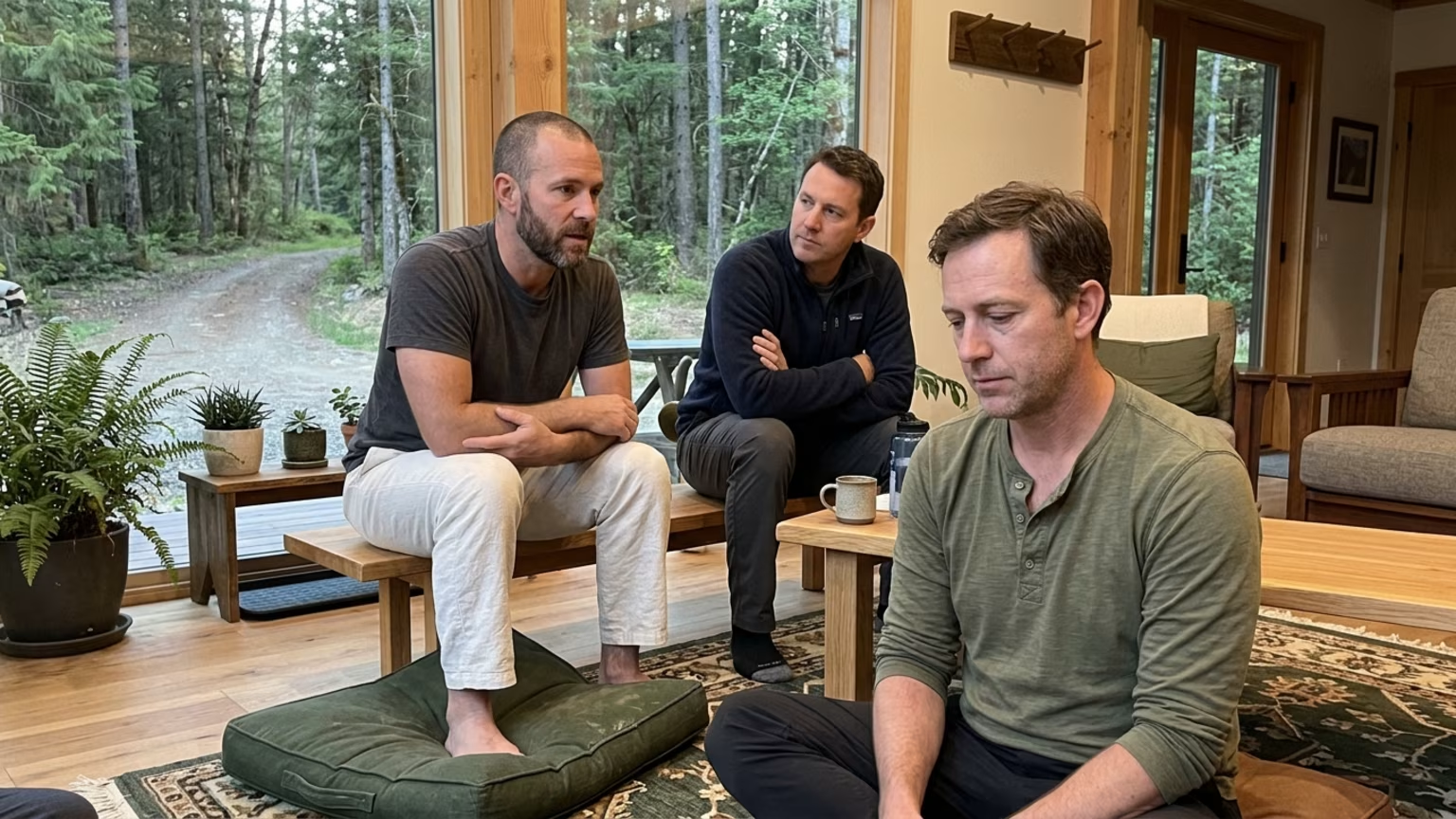

A private ayahuasca retreat for 47 veterans highlights demand for alternative PTSD care, but clinical evidence and safety protocols remain unverified.





If you are experiencing an immediate mental health crisis or suicidal thoughts, contact emergency services first. Dial 911 for immediate danger, dial 988 and press 1 for the Veterans Crisis Line, or text 838255. Do not wait for a retreat or an experimental program to seek help. Crisis support is available right now.
From September 5 through September 12, 2026, an intensive weeklong ayahuasca retreat took place for 47 U.S. combat veterans and first responders. The event coincided with the week marking the 25th anniversary of September 11. The Coming Home Project organized the private program to support those with war-related trauma. The Birds Eye View Project provided cornerstone funding through its War Feather program.
The retreat happened at the Rythmia Life Advancement Center in Costa Rica. Organizers stated the retreat was intended for individuals dealing with treatment-resistant PTSD or seeking help after their military service. The facility was completely closed to the general public for the duration of the event. The seven-day schedule included four nights of ayahuasca and educational classes. According to the event announcement, participants also engaged in supervised ceremonies and integration activities.
The organizers noted that Rythmia operated under the regulatory oversight of Costa Rica's Ministry of Health. Medical and integration personnel reportedly worked alongside Coming Home Project coaches during the week. This combined team operated under the leadership of a chief medical officer. The completion of this event reflects a growing trend of private organizations funding overseas alternative treatments.
This event highlights a major shift in how former service members pursue mental health care. Many veterans are searching for new ways to address traumatic brain injuries, anxiety, and complex trauma. Coming Home Project leadership described the retreat as a potential new chapter in mental health treatment options. However, this description should be presented strictly as the organization's view rather than a medical consensus.
It is crucial to separate privately organized overseas retreats from formal clinical trials. Despite the reported medical oversight in Costa Rica, this does not equal U.S. regulatory approval. The 47 participants simply represent the retreat population. They do not represent a clinical sample demonstrating a proven treatment effect. The event illustrates a high demand for new interventions, but the clinical effectiveness of this specific model remains undocumented in peer-reviewed literature.
The available event coverage is primarily based on organizational press materials. It is not based on independent clinical evaluation. There is no peer-reviewed study of the 47 participants published alongside the announcement. This distinction matters deeply when evaluating new health claims. Testimonials can sound convincing, but they do not replace standardized medical data.
As our team looks at the landscape of veteran care, we often see a gap between emerging treatment trends and foundational health. I remember waking up after a poor night of sleep and realizing that my training recovery was taking much longer than it used to. I realized that readiness is more than just pushing through the fatigue. It requires a dedicated approach to sleep and hormonal health, which completely shifted how I view long term capability.
Building a resilient physical baseline is critical before seeking experimental therapies. Readers can find useful strategies for building this foundation in our veteran lifestyle and healthcare resources. Strong daily habits create the physical stability necessary for processing difficult mental challenges.
Interest in psychedelic-assisted therapies is certainly growing across the active duty and veteran communities. The Department of Veterans Affairs is currently running the PIVOT study. This is described as a randomized, controlled VA trial examining psilocybin-assisted treatment for veterans with treatment-resistant major depressive disorder. This formal study includes veterans who also have PTSD.
However, the existence of this study does not mean psilocybin is an approved routine VA treatment. Privately funded ayahuasca retreats and controlled clinical trials for other substances are very different. They should never be treated as interchangeable by veterans seeking care. Understanding these distinct differences is vital for anyone reading military health articles and looking to make informed healthcare decisions.
Veterans considering any psychedelic program must approach the decision with careful medical scrutiny. The completion of this recent retreat does not establish that ayahuasca is effective for PTSD or substance use disorders. There are no publicly reported pre- and post-retreat PTSD scores for the 47 participants. The event coverage also does not provide substance use outcomes, adverse event rates, or data from a control group.
Veterans should never stop prescribed psychiatric medication based on promotional claims from a private retreat. You must not replace evidence-based care with an experimental option. It is critical to discuss your symptoms, current medications, and any history of traumatic brain injury with a qualified clinician. Veterans with complex medication regimens may face significant individual risks from poorly screened psychedelic use.
Always confirm the specific details of medical screening and emergency procedures before traveling. You should request written information about participant-to-facilitator ratios, informed consent, and clinician credentials. The public event announcement for the Costa Rica retreat does not disclose all of these clinical details. Asking these difficult questions is a core part of protecting your long-term capability.
Before traveling overseas for treatment, you must investigate the local laws and medical standards. The retreat occurred in Costa Rica, so readers should not assume that its legal or licensing arrangements apply in the United States. Emergency care standards and professional credential requirements differ significantly by country. A facility claiming to be medically supervised in one nation may not meet the basic safety requirements of the U.S. medical system.
The event announcement does not report whether participants had psychiatric exclusions, cardiovascular screening, psychosis-risk screening, or standardized suicide-risk monitoring. These are standard safety protocols in regulated clinical environments. Without them, individuals take on a massive burden of unknown risk. You must take responsibility for demanding this safety information up front.
Other psychedelic interventions show varying levels of clinical evidence and legal restriction. A peer-reviewed pilot study of MDMA-assisted conjoint therapy reported preliminary PTSD and relationship improvements for veterans. There were no serious adverse events reported in that specific study. However, the MDMA study was a pilot study and therefore should not be treated as proof that ayahuasca produces the same outcomes.
The substances, therapeutic protocols, study designs, and evidence bases are entirely different. MDMA remains legally restricted in the United States outside of authorized research or other legally permitted pathways. Psilocybin also remains a federal Schedule I substance under U.S. law. To navigate these choices safely, veterans must strictly differentiate between a licensed clinical service and a private retreat.
The sources for the Costa Rica event do not establish whether every participant received the same follow-up or integration schedule. You should rely on independent measurements of sleep, cognitive function, and depression rather than individual testimonials alone. Maintaining your physical and mental foundation is vital, and recovery and sleep articles can help you establish healthy daily routines. Ensure any new therapy integrates safely and legally with your established medical care.
The Coming Home Project and Birds Eye View Project announced plans for at least four additional retreats in 2027. This signals a clear intention to build a continuing program rather than a single standalone event. As more private organizations look to operate outside the U.S. medical system, will the formal clinical evidence eventually catch up to the growing veteran demand for alternative trauma treatments?
Follow BattleVet for practical guidance on military and veteran health, strength, recovery, testosterone, sleep and healthy aging. Stay connected for new articles, research backed insights and clear information to help you stay capable for the years ahead.


A new UK Biobank study links higher estimated REM and deep sleep to lower risk for 83 diseases. We explain what this means for veteran health and recovery.

A new study involving over 600,000 patients found that equal access to structured VA oncology care effectively eliminates racial survival gaps among Veterans.
A 2026 study in npj Aging links physical fitness to healthier brain structure in older adults, though it does not show a direct baseline memory advantage.
Build better habits around strength, recovery, sleep, hormones and healthy aging with practical guidance for active military personnel and veterans.
Explore BattleVet