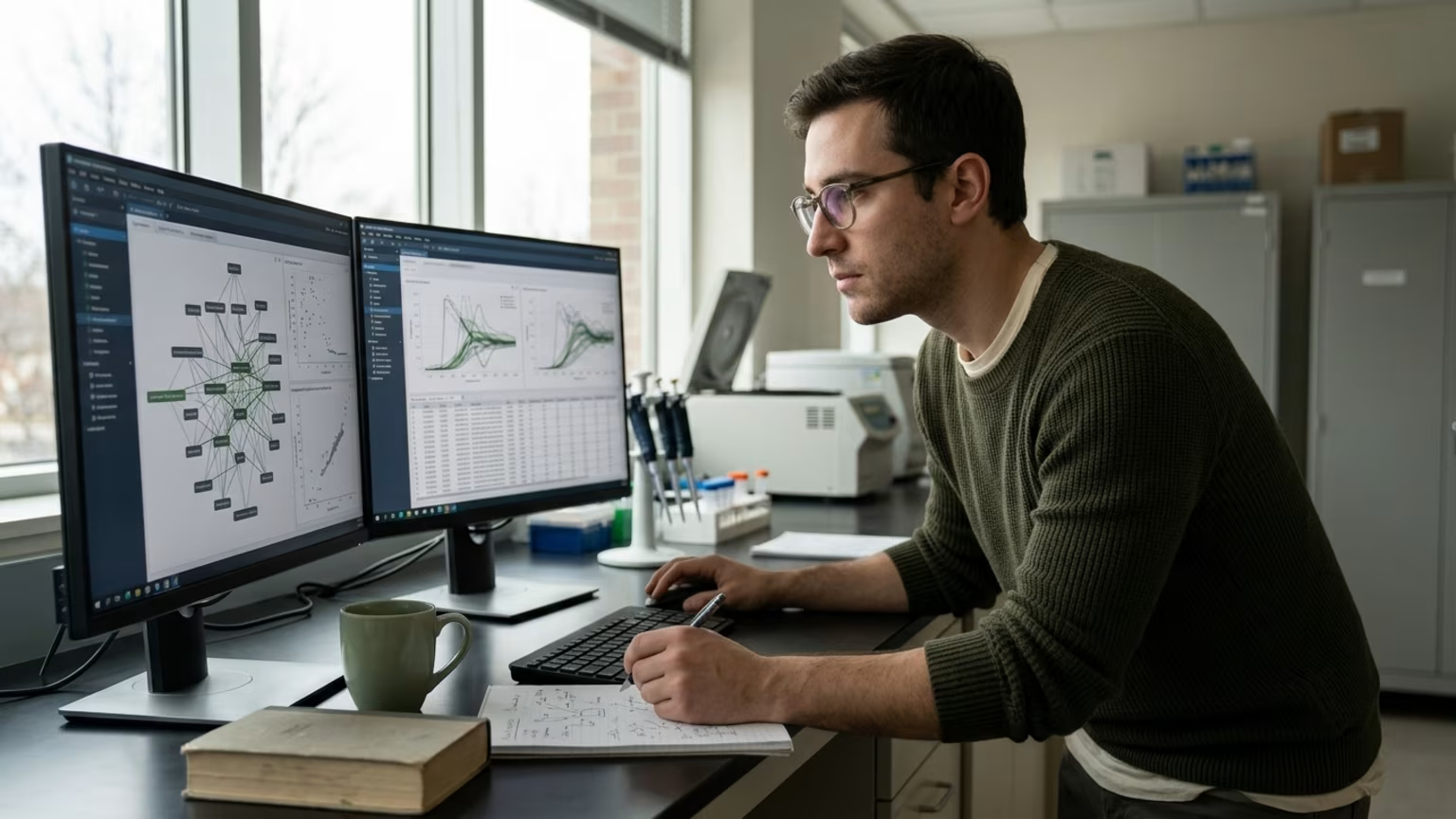

A 2026 study highlights shared biological pathways behind ME/CFS, long COVID and PTSD. Learn why persistent veteran fatigue requires comprehensive assessment.





In late August and early September 2026, the Journal of Translational Medicine published a new study analyzing complex fatigue. Researchers examined biological convergence across ME/CFS, long COVID, PTSD, rheumatoid arthritis and multiple sclerosis. The study authors included researchers from Oxford BioDynamics, the University of East Anglia, the London School of Hygiene & Tropical Medicine and Cornwall Partnership NHS Foundation Trust. The paper’s DOI is 10.1186/s12967-026-08874-9.
The research team combined existing genetic and genome-wide association data with 3D-genomics analysis. This method allowed them to examine how regions of DNA interact and potentially influence gene activity. The work was funded by Oxford BioDynamics. This is the company associated with the EpiSwitch and Orion technologies used in the analysis. The ME Association described the paper as an interesting and quite complex research hypothesis. The organization emphasized that its conclusions remain speculative and unproven at this stage.
Persistent fatigue after infection or trauma exposure should not automatically be treated as a simple loss of fitness. This research reinforces that post-viral fatigue and PTSD-related exhaustion may share underlying biology with autoimmune conditions. For service members and veterans, this underscores the need to treat persistent fatigue as a serious multi-system condition. Overlapping mechanisms do not imply a single diagnosis, but they do require a comprehensive medical response.
I remember waking up after a poor night of sleep and realizing that my training recovery was taking much longer than it used to. I realized that readiness is more than just pushing through the fatigue. It requires a dedicated approach to sleep and hormonal health, which completely shifted how I view long term capability. That personal realization aligns with what this new network-level research suggests about human biology. Debilitating fatigue involves multiple overlapping systems that require thorough clinical assessment.
Veterans are a particularly relevant population for discussions about post-viral syndromes. VA researchers reported that Veterans with at least one psychiatric disorder were 28 percent more likely to receive a long-COVID diagnosis after infection. The overlap between psychiatric history and post-viral conditions shows why fatigue requires careful review. Evaluating understanding long-term health priorities can help individuals navigate these complex overlapping symptoms. Connecting physical performance to underlying immune health provides a much clearer path for maintaining physical capability during long-term recovery.
The study analyzed disease categories rather than directly testing fatigue as a standalone symptom across harmonized patient groups. The analysis found relatively little direct overlap between individual disease-associated genes. However, the researchers observed greater convergence at the level of biological networks and pathways. The Science Media Centre reviewed the paper's proposed regulatory pathways. They noted these shared pathways span across ME/CFS, long COVID and PTSD. Multiple sclerosis and rheumatoid arthritis were also included in this pathway convergence.
Shared biological themes across the five conditions included immune and inflammatory signaling, cytokine and interferon responses and mitochondrial energy production. Metabolic regulation, stress-response mechanisms and neuroendocrine signaling also emerged as common pathways. The research highlighted highly connected network components to explain these connections. Specifically, the analysis identified LAG3 and elements of the mTOR pathway as candidate connected nodes. These findings identify candidate biological nodes rather than proven causes or validated treatment targets.
We can see the broad scale of post-viral fatigue in recent federal health data. In a VA study summarized by the agency, nearly 450,000 Veterans who had COVID-19 were compared with 4.7 million Veterans who had not been infected. Among infected Veterans, long-COVID symptoms one year after infection occurred in 3.5 percent of vaccinated people. By comparison, those long-COVID symptoms appeared in 7.8 percent of unvaccinated people.
VA research has also reported that psychiatric disorders were associated with increased long-COVID risk among Veterans. This pattern was particularly notable among younger Veterans. These findings fit a broader research trend examining long COVID and post-viral syndromes through multiple interacting systems. Researchers continue looking closely at viral persistence, immune dysfunction, inflammation and changes in other body systems.
The ME Association stated the research links illnesses involving debilitating fatigue and cognitive dysfunction with abnormalities involving the brain, immune function and mitochondrial energy production. The organization said the research could eventually contribute to diagnostic biomarkers or treatments aimed at disease mechanisms. They stressed that additional research is required before clinical applications are possible. This computational analysis generates testable hypotheses about biological convergence rather than establishing a new standard of care.
These genomic findings support a more careful clinical assessment rather than simple self-diagnosis. A useful medical evaluation should document the timing of symptoms, recent infections, sleep quality and exertional tolerance. Clinicians should note delayed worsening after activity, cognitive issues and pain. Evaluations must also check for mood changes, trauma symptoms and medication effects. Finally, checking for orthostatic symptoms and signs of autoimmune disease ensures a complete clinical picture. The immediate practical message is that persistent fatigue warrants a serious multi-dimensional assessment.
Recovery planning must be highly individualized for every service member and veteran. You should avoid assuming that pushing through it is appropriate for every fatigue syndrome. This caution is critical when exertion produces delayed or disproportionate worsening. Research on long COVID and ME/CFS specifically identifies delayed post-exertional symptoms and prolonged recovery as important features under investigation.
The study did not establish that any proposed biomarker can currently diagnose ME/CFS, long COVID or PTSD in routine clinical practice. It also did not establish that targeting LAG3 or mTOR will improve symptoms in patients. Sleep deserves active assessment rather than being treated as an afterthought in medical evaluations. Separate sleep research reported potentially pathological EEG microstructure changes in people with long COVID and ME/CFS. This suggests that sleep-related brain physiology may be part of post-infectious disease biology rather than merely a lifestyle issue.
Optimizing sleep and stress recovery protocols remains a crucial pillar of managing chronic exhaustion. VA research summaries report that PTSD treatments can improve sleep. Interventions specifically targeting sleep were more effective for sleep outcomes than other PTSD treatments. Clinicians may need to consider multiple coexisting contributors during an evaluation. Post-infectious symptoms often exist alongside PTSD-related sleep disruption and depression. Pain, medication effects or autoimmune disease may also play a role.
In Veterans with multiple sclerosis, VA researchers found that reducing depression symptoms was associated with reductions in physical, cognitive and emotional fatigue over follow-up. This reinforces that fatigue may require the assessment of multiple overlapping contributors rather than a single explanation. Veterans should discuss persistent fatigue with a VA clinician or another qualified healthcare professional. This is critical when symptoms interfere with duty, training or daily driving. Medical advice is also necessary if exhaustion impacts work and concentration.
The identification of shared biological pathways across diverse conditions highlights the deep complexity of human fatigue. Clinical validation will eventually determine whether targeting these immune and metabolic networks can produce safe therapies. As genomic models continue mapping the connections between our immune responses and long-term exhaustion, how will these emerging biomarkers shape the future of personalized veteran healthcare?
Follow BattleVet for practical guidance on military and veteran health, strength, recovery, testosterone, sleep and healthy aging. Stay connected for new articles, research backed insights and clear information to help you stay capable for the years ahead.


JAMA estimates low testosterone readings in active-duty Army men. See the threshold data, study limits, and implications for clinical follow-up.

The Army’s HVAC task force targets hot barracks. Here is what its project figures mean and how to assess future housing and sleep-related claims.

The BRIDGE Act proposes a whole-family military transition pilot. Read who it would serve, what support it includes, and what remains unresolved.
Build better habits around strength, recovery, sleep, hormones and healthy aging with practical guidance for active military personnel and veterans.
Explore BattleVet