

Nevada’s 2023 veteran suicide rate reached 61.2 per 100,000. Learn how federal clinical trials are evaluating new therapies for treatment-resistant PTSD.





If you are in immediate danger, call 911. For 24/7 support, call or text 988 and press 1 for the Veterans Crisis Line, or text 838255.
In 2019, veteran Gehrig Tucker sustained two traumatic brain injuries within 48 hours during Army Special Forces training in North Carolina. The injuries left him with severe anxiety, night terrors, and persistent suicidal thoughts. Traditional interventions failed to bring relief. Department of Veterans Affairs data cited by Las Vegas Weekly shows that Nevada’s 2023 veteran suicide rate reached 61.2 deaths per 100,000 veterans.
This statistic represents the highest reported veteran suicide rate in the country. The reported rate was more than twice the suicide rate among Nevada’s civilian population. First responders face a similar burden across the state. State officials recorded at least 26 first-responder suicides between 2019 and 2023, including 19 law-enforcement officers.
Clinicians use the term "treatment resistant" when a patient has not improved after trying at least two standard treatments. Roughly one-third of people with PTSD fall into this category. For these individuals, conventional psychotherapy and medications often fail to resolve severe symptoms. This widespread treatment resistance has driven both patients and policymakers to investigate novel interventions.
State and federal authorities are actively assessing alternative therapies. Nevada passed Senate Bill 242, which created a 15-member Psychedelic Medicines Working Group made up of lawmakers, doctors, veterans, and law-enforcement officials. After more than a year of hearings, this group produced a 59-page report in 2024. The federal government is also advancing research, as the FDA granted breakthrough-therapy designation to MDMA in 2017 and psilocybin in 2018.
Legislators in Nevada recognized that unrestricted recreational access poses significant public health risks. Assembly Bill 378 was introduced to create a state-backed alternative-therapy pilot program for veterans and first responders. Although this particular bill did not reach a final vote, it reflects a growing consensus that supervised clinical research is the appropriate path forward.
The U.S. Department of Veterans Affairs is bringing this research into federal facilities. The VA has launched PIVOT, a randomized, controlled trial evaluating psilocybin for veterans with treatment-resistant major depressive disorder. This study will take place at five VA locations across the country. Large clinical trials provide stronger evidence regarding safety, dosing, and long-term outcomes than early pilot studies.
The PIVOT trial is officially registered under NCT07226232. By comparing two different psilocybin dosage levels, researchers hope to assess depression outcomes and specific side effects. This federal infrastructure ensures that participants receive structured monitoring throughout the process. Participating in a registered clinical trial provides safeguards that private, unregulated retreats simply cannot offer.
An earlier 12-person study provided the preliminary momentum for these larger investigations. Researchers in that pilot administered two synthetic-psilocybin dosing sessions at 15 milligrams and 25 milligrams. Patients received eight hours of therapy before the doses and approximately eight hours of post-dose integration therapy. The structured model of preparation, supervised administration, and integration forms the foundation of clinical psychedelic protocols.
UNLV researchers Dustin Hines and Rochelle Hines told Las Vegas Weekly that psychedelics might disrupt rigid patterns of thought. They hypothesized that these substances act on serotonin-related brain systems, including the 5-HT2A receptor. The 12-person study reported no serious adverse events and no increase in suicidal ideation or behavior during the trial.
Many discussions blend various compounds into one broad category, which creates dangerous misunderstandings. Ketamine is frequently mentioned alongside these new therapies because of its mental health applications. However, ketamine is an established anesthetic and belongs to a completely different drug class than classic psychedelics. Medical professionals administer ketamine legally in clinics across Nevada today.
Psilocybin and MDMA remain federally controlled substances despite their breakthrough-therapy designations. Tucker reported that an MDMA experience in 2023 was followed by 13 months without a suicidal thought. While this individual account is compelling, anecdotes do not replace rigorous clinical trials. The medical community requires expansive data to prove that interventions work consistently across diverse populations.
Ibogaine presents an entirely different risk profile that demands extreme caution. The Nevada article specifically highlights cardiac risks and toxicity at high doses for ibogaine. Because of these severe physiological risks, ibogaine treatment requires extensive medical screening and cardiac monitoring. Grouping all of these substances together masks the very real medical dangers associated with specific compounds.
This distinction highlights why structured clinical supervision is non-negotiable. Tucker’s ibogaine program involved four weeks of preparation, one week of active treatment, and four weeks of integration. This extended timeline proves that these interventions are not simple medications you take at home. The therapy surrounding the dosing session is just as critical as the substance itself.
Promising early research does not provide immediate relief for veterans in crisis today. You should never wait for pending legislation or future clinical trials to seek help. Veterans experiencing suicidal thoughts can call 988 and press 1, text 838255, or use the Veterans Crisis Line’s online chat. The VA’s Veterans Crisis Line is available 24/7, and veterans do not have to be enrolled in VA health care to use it.
Trying to maintain fitness years after leaving service required a completely new mindset for our team at BattleVet. The goal changed from immediate tactical readiness to healthy aging and longevity. I learned that connecting short term performance with long term health, focusing on mobility and cardiovascular function, was the real key to staying capable. This same long-term perspective applies to navigating mental health interventions.
When considering alternative treatments, you must separate clinical evidence from commercial marketing. Nevada clinics cannot yet legally provide psilocybin, MDMA, or ibogaine treatment. You should consult a primary care provider and a mental health clinician before pursuing any private therapeutic programs. Integrating immediate conventional care remains the safest starting point for severe PTSD and depression.
Even if federal policies shift, widespread access will likely face significant logistical hurdles. The supervised psilocybin model in Oregon illustrates how legalization does not automatically equal accessibility. With typical sessions costing $1,000 to $3,000, out-of-pocket expenses can quickly exclude the veterans who need help the most. The failure of numerous service centers in Oregon highlights the unstable nature of this emerging industry.
The article reports that roughly one-third of Oregon’s approved psilocybin-service-center businesses had closed, leaving just over 20 operating. Insurance coverage for these services remains highly limited. Without robust insurance coverage or direct VA funding, these therapies will remain restricted to those who can pay cash. This economic barrier forces some individuals to seek cheaper, unregulated alternatives abroad.
Due to restricted domestic access, some veterans travel outside the country for unapproved treatments. Tucker traveled to Cancún for an ibogaine treatment, which he credited with providing a cognitive reset. However, international clinics operate without standard domestic medical oversight. Traveling for psychological interventions introduces stress, removes patients from established support networks, and complicates emergency responses.
Any veteran evaluating these options must ask specific safety questions before committing to an overseas facility. You should verify medical screening protocols, emergency procedures, and the credentials of the attending clinical staff. Comprehensive mental healthcare requires continuity, which overseas retreats rarely provide once the patient returns home. A single positive testimonial does not guarantee safety or effectiveness for the broader veteran population.
Your primary focus should always remain on actionable, established health strategies. Routine medical care, consistent sleep protocols, and professional counseling form the bedrock of long-term resilience. While we track advancements in recovery and sleep alongside mental health, basic foundational health habits yield reliable daily benefits. You possess the agency to control your immediate environment and schedule standard medical consultations.
Working with professionals who understand veteran lifestyle and healthcare can help you establish a secure foundation. Patients can access the Veterans Crisis Line immediately while continuing to monitor credible military health research through verified channels. We consistently monitor BattleVet's ongoing blog to share updates as these federal trials yield definitive results. Building a relationship with a primary care provider ensures that you will be ready if novel treatments secure full federal approval.
The reported rate of 61.2 veteran suicides per 100,000 in Nevada illustrates a profound need for expanded, evidence-based treatment options. Federal trials and state working groups signal progress, but practical health choices require acting on the established tools available today. True capability comes from facing complex health challenges with clear information and reliable support. Stay informed, lean on proven crisis resources, and prioritize your long-term resilience.
Follow BattleVet for practical guidance on military and veteran health, strength, recovery, testosterone, sleep and healthy aging. Stay connected for new articles, research backed insights and clear information to help you stay capable for the years ahead.


Combat Stress’s workplace guidance emphasizes listening over diagnosis. Recent U.S. veteran insomnia research adds context for sleep and recovery concerns.


ErythroMer's reported storage design could matter for military care. An academic review still lists it as preclinical, with human evidence ahead.
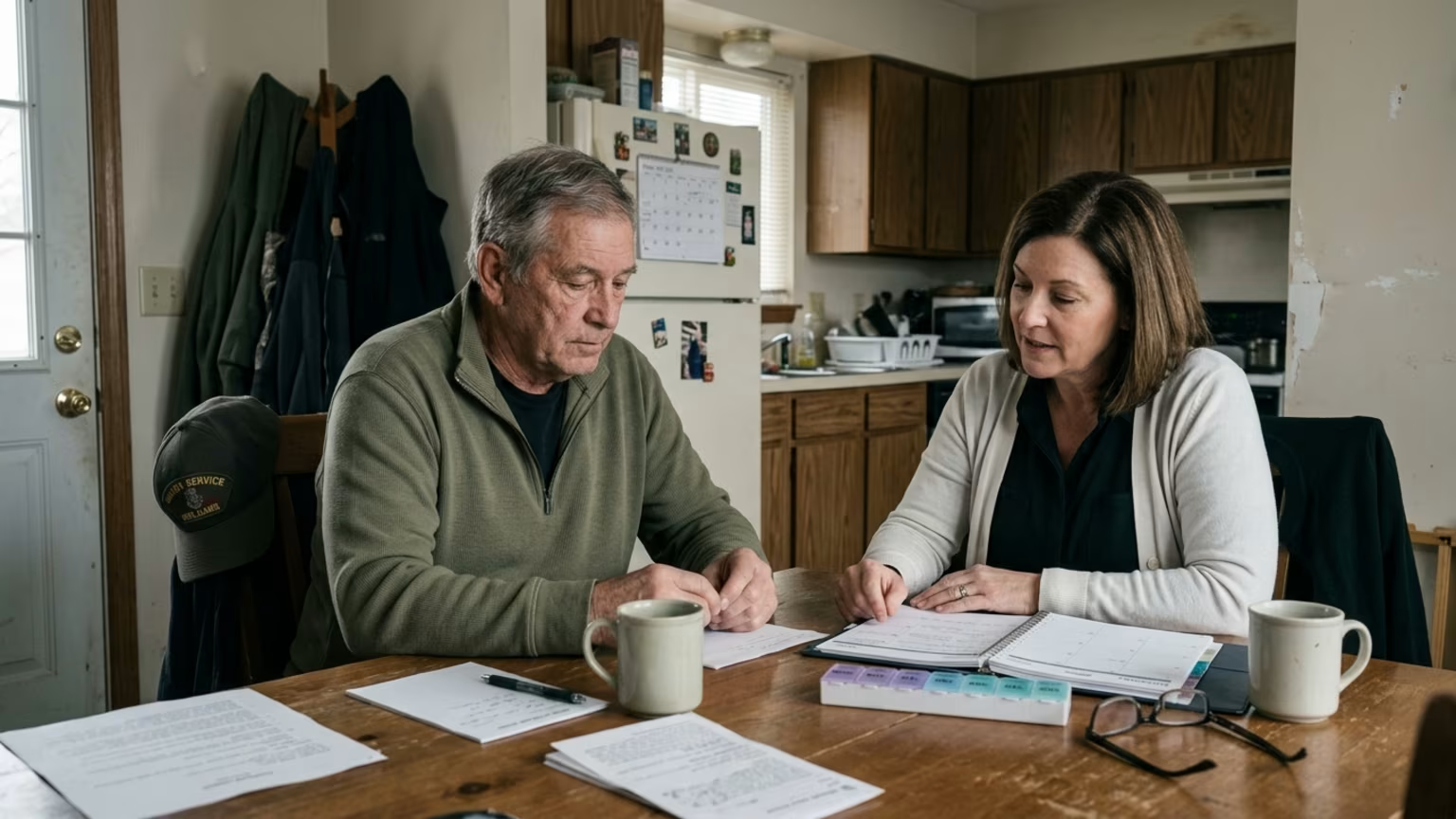
A large veteran study links PTSD and documented social needs to later cognitive impairment, reinforcing the value of connected care planning.
Build better habits around strength, recovery, sleep, hormones and healthy aging with practical guidance for active military personnel and veterans.
Explore BattleVet