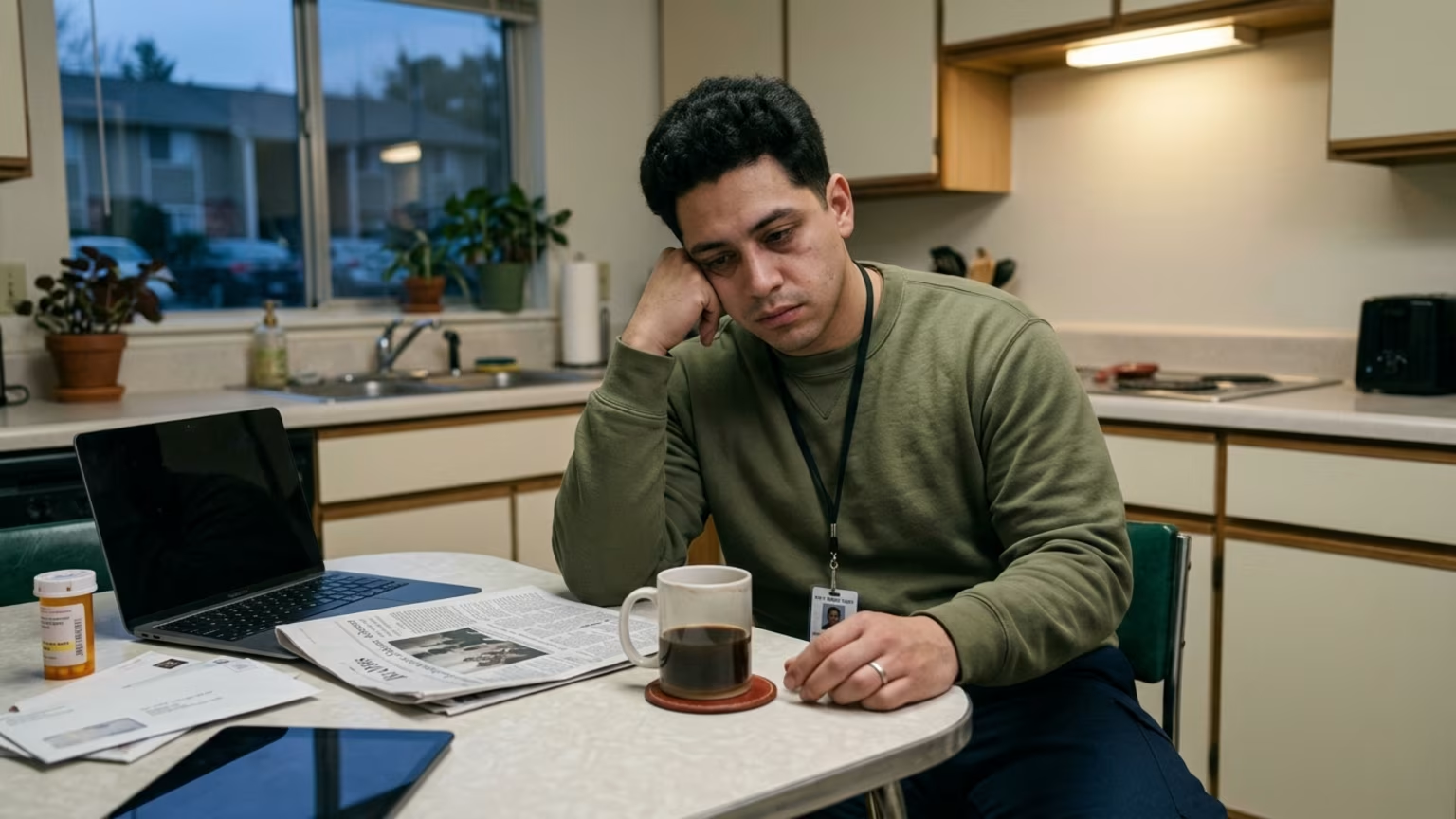

A recent study found Navy sailors face a 2.3-hour nightly sleep debt underway. Learn how planned napping impacts burnout, stress and physical recovery.





On September 24, 2026, Military Times reported on a major study of active-duty U.S. Navy sailors published in the Journal of Sleep Research. The research examined nap frequency, stress, burnout and impaired functioning among deployed personnel. The study analyzed responses from nearly 16,000 sailors. These responses were collected through the Navy Afloat Climate Assessment Survey between 2021 and 2024.
The findings paint a clear picture of shipboard fatigue. Sailors underway reported having about 5.7 hours of sleep available per day. They actually obtained approximately 5.4 hours of sleep during that available window. This falls far short of their average reported need of 7.7 hours to feel rested.
That difference represents an average sleep shortfall of approximately 2.3 hours per night while deployed. The 2.3-hour sleep debt figure is an average across the survey population. It should not be applied identically to every individual sailor, watch rotation, ship or mission.
The reported sample included several surface-ship classes but explicitly excluded aircraft carriers. It covered crews on amphibious ships, cruisers, destroyers, littoral combat ships and mine countermeasure vessels.
Understanding these conditions is crucial for both active personnel and veterans. Prolonged sleep restriction fundamentally alters how the body recovers from physical and mental stress. When service members operate with chronic sleep debt, they face higher risks of impaired functioning and long term health strain. This data matters because it replaces outdated assumptions with actual survey evidence.
I remember waking up after a poor night of sleep and realizing that my training recovery was taking much longer than it used to. I realized that readiness is more than just pushing through the fatigue. It requires a dedicated approach to sleep and hormonal health, which completely shifted how I view long term capability.
For veterans transitioning out of service, unresolved sleep debt often follows them into civilian life. Recognizing the origins of this fatigue helps former service members seek proper medical guidance. Active-duty health decisions must prioritize physical restoration before chronic stress creates permanent health issues. Readers can learn more about these foundational concepts in our recovery and sleep resources.
Sleep quality depends heavily on the specific stressors sailors carry. Maintaining physical capability requires a realistic understanding of how environment limits recovery. These structural challenges explain why practical fatigue management is so necessary for active duty populations. We continually emphasize that proper rest is an operational requirement for sustained performance.
The research provides a detailed breakdown of how different crews experience underway operations. Across the entire survey population, sailors reported napping approximately 1.5 days per week. They rated average burnout at 2.66 out of five. Job stress averaged 3.77 out of five across the surveyed groups.
Sailors also reported an average of approximately 14 poor mental-health days per month. They experienced nearly nine poor physical-health days per month on average. These figures highlight the significant physical and mental demands of extended deployments.
Different ship classes showed distinct patterns of strain. Littoral combat ship crews reported the highest average burnout among the discussed classes at 2.7 out of five. Cruiser crews reported the lowest average burnout at 2.62 out of five. Meanwhile, mine countermeasure crews reported the highest average job-stress score at 3.87 out of five.
Amphibious-ship crews reported the lowest listed job-stress score at 3.59 out of five. They also reported the largest average sleep debt at 2.4 hours. In contrast, mine countermeasure crews reported the smallest sleep debt at two hours. Ship class differences may reflect different missions and operational requirements, according to Germain, rather than ship design alone.
Nap frequencies also varied significantly across the fleet. Cruiser crews reported the highest nap frequency at 1.61 days per week. Mine countermeasure crews reported the lowest nap frequency at 1.27 days per week. Littoral combat ship crews reported napping 1.32 days per week, ranking as the second lowest rate among the listed ship classes.
The data revealed major variations across different job fields and pay grades. Administrative personnel had the highest reported burnout score at 2.85 out of five. Engineers reported the highest job-stress score at 3.88 out of five. Deck sailors had relatively low job stress but high burnout, reporting the highest nap frequency at 2.14 days per week.
Sailors in the E-1 through E-3 pay grades showed distinct operational patterns. They reported the highest burnout and the highest nap frequency at more than two days per week. However, this pay-grade group reported the lowest job stress among the groups discussed.
This new information clarifies how service members should use napping as a fatigue management tool. The study found that more frequent napping was associated with lower odds of high job stress and impaired functioning. However, nap frequency had a mixed relationship with overall health and work outcomes. More frequent napping was also linked to higher odds of burnout.
Sailors who napped on five or more days per week faced additional risks. The researchers found these individuals had higher odds of reporting an elevated number of poor mental-health days. Nap frequency was not significantly associated with the number of poor physical-health days. Therefore, frequent napping may function as both a fatigue countermeasure and a risk marker for underlying occupational strain.
Study co-author Anne Germain suggested that deployed sailors might benefit from short rest periods. She noted that "micro-doses" of sleep can help when obtaining a regular, uninterrupted night of sleep is unrealistic. Germain described naps as a short-term intervention that might provide a temporary boost for the next several hours. She emphasized that naps are not a treatment and cannot permanently resolve underlying sleep problems.
Commanders and supervisors may find nap frequency useful as one signal of fatigue or strain. This is particularly true when paired with reports of burnout, impaired functioning, or persistent sleep restriction. Individual sailors should avoid treating a nap as permission to ignore persistent exhaustion or an inability to function safely. These structural symptoms warrant immediate discussion with appropriate medical or behavioral health resources.
The study authors cautioned that planned naps should not replace adequate total sleep or solve chronic workload problems. Individual sailors must recognize that a brief nap is a practical tool rather than a comprehensive recovery strategy. You can find more practical information about maintaining capability in our military health section. The findings clearly support treating rest as a critical operational and safety issue.
This guidance aligns with broader military efforts to standardize crew rest practices. Two deadly Navy destroyer collisions in 2017 highlighted the severe operational consequences of crew fatigue. This tragedy prompted the military to examine circadian rhythms and rest protocols more closely. The Navy is currently evaluating wearable devices that track rest and vital signs to identify when additional intervention is needed.
The mental health impact of prolonged deployments remains a critical issue for the military. Separate reporting from Military Times noted that shipboard psychologists and deployment-related counselors were sometimes operating beyond capacity. Some of these personnel increased their weekly hours from 40 to 90 to address the massive demand.
The military continues to gather data on how long deployments affect service members over time. The Navy reported that the share of personnel reporting high burnout declined from 27 percent in 2023 to 21 percent in 2025. Over the same period, the share reporting severe or extreme stress declined from 37 percent to 33 percent. These broader Navy figures should not be treated as direct measurements from the nap frequency study.
The sleep study specifically analyzed survey responses collected from 2021 through 2024. While the Navy's broader numbers suggest progress, the core challenge of shipboard sleep restriction remains entirely relevant. Managing fatigue requires an objective look at both rest schedules and environmental stressors.
The integration of wearable technology and standardized rest periods points toward a more scientific approach to readiness. As leaders gain access to better recovery data, will future policies finally treat sleep as a non-negotiable operational requirement rather than a personal luxury?
Follow BattleVet for practical guidance on military and veteran health, strength, recovery, testosterone, sleep and healthy aging. Stay connected for new articles, research backed insights and clear information to help you stay capable for the years ahead.



A September 2026 review outlines practical midlife habits for healthy aging. Learn how veterans can use strength training, nutrition and sleep to stay capable.


A review of how the PACT Act expanded VA healthcare and toxic exposure benefits for veterans, detailing covered deployment locations and medical conditions.

An overview of the U.S. Army's guidance on foundational readiness, explaining how daily habits and basic standards drive measurable physical performance.
Build better habits around strength, recovery, sleep, hormones and healthy aging with practical guidance for active military personnel and veterans.
Explore BattleVet