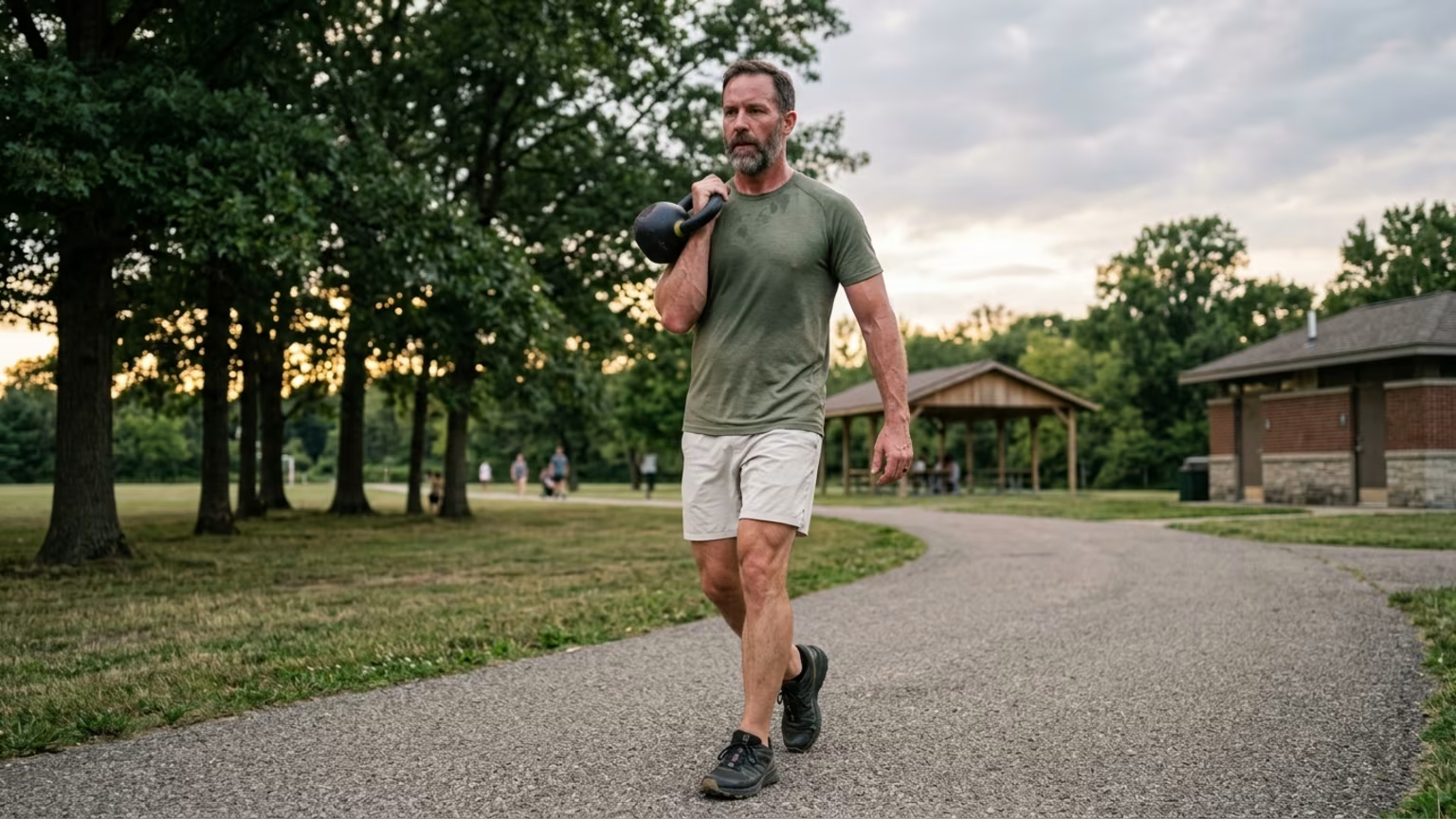

A September 2026 review outlines practical midlife habits for healthy aging. Learn how veterans can use strength training, nutrition and sleep to stay capable.





On September 23, 2026, KVIA published a review through the Stacker Longevity series titled "8 longevity habits to start in midlife." The article outlines healthy aging as a cumulative strategy built around exercise, nutrition and sleep. It also includes hormone evaluation, stress management and social connection. Proactive health care and limiting ultraprocessed foods round out the approach. It presents a framework that relies on consistent habits to support long-term physical capacity.
For military personnel and veterans, this information matters because it shifts the focus toward healthspan. Active service and the transition to civilian life often take a toll on the body. The priority is maintaining strength, cardiovascular health and recovery. Preserving mobility and independence remains equally important. This requires a structured approach that accounts for the physical realities of past military service.
In our experience, true readiness relies heavily on consistent restoration. I remember waking up after a poor night of sleep and realizing that my training recovery was taking much longer than it used to. I realized that readiness is more than just pushing through the fatigue. It requires a dedicated approach to sleep and hormonal health, which completely shifted how I view long term capability.
Service members frequently deal with rotating schedules, deployment cycles and physical wear. An evidence-based framework helps separate practical interventions from marketing trends. We can look at the data to understand which healthy aging habits actually support long-term physical capacity. Addressing these factors methodically provides a stronger foundation for active aging.
The KVIA review provides specific figures regarding physical decline and lifestyle interventions. It cites an estimated average annual decline of about 1% to 2% in muscle mass and strength after age 35. To counter this, the review references a systematic review and meta-analysis of 16 cohort studies. This research associated muscle-strengthening activity with overall and cardiovascular health.
The greatest reported benefits occurred around 30 to 60 minutes of muscle-strengthening activity per week. The review also highlights nutritional factors using large population studies. It cites a 30-year study linking higher intake of fruits, vegetables, unsaturated fats and legumes with better odds of healthy aging. Nuts, whole grains and low-fat dairy products were also evaluated in this timeframe.
Additionally, the article cites a systematic review and meta-analysis involving more than 670,000 participants. This analysis associated greater adherence to a Mediterranean diet with better overall and cardiovascular health. Social and lifestyle factors also feature measurable data. The review cites a meta-analysis involving data from 2 million people that associated social isolation with a 32% higher risk of shorter lifespan.
Another study involving nearly 250,000 participants associated alcohol consumption with shorter telomeres. Telomere length is used as a biological marker related to aging and cellular health. Hormone balance and proactive care are also supported by large studies. The article cites a meta-analysis of nearly 25,000 men ages 40 to 70 that associated balanced hormone levels with better overall and cardiovascular outcomes. Finally, it mentions models suggesting that expanding proactive services to 90% of the U.S. population could save millions of lives.
The review outlines evidence regarding creatine monohydrate for muscle support. It cites a review of 23 studies involving healthy older adults. According to that research, four to 12 weeks of creatine supplementation combined with resistance training supported upper-body strength and lower-body strength. Lean muscle mass was also supported in that population.
A 2026 meta-analysis provides more precise data on these outcomes. It reported a small but statistically significant strength advantage for creatine combined with resistance training compared to resistance training alone. The reported standardized effect size was g=0.31, with a 95% confidence interval of 0.18 to 0.45. This specific evidence applies to generally healthy older adults. The research cautions that findings should not be directly extrapolated to frail or functionally limited people.
This research reinforces current health decisions by prioritizing foundational habits over quick fixes. The review recommends two to four strength-focused workouts per week. It advises using options like free weights, resistance bands and body-weight exercises. Movements such as squats, push-ups and planks are highly recommended. Veterans should progressively increase weight or repetitions so that training remains challenging.
Cardiorespiratory exercise is presented as a complement to strength training, not a replacement. Walking, swimming or cycling can support cardiovascular conditioning while strength work addresses muscle capacity. Nutritional guidance emphasizes a flexible Mediterranean-style pattern. This includes fresh produce, vegetables, fruit and unsaturated fats.
Nuts, legumes, whole grains and low-fat dairy products are also encouraged. Olive oil and fish serve as beneficial additions to this eating pattern. For military personnel dealing with field conditions or shift work, the focus should be on accessible whole foods. Limiting ultraprocessed foods and reducing alcohol intake can further support recovery and weight management.
The review notes that diets high in ultraprocessed foods are associated with a higher risk of shorter lifespan. Such foods are often high in added sugar, saturated fat and salt. Creatine should be viewed as a possible adjunct to a well-designed resistance program. It is not a substitute for progressive training, adequate food, recovery or medical advice. Because the cited evidence concerns healthy older adults, individual medical history warrants professional review before supplementation.
The findings clarify the role of sleep, stress and resilience in daily capability. The article recommends seven to nine hours of sleep each night and a consistent schedule. It suggests reducing screen exposure before bed, keeping the bedroom cool and using calming pre-sleep routines. Sleep is especially important for people managing pain or post-service adjustment.
The Department of Defense identifies chronic insomnia, sleep-related breathing disorders, narcolepsy and circadian-rhythm disorders as clinically relevant conditions. Persistent insomnia, loud snoring, witnessed breathing pauses or excessive daytime sleepiness should be treated as medical issues. The KVIA article itself recommends clinician involvement when midlife symptoms interfere with sleep.
Managing stress is another core component of the KVIA review. It recommends stress-management practices such as meditation, time in nature, exercise and regular contact with friends. The article describes cortisol as part of the normal fight-or-flight response. However, it states that repetitive, intense stress may contribute to accelerated biological aging.
Social connection also requires deliberate effort, especially for veterans transitioning out of military units. The article provides practical examples like combining social time with movement. Activities like playing pickleball, cycling with family or meeting a friend for coffee can bridge this gap. Protecting unit and community connections is a measurable component of long-term health.
Medical guidance shifts toward proactive symptom evaluation. The review recommends discussing symptoms and testing with a physician. It names estradiol, free testosterone and total testosterone among the tests that may be considered. Testing for DHEA-S and SHBG might also provide useful information. A comprehensive clinical view is safer than self-prescribing supplements.
The KVIA article notes that hormonal changes during midlife can affect several areas of health. These include estrogen changes during perimenopause and menopause, along with testosterone changes in men after age 40. The review links hormone-related symptoms with possible changes in sex drive, sleep and energy. Weight management and mood can also be affected.
Veterans can use periodic medical care to monitor physical and mental health. The article urges readers not to postpone annual checkups. Early attention to health problems is presented as preferable to waiting until illness becomes more advanced. Dr. Michael A. Smith, an integrative physician and director of education for Life Extension, commented on this approach. He said, "Investing in your health in midlife will pay dividends in later years."
Broader health programs reflect this integrated, proactive approach. The Department of Veterans Affairs reports a 12-month program involving 208 veterans. This program combined exercise, nutrition counseling and stress management. Tobacco cessation, medication adherence and education were also included. It aligns with the KVIA review by treating movement, stress and nutrition as connected systems.
VA Whole Health materials offer a similar integrated-care perspective. They connect food choices with energy, sleep and gut health. Movement, relationships and broader well-being are also integrated. This approach avoids treating performance, recovery and mental health as isolated issues. Nutrition and social support are addressed as interconnected factors.
As more evidence supports cumulative daily habits over single interventions, how will health systems adapt to provide integrated, preventive care for veterans facing complex physical challenges?
Follow BattleVet for practical guidance on military and veteran health, strength, recovery, testosterone, sleep and healthy aging. Stay connected for new articles, research backed insights and clear information to help you stay capable for the years ahead.


A review of how the PACT Act expanded VA healthcare and toxic exposure benefits for veterans, detailing covered deployment locations and medical conditions.

An overview of the U.S. Army's guidance on foundational readiness, explaining how daily habits and basic standards drive measurable physical performance.
A 2026 University of Oklahoma study demonstrates how unusually heavy training loads impact next-day recovery, wellness, and speed in elite soccer athletes.
Build better habits around strength, recovery, sleep, hormones and healthy aging with practical guidance for active military personnel and veterans.
Explore BattleVet