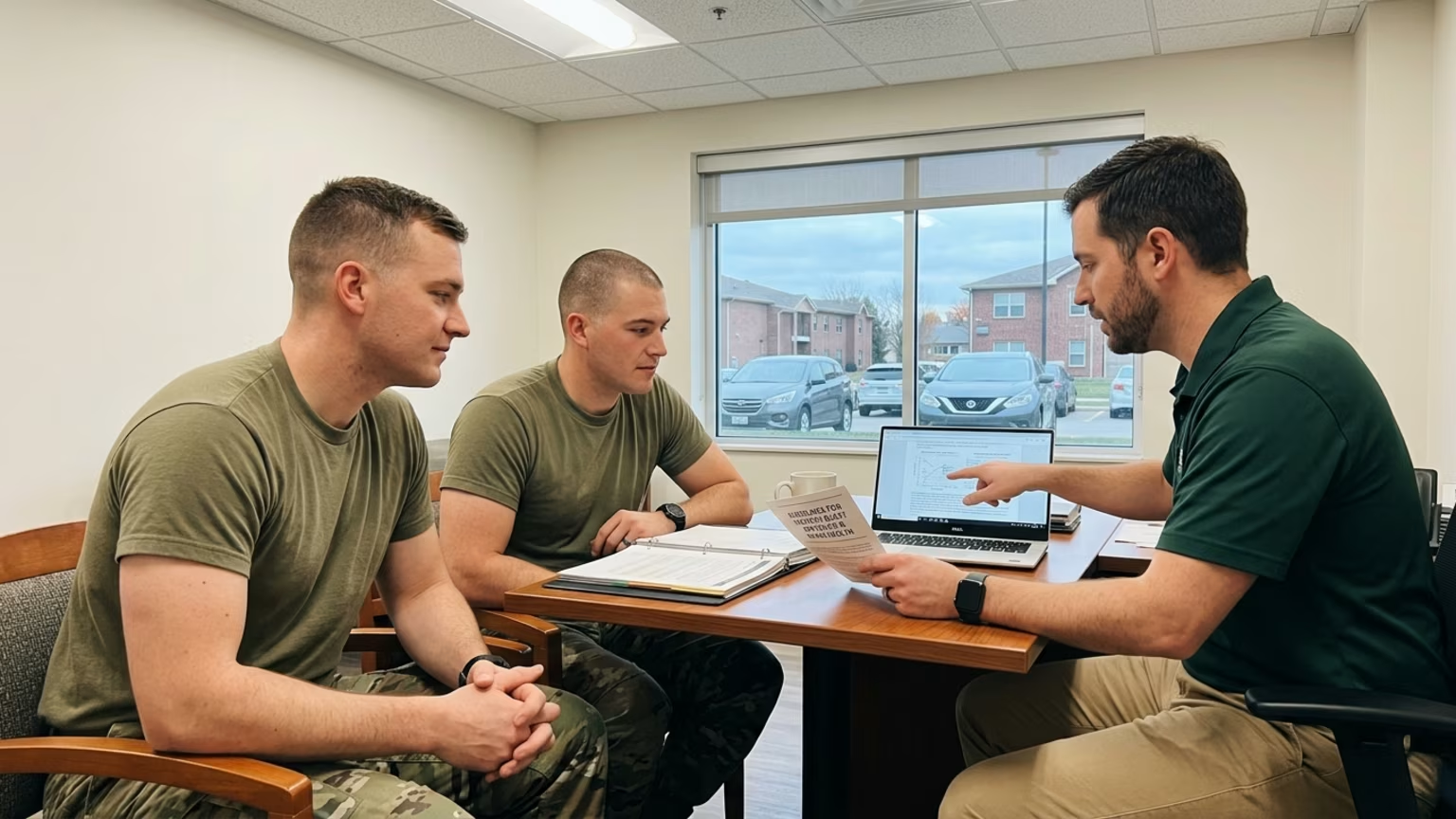

NATO has issued new interim guidelines to limit cumulative blast exposure for soldiers. Learn why ignoring low-level blasts compromises long-term brain health.





The idea that a blast is only harmful if it knocks you unconscious is a dangerous myth that ignores the physical reality of cumulative brain exposure. Standing near the breaching door during training used to be a point of pride. We assumed that walking away under your own power meant you were perfectly fine to keep operating. True readiness requires us to abandon that outdated mindset immediately.
Military training has historically treated low level blasts as a standard part of the job. Personnel repeatedly endure shock waves from heavy weapons fire and routine explosive breaching. The prevailing attitude suggests that surviving the immediate noise and pressure proves a service member is tough enough for combat. This mentality separates perceived physical endurance from actual biological reality.
Commanders historically focused on visible safety metrics during complex training operations. If the safety brief covered ear protection and physical clearance distances, the training iteration was considered safe. The invisible overpressure wave washing over the assault element was completely ignored. We systematically failed to measure the biological cost of simply being in the room.
Military health planning historically prioritized acute trauma over chronic environmental stressors. Medics were trained to look for immediate visible signs of a concussion after an explosive event. If a service member could answer basic questions and maintain their balance, they were cleared to return to the line. This approach completely missed the microscopic cellular changes happening beneath the surface.
The culture of military fitness actively rewarded individuals who ignored physical discomfort. Service members were taught to ignore headaches and fatigue after days on the firing range. We often treat physical strain like an invisible badge of honor. I remember waking up after a poor night of sleep and realizing that my training recovery was taking much longer than it used to.
I realized that readiness is more than just pushing through the fatigue. It requires a dedicated approach to sleep and hormonal health, which completely shifted how I view long term capability. The exact same shift in perspective must apply to brain health and overpressure management. Ignoring the cumulative shock waves of regular training simply compounds unnoticed physiological stress over time.
For decades, the standard procedure for evaluating blast injury relied entirely on immediate physical symptoms. If a soldier did not suffer a concussion or lose consciousness, medical personnel often assumed no injury occurred. This reactive model leaves active personnel vulnerable to invisible neurological damage. It waits for a catastrophic failure rather than managing the environment to prevent one.
Our military health guidance regularly points out the dangers of ignoring cumulative physical strain. A single heavy lift with bad form might not cause a ruptured disc right away. However, repeating that bad movement hundreds of times will eventually break down the tissue. The human brain responds to repeated low level shock waves in a remarkably similar way.
NATO has issued interim guidance intended to reduce soldiers' risk of blast related brain injury during combat and training. The guidance was developed by an international team spanning medicine, engineering, and military operations. This marks a major shift in how the military alliance manages operational health. Planners must consider both single immediate injuries and the cumulative effects of repeated low level exposure.
The guidance relies heavily on recent biological findings and academic engineering studies. The work included James Stone, MD, PhD, a radiologist at the University of Virginia School of Medicine. It also included Matthew Panzer, PhD, a professor of mechanical and aerospace engineering at the University of Virginia School of Engineering and Applied Science. These experts helped translate current evidence into actionable military policies.
The report says research by Stone, Panzer, and colleagues has found that frequent low level exposures can produce brain injuries. These repeated exposures from weapons or explosive breaching can also cause harmful changes in brain function over time. Stone said that understanding of blast related brain injury has changed substantially over the past decade. Researchers now recognize the importance of repeated low level exposures in addition to immediately disabling blasts.
One central recommendation is to limit the maximum blast overpressure a soldier experiences during a single exposure. Overpressure is the air pressure shock wave generated by a blast. This interim exposure guidance can be implemented immediately by NATO forces, according to the report. It provides an actual ceiling for safe training environments rather than waiting for symptoms to appear.
The new guidelines rely on the best available science while clearly acknowledging what remains unknown. The guidance is described as interim, meaning it should be presented as an evolving framework rather than a final answer. The report distinguishes between recommendations that can be applied now and research questions that remain unresolved. Planners are currently working to understand exactly how these forces interact with the human body.
The report identifies eight areas for future research to improve operational safety. These areas include better methods for monitoring blast exposure in the field. They also include an improved understanding of the individual factors that influence how a person's brain responds to blast waves. NATO's research agenda does not assume every service member will respond identically to the same exact blast exposure.
To accelerate this critical work, the University of Virginia has received a new blast simulator from U.S. military partners. Stone and Panzer said this equipment would expand the institution's ability to investigate research gaps identified in the NATO report. Panzer noted that engineers use this information to improve protective equipment, training procedures, and exposure limits. Panzer also said the report gives U.S. forces and allied militaries recommendations they can use immediately.
The interim guidance emphasizes that brain health requires proactive measurement. Monitoring exposure and collecting performance data may significantly improve military decision making. However, the report clearly states that these systems cannot predict injury in an individual soldier with absolute certainty. The primary goal is to manage overall environmental risk during high intensity operations.
The operational recommendations focus on four capabilities to protect brain health. Forces must prioritize monitoring blast exposure and collecting soldiers' health and performance data. They must also focus on analyzing the effects of exposure and implementing strategies to manage risk. This comprehensive approach gives commanders the tools they need to adjust live fire schedules safely.
The NATO framework combines three layers of action to achieve these protective goals. The plan relies on immediate exposure limits, operational data and risk management systems, and longer term research and development. That structure treats blast protection as an ongoing exposure management problem. It moves away from treating these events solely as emergencies requiring an immediate medical response.
Active duty personnel can take immediate steps to support this new framework. Service members must accurately report their exposure history to medical personnel. Documenting your proximity to breaching charges or heavy weapons fire is essential for your long term medical record. You can find more strategies for documenting physical strain in our training and performance resources.
For training planners and range safety officers, the guidance supports treating blast exposure as a highly measurable variable. Planners should monitor this variable across time rather than considering each training event in complete isolation. Live fire and explosive breaching programs may need stronger operational systems for recording daily exposure metrics. These units must then link those records with individual health and performance information.
When concerns arise during a training cycle, leaders must be willing to adjust their risk mitigation strategies. Adjusting a training schedule to protect an operator's brain is a necessary operational tactic. Modern militaries invest millions of dollars into developing highly capable service members. Throwing that investment away through negligent exposure management represents a massive strategic failure.
For medics and medical personnel, the framework highlights the value of gathering comprehensive patient histories. Providers must start combining exposure history with documented changes in health or performance. They can no longer rely only on whether a soldier experienced a single obvious blast injury. This holistic approach ensures that subtle neurological shifts are caught early rather than ignored.
For veterans transitioning out of service, this interim guidance provides vital context for past training experiences. If you experience cognitive changes, discussing your past blast exposure with a physician can provide valuable diagnostic context. This history is just as relevant as any joint injury or physical trauma. You can read more about navigating post service medical care in our veteran life archives.
However, veterans should understand the specific clinical boundaries of this new guidance. The NATO report concerns current military exposure management and active training protocols. It is not presented as a diagnostic tool or as a statement that a past exposure definitively caused a particular condition. It simply validates that repeated low level blasts are a credible risk factor requiring ongoing medical attention.
Protecting your brain from cumulative blast exposure is not a reduction in toughness; it is a calculated operational strategy that secures your capability for the rest of your life.
Follow BattleVet for practical guidance on military and veteran health, strength, recovery, testosterone, sleep and healthy aging. Stay connected for new articles, research backed insights and clear information to help you stay capable for the years ahead.


Combat Stress’s workplace guidance emphasizes listening over diagnosis. Recent U.S. veteran insomnia research adds context for sleep and recovery concerns.


ErythroMer's reported storage design could matter for military care. An academic review still lists it as preclinical, with human evidence ahead.

A large veteran study links PTSD and documented social needs to later cognitive impairment, reinforcing the value of connected care planning.
Build better habits around strength, recovery, sleep, hormones and healthy aging with practical guidance for active military personnel and veterans.
Explore BattleVet