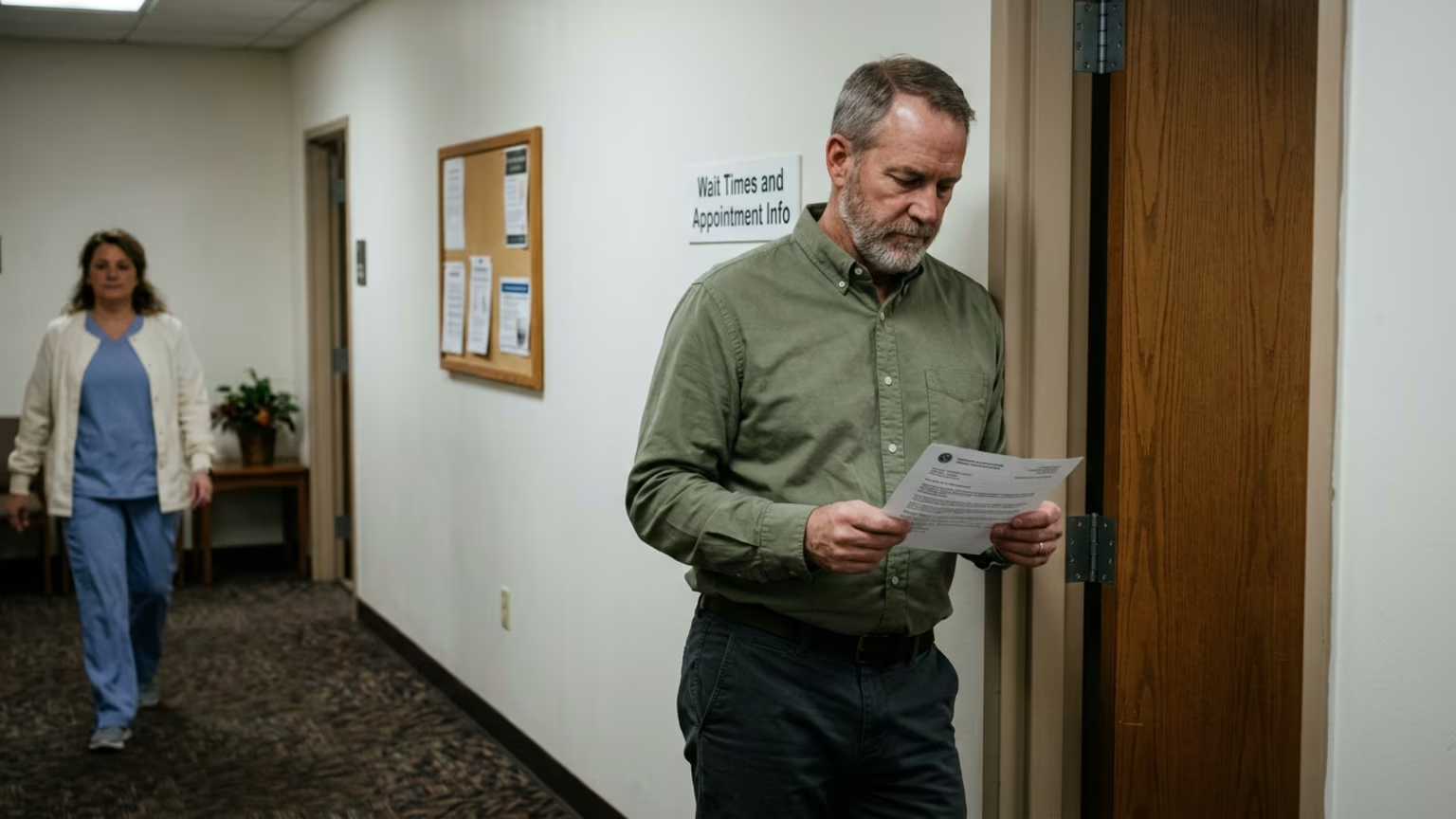

A Million Veteran Program study examines how alcohol consumption impacts cardiovascular events, cancer and mortality among older adults.





If you or a veteran you know is experiencing a mental health emergency, call 911 for immediate danger. You can also reach the Veterans Crisis Line by dialing 988 and pressing 1. Texting 838255 provides another direct connection to support.
Moderate drinking is not a reliable strategy for protecting your heart. The assumption that a daily drink improves cardiovascular health has shaped lifestyle choices for decades. The reality is that alcohol consumption must be measured against cancer risks and overall mortality rather than isolated cardiovascular claims.
A new cohort analysis from the Million Veteran Program evaluates this exact balance among older adults. The paper was published online on August 26, 2026, in The American Journal of Clinical Nutrition. This work examines how self-reported alcohol consumption compares with abstention regarding major adverse cardiovascular events, cancer and mortality.
The analysis uses Million Veteran Program data to understand these complex relationships. This program is a large U.S. veteran cohort designed to support research into lifestyle factors and later health outcomes. The study was highlighted by UCLA Health’s Department of Medicine as an analysis of a deeply contested public health question. It asks whether alcohol use is truly associated with better or worse outcomes among U.S. veterans.
The idea that low-level alcohol use improves longevity stems from older observational studies. Public health discussions frequently highlighted a potential cardiovascular benefit without fully addressing broader consequences. This older narrative encouraged many adults to view alcohol as a harmless part of a healthy routine. The reality is far more complicated when you look at overall mortality.
A major issue with previous research was the way it defined abstention. A lifelong nondrinker often has a completely different health profile than a former drinker. Many former drinkers quit alcohol only after developing severe medical problems. When researchers group all abstainers together, the healthy nondrinkers are mixed with those who are already sick.
This blending makes moderate drinkers look artificially healthier by comparison. Medical researchers and public health agencies are now placing much greater emphasis on cancer risk and overall mortality. Evaluating alcohol requires looking at the whole body instead of focusing solely on the heart. Treating all abstainers as one comparison group can severely complicate the interpretation of any study.
Self-reported alcohol intake also introduces a significant layer of uncertainty. Participants may underreport their alcohol use during surveys. A single self-report might also fail to capture major changes in drinking behavior over time. This common survey limitation can weaken the precision of comparisons between different drinking categories.
Because this new study is observational, its associations should not be presented as proof of causation. The study cannot by itself eliminate confounding variables or reverse causation. Differences in outcomes might reflect factors associated with drinking behavior rather than the alcohol itself. Potential issues include smoking, socioeconomic conditions, baseline disease and medication use.
Shedding the myth of protective drinking completely changes how we approach long term health. Veterans should treat alcohol decisions as a comprehensive health issue rather than looking for a cardiovascular excuse to drink. You cannot isolate the heart from the rest of the body when making lifestyle choices. The current public summaries do not establish a specific protective or harmful effect for any stated drinking level.
Trying to maintain fitness years after leaving service required a completely new mindset. The goal changed from immediate tactical readiness to healthy aging and longevity. I learned that connecting short term performance with long term health, focusing on mobility and cardiovascular function, was the real key to staying capable. This means evaluating all modifiable risks together instead of relying on outdated advice.
Veterans should track their actual alcohol intake honestly to get a realistic picture of their habits. Because self-reporting often underestimates volume, you must record drinks accurately and note any heavier episodes. This accurate tracking is essential for having informed discussions with primary care providers. Discussing alcohol with a clinician is vital when managing other health conditions or taking daily medications.
The Million Veteran Program has also supported research on cardiovascular risk completely unrelated to alcohol. Alcohol is just one potentially relevant exposure among many that influence healthy aging in veterans. Other critical factors include tobacco use and sleep quality. Physical activity, mental health and consistent access to care also play major roles.
A VA research brief described an analysis of more than 92,000 veterans where large weight fluctuations showed significant risks. These weight shifts were associated with increased risks of heart attack, stroke and death independent of overall body mass index. This context is crucial for readers seeking healthy aging guidance. Managing your weight, sleep, physical activity and mental health provides a much stronger foundation for longevity.
Separate military health research also highlights the severe mental health risks associated with heavy alcohol use. One study reported higher odds of post-traumatic stress disorder among people with heavier alcohol consumption. Those findings come from a completely different study and population framework. Therefore, they should not be treated as direct results from the Million Veteran Program analysis.
A separate report on veteran drinking trends provides additional context for these lifestyle choices. That report indicated that binge drinking among U.S. veterans declined between 2016 and 2024. However, heavy drinking among veterans aged 35 to 49 actually increased during that same period. This underscores the importance of addressing alcohol habits openly during midlife health assessments.
Veterans who want to reduce their drinking should view treatment as a basic health maintenance strategy. Seeking support is a standard part of staying capable and active as you age. Discussing alcohol with a clinician is especially relevant for veterans managing cardiovascular disease, cancer risk or liver disease. It is also important for those dealing with sleep problems, PTSD or depression.
These findings are directly relevant to veteran health planning. However, they may not apply equally to active duty personnel, civilians or younger service members without subgroup analyses. The strongest defensible approach is to weigh cardiovascular, cancer and mortality considerations together. Readers should never focus on a possible heart benefit in complete isolation.
The available public summary omits the numerical sample size and the specific alcohol consumption categories. It also excludes the operational definition of abstention, the follow-up duration and the adjustment variables. The precise hazard ratios are missing from the initial coverage as well. These omissions are highly important for interpreting the final results.
We are watching for the complete publication of the findings to understand the exact hazard ratios. This future data will clarify the specific risks associated with different alcohol consumption categories. Until the full methods and results are available, readers should avoid translating the findings into a safe drinking threshold. The accessible sources do not support a blanket claim that alcohol is always harmful.
The upcoming details will help military health researchers determine if the results differ by age or baseline disease. They will also clarify the exact adjustment variables used to isolate the impact of alcohol. Until those numbers are fully published, the wisest approach is to avoid starting to drink for perceived heart protection. Connecting these findings to veteran lifestyle and healthcare resources ensures a balanced perspective on aging.
Health decisions ultimately require looking at the entire picture rather than isolated claims. The human body does not neatly separate the risks of one habit from the benefits of another. Time reveals the true impact of our daily choices.
Follow BattleVet for practical guidance on military and veteran health, strength, recovery, testosterone, sleep and healthy aging. Stay connected for new articles, research backed insights and clear information to help you stay capable for the years ahead.


Combat Stress’s workplace guidance emphasizes listening over diagnosis. Recent U.S. veteran insomnia research adds context for sleep and recovery concerns.


ErythroMer's reported storage design could matter for military care. An academic review still lists it as preclinical, with human evidence ahead.
A large veteran study links PTSD and documented social needs to later cognitive impairment, reinforcing the value of connected care planning.
Build better habits around strength, recovery, sleep, hormones and healthy aging with practical guidance for active military personnel and veterans.
Explore BattleVet