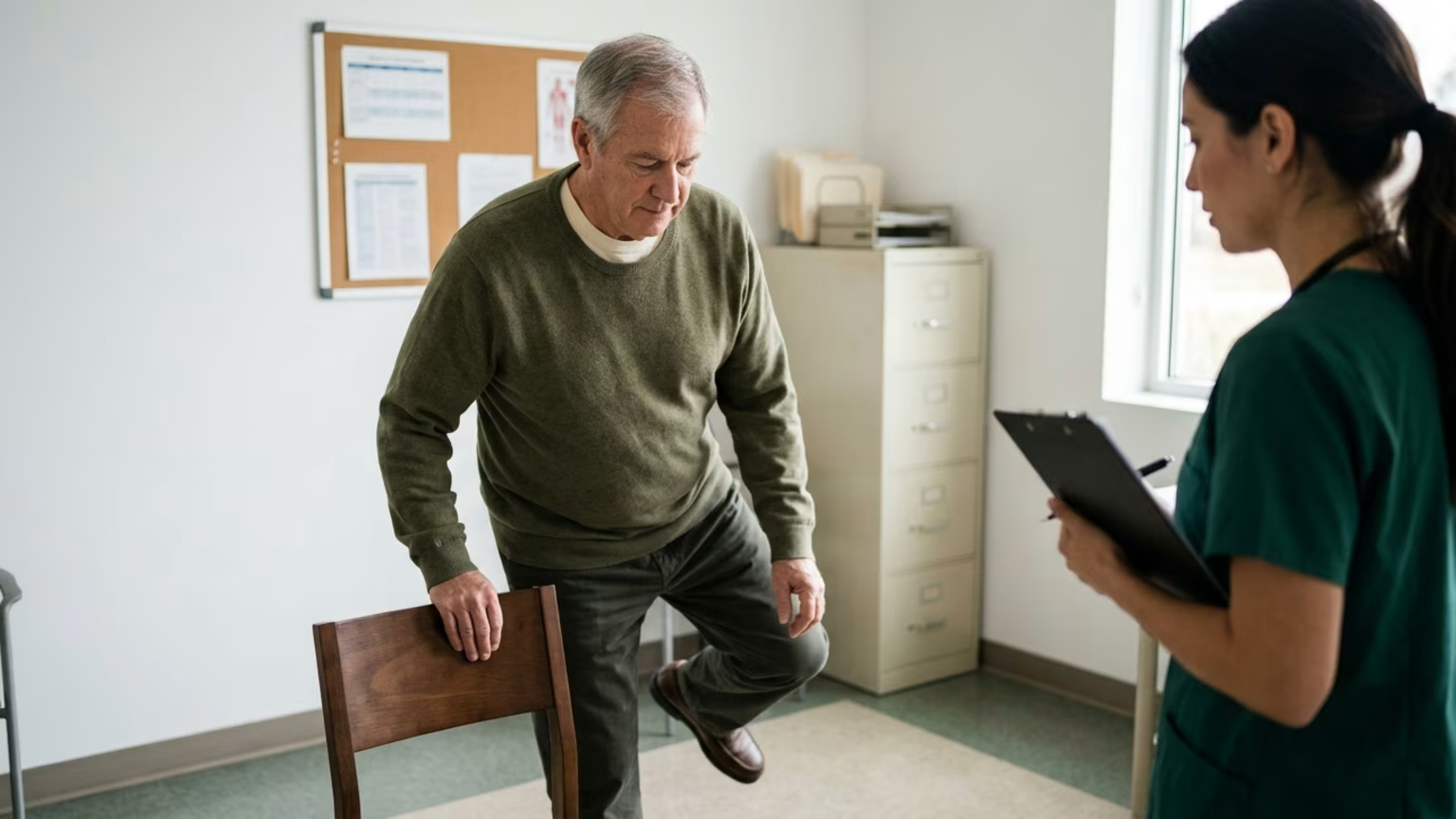

A 2024 Mayo Clinic study reveals why single-leg balance is a more sensitive marker of aging than strength loss, and how veterans can adapt their training.





You stand by the kitchen counter and try to lift one foot off the floor for a routine balance check. Your ankle shakes, and you quickly grab the edge of the sink to stabilize yourself. People often assume that losing muscle mass is the primary driver of physical decline as we get older. The reality is that balance deteriorates much faster than physical strength.
This misconception stems from how fitness is traditionally measured in military training and commercial gyms. Decades of physical readiness testing focused heavily on strength and cardiovascular endurance. Pushups, pullups, and run times were the standard metrics of a capable body. Balance was rarely tested in a formal setting unless a service member suffered an acute injury.
The standard physical fitness assessments heavily reward raw power and sheer repetition volume over joint stability. Service members spend decades optimizing their bodies for maximum pushup counts or heavy deadlifts. They rarely practice the subtle sensory integration required to stand perfectly still on one foot. This long term training bias creates a population of veterans who are incredibly strong but neurologically vulnerable.
Because strength was always the priority, many people continue to judge their physical aging purely by how much weight they can lift. Fitness marketing reinforces this idea by prioritizing muscle size over joint stability and sensory coordination. Older veterans often focus entirely on lifting heavy weights to preserve their youth, ignoring other aspects of physical longevity. They unintentionally ignore the intricate neurological systems that keep them upright.
Traditional medical checkups also contribute to this blind spot in routine medical tracking. Doctors routinely measure blood pressure, heart rate, and basic reflexes during annual exams. However, they rarely conduct comprehensive functional stability tests on healthy middle aged adults. This systemic oversight leaves many veterans unaware of their declining stability until an unexpected fall occurs.
In 2024, Mayo Clinic researchers published a cross sectional study in PLOS ONE. The research examined whether gait, balance, and strength measures changed with age. They also wanted to see whether any of these metrics could serve as reliable indicators of neuromuscular aging. The study assessed 40 healthy, independent adults over 50.
Participants included an equal representation of people younger than 65 and people aged 65 or older within each sex group. The team assessed walking, static balance, grip strength, and knee extension strength. They measured balance using force plates during 30 second stands on both the dominant and nondominant legs. They also tested bilateral standing with eyes open and eyes closed.
The findings revealed a stark contrast between different types of physical decline. The nondominant leg stance duration showed the steepest age related decline among all the significant measures. The standardized duration of the nondominant leg stance declined by 0.62 standard deviations per decade. Meanwhile, the dominant leg stance declined by 0.53 standard deviations per decade.
Strength also declined, but the standardized changes were much less severe. Dominant hand grip strength declined by 0.34 standard deviations per decade. Dominant leg knee strength declined by only 0.26 standard deviations per decade. When researchers looked at normalized measurements, grip strength declined by approximately 3.7% per decade.
Knee strength declined by approximately 1.4% per decade in these normalized measurements. These figures describe this small study cohort and should not be presented as universal aging rates. Walking measures did not show a statistically significant relationship with age in this sample. The abstract reported p≥0.12 for gait parameters when participants walked at their preferred, self selected pace.
This finding challenges the way many fitness professionals design exercise programs for older adults. If strength declines slower than balance, then lifting weights alone cannot fully protect an aging body. A comprehensive physical maintenance routine must specifically target the nervous system alongside the muscular system. The researchers emphasized that physical independence relies on the brain accurately interpreting sensory feedback from the feet.
The study carefully excluded certain demographics to keep the data as clean as possible. Researchers excluded people with a body mass index above 35. They also excluded individuals with spinal pathology, neuromuscular disorders, or a FRAIL score of 3 or greater. These exclusions make the findings cleaner scientifically but limit their direct generalizability to people already experiencing functional decline.
The researchers tested one leg balance with eyes open. This is notably easier than the more difficult eyes closed one leg condition. The protocol also allowed participants to position their non weight bearing leg and arms as they wished. This natural positioning reflects how people organically recover balance, but it makes the test slightly less standardized.
Bilateral balance was also less sensitive than the one leg balance tests. However, the distance traveled by the center of pressure did increase with age during bilateral standing. Center of pressure movement increased by 6.3% per decade with eyes open and 10.4% per decade with eyes closed. The study highlighted that balance requires complex integration rather than just raw muscle output.
Mayo senior author Kenton Kaufman explained that balance draws on visual, vestibular, somatosensory, and muscular systems. He warned that poor balance can increase fall risk even when a person is not moving. A person might retain excellent grip strength while experiencing significant changes in sensory integration or postural control. The study showed that these subtle neurological changes become highly visible during a single leg stance.
Older veterans can use a single leg stance as a simple self monitoring signal. You should always perform this check near a stable counter or sturdy support. Keep the test brief, and stop immediately if you feel unsafe or unsteady. Do not treat this movement as an unsupervised challenge if you have a history of falls or dizziness.
Kaufman noted that standing on one leg can help train the coordination of muscular and vestibular responses. He mentioned that being able to stand on one leg for 30 seconds is a good performance. However, this 30 second mark is an expert comment rather than a strict clinical cutoff for fall risk. You should compare your right and left sides while recording your best time under consistent conditions.
Balance performance can vary significantly based on your environment and daily habits. Your stability might fluctuate based on recent fatigue, footwear choices, joint pain, or sleep quality. Even minor alcohol use or a heavy workout can temporarily reduce your neuromuscular coordination. You should interpret repeated checks as long term trends rather than definitive judgments about your biological age.
Pay particular attention to your nondominant side because it showed the largest age related decline in the research. If you notice a major side to side difference or a rapid decline in stability, seek professional guidance. Treat these changes as a reason to talk with a physical therapist or VA rehabilitation service. Do not assume that a sudden loss of balance is just a normal part of getting older.
You must pair balance practice with dedicated lower body exercise routines. The Mayo findings clearly show that strength still declines with age. Furthermore, VA summarized research linking lower leg power and grip strength with fall injury risk in older men. That specific study tracked more than 5,000 older men, and 40% experienced at least one fall injury over nine years.
This evidence supports retaining power assessments alongside balance checks rather than replacing strength training entirely. Veterans affairs facilities, such as the Los Angeles VA Clinic, maintain dedicated fall prevention and mobility services for older service members. The VA Gerofit to Home program perfectly illustrates the value of a well rounded fitness approach. VA reported that an analysis of 600 Gerofit participants found significant improvements in several physical fitness tests.
These participants had an average age of 75, and they improved in tests like the 30 second chair to stand test. A comprehensive program combines aerobic conditioning and whole body strength with balance, flexibility, and individualized exercise. A balanced home routine can include supported single leg stances, step ups, calf raises, and hip strengthening movements. You should also adapt your training to account for fatigue, footwear, and daily physical demands.
Service members and veterans should adapt their training to reflect their own operational and medical realities. Walking on an 8 meter level walkway in a laboratory does not mimic real world challenges. Loaded movement, uneven terrain, and rapid changes of direction may expose physical limitations that a quiet stance does not capture. Veterans must recognize that passing a simple static balance check does not guarantee stability during complex physical tasks.
Anyone with persistent instability, recurrent falls, vertigo, or new weakness should seek immediate professional assessment. A clinician can properly examine vision, vestibular function, sensation, and the side effects of daily medication. Medical professionals can also evaluate specific joint problems rather than attributing every balance change to normal aging. Proper medical scaffolding ensures that veterans receive targeted treatment for solvable issues instead of ignoring progressive neurological symptoms.
Future research will likely focus on how different sensory systems interact to prevent falls in aging populations. We expect to see more longitudinal studies that track single leg balance in participants over multiple decades. These long term trials will help clarify whether a declining balance score directly predicts future medical disability. Researchers also need to conduct larger studies to see how these metrics apply to frail adults or people with injuries.
Scientists will likely investigate how sleep quality, medication, and joint pain influence daily sensory integration. This evolving science could eventually produce validated, military specific balance norms for active duty personnel and veterans. Until those specific guidelines arrive, older adults should focus on consistent, well rounded physical maintenance. Start testing your single leg balance safely next to a sturdy counter twice a week to track your own baseline over time.
Follow BattleVet for practical guidance on military and veteran health, strength, recovery, testosterone, sleep and healthy aging. Stay connected for new articles, research backed insights and clear information to help you stay capable for the years ahead.


Combat Stress’s workplace guidance emphasizes listening over diagnosis. Recent U.S. veteran insomnia research adds context for sleep and recovery concerns.


ErythroMer's reported storage design could matter for military care. An academic review still lists it as preclinical, with human evidence ahead.
A large veteran study links PTSD and documented social needs to later cognitive impairment, reinforcing the value of connected care planning.
Build better habits around strength, recovery, sleep, hormones and healthy aging with practical guidance for active military personnel and veterans.
Explore BattleVet