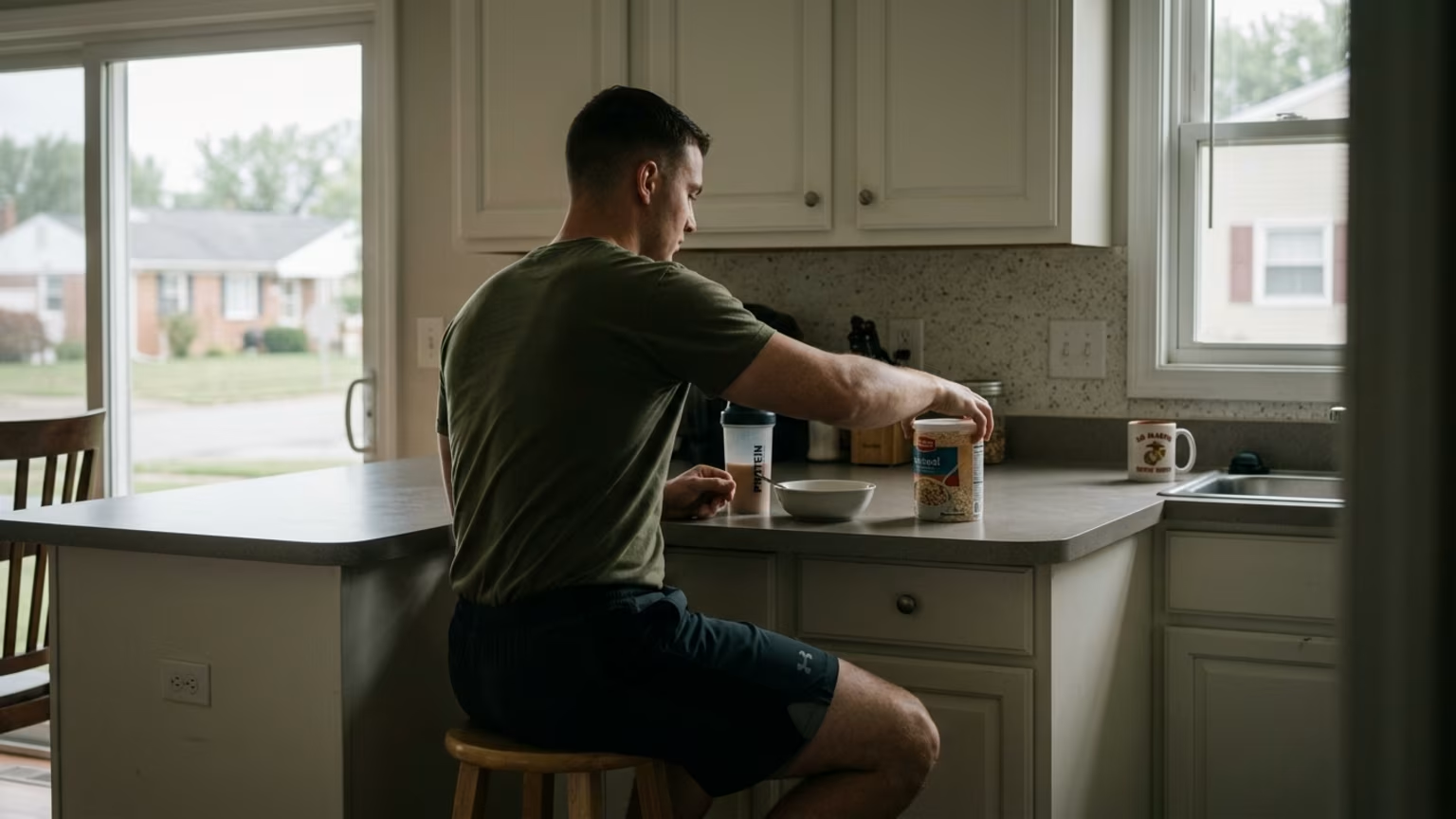

Explore the Marine Corps Total Fitness framework. Learn how moving beyond basic PFT scores toward comprehensive readiness improves long-term performance.





If you or someone you know is in immediate danger, call 911. If you are experiencing a crisis, call 988 and press 1 for the Veterans Crisis Line, or text 838255. Securely storing firearms and medications with the help of a trusted person can provide crucial safety during a crisis.
A Marine stares at a worn training log in the barracks gym. They pass the annual evaluation easily, but chronic joint pain makes the following week a painful struggle. This cycle of maximizing a test score while breaking down the body is exactly what the new Marine Corps Total Fitness framework aims to stop.
Physical readiness in the military often defaults to preparing for a semiannual evaluation. Service members build their entire weekly schedule around maximizing their score on this single test. This approach prioritizes peak performance for a brief window of time. It often ignores what happens to the body during the other six months of the year.
Focusing strictly on a fitness test can create gaps in overall physical capability. A service member might run fast and perform high repetitions on a pull-up bar. That same individual might struggle with loaded carries or lack a foundation of aerobic conditioning. The test becomes the only metric of health.
This narrow view of fitness often treats rest as a biological inconvenience rather than a requirement. Chronic fatigue builds up when recovery is absent from the weekly plan. A systematic review concluded that monitoring fatigue-related measures may help inform recovery periods. The review noted that this monitoring can optimize occupational performance while limiting adverse training responses.
When readiness is defined strictly by an annual test, an injury becomes a catastrophic failure rather than a temporary setback. This creates an environment where personnel might hide pain to pass the evaluation. They risk severe, long-term damage just to meet a numerical standard. This approach ultimately reduces force readiness by sidelining experienced personnel with preventable, chronic injuries.
The Marine Corps Gazette published a new framework on August 26, 2026. The article was written by Col. Eric J. "Chewy" Keith alongside SgtMaj Emmanuel Hudson and SgtMaj Jacob Reiff. It presents a holistic approach designed to develop Marines who are physically tough, mentally sharp, spiritually grounded, and socially connected. The authors argue that physical readiness should be treated as a daily commitment rather than a semiannual evaluation.
The article identifies four connected domains that form the foundation of Marine Corps Total Fitness. The physical fitness domain covers strength, mobility, and nutrition. It also includes sleep, recovery, injury prevention, and tactical athlete preparation.
Mental fitness involves resilience, stress exposure, and decision making under pressure. It also requires cognitive conditioning, vulnerability, and help seeking. Spiritual fitness addresses meaning, purpose, identity, and faith. It encompasses family, nation, legacy, and a clear reason for enduring hardship.
Social fitness focuses on belonging, trust, and mentorship. It also relies on family readiness, unit cohesion, and shared experience. Capt. Riley Tejcek is described in the Gazette article as both a Marine officer and a Team USA bobsledder. She summarizes the concept by stating that every Marine is a tactical athlete.
She adds that this status requires prioritizing training, recovery, mental edge, and sleep. This specific Marine Corps model relies on a broader military health foundation. A separate Marine Corps University article says the Department of Defense released its Total Force Fitness framework in 2011. This release was intended to help understand well-being, sustain mission capability, optimize performance, and build resilience.
That same article describes a Marine Corps progression through multiple historical initiatives. These include the 2017 Marine Leader Development order and the 2023 Marine Corps Total Fitness Strategic Plan. The Gazette article also identifies specific structures to support operational endurance. It points to Warrior Athlete Readiness and Resilience centers and performance teams as key resources.
These facilities are intended to support operational endurance rather than functioning as optional wellness benefits. The Marine Corps has also begun publicly documenting implementation activity for this new framework. DVIDS reported Marine Corps Total Fitness Implementation Training at Camp Lejeune on August 5, 2026.
Service members and veterans must decide how to structure their physical training and health management. Sticking to a test-focused program works if your only goal is passing an upcoming evaluation. This narrow focus requires minimal planning and provides clear numerical targets. It often fails to support long-term physical resilience or joint health as you age.
The integrated fitness approach is better suited for maintaining lifelong physical capability. A broad Military health strategy requires looking at the whole picture. If you have a recent bone or joint issue, you should prioritize medical guidance over maximal testing. A Military Medicine study reported that early rehabilitation after fracture was associated with approximately a 30 percent lower risk of subsequent Army Physical Fitness Test failure.
Mental and social factors play a major role in how you tolerate physical stress. The Gazette article uses retired Cpl. Kyle Carpenter as an example of mental fitness and post-trauma resilience. Carpenter states that there is strength in vulnerability, in admitting our weaknesses, and in seeking help.
Spiritual and social connection provide the foundation for enduring hard training. The Gazette article uses Sgt. Dakota Meyer to illustrate spiritual fitness as purpose and a personal centerline. This concept is broader than formal religious practice and focuses on meaning, identity, and legacy. Retired LtCol. Rob Riggle is also cited to illustrate the social dimension of shared purpose, trust, and people doing what they say they will do.
Choosing a comprehensive readiness strategy also changes how leaders manage their teams. The Gazette article argues that total fitness is not solely the responsibility of chaplains, S-1 personnel, or Semper Fit. It says responsibility belongs to commanders and senior enlisted leaders. A separate Marine Corps University article similarly reports that Marine Corps guidance treats commanders as owners of spiritual fitness.
This positions chaplains as advisers rather than the sole custodians of the function. You can apply these concepts by building training environments that create trust and shared goals.
Active duty personnel need sustainable operational endurance to manage high physical workloads. The Training and performance requirements of modern service demand more than basic running and pull-ups. The wider military health system uses a Total Force Fitness framework. This system covers nutrition, sleep, mental health, and medical readiness.
It also addresses cognitive performance, brain health, physical fitness, and human performance research. Integrating these elements helps active duty members perform reliably without breaking down. Accessing the right resources is a critical part of this active duty strategy.
Health.mil lists several health resources including CHAMP and ARMORR. The site also provides access to Human Performance Resources by CHAMP and Rx3 injury recovery guidance. Additional support includes Operation Supplement Safety, heat illness prevention resources, and nutrition programs.
The Gazette article specifically includes embedded behavioral health, Marine Intercept, and Operational Stress Control and Readiness among existing resources. Veterans and former service members must pivot away from military volume and focus on consistency. A solid Healthy aging plan means you do not need to reproduce active duty training loads.
You can adapt the total fitness concepts of strength, mobility, and recovery to support your current civilian life. Emphasize physical capacity that makes daily tasks easier while managing old injuries. The most important shift is viewing recovery and behavioral health as performance multipliers.
Leaders are expected to model this healthy training behavior and normalize appropriate help-seeking. DVIDS described the August 2026 Camp Lejeune training as intended to help leaders discuss and apply systems addressing the total health of the Marine Corps. This specific training included discussions on physical fitness alongside suicide and alcohol-abuse prevention.
Track one new recovery metric like sleep consistency alongside your workouts this week.
Follow BattleVet for practical guidance on military and veteran health, strength, recovery, testosterone, sleep and healthy aging. Stay connected for new articles, research backed insights and clear information to help you stay capable for the years ahead.


Combat Stress’s workplace guidance emphasizes listening over diagnosis. Recent U.S. veteran insomnia research adds context for sleep and recovery concerns.


ErythroMer's reported storage design could matter for military care. An academic review still lists it as preclinical, with human evidence ahead.
A large veteran study links PTSD and documented social needs to later cognitive impairment, reinforcing the value of connected care planning.
Build better habits around strength, recovery, sleep, hormones and healthy aging with practical guidance for active military personnel and veterans.
Explore BattleVet