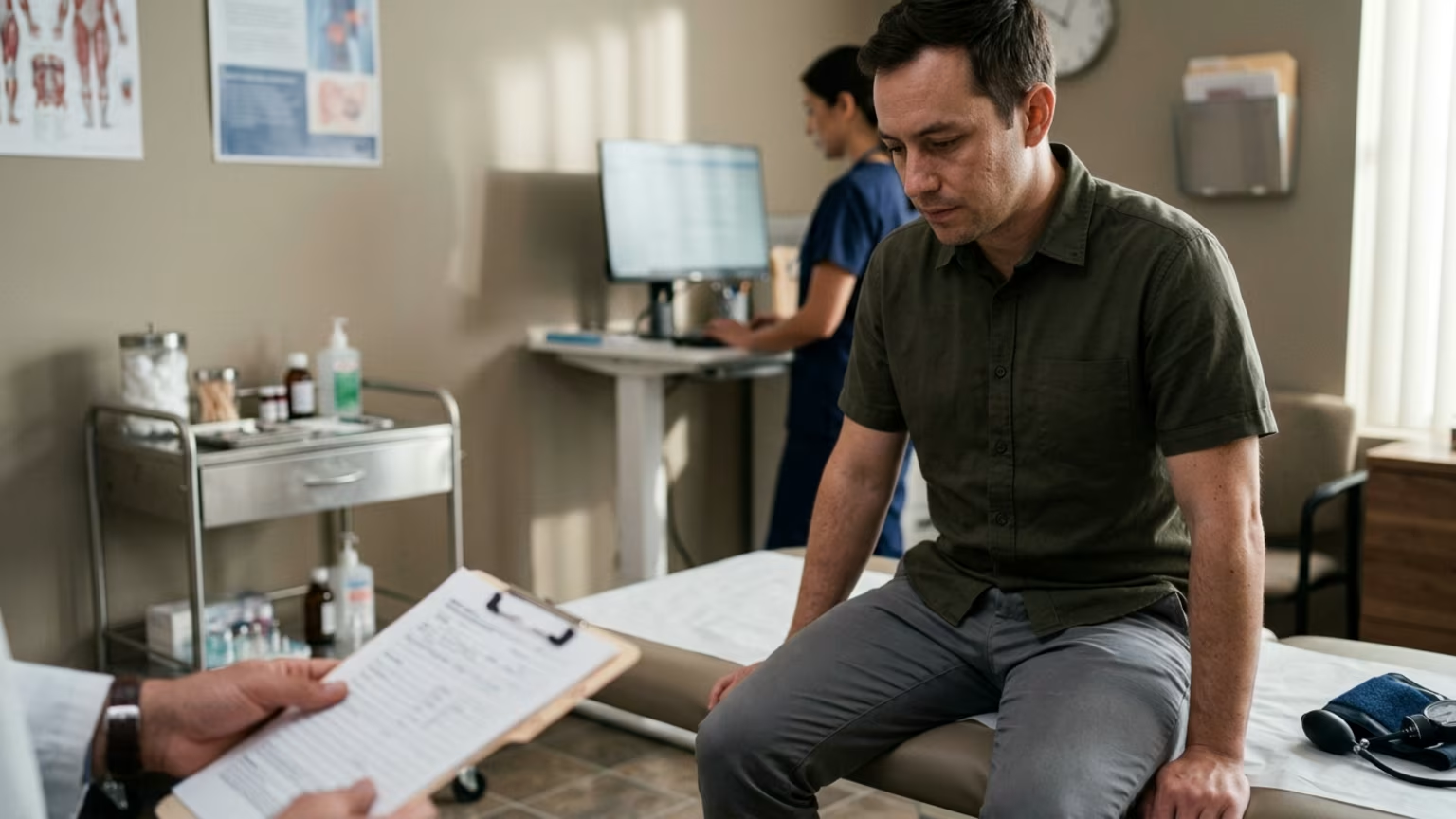

Learn what a proper evaluation for low testosterone actually involves. We explain the testing guidelines, symptom analysis, and factors affecting your lab results.





In one 2026 referral study of patients evaluated for low testosterone, researchers found that 65% had obesity and 28% had obstructive sleep apnea. This data matters because it shows how often other health conditions mimic or cause hormonal symptoms. A proper diagnosis requires looking at the whole picture rather than just treating a single lab result.
Men reading about testosterone and hormones are asking a fundamental question. What does a legitimate evaluation actually involve? In our experience, navigating these health decisions is rarely straightforward. As one team member recalled, "Reviewing my blood work for the first time felt overwhelming. There was so much confusing information out there about testosterone and hormones. I wanted clear facts and evidence based guidance, not a sales pitch. That experience showed me how critical it is to separate established science from marketing hype."
We need to look at what testing can actually establish and why the details matter.
A single low laboratory result is never enough to diagnose a medical condition. The American Urological Association (AUA) notes that testosterone levels vary throughout the day and change from one measurement to the next. Guideline based evaluation generally confirms a low result with a second measurement. These two tests must be taken on separate occasions.
The Endocrine Society likewise recommends confirming a low initial result with a repeat measurement rather than diagnosing hypogonadism from one test. Taking a second sample helps your clinician distinguish a persistent deficiency from a temporary dip. This prevents unnecessary medical interventions based on a single misleading measurement.
Both measurements need to happen in the early morning. Testosterone normally follows a daily rhythm throughout the human body. Concentrations are generally higher earlier in the day shortly after you wake up. A late afternoon test is difficult to compare with a properly timed morning sample.
This timing discrepancy is particularly relevant if you have an irregular schedule or work night shifts. Clinical guidance emphasizes sample collection before mid morning or within several hours of waking. Drawing blood at the right time ensures that the laboratory compares your numbers against an accurate biological baseline.
What you eat can temporarily influence your hormonal lab results. One clinical source summarizing guideline practice states that total testosterone should be measured on two separate mornings while fasting. This removes temporary dietary variables from the equation. Fasting helps isolate your baseline hormone production from acute metabolic shifts.
The exact testing instructions can differ based on local laboratory protocols and clinical preference. You should always confirm the fasting requirements with your clinician before arriving at the clinic. Following these guidelines strictly prevents false readings and unnecessary follow up appointments.
Compatible symptoms or signs are necessary for a clinical diagnosis. Symptoms alone are not enough to confirm low testosterone in any patient. Fatigue, poor concentration, sleep problems and weight gain can arise from numerous other causes. A thorough medical provider will look at your broader health context before assuming a hormonal deficit.
The AUA clearly states that a clinical diagnosis requires compatible symptoms together with consistently low testosterone. Neither a symptom checklist nor a laboratory result is sufficient on its own. Medical professionals rely on this combined approach to rule out overlapping conditions like depression or chronic stress.
Medical guidelines need specific reference points for standard clinical practice. The AUA uses a total testosterone level below 300 ng/dL as a reasonable cut off supporting the diagnosis. This is only true when compatible symptoms or signs are present in the patient. The 300 ng/dL threshold is a practical AUA cut off supporting diagnosis.
It is not a universal biological boundary between healthy and unhealthy men. Borderline results require careful interpretation alongside your overall strength, fitness and body composition. Clinicians must consider assay quality, your age and other health factors before making a definitive medical decision.
A total testosterone result does not always tell the whole story. Clinicians may consider calculating free testosterone when the total value is borderline. Follow up testing helps investigate why the hormone level might be low in the first place. Clinicians often assess luteinizing hormone, follicle stimulating hormone and prolactin.
This secondary testing helps distinguish problems originating in the testes from other systemic issues. The pituitary gland and hypothalamus play major roles in signaling hormone production. Identifying the exact failure point dictates whether a patient needs lifestyle interventions, specialized therapy or further medical imaging.
Standard testing protocols assume a relatively predictable routine. Military service rarely provides that luxury for active personnel. Service members on deployment or extreme shift rotations face unique challenges when scheduling early morning blood draws. For shift workers, morning should be interpreted clinically rather than mechanically.
Testing shortly after the person's principal sleep period might be more meaningful than testing at a fixed clock time. Heavy recent training and under fueling can also temporarily suppress your hormone levels. This matters for personnel preparing for selection courses or completing intense conditioning blocks.
A low result obtained during extreme physical stress might require repeat testing after recovery. It does not automatically indicate chronic hypogonadism. Acute illness and systemic inflammation also complicate laboratory interpretation. Service members should always inform their clinician about recent infections, surgeries or major recovery blocks.
Body composition and metabolic health play massive roles in natural hormonal balance. Obesity is a recognized contributor to low testosterone across patient populations. It may be a reversible or functional factor rather than evidence of permanent testicular failure. Increased body fat and reduced muscle mass can be symptoms, consequences or causes of several conditions at once.
They do not prove testosterone deficiency on their own. Clinicians may therefore assess weight trajectory, waist circumference and metabolic disease before making a diagnosis. They look at your nutrition, alcohol use and training load rather than treating the testosterone number in isolation. A functional drop in hormones often recovers when these foundational metabolic issues are addressed properly.
Opioids and high dose corticosteroids are among the medications associated with possible suppression of testosterone. The clinical evaluation should include your prescribed medicines, short term medications and pain treatment history. Clinicians also need to know about any relevant supplements or performance enhancing substances you have used. Previous anabolic steroid use can complicate interpretation because your natural hormone production may remain suppressed.
You should never stop a prescribed medication abruptly to improve a testosterone test result. The safer approach is to give the prescribing clinician a complete list of your medications. You can then ask whether a medication, prescribed dose or underlying condition could affect the result. Full transparency ensures that your lab results are interpreted in the correct medical context.
A proper medical evaluation starts long before you order a blood panel. You should begin by documenting your symptoms and their specific timeline. Record when the fatigue, mood changes or reduced physical capacity began. Note whether these issues followed a specific deployment, physical injury or severe illness.
This timeline gives your clinician the context needed to interpret the test appropriately. Bring a complete list of your current medications and past operational exposures to your appointment. Many men transitioning to veteran life forget to mention their shifting sleep habits.
You should explicitly discuss your sleep duration, overnight snoring and daytime sleepiness. Obstructive sleep apnea is especially relevant because it can contribute to poor sleep and altered testosterone regulation. These details help your doctor decide whether your blood sample reflects a stable baseline.
If your initial morning test comes back low, ask about the immediate next steps. Request clear instructions on fasting and timing for your required second measurement. If the results seem inconsistent with your symptoms, you can ask whether additional binding protein assessments make sense. A competent doctor will welcome these questions as part of a thorough health review.
If you have limited access to medical care, your personal documentation becomes even more important. Urgent evaluation is warranted for concerning findings such as severe headaches or visual field changes. These specific symptoms can suggest underlying pituitary disease or other significant systemic illness. Targeted imaging or specialist referral should be based on these clinical findings rather than on a low lab number alone.
You must also discuss any future fertility plans before starting medical treatment. Testosterone therapy is not simply a general purpose performance supplement. The clinical evaluation should always account for your long term reproductive goals. Suppressing your natural hormone production without a clear medical need can create entirely new health complications.
We started by looking at how frequently obesity and sleep apnea overlap with hormonal concerns. That 2026 referral study highlights a critical reality in modern medical evaluations. True health requires looking past isolated numbers to understand how your entire physiological system functions. A proper clinical assessment rules out the noise and focuses on your long term capability.
When you review your daily training and performance, are you setting the foundation for optimal hormonal function or are you expecting a medical fix for a lifestyle deficit?
Follow BattleVet for practical guidance on military and veteran health, strength, recovery, testosterone, sleep and healthy aging. Stay connected for new articles, research backed insights and clear information to help you stay capable for the years ahead.


Combat Stress’s workplace guidance emphasizes listening over diagnosis. Recent U.S. veteran insomnia research adds context for sleep and recovery concerns.


ErythroMer's reported storage design could matter for military care. An academic review still lists it as preclinical, with human evidence ahead.

A large veteran study links PTSD and documented social needs to later cognitive impairment, reinforcing the value of connected care planning.
Build better habits around strength, recovery, sleep, hormones and healthy aging with practical guidance for active military personnel and veterans.
Explore BattleVet